Economista y PhD en Management
Comisionado, @Def_Competencia
Prof. Finanzas y Gobierno Corporativo, @um_umpe
Casado con Isabel, 5 hijos
Opiniones personales
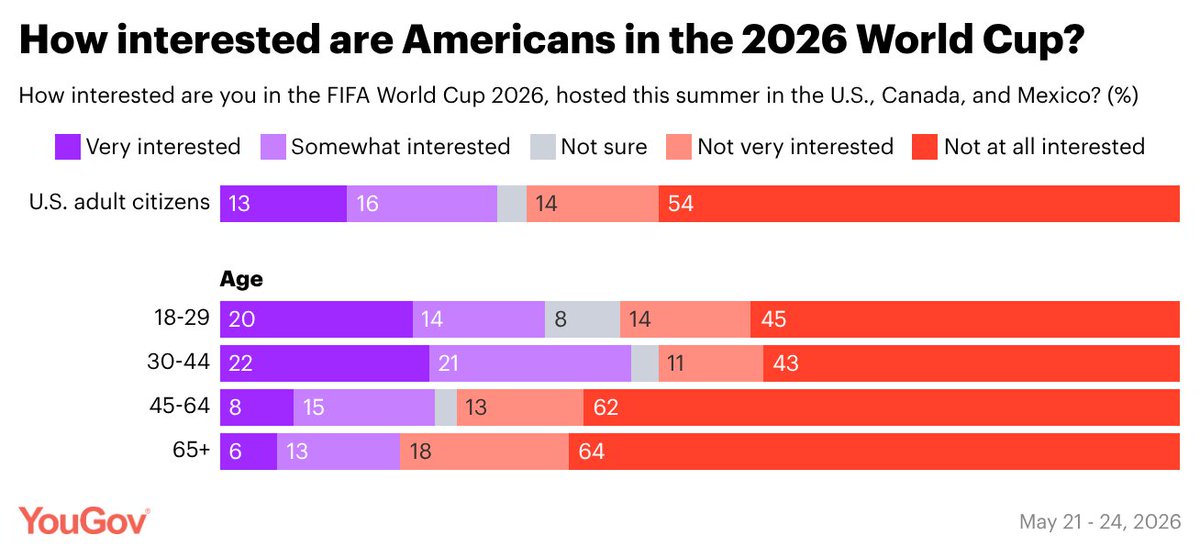
New polling on the 2026 World Cup
How interested are Americans in the World Cup?
% of U.S. adult citizens who say they are...
Very interested 13%
Somewhat interested 16%
Not very interested 14%
Not at all interested 54%
(Link in reply)
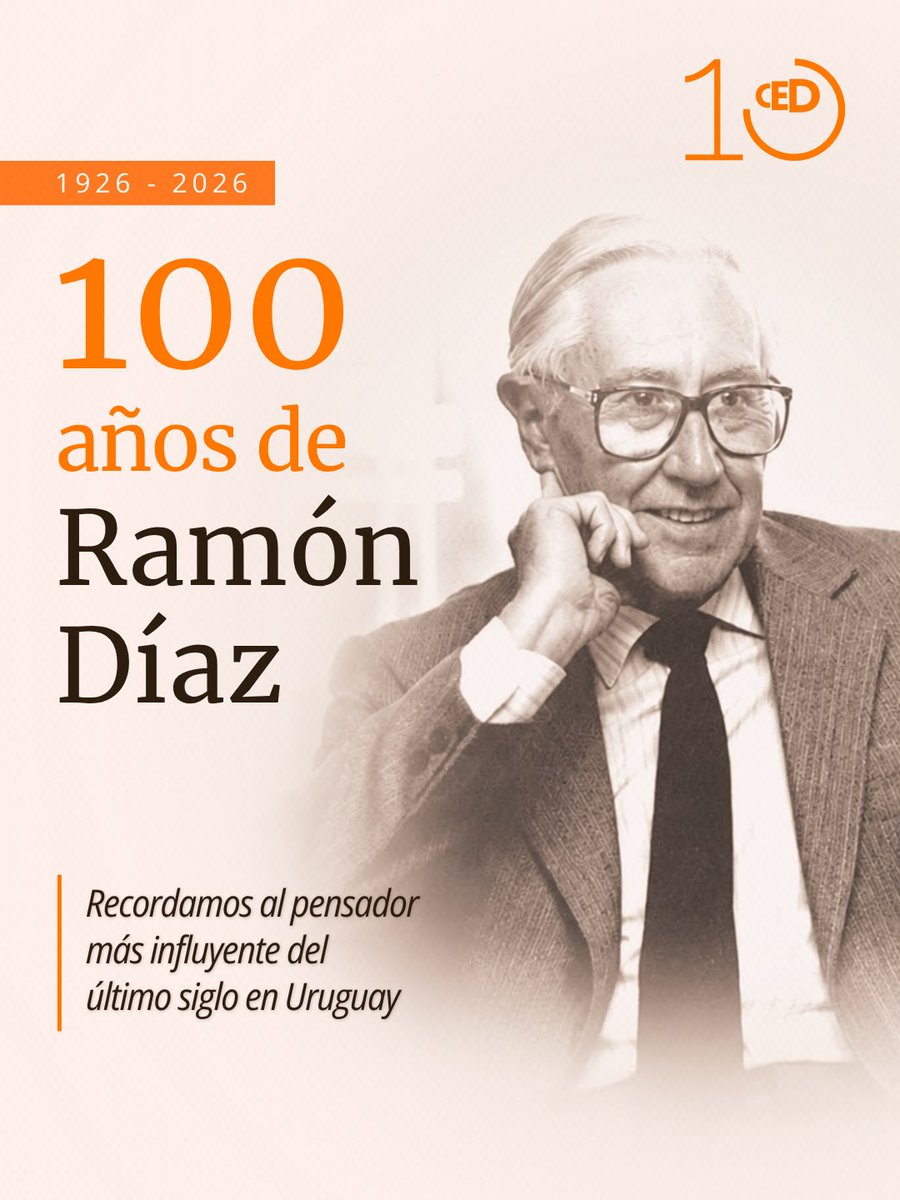
Centenario de Ramón Díaz
Hace exactamente un siglo nacía en Montevideo Ramón Díaz uno de los mayores pensadores de nuestra historia. Vale la pena entonces recordarlo a través de algunas pinceladas que demuestran por qué fue el principal intelectual uruguayo y el de mayor reconocimiento internacional desde mediados del siglo pasado.
Lector precoz, voraz estudioso de lenguas vivas y muertas, abogado, economista, periodista y profesor, fue un incansable lector al que nada de lo humano le era ajeno. Si en su adolescencia lo deslumbró el Manifiesto Comunista, fue su contacto con el Estado lo que lo hizo cambiar de rumbo: “Algo que sea mucho de esto no lo quiero”, confesaría.
De ese rechazo y la profundización en los grandes autores del liberalismo clásico nació una misión: en enero de 1972, junto a Ramiro Rodríguez Villamil y un puñado de amigos, fundó Búsqueda. Era una voz casi solitaria en un país anegado por el dirigismo, donde el liberalismo prácticamente había desaparecido. Desde el primer número se propuso buscar “una nueva doctrina socio-económica” para el Uruguay. La defendió durante cuatro décadas con la sola fuerza de su pluma. Durante la dictadura fue detenido innumerables veces, incluyendo un procesamiento y un secuestro y Búsqueda fue censurada y clausurada numerosas veces. Cuando por esos años escribió “Creemos en la libertad, estamos dispuestos a jugarnos por ella” fue visceralmente sincero.
Entre 1990 y 1993 presidió el Banco Central. Heredó una institución al borde del colapso y una inflación de tres dígitos. La dejó en descenso firme y con un BCU modernizado. El presidente Lacalle Herrera recordaría su “coraje sin cólera” para sacar adelante a “ese paciente terminal”.
Su trayectoria internacional fue impresionante e incomparable. Compartió paneles y conferencias con Hayek, Friedman y Popper. La Sociedad Mont Pèlerin lo eligió su presidente y sigue siendo el único sudamericano con esa distinción hasta hoy.
Su Historia Económica de Uruguay reinterpretó destruyó las caducas lecturas de Barrán y Nahum. Su Diálogo sobre el liberalismo con Pablo da Silveira es un modelo de cómo se debate con respeto entre quienes piensan distinto. Fue un católico devoto, esposo, padre, abuelo y bisabuelo. Tenista, amante de la ópera, y poseedor de un carácter firme, en su caso, compatible con una gran ternura y generosidad, de lo que doy fe. Lo definió da Silveira con precisión: leerlo era una revelación. Todo resultaba claro. Que un país chico debe ser un país abierto. Que la inflación es el peor de los impuestos, porque castiga a asalariados y jubilados. Y aquella máxima de Pascal que repetía como una brújula: “Esforcémonos por pensar bien, he ahí el principio de la moral”.
Si el clima de ideas en Uruguay cambió para bien, si hoy nadie defiende la inflación ni el cierre al mundo, fue en buena medida gracias a él. Quedan batallas pendientes: nuestro Estado sigue siendo elefantiásico y arrastramos muchas regulaciones que carecen de sentido, pero Uruguay es un país mejor entre otros factores por la pasión, rigor, inteligencia y capacidad de Ramón Díaz. Hoy conmemoramos su centenario celebrando la vida del amigo entrañable que extrañamos y del maestro incomparable que veneramos.
Publicado en el diario El País, 30 de mayo de 2026
La imitación artificial de una comunicación humana positiva —palabras de consejo, de empatía, de amistad, de amor— puede resultar gratificante, pero también puede inducir a engaño y dar la falsa impresión de estar en una relación con un auténtico sujeto personal. En un contexto pobre de relaciones y de afectos reales, el riesgo es que la persona pierda el deseo de buscar realmente al otro.
La IA puede parecer "inteligente" pero no debiera sustituir ni debe compararse con la comprensión humana. Nuestra forma de entender el mundo se construye con la experiencia, los vínculos con otros, las motivaciones y la responsabilidad de saber que podemos equivocarnos.
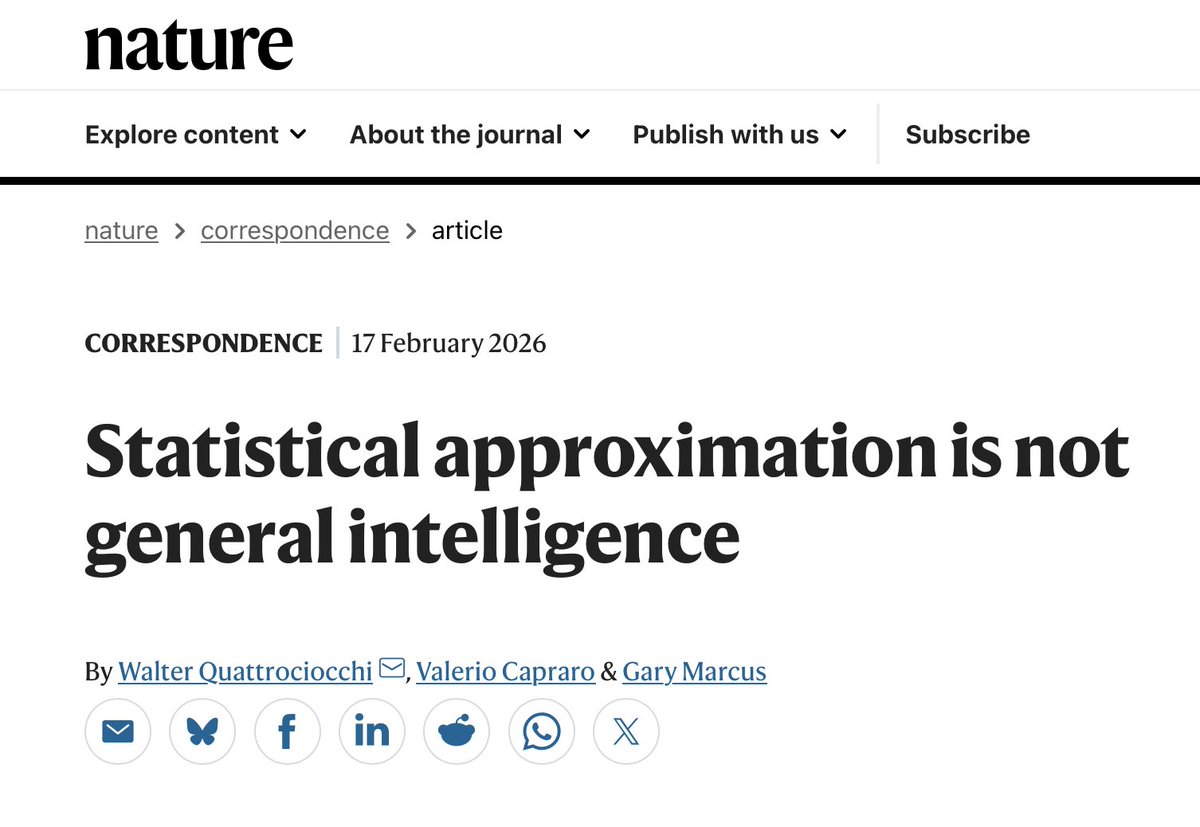
The Pope is making exactly our point. LLMs “may imitate or even simulate, but they do not understand.”
This is the core epistemic fault line.
Most AI evaluation is still based on one assumption: if a system statistically approximates human behaviour, then it is close to human intelligence.
But approximation is not intelligence.
Simulation is not understanding.
LLMs can produce the right answer without knowing why it is right. They can simulate empathy without feeling. They can imitate judgment without responsibility. They can generate coherent explanations without having a world to which those explanations are accountable.
Stop confusing behavioural similarity with cognitive equivalence.
Human understanding is embodied, affective, relational, motivational, and normative. It is not just the production of plausible text.
*
Full paper in the first reply
Las inteligencias artificiales no viven una experiencia, no poseen un cuerpo, no pasan por la alegría y el dolor, no maduran en las relaciones ni conocen desde dentro lo que significan el amor, el trabajo, la amistad y la responsabilidad. Tampoco tienen una conciencia moral: no juzgan el bien y el mal, no captan el sentido último de las situaciones ni asumen el peso de las consecuencias. Pueden imitar, pueden simular pero no conocen lo que producen, porque no residen en el horizonte afectivo, relacional y espiritual en el que el ser humano se hace sabio. #MagnificaHumanitas
A post about Pope Leo XIV's encyclical on AI. Why the Pope is right, but perhaps not right enough.
Artificial intelligence is reshaping the world in front of our eyes: how we communicate, how we access information, how we work, how income and status are distributed among us, and soon how we fight and kill each other. Yet the public conversation about AI remains stuck on the minutiae of competition between labs, or on a false dichotomy between AI as a “stochastic parrot” with no real capabilities and AI as an alien superintelligence poised to take command of humanity.
The more important questions are about what we want from AI, and whether our current mindset, institutions, and control mechanisms are equal to the task of steering it toward our welfare.
It is refreshing, then, that a bold and powerful voice has weighed into this debate: Pope Leo XIV. As an economist who has long argued that technology is a matter of choice rather than fate, I find Leo’s intervention welcome and, on most points, on target. But on the most consequential question of what AI should actually be designed to do, Leo stops short.
Secular readers may bristle at the encyclical’s opening invocation of the Tower of Babel. They would be mistaken to stop reading there. Leo goes much further than most pundits, journalists and policymakers in the United States by recognizing that what happens to AI, and hence to humanity, is a under our control. There are multiple possible paths for AI, and which one we take will have sweeping consequences. He is also ahead of many commentators when he writes forcefully and unequivocally that “technology is never neutral, because it takes on the characteristics of those who devise, finance, regulate, and use it.”
These were the central themes of the book I wrote with Simon Johnson, Power and Progress: Our Thousand-Year Struggle over Technology and Prosperity. It is heartening to hear them taken up by a voice with Leo's reach.
The Pope is also right to question the current trajectory of AI in warfare and law enforcement. What was taboo only a few years ago – AI-driven mass surveillance, algorithms selecting targets for killing – has become routine. Many in Silicon Valley are now calling openly for a new military-algorithmic complex centered on AI as an instrument of American hard power. Leo captures something deep and too often ignored: “Any technology that facilitates attacks without seeing the face of human beings lowers the moral threshold of conflict.”
His call for the “disarmament of AI” follows directly from these observations. As he explains, disarming AI means “freeing it from the mentality of ‘armed’ competition, which today is not limited simply to the military context, but is also an economic and cognitive phenomenon.” His moral clarity in stating that “there is no algorithm that can make war morally acceptable” should be a warning to technologists rushing to design new weapons of mass destruction.
Underneath these specific concerns lies a more fundamental claim: that what is technically feasible is not the same as what is good for humanity, and that the difference depends on who controls the technology and what ideology and interests guide them.
Leo edges toward what I take to be the most important point about AI's future when he observes that “while AI promises to boost productivity by taking over mundane tasks, it frequently forces workers to adapt to the speed and demands of machines, rather than designing machines to work with those who work.”
But here he does not go far enough. He stops short of questioning the prevailing design philosophy of AI itself: a philosophy centered on mimicking human capabilities and automating human tasks, with the ultimate goal of artificial general intelligence (AGI) that can do everything a person can.
This philosophy rests on a mistake. It assumes that artificial intelligence and humanintelligence are fundamentally similar, and therefore machines should naturally take over whatever humans currently do. Yet these intelligences are fundamentally different.
Humans are “one-shot” learners. We form hypotheses from a few examples, mentally simulate possibilities, and refine our understanding through a social process of trial and error. This is how children learn language - imitating a few words, generalizing, and adjusting based on how others respond. We are not, however, very good at absorbing massive volumes of information or sifting through unstructured data for relevant patterns.
AI models are almost the opposite. They thrive on enormous training sets and excel at pattern recognition at scale. But they have, as yet, no genuine creativity, no real-world embodiment, and no capacity for trial-and-error learning grounded in interaction with the physical and social world.
When two things are different – you shouldn’t, and typically you couldn’t – use one to mimic the other. If you did, you would end up with suboptimal, disappointing results. It would have been a colossal mistake, and the Chicago Bulls’s legendary coach Phil Jackson would have gone down in the annals of basketball as one of the worst coaches in history, if he decided in the 1990s that because Michael Jordan was the better player, Jordan should mimic everything that Scottie Pippen and Dennis Rodman were doing in the team. The team went from championship to championship because these players worked together and complemented each other.
The same applies to AI and human skills.
The more productive path is complementarity – using AI to do what humans cannot, so that humans can do what they do best. An electrician aided by AI diagnostics, a nurse supported by AI in interpreting symptoms, a teacher using AI to personalize instruction for each student; these are the contours of a different AI future, one that raises rather than displaces human capability.
Optimists and industry insiders will respond that automation-first AI can still benefit everyone, provided redistributive policy keeps pace. But this argument has a poor track record. Forty years of digital automation have already concentrated gains at the top, hollowed out middle-skill work, and produced disappointing aggregate productivity growth. There is little reason to expect that an even more powerful round of automation, deployed by even more concentrated firms, will end differently. We can and must demand a different design.
The global stakes from the future of AI are even larger than those we can see around us in the United States. For the developing world, where billions still depend on the prospect of decent jobs as a path out of poverty, an automation-centric AI agenda is not merely suboptimal. It is simply transferring to foreclose the most important route to broad-based prosperity.
The biggest failing of today's AI industry is its refusal to recognize any of this. It is guided instead by an ideology of control (the industry’s own over humanity) and by a conviction that machines are uniformly better than humans.
As Leo rightly notes, this failure is enabled by the fact that a handful of companies now command the future of AI.
What we need is a combination of moral clarity and a serious, society-wide debate about what AI can do and what we want it to do. That debate must move beyond exhortation toward concrete choices: antitrust action against the dominant platforms, public investment in human-complementary AI, regulation of surveillance and autonomous weapons, and meaningful rights for workers and citizens over the data on which these systems are built.
The Pope's intervention makes such a debate a little more likely today than it was before.
It is now up to the rest of us to carry it further than he was willing to go.
👉El barrio Santa Eugenia, uno de los asentamientos más grandes de Montevideo, estrenó una nueva cancha de fútbol y un salón comunitario para más de 500 niños.
Además, ocho familias de allí recibieron sus nuevas viviendas.
Ed Yardeni: "The S&P 500 is up 9% this year, but the price-to-earnings multiple has actually contracted 4.6%. The entire rally has been driven by earnings rising 14.4%."
¿Cómo se consigue #experiencia si “nadie” te da el primer #trabajo?
En 2022, el 25,8% de los puestos de entrada no pedía experiencia.
Hoy ese número cayó al 15,6%.
El mercado laboral uruguayo le está cerrando la puerta a los #jóvenes?
📊 #MonitorLaboral de @AdviceRRHH, abril 2026 https://t.co/EOnorDUbhs
#empleo #Uruguay
El análisis de eficiencias alegadas es clave en la evaluación del impacto competitivo de concentraciones económicas (M&A). Acá dos papers académicos actuales y relevantes que apuntan a la necesidad de una evaluación de eficiencias basada en información verificable y contrastable
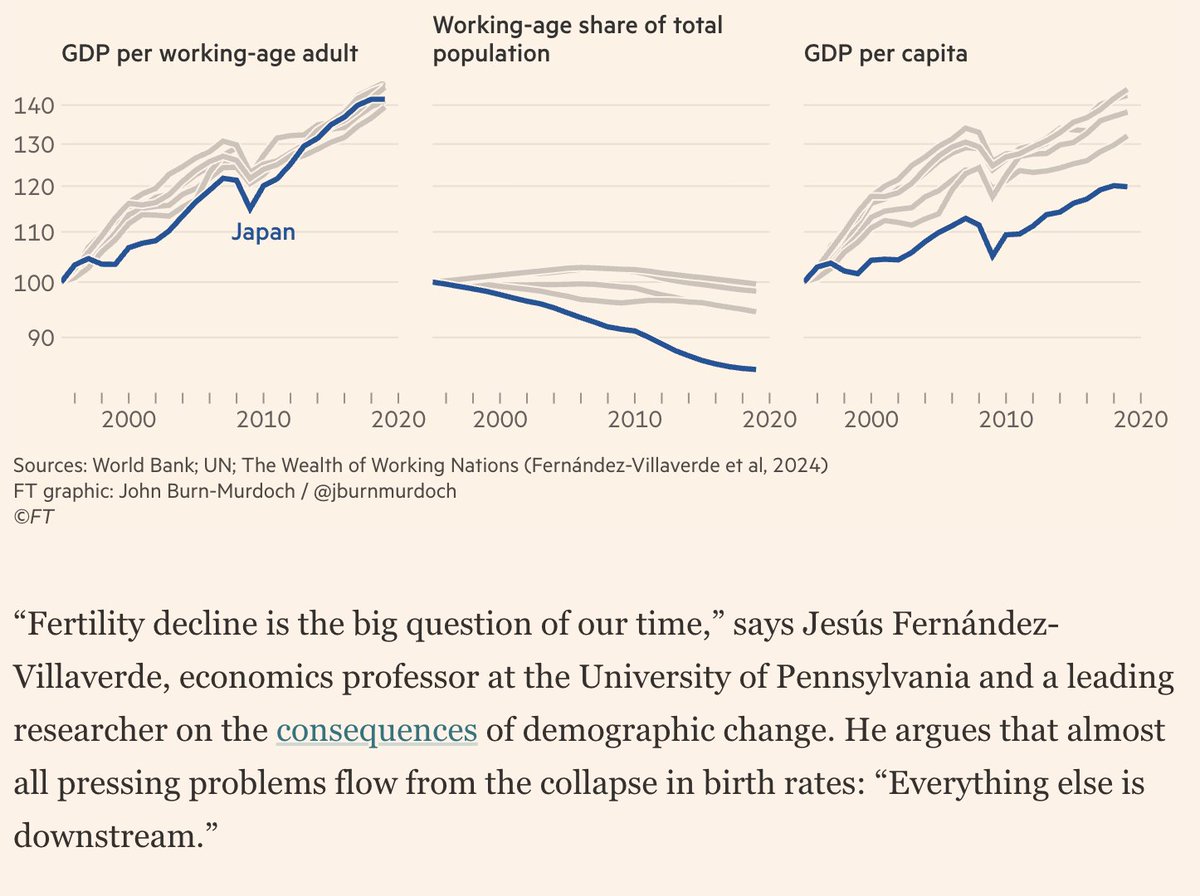
¿Por qué cayó la natalidad en todo el planeta al mismo tiempo, en países tan distintos como Corea, Argentina, Irán y España? La respuesta más incómoda cabe en un bolsillo. Advertencia esto es una teoría pero la correlación es fuerte.
Alrededor de 2010, en todos los continentes, en países ricos y pobres, religiosos y seculares, las tasas de fertilidad empezaron a caer de forma sincronizada. Todos hacia abajo, todos al mismo tiempo, todos desde que el iPhone se masificó y las redes 4G cubrieron el mundo.
La explicación económica habitual no alcanza. Corea y Argentina no se parecen en nada, y sus curvas se desploman en paralelo.
Los smartphones movieron la vida juvenil del mundo físico al digital. Las horas que antes se pasaban en plazas, bares y fiestas hoy se pasan mirando una pantalla. En EEUU la socialización presencial adolescente se redujo a la mitad mientras el ocio digital se triplicó. Por cada diez por ciento más de cobertura 4G, los nacimientos adolescentes cayeron casi un punto.
Dentro de las parejas, el phubbing vacía las noches de intimidad. TikTok, Netflix, videojuegos y pornografía compiten con la pareja real y suelen ganar, porque ofrecen dopamina barata sin la fricción del otro.
Se suma la crisis de salud mental de la generación criada con pantalla en mano. Ansiedad, soledad, adolescencia prolongada hasta los treinta y pico. Por eso los incentivos pronatalistas que ensayan Hungría o Corea fracasan. El problema no es el dinero, es que la gente joven está sola en su cuarto.
El mundo no dejó de tener hijos porque se hizo más rico. El mundo dejó de tener hijos cuando dejó de mirarse a los ojos.
La caída de la natalidad acelera el envejecimiento poblacional; reduce la proporción de personas en edad de trabajar; amenaza el crecimiento potencial de largo plazo; genera presiones fiscales y sobre los sistemas previsionales y de salud. @JesusFerna7026; @Schuldensuehner
At the FT today, John Burn-Murdoch (@jburnmurdoch) has an excellent article describing how fertility is declining everywhere at the same time:
https://t.co/Ad0LpN25Dl
He quotes me and, even better, draws the reader’s attention to my work with Gustavo Ventura, @King_ofSweden, and Wen Yao on “The Wealth of Working Nations.”
If I may suggest, reading the article alongside the podcast I did with Derek Thompson, @DKThomp, will give you a good overview of the issue.
BTW, I have decided to write something longer about all this over the summer with Nezih Guner, @NezihGuner. Hopefully, the gods of productivity smile on us, and we can have a draft by early fall.
For researchers interested in U.S. banking and finance, we are sharing a new data resource!
It contains information on bank balance sheets, bank runs, and bank failures from the 19th century to the present:
We are excited to announce that Pablo Ottonello will be joining the Economics Department and @Watson_School as Professor of Economics, effective July 1. Welcome Pablo!
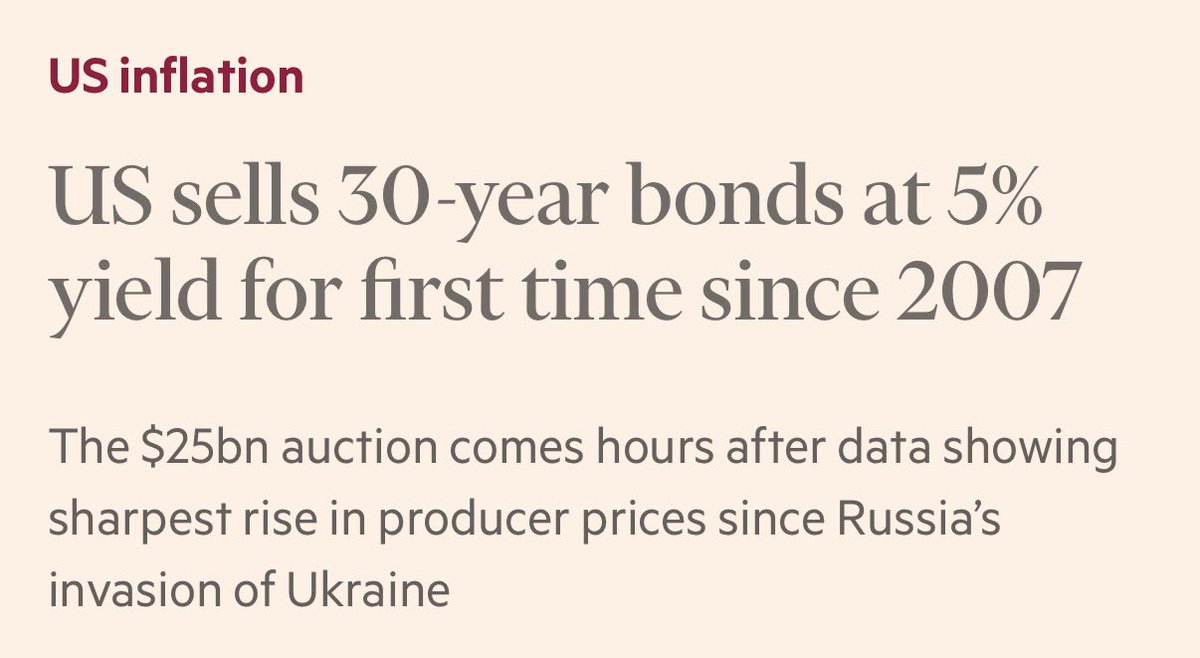
From the Financial Times:
"The Treasury department issued $25bn of new 30-year bonds on Wednesday, with the high yield at auction reaching 5.046 per cent."
#economy#markets#debt#bonds#ust@ft
Usan modelos de lenguaje (LLMs) para analizar una base de datos con 6.693 comunicados de política monetaria de 51 bancos centrales entre 1990 y 2024 (disponible). Los comunicados se volvieron más detallados y más fáciles de leer, después de la crisis financiera de 2008.
🚨 Public Good Alert 🚨
Two years of development. Zero funding. 𝟲,𝟲𝟵𝟯 𝗼𝗳𝗳𝗶𝗰𝗶𝗮𝗹 𝘀𝘁𝗮𝘁𝗲𝗺𝗲𝗻𝘁𝘀 𝗳𝗿𝗼𝗺 𝟱𝟭 𝗰𝗲𝗻𝘁𝗿𝗮𝗹 𝗯𝗮𝗻𝗸𝘀. #TextData
Today, we are opening the doors to it all for free 🚀
Visit our website: https://t.co/ToBke8Dxww
🧵1/12 #NLP