Here's a simple calendar trick anyone can use:
(bookmark this and try it later)
There are 4 types of professional time:
1. Management
2. Creation
3. Consumption
4. Ideation
Management Time is what most of us spend the majority of our professional lives in. Meetings, calls, presentations, email processing, team and people management.
Creation Time is what most of us scramble to fill into the gaps between Management Time blocks. Writing, coding, building, preparing.
Consumption Time is where new ideas for creation and growth are originally planted. Reading, listening, studying.
Ideation Time is where new ideas for creation and growth are cultivated and grown. Brainstorming, journaling, walking, self-reflecting.
Before you can make improvements to your balance of time, you need to understand your starting point.
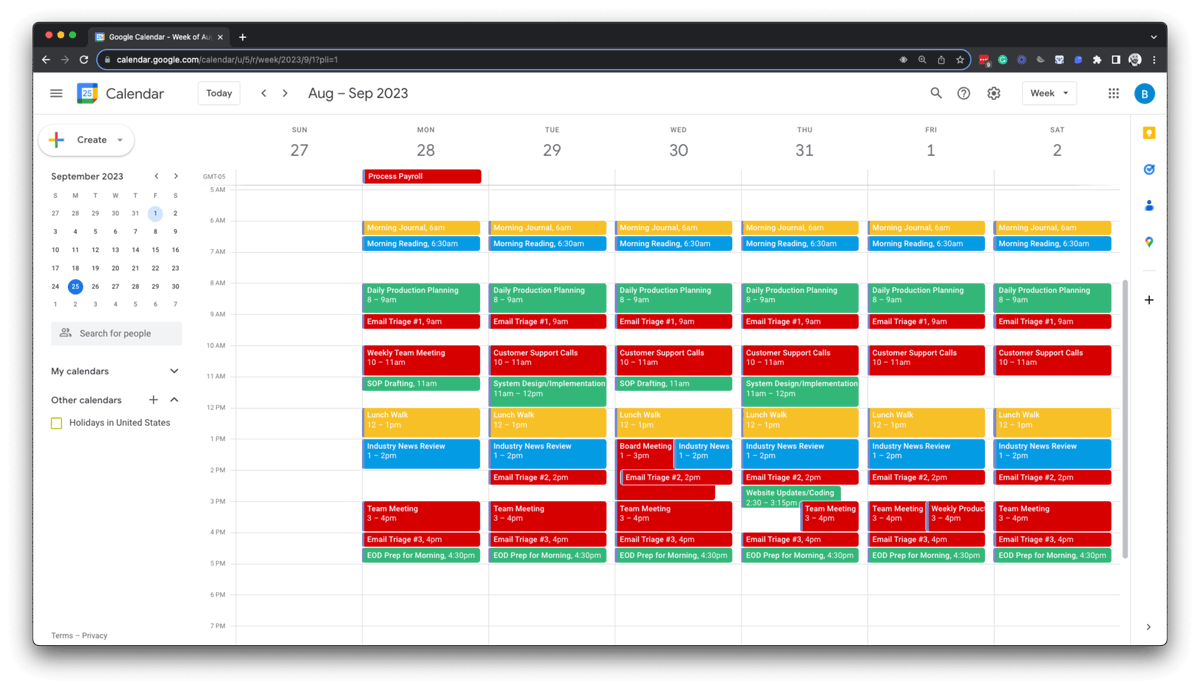
Starting on a Monday, at the end of each weekday, color code the events from that day according to this key:
• Red: Management
• Green: Creation
• Blue: Consumption
• Yellow: Ideation
At the end of the week, look at the overall mix of colors on the calendar.
Here's an example of how this looked for a friend's calendar at the end of the week.
This simple exercise should give you a clear picture of what your current baseline mix of professional time looks like.
3 Tips for an Optimal Balance
Tip 1: Batch Management Time
Create discrete blocks of time each day when you will handle major Management Time activities.
1-3 email processing blocks per day. 1-3 call and meeting blocks per day.
The goal here is to avoid a schedule where the red bleeds out everywhere across every single day.
We are trying to keep the Management Time windows as discrete as possible to create space for the other types of time.
Tip 2: Increase Creation Time
Creation is what propels us forward, with more interesting projects and opportunities. We all need more Creation Time in our days.
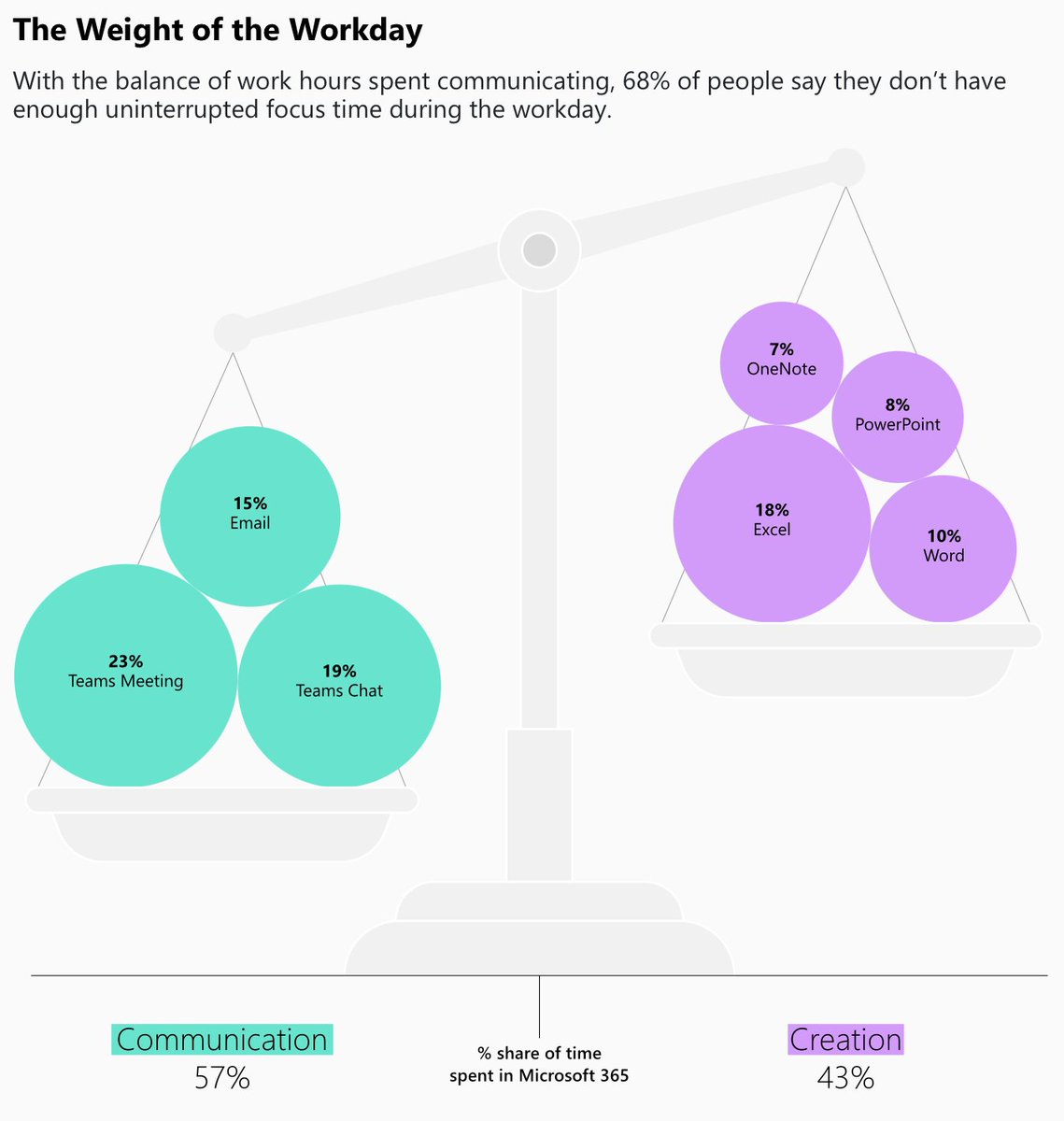
Recent data from Microsoft showed that users of their apps are spending much more time on email and meetings than creating.
As you batch Management Time, carve out distinct windows for Creation Time.
Block them on your calendar. Don't check your email or messages during them. Focus on creation during your Creation Time.
Tip 3: Create Space for Consumption & Ideation
Consumption and Ideation are the forgotten types of time because we rarely create space for them, but they are critical to long-term, compounding progress.
History's most successful people have all made a practice out of creating space for reading, listening, learning, and thinking. We can draw a lesson from this.
To start, schedule one short block per week for Consumption and one short block per week for Ideation. Stay true to the purpose of the block. Own that before increasing the presence of these types of time in your schedule.
With these three tips in mind, you're well on your way to finding a more optimal balance across the four types of professional time.
Bookmark this post and give it a shot.
If you enjoyed this or learned something, follow me @SahilBloom for more in future!
@kasimaslam I’d love to hear about your content strategy when remarketing. Do you move to objection handling ads, testimonials, FAQs, or just repeat the same general message as the TOFU ads and drive them back to lead gen assets or sales pages?
@UjwalVelagapudi@sweatystartup Isn’t there an irony here? Enterprise value is supposed to be a function of expected future cash flows… but I guess not always the case in practice?