Your dad is not wrong. I even have written on it once.
Morocco shows up as MAR on scoreboards because FIFA's country codes do not always come from the English name.
A lot of them come from French, which is the working language FIFA has used since it was founded in Paris in 1904. Morocco in French is Le Maroc. First three letters: MAR.
And Morocco is not alone. This happens more than people realise.
Germany is GER, which tracks in English. But then you get to Ivory Coast, which shows up as CIV, from Côte d'Ivoire. Algeria is ALG from Algérie. Haiti is HAI from Haïti. Switzerland is SUI from Suisse. Spain is ESP from España. Iran appears as IRN.
The pattern runs across the entire scoreboards.Some countries are also coded based on whatever their language is.
FIFA built its codes in an era when French dominated international administration, and colonial history shaped which language a country's name was recorded in first.
That legacy is still sitting quietly on every scoreboard at this World Cup.
I hope you have learned something today.
My name is Ajoje. I am a FIFA Licensed Agent and International Sports Lawyer. I write on the Law and Business of Football, a lot. Repost and Follow if you want to read more posts like this.
Where did the Godts links go?
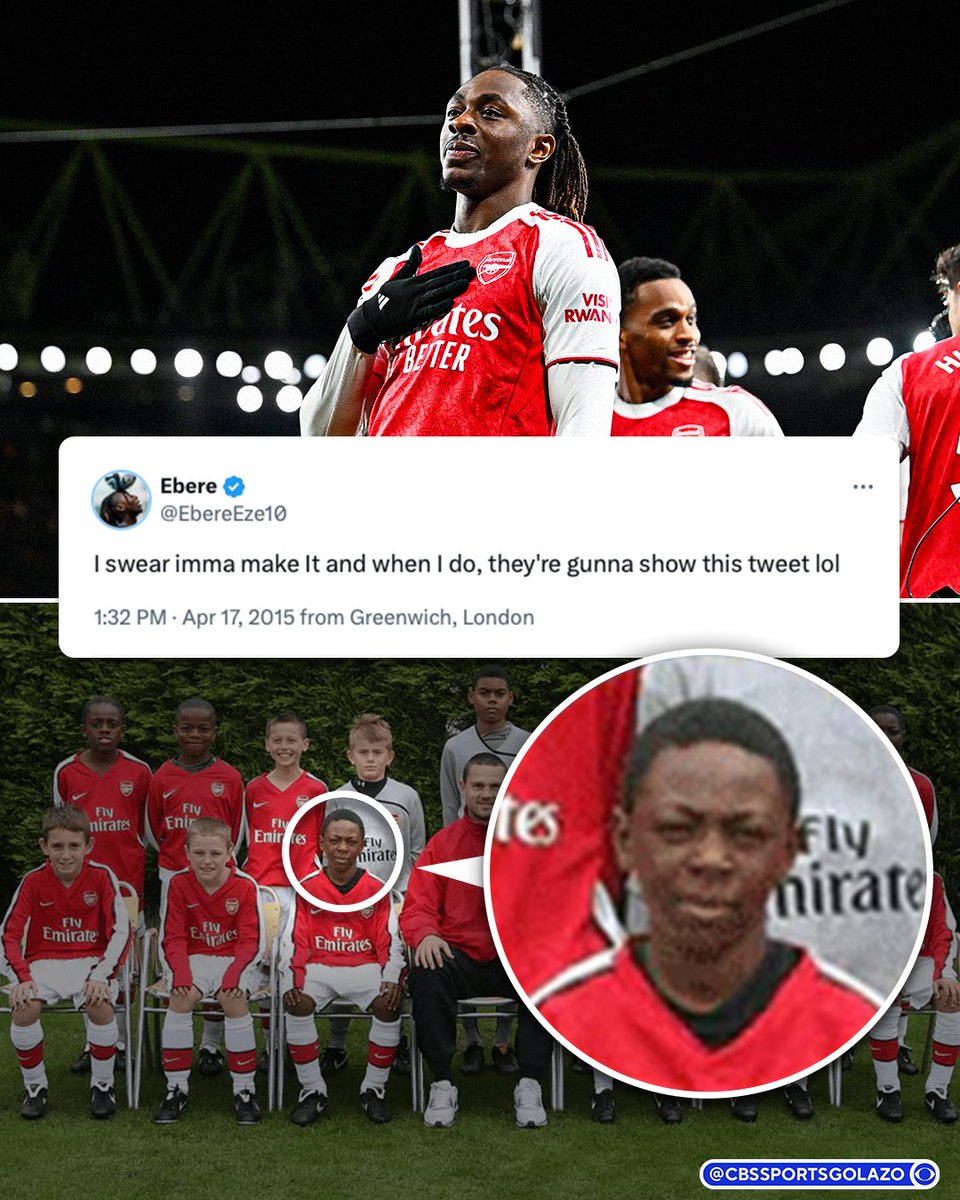
There are questions about his current level, but his profile, baseline qualities are exactly what Arsenal need from a LW
He has the technical dribbling to manipulate a block from a standing start in wide areas and inside.
right so 15th, 9th and 11th?
vs arsenal’s 16th, 7th, and 14th… not that different really, arsenals slightly more favourable on average as it should be with them having a better placement.
cheers for showing the format is doing its job.
Police pulled a crocodile out of a South African river last week and cut it open. Inside: a man's ring, his remains, and six other pairs of shoes that didn't belong to him.
The man was Gabriel Batista, 59. He ran a small hotel and bar in eastern South Africa, near the Komati River. On April 27, he tried to drive across a bridge that had flooded over. His truck got stuck. He was swept downstream and never seen alive again.
For a week, police searched the river with drones and found nothing. Then they spotted a single crocodile sitting on a small island, belly bulging, completely still while a helicopter buzzed overhead. Every other croc in the area slid into the water at the noise. This one didn't move. That gave them their answer.
A police captain was lowered on a rope. They killed the crocodile, lifted it out by helicopter, and flew it about 3 miles to Kruger National Park to be cut open. Batista's ring was inside. So were the six other pairs of shoes.
The crocodile was 15 feet long and weighed 1,100 pounds, about the size of a horse. Nile crocodiles like this one kill somewhere between 300 and 1,000 people every year in Africa. Around half of all attacks end in death.
Your bite is about 150 pounds of pressure. A lion's bite is 650. A saltwater crocodile's bite, the strongest ever measured in any living animal, is 3,700. That is enough to snap bone. Once those jaws close, the limb does not come back out.
Then there is how they hunt. A crocodile resting underwater can hold its breath for two hours. Its heart slows to two or three beats a minute, basically off. When it decides to move, it can swim at 18 miles an hour, faster than any human in any pool, ever. Picture a flooded river. The crocodile saw you the moment you went in. It picked the right second to move, and you never saw a ripple.
The Komati flows right next to Kruger National Park, in some of the most crocodile-heavy water on earth. The bridge Batista tried to cross is locally known to flood. December through March is the rainy season in this part of South Africa, when crocodiles breed and are most aggressive. Batista went in during peak danger.
The six pairs of shoes are still being tested. Police suspect at least some belong to other people the crocodile had eaten.