You can say what you want about Iran but they're definitely pretty unique in their communication: never seen a country threaten another with a math equation before 😅
For those who didn't get it: there is a famous monetary policy formula used by the Fed called the "Taylor rule" that says a central bank's policy rate (i) should equal the neutral real rate (r*) plus target inflation (π*), plus 1.5 times the inflation gap and 0.5 times the output gap (the "i = r* + π* + 1.5(π−π*) + 0.5(y−y*)" part of Ghalibaf's formula).
Ghalibaf adds α(SOH−SOH*) and β(BEM−BEM*): SOH referring to the Strait Of Hormuz and BEM to Bab El-Mandeb. Both have positive coefficient, meaning the more those chokepoints are choked, the higher the rate the Fed would have to set to fight the resulting inflation.
In a nutshell this is Ghalibaf trolling the Fed, telling them that Iran is - in a very real way - setting American monetary policy.
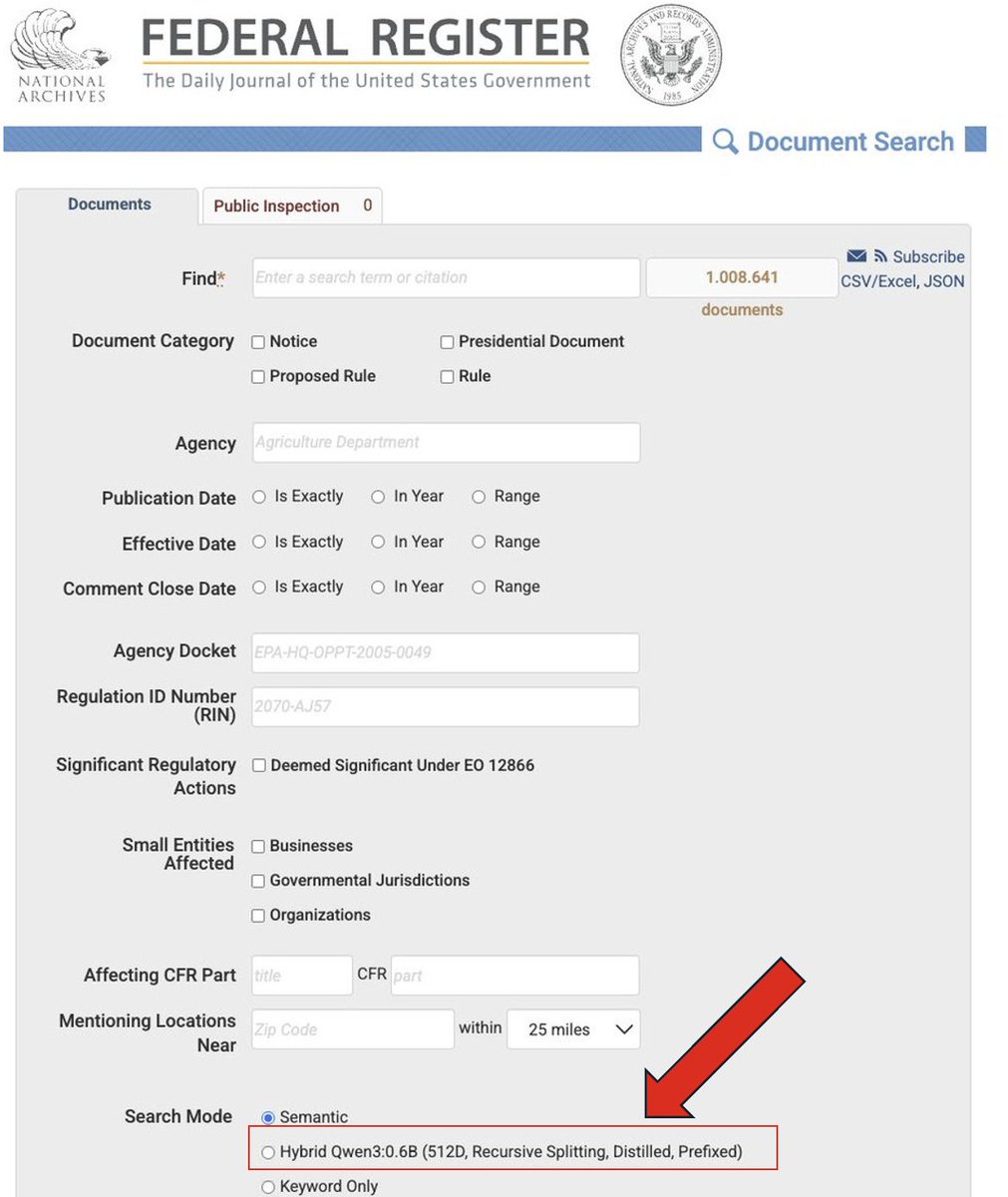
Yesterday someone found that a US government website has a 'distilled Qwen3' Chinese AI model. So i did some investigation to find out what, because it is kinda massive news especially after last week US intelligence and cyber agencies warned about that exact model...
So are the US government actually distilling Chinese models? Not quite, but their usage is shocking nonetheless. Thread below 🧵
@aj_inapi The Trump administration foolishly embroiled itself in a war with Iran, leading to the disintegration of the Middle Eastern order. A Middle East plunged into conflict will directly result in the collapse of the petrodollar and U.S. Treasuries.
China’s Gyirong Border Port Rescue: Truth and Lies
After screening hundreds of videos, I posted three videos today.
All from Chinese media. Uncut. Verifiable from every direction.
They give the most complete account of what China’s military and civilians did after the debris-flow disaster at Tibet’s Gyirong border port on August 26.
Video 1:
In four days, the Chinese restored all overland routes.
Full-course panoramic drone footage of the entire Gyirong Gorge valley.
Anyone with basic engineering knowledge can feel how enormous this volume of work is.
Note: To preserve the central river channel as much as possible while searching for the missing, they essentially cut the route through the mountainsides.
This rebuts those shameless rumor-mongers who claimed the Chinese filled the valley flat with no regard for the missing.
#GyirongPort #ChinaRescue
@zhao_dashuai The US aims to control China's energy supply chain through absolute control of the Strait of Hormuz, but the cost is falling into a quagmire and losing all its military bases in the Middle East.
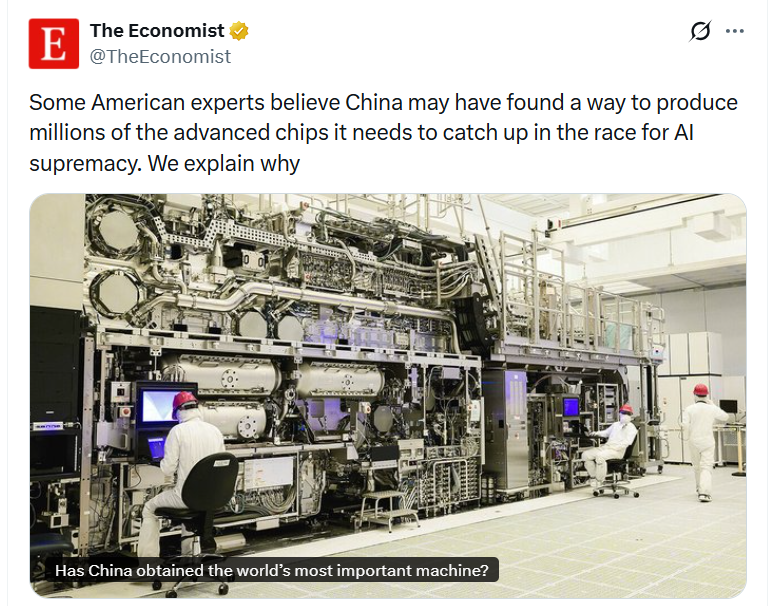
Over the past few years, the U.S. has imposed the strictest semiconductor technology blockade in human history against China; however, U.S. policy experts—including current White House Science Advisor Michael Kratsios—are now realizing that the White House's sanctions have acted as a "perfect boomerang." Previously, U.S. experts widely believed that China’s use of older equipment and "multi-patterning" techniques to produce advanced chips resulted in abysmal yields and exorbitant costs—making them suitable only for a handful of flagship smartphones, let alone the AI data centers that require clusters of tens of thousands of chips. Yet, production of Huawei’s Ascend series AI chips is projected to exceed 1.35 million units by 2026. Notably, the Ascend 950PR chip—which entered full-scale mass production this March—has become a primary procurement target for China’s major internet giants (Alibaba, Tencent, and ByteDance). Nvidia CEO Jensen Huang recently confirmed that, driven by the explosive growth of domestic alternatives and policy guidance, Nvidia’s market share in China’s AI accelerator sector has collapsed to near zero percent. With projected annual AI chip revenues reaching $12 billion, Huawei has demonstrated to the world that China possesses the industrial capability to independently produce millions of advanced chips. In the software ecosystem—a domain the U.S. once took great pride in—the defensive barriers established by CUDA and advanced packaging (HBM memory) are being dismantled at an astonishing pace. Huawei’s latest 950PR/950DT chips feature significant architectural adjustments for "CUDA compatibility," allowing thousands of Chinese AI programmers to seamlessly migrate existing Nvidia-based code to domestic chips, thereby eliminating long-standing software barriers. By establishing a local supply chain for High Bandwidth Memory (HBM) and advanced packaging—comprising companies like CXMT, JCET, and Tongfu Microelectronics—China has successfully equipped domestic GPUs with over 128GB of domestically produced HBM, effectively shattering the Western monopoly in the high-end memory sector. Faced with restrictions on computing power, China’s major AI players have demonstrated formidable capabilities in algorithm optimization. Chinese enterprises have demonstrated through results that, even when faced with a generational gap in hardware performance, the use of highly efficient Mixture-of-Experts (MoE) architectures allows Chinese large models (such as DeepSeek-R1, Qwen-3, and Kimi) to match and even surpass their US counterparts across several key metrics. Regarding the critical areas of computing power and electricity, China is vigorously advancing the "East Data, West Computing" national integrated computing network; furthermore, by leveraging the world's largest installed capacity of wind and solar power, it provides an extremely low-cost energy supply for AI data centers. While the US retains a lead in foundational innovation, China has demonstrated a near-monopolistic pace of ecosystem development regarding the rapid commercial deployment and widespread adoption of AI across vertical applications. Aggressive US supply cutoffs served as a wake-up call for China's entire industrial sector. State-level strategic support quickly converged with the massive demand from China's vast domestic market, effectively forcing the emergence of a semiconductor powerhouse with a fully autonomous, controllable supply chain—entirely independent of US control.
This is a leader of profound Eastern wisdom and cultural depth, whose subtle strength completely overwhelmed the reckless remarks of a Western leader characterized by the traits of a nouveau riche.
트럼프 대통령께서 최근에 올리신 SNS 메시지와 사진들을 잘 보았습니다.
약 1년 전, 백악관에서 트럼프 대통령님과 처음 만났을 때 세계 유일 분단국인 한반도의 평화를 위해 페이스메이커를 자처하며 피스메이커 역할을 요청드렸던 기억이 떠오릅니다.
저는 G7 정상회의와 NATO 정상회의에서도 트럼프 대통령님과 한반도에서 평화를 회복하고 핵 문제를 해결하기 위한 진지한 논의를 하였습니다.
이번 트럼프 대통령님의 메시지는 한반도에서 적대와 대결을 넘어 평화를 만들기 위한 고심이 담긴 큰 결정으로 느껴집니다.
북측 연간 GDP의 1.4배에 이르는 국방비를 지출하며 세계 군사력 5위로 평가받는 대한민국은 한미 양국 합의에 따라 GDP 대비 국방비 3.5% 달성을 위해 국방비 지출을 급격히 늘려가는 등 한반도 방위를 스스로 감당하기에 충분한 역량을 갖춰가면서, 한반도 안보는 대한민국 스스로 책임져야 한다는 트럼프 대통령님의 의지에 전적으로 공감합니다.
싸울 필요가 없는 평화체제가 가장 완벽한 안보자산이라고 믿는 우리는 금번 한미연합연습과 야외기동훈련 축소를 통해서라도 한반도에서 평화체제 구축을 위한 대화여건을 조성하려는 트럼프 대통령님의 의지와 노력에 공감하며 그 결단에 경의를 표합니다.
트럼프 대통령님의 이 결단이 북미간 신뢰 구축과 대화 재개를 거쳐 한반도의 안정적 평화체제 구축으로 이어지기를 기대합니다.
이미 수차 밝힌 것처럼 저는 트럼프 대통령님의 이러한 피스메이커 활동을 촉진하고 기여하는 페이스메이커 역할에 최선을 다할 것입니다.
또한 대한민국 정부는 여러 계기에 호르무즈 해협에서의 자유로운 통항 회복을 위한 미국을 포함한 국제사회의 노력에 적극 동참할 것을 밝힌 바 있습니다. 우리 정부는 이를 위해 대한민국 법령과 기본정책상 감내할 수 있는 범위내에서 여러 실질적 기여 방안에 대해 지금까지 해왔던 것처럼 미측과 계속 긴밀하게 소통해 나갈 것입니다.
머지않아 미국에서의 존경하는 트럼프 대통령님과의 재회를 기대합니다.
@Jaemyung_Lee This is a leader of profound Eastern wisdom and cultural depth, whose subtle strength completely overwhelmed the reckless remarks of a Western leader characterized by the traits of a nouveau riche.
@FoxNews In all fields related to the economy, technology, and national defense, the United States lags far behind China in every respect, with the sole exception of cost, where it remains significantly ahead.
@MarioNawfal On August 5, China sanctioned the US RBA. To this day, the United States remains completely bewildered regarding its observation of the situation and how to respond.
China’s imposition of sanctions on RBA effectively marks the beginning of a total decoupling between the Chinese supply chain and U.S. markets and enterprises.
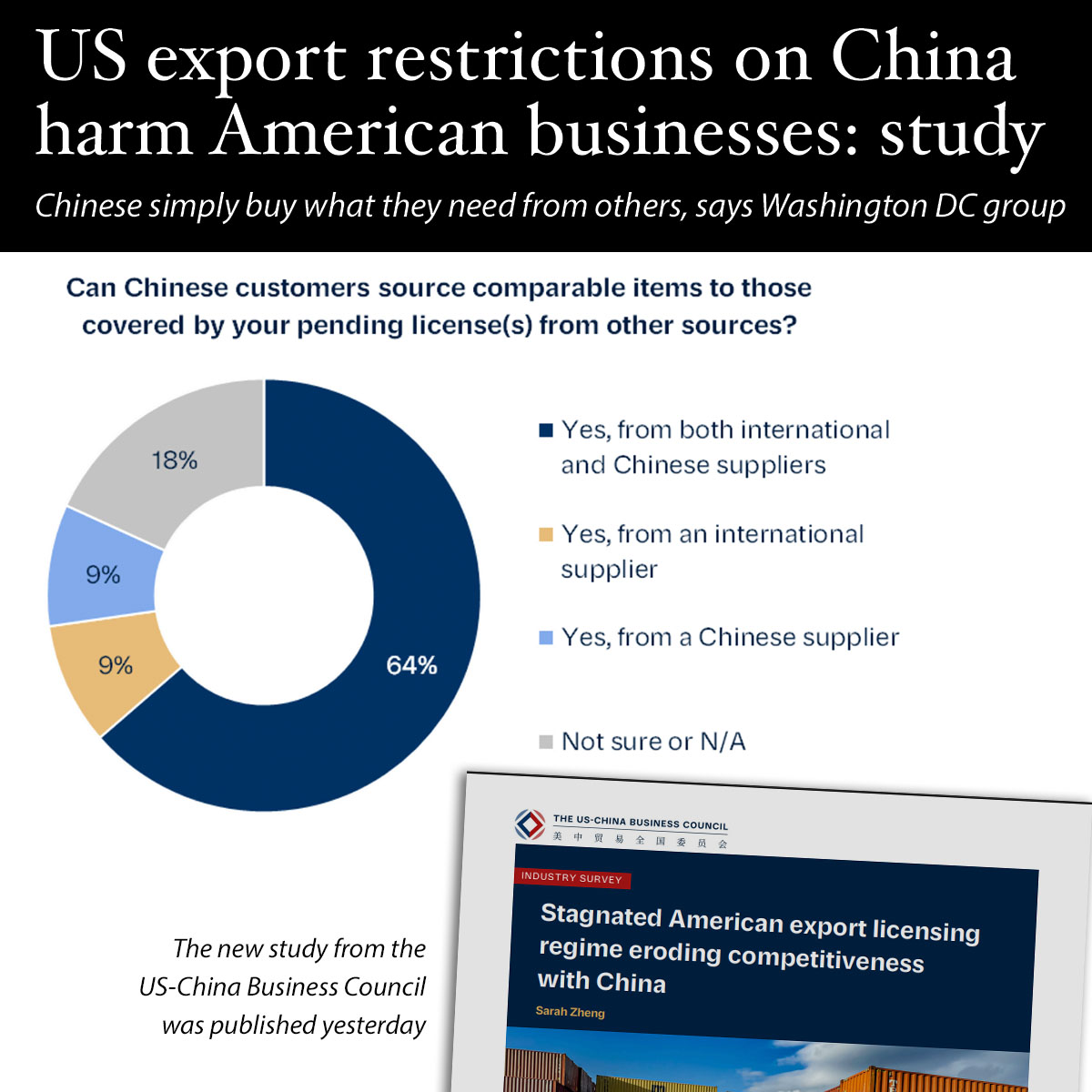
BREAKING NEWS: U.S. GOVERNMENT ATTEMPTS to harm China by denying access to certain goods successfully caused significant harm – to American businesses, a new study revealed yesterday.
But not to Chinese ones.
“Most pending export licenses are for items that are already available in China from Chinese or international suppliers — effectively sidelining American companies for no strategic gain,” said a new report from the US-China Business Council, a thinktank in Washington DC.
.
HARMS US, NOT THEM
The council yesterday published a report giving results from a survey of 31 companies navigating recent US export rules. Their conclusion: it’s not working.
The Chinese simply buy similar or the same products from other sellers, meaning that the only effect of the export bans is to harm US sales efforts.
.
LOSS OF MARKET SHARE
This creates a long-term problem in that foreign companies win market share in China that would otherwise have gone to American firms.
“Poorly calibrated US export controls weaken American companies in China, ceding market share to foreign competitors while reducing the profits available for research and development,” the report said.
The Chinese tend not to fight back, or respond minimally, but there are concerns that their government could play the same game more seriously, limiting the export of chemicals and elements such as rare earths, for example.
.
THOSE AWFUL LISTS
The businesses particularly criticized the US government habit of making lists of Chinese firms that cannot be dealt with. These are the infamous “Entity List” and “Military End-User List”.
The problems they created were compounded when the “Affiliates Rule” was added, preventing US businesses from working with Chinese companies at least 50 per cent owned by firms on the lists.
That rule, introduced in September 2025, caused so much trouble that it was suspended for review—with a view to reinstating it in November this year.
Business leaders say they feel they are in investment “limbo”, waiting to see if it will return.
Analysts east and west have repeatedly warned the US that fair competition is the basis of capitalism.
.
.
@NuryVittachi China’s imposition of sanctions on RBA effectively marks the beginning of a total decoupling between the Chinese supply chain and U.S. markets and enterprises.