[ES] Escribí un blog con mis reflexiones en dedicarse a la comunicación científica y por qué es "la parte fácil de la ciencia", me encantaría leer sus opiniones! 🙌 https://t.co/m4Corz3s6J
[EN] I wrote a blog post with my thoughts on doing science communication and why it's seen as "the easy part of science", I'd love to know your opinions on this! 🙌
https://t.co/HGYizZ028T
Wrapping up an inspiring week at @SynBioBeta recording for the BioBites Studio along with @causastudio ✨ my heart is full of inspiration after hearing all of the different voices gathered in San José. Thanks to all for sharing with us, looking forward to share our learning! 💚
It’s hard to collect data about how bioterrorists might try to use AI. Few people want to create a bioweapon, and those who might aren’t talking.
On the other hand, it's easy to predict how the news will cover bioterrorism and how social media responds. We have years of clickbait headlines and viral scareposts to train on.
This makes it much simpler to build a biosecurity policy around avoiding bad headlines, rather than installing safeguards that would actually stop bad actors.
I have a PhD in Synthetic Biology. I know roughly what it would take to make a bioweapon. It would be enormously difficult and dangerous. Most of the work is in the physical world, where AI tools would be only marginally useful. None of the relevant uses of AI look anything like the examples cited in the NY Times story below.
- Printing 8,000 word protocols for methods already in the public domain
- Making a list of common cattle diseases
- Generating a shopping list of test tubes and media
- Describing how to use a weather balloon
The actual biosecurity questions that need answers are technical and too boring to cover in a major media outlet.
- How can we tell the difference between a dangerous DNA sequence and a harmless one?
- What separates a python script used to discover a therapeutic from one used to discover a toxin?
- Which practical R&D bottlenecks are being rapidly opened by AI and which are not?
Much of the work of biology happens in the real world and doesn’t involve AI much at all. A serious biosecurity policy needs to focus on how bad actors might access physical hardware, specialized facilities and trained personnel. These are infinitely more important barriers than what Claude might tell someone about weather balloons.
My point here is that the people telling you to be afraid, and the media outlets who cover them, are putting us all in danger. The big AI shops are going to lock down their models, not to stop bad actors, but to stop bad press. Training models to stop using scary words is easy, the real work of biosecurity is hard.
If we don’t push back, we’re going to end up with an industry dedicated to performative biosecurity theater.
https://t.co/Ohi7l55ZMW
By posting this, Trump is violating Article 13 of the Geneva Convention.
It prohibits the use of media humiliation against PoWs.
If Trump claims he isn’t a PoW and instead a criminal under US jurisdiction, then he’s violating multiple other domestic legal rights.
[EN] I wrote a blog post about the use of generative AI in science (biotech) and the risks of training language models with sensitive biological databases: from privacy to the design of biological weapons. I would love to read your thoughts! ☣️����🧬 #AI https://t.co/MijrZccvYv
[ES] Escribí un blog sobre el uso de IA generativa en ciencias (biotec) y los riesgos de entrenar modelos de lenguaje con bases de datos biológicas sensibles: desde privacidad hasta diseño de armas biológicas. Me encantaría leer sus opiniones! ☣️🤖🧬 #IA https://t.co/t7u1bNwFU6
Proud to share our video “Keep It Human: Humanity’s Future in an AI-Driven World”, awarded Runner-Up at the Keep the Future Human Creative Contest 🏅
🎥 ENG: https://t.co/9CBfazTtYU
🎥 ESP: https://t.co/9lF0fuPXFK
#AI#KeepTheFutureHuman@FLI_org
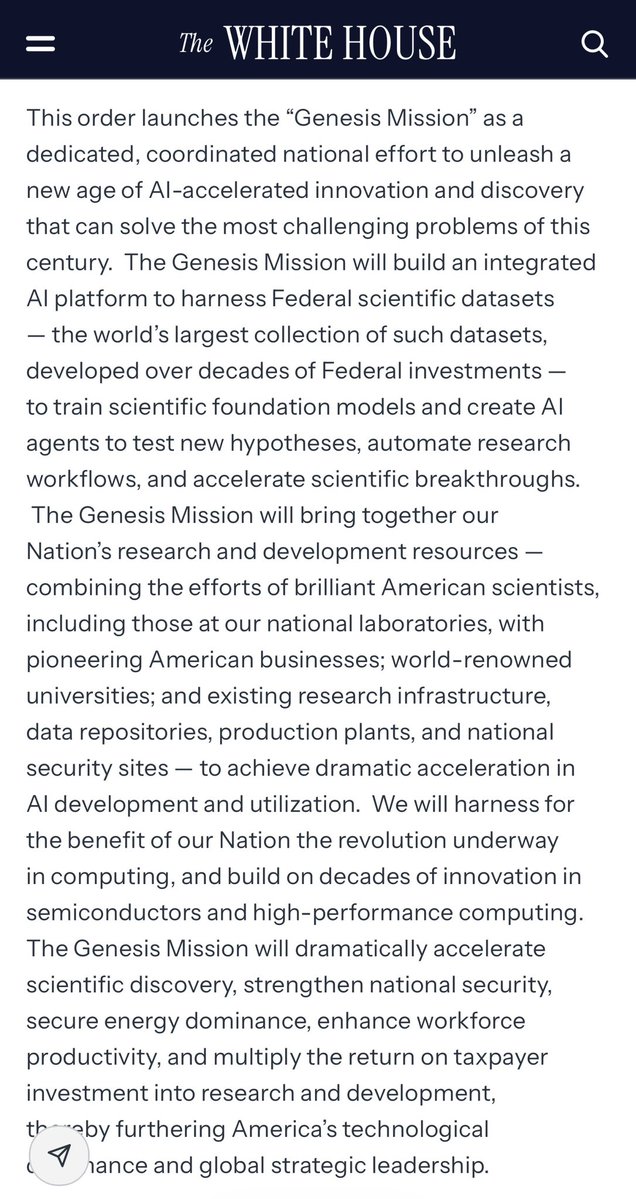
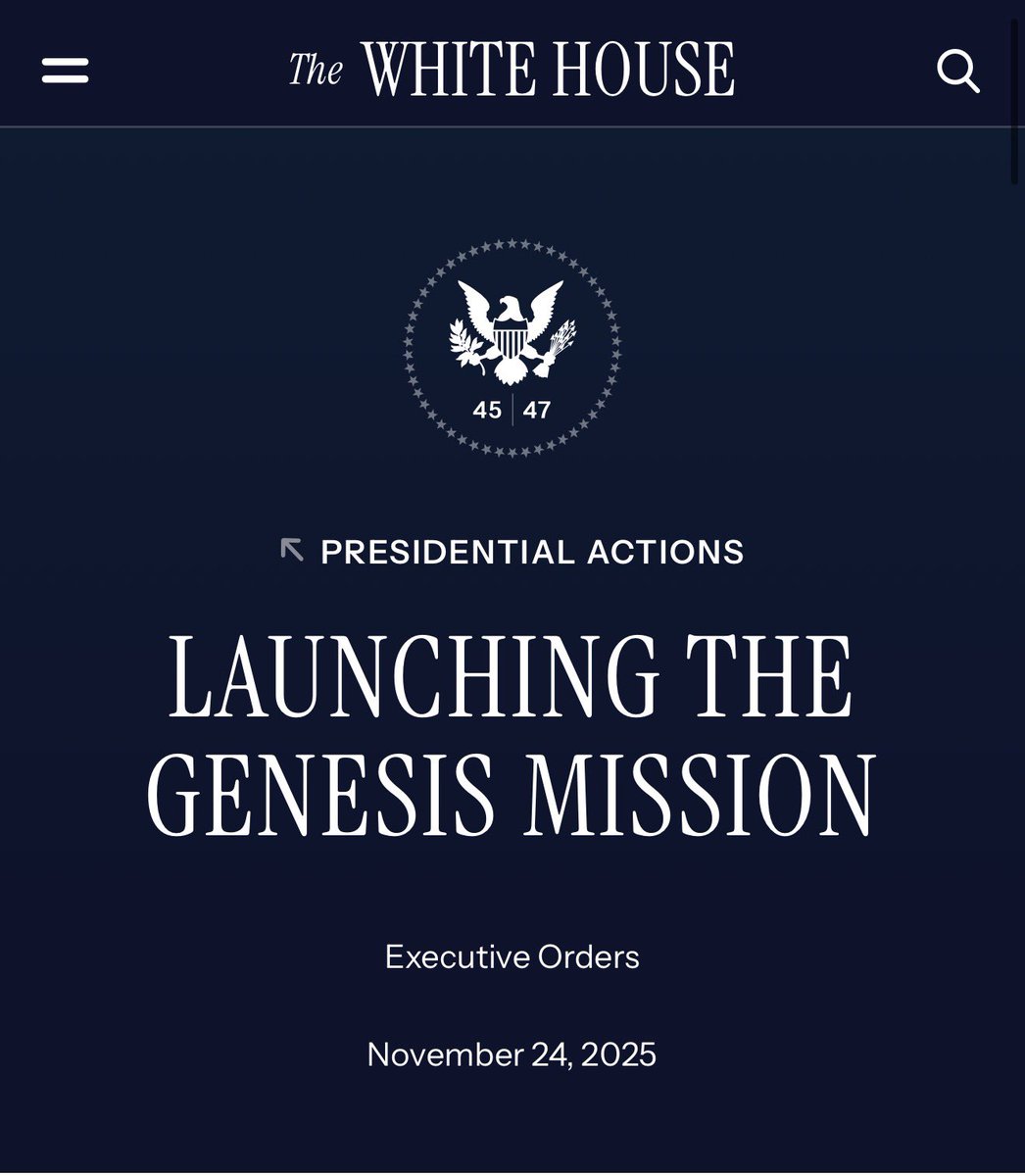
Very excited to see this AI for Science Executive Order—the Genesis Mission. The Administration has appropriately ambitious goals here; we may be on the verge of world-changing breakthroughs. Congratulations to all involved!
Let's say you use AI to generate a random protein sequence. No conditions except it is stable and can fold. Then you express it in a food-safe organism like baker's yeast.
Would you eat it? Would you worry at all about the safety of a random protein?
Discover how the TeselaGen platform provides comprehensive support for fermentation workflows, integrating everything from strain management and lab automation to advanced data analysis and AI-driven optimization. https://t.co/4EHmwKZbse #biotech#synbio
Lead the future of Synthetic Biology and empower your regional community.
2026 iGEM Community Recruitment is now open!
- Become an iGEM Ambassador
- Lead as a Project Head
Deadline: Nov 24, 2025 (23:59 UTC)
Apply here: https://t.co/2x3c9JvN9H
How can we engage society in conversations about life’s mirror image?
Join the interactive workshop, “Strategies for Community Engagement on Mirror Life,” to explore responsible innovation and inclusive dialogue on emerging biotechnologies.
https://t.co/MPllegfHb7