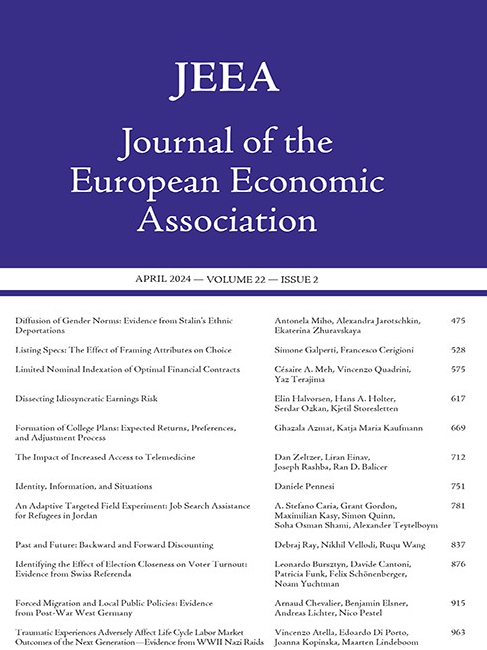
Good time to write about our paper on NEGATIVE PROBABILITIES
https://t.co/mTWmswkfw5
with A. Brandenburger, P. Ghirardato and L. Stanca.
First, yes, we do have negative probabilities in a model of choice under uncertainty.
Thinking about studying Economics in Turin? Learn about our MA programs at our online event on March 3rd at 5 PM. Reserve your spot at the following link: https://t.co/vVVqHsr4Hh
The Italian SuperBonus: How a badly designed fiscal "stimulus" ballooned to 6 times its budget to cost 12% of Italy's GDP, and what it tells us about the fiscal governance of Europe.
A thread on my Silicon Continent post.
(1/11)
Thus, we can explain why some people make dominated choices, such as in strategy-proof mechanisms, but also why people simultaneously buy insurance and lottery tickets, or why they avoid emotional hedging.
The main ingredient of our model is a weakening of a standard condition called monotonicity or "more is better". When events carry intrinsic value, it is no longer true that more is always better.
Thus, our model features events that are not "ethically neutral" in the sense of Ramsey, some events are intrinsically attractive others are intrinsically aversive, and our valence measures such non-neutrality.
The latter refers to the intrinsic value of an event, which can be negative—such as for a football fan when their team loses a game. Thus, WTB can be negative, even if the subjective likelihood of the event is positive.
but this negative WTB does not reflect a fan's subjective negative probability of his team losing the game, but it is the combination of a standard likelihood assessment and an emotional response. In our models, WTB is the sum of a subjective likelihood and a "valence"
But with this interpretation, nothing prevents WTB from being negative. Consider a bet paying $1 if your preferred football team loses a game and zero otherwise. Many supporters would reject such a bet- thus receiving $0 for sure-and so displaying a "negative willingness to bet"
Good time to write about our paper on NEGATIVE PROBABILITIES
https://t.co/mTWmswkfw5
with A. Brandenburger, P. Ghirardato and L. Stanca.
First, yes, we do have negative probabilities in a model of choice under uncertainty.
But how do we interpret negative probabilities? For us, as for de Finetti, 'subjective probabilities' represent one's Willingness to Bet (BTW) that is, how much one would pay to take a bet that pays $1 if an event occurs and $0 otherwise.
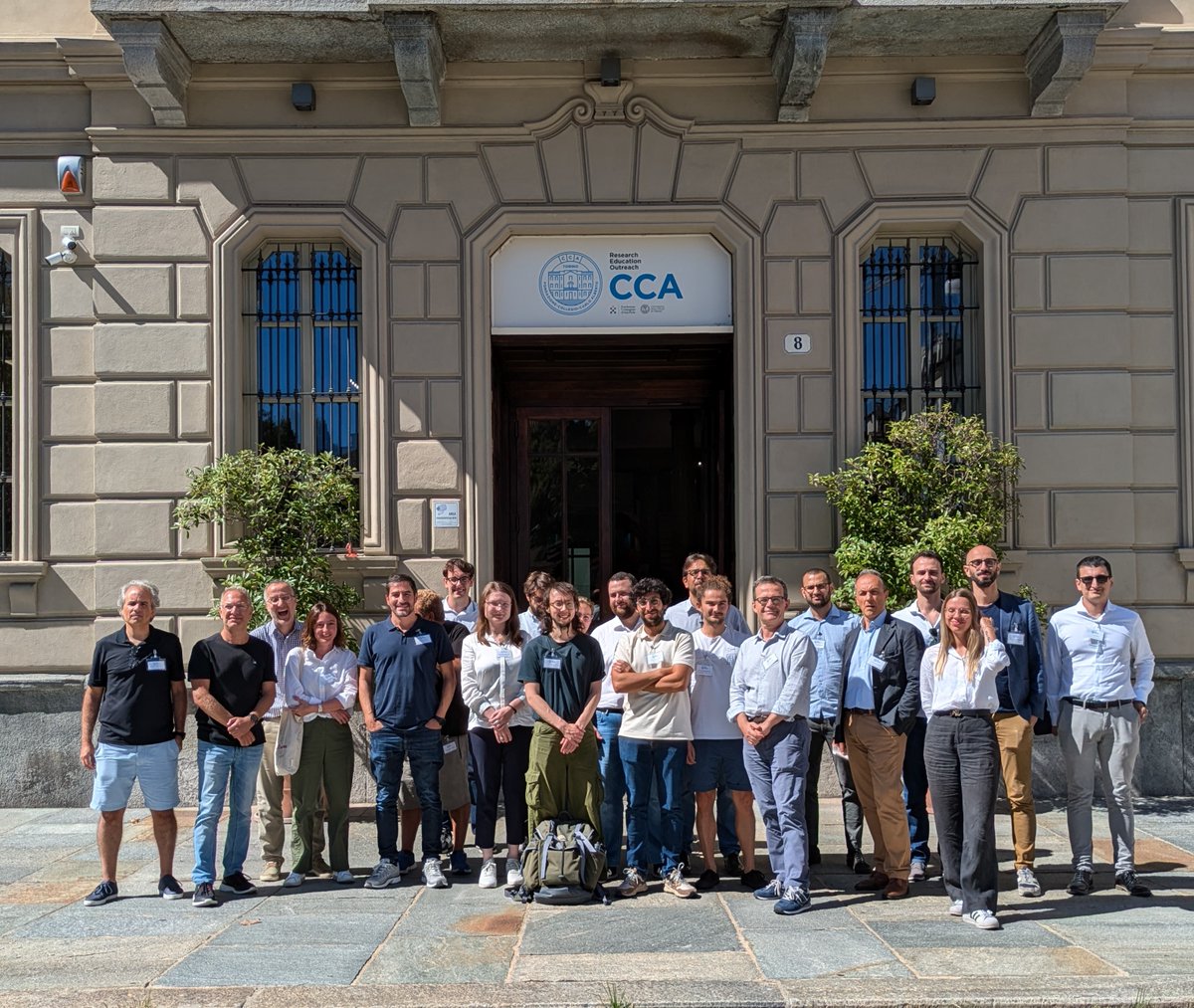
Today and tomorrow CCA hosts the XVIII Grass #workshop, a meeting of economists interested in the analysis of individual and collective choices.
This is a joint event with the ESOMAS Department of the University of Turin.
https://t.co/7eVhFPvIkq
LO SPETTACOLO NELLO SPETTACOLO DI #GIMBO
(La sequenza dei tre salti e dello show di #Tamberi con il commento dei telecronisti #RaiSport e #Antenne2)
- «Due e trentuno! Sensazionale! E adesso venitemi a prendere!»
- «Il s'est blessé, s'est blessé. Ahi ahi ahi. Ce n'est pas possible!»
- «Mamma mia! Ma chi è questo mostro?! Ma cosa ha messo dentro la scarpa? Cos’è, ferramenta? Ahhh! Le molle!»
- «Wow! Vado via! Non è possibile! Ma chi è quest’uomo?!»
È #GianmarcoTamberi
#EuropeanAthletics
#Roma2024
OPEN DAY at the Economics Department of the University of Turin, Italy!
Get to know our Master's Degree in Economics and our Master's Degree in Quantitative Finance and Insurance! Our programs are fully in English!
Monday, 4 March 2024, from 17:00 to 18:20.
Discover the magic of Turin! Don't miss the chance to explore this enchanting city and join us at the 16th UniTO-CCA PhD Workshop in Economics.📚Unique opportunity to learn from peers and experts, disseminate your research, and get valuable feedback
Apply! https://t.co/rjjgDVdBOo