I’ve put a load of my most popular files together in a Dropbox folder. Let me know if you’d like the link. Can I also ask that you share this post pretty please 🙏 (as it seems the only way to get anything seen nowadays!). 😊
✨A Books of Hope Giveaway!✨I'm giving away these amazing picture books by Kobi Yamada/Charles Santoso; Peter H. Reynolds; @chanastiefel/ Susan Gal; @KimberlyBiddle4/ David Wilkerson.
To enter, L + RP. Leave a comment for a bonus entry. Ends April 8.
🎉 GIVEAWAY TIME 🎉
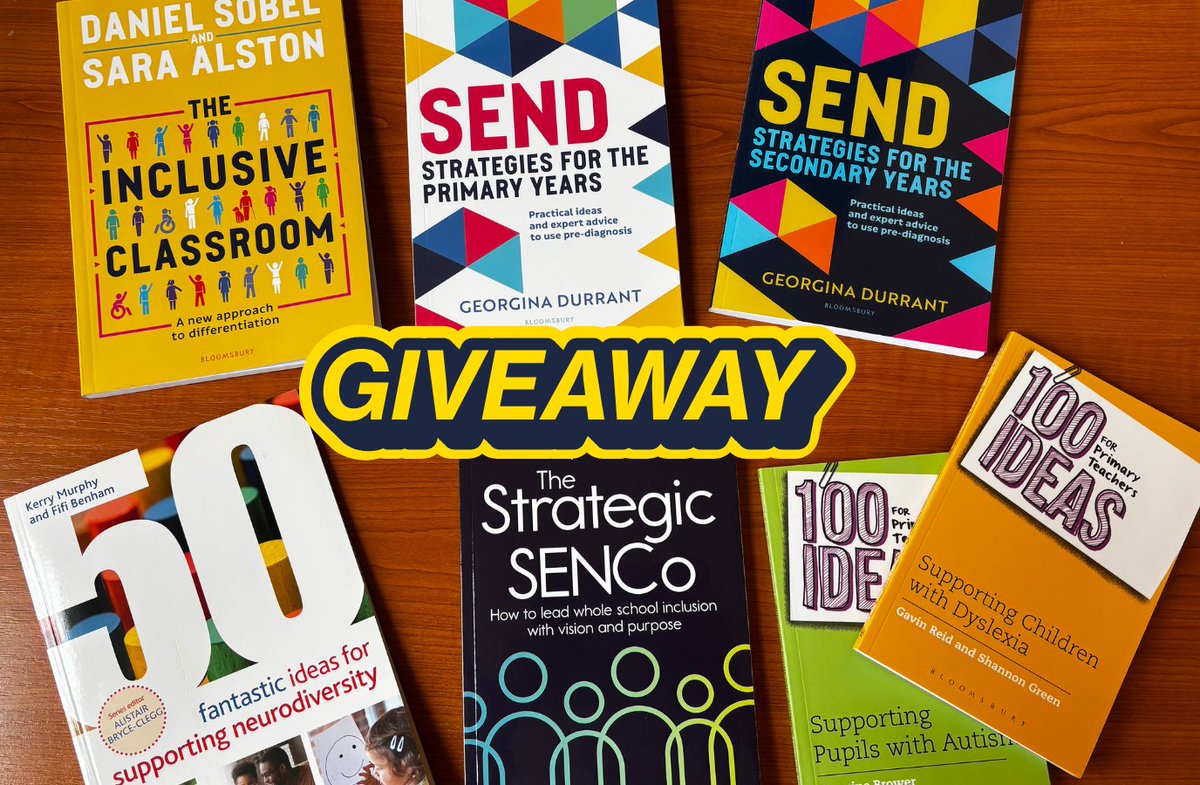
For Neurodiversity Celebration Week, we’re giving away a fantastic SEND & inclusion book bundle - packed with practical ideas, strategies and inspiration for supporting every learner, from early years to secondary 💙
To enter:
✅ Like
🔁 Retweet
💬 Comment a celebratory emoji
Good luck! 🌟
T&Cs apply: https://t.co/mfOI8C8SmV
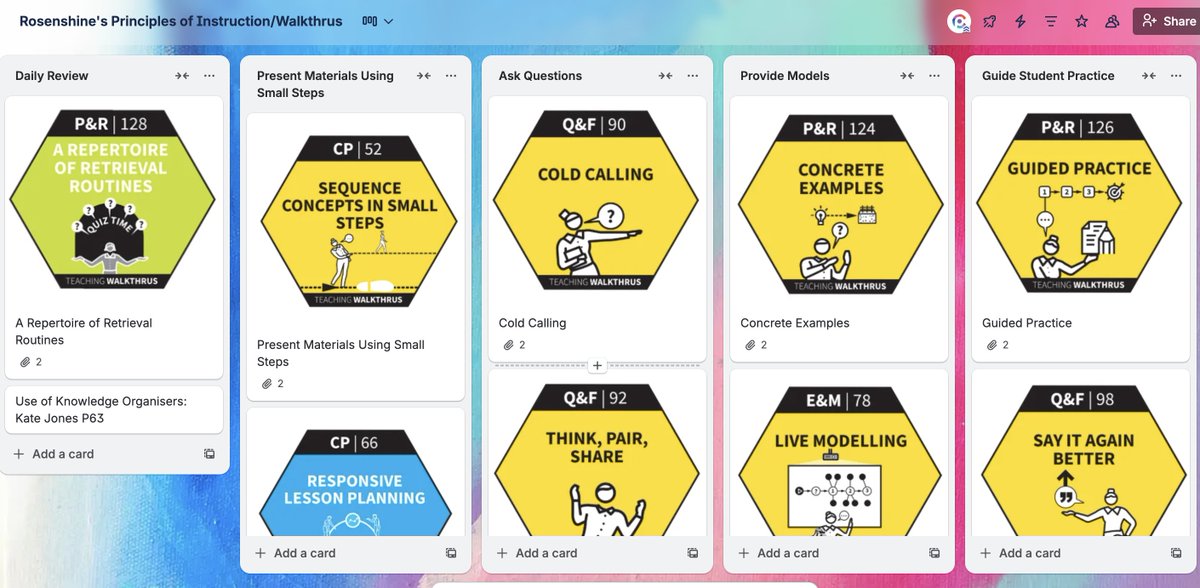
Really excited about our new CPD tool using @trello and building in the core @WALKTHRUs_5 techniques that we have chosen to enact @teacherhead's Rosenshine's Principles.
As subscribers to the Walkthrus platform, we can now go straight to the slidedeck by clicking on the relevant tile and use this for bespoke CPD to ensure alignment and consistency across our school.
Integrating this into Trello, matches all our other school improvement work, helps document teachers' strengths in practice live and in the moment and comment in a collaborative and transparent way across the team. Plus, it's great value for money!
If you have not checked out the Walkthrus platform, I'd highly recommend it.
Happy Wednesday! Cass
@LisaWorgan@olicav@MattTeachCoach
Are you looking to harness feedback and pupil understanding in the classroom to adapt your teaching?
The new Education Endowment Foundation (EEF) ‘Check.Adapt’ tool offers a simple scaffold for reflection.
Find it here: https://t.co/zT0QcQiUzY
To celebrate the start of 2026, I have a copy of Primary Reading Simplified to give away.
For your chance to win, just **retweet this tweet**.
I will pick the winner at random on Saturday January 10th. Good luck!
Doing a tiny bit of January prep to calm your brain? Start here:
IDSR guide
Staff KCSIE
Ofsted: SEF and SIP
If you want everything pulled into one place: Leadership Toolkit pack and Inclusion pack.
https://t.co/AHNKdDl9O5
The I–We–You model works because it matches how the brain actually learns.
I → reduces cognitive load with clear modelling
We → builds strong mental models through guided practice
You → only then do students work independently with confidence
It’s not hand-holding. It’s cognitive science: novices need clarity before autonomy.
When we get the sequence right, students don’t just “get it” - they own it.
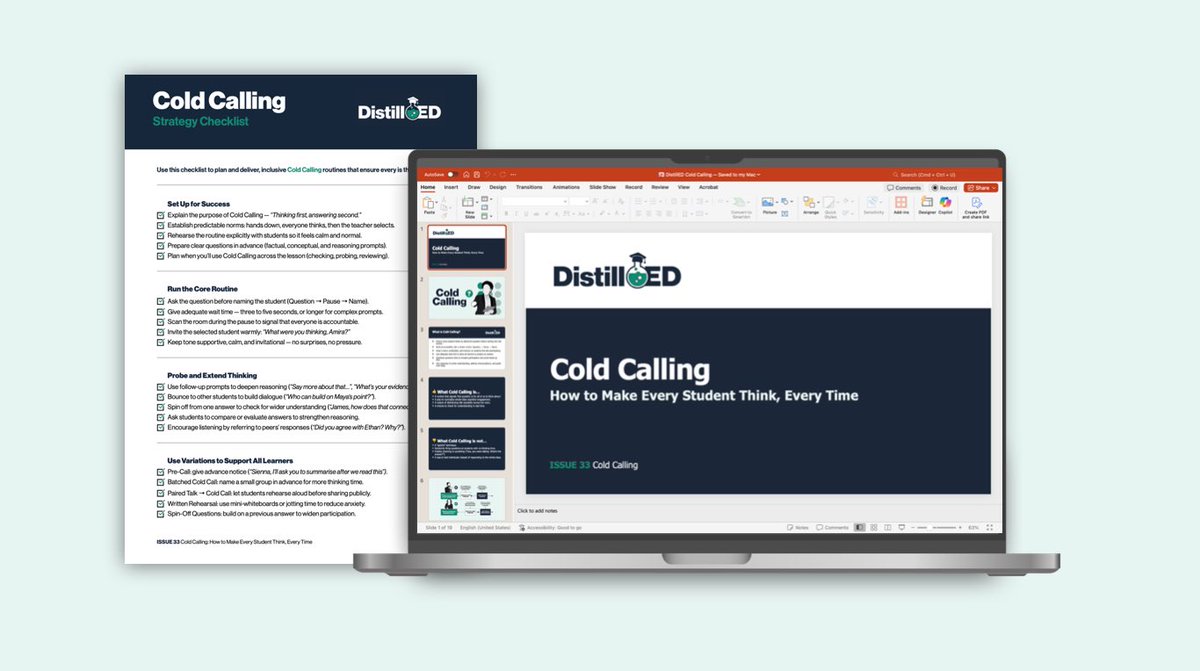
This week’s ⚗️DistillED is a big one. I’m unpacking the ins and outs of inclusive questioning through cold calling — an essential strategy that holds every student accountable for thinking. It also includes a free resource and practical guide! 👍
https://t.co/apSTwwPXn5
‼️ This is a really interesting report, published by @educationgovuk.
This report presents the findings from the fourth national behaviour survey for the 2024 to 2025 academic year.
https://t.co/KPIa81op1F
#behavior#schoolleaders#schoolleadership
Metacognition in the primary classroom: what you might hear…
🧠Teachers explain how to approach tasks, not just the task itself
Instead of saying,
“Write a paragraph about the rainforest,” you might say:
•“First, I think about what I already know.”
•“Now I plan where to find the information.”
•“While I’m working, I’ll check if I’m on track.”
Teachers make their thinking visible so pupils learn the process, not just the answer.
🧠Children learn three key habits: Plan – Monitor – Evaluate
Across all subjects, teachers help pupils:
•Plan: “What do I need? What steps will I take?”
•Monitor: “Is this working? Do I need to change something?”
•Evaluate: “How did it go? What would I do differently next time?”
These habits are woven into normal lessons.
🧠Teachers model their thinking (“think-alouds”)
A teacher might say:
•In writing: “I want to show contrast, so I’ll use the word ‘however’ here.”
•In maths: “I’m stuck. What strategies do I know that would help?”
•In PE: “First I tuck my chin so I roll safely.”
Children learn how skilled learners think.
🧠Pupils talk about their thinking with each other
Teachers encourage partners to ask each other:
•“What makes you think that?”
•“Could it be something else?”
•“How do you know this is correct?”
This isn’t just chatting—it’s structured talk that helps pupils reason and reflect.
Exploring Barak Rosenshine's seminal Principles of Instruction: Why it is THE must-read for all teachers. https://t.co/b9cpXW0MM0 This post became a booklet - it's now had 200,000+ views.