I've made a blog-post where all the resources I've shared - from science curriculum documents to tier two vocabulary lists - can be downloaded. Help yourself! https://t.co/ul2t6kgoZb
There's been a lot of talk in the last few weeks in edu circles about whether the trad education movement has failed, what it needs to do next, etc.
This article is just the latest in a succession of examples that shows how us edu-trads have not been nearly as successful as we hoped in altering elite consensus on education.
We have obviously seen with all the Labour party policies that we completely failed to convince Labour.
But actually, it's not like we've really convinced the Conservatives either. This is Dan Hannan, major figure in Brexit, major figure in Conservative politics, presumably has some idea of who Michael Gove is - and here he is in the Telegraph confidently asserting that we no longer need to know things because we can look things up.
(The ironies in this piece abound, by the way. He argues for lessons in spotting bad bogus arguments at the same time as building an article around the argument that memory doesn't matter any more. He argues that "identifying improbable claims" is a generic skill that can be taught in the abstract, at the same time as claiming that handwriting and geography are obsolete. He says that you can always just look up what you need, whilst signally failing to look up any of the evidence on the role of long-term memory...I could go on.)
I wrote a few weeks ago that there was some evidence journalists at the Financial Times were waking up to all the evidence on cognitive science, its implications for schools, the international test evidence.
But the elite understanding of this is a very thin layer, absolutely skin deep.
The mass of second-hand dealers in ideas are still distilling their frenzy from Romantic pedagogy.
Depressing. I honestly don't know what else we can do.
We wrote the books. We had the debates. We built the schools. We aced the tests.
And then it turned out nobody cared.
Right now it is definitely a bleak time to be a trad. It feels like we are on Athelney Marshes, beset by vandals without and dissension within.
BUT we have to keep the faith. Reality is an undefeated champion. Despair is a sin! What we do works!
It may well be that for now, the New World with all its power & might etc., is going to have to step in to save our bacon for a bit. Maybe the momentum is shifting to @ehanford and Sold a Story, @rastokke and Chalk & Talk, @jettybe3 , etc.
We have got to dig in. As Declan Rice said, it's not done!
Is it ok to plan a unit of lessons without any objectives?
We’ve got opinions on that, and much more.
Check out They Behave For Me whenever you get your podcasts so Adam stops texting me to tell me that the listener numbers are down because of me.
I have had the privilege of reading this already. It takes a complex subject and distils it expertly, making it immediately useful to anyone who works in a school. ⬇️
My new book, Building Belonging in Schools, is out next month.
It’s available for pre-order now.
I’m convinced that we can really shift the experience that kids have in schools, and make them places where they love to go.
This book is my attempt to set out how.
My new book, Building Belonging in Schools, is out next month.
It’s available for pre-order now.
I’m convinced that we can really shift the experience that kids have in schools, and make them places where they love to go.
This book is my attempt to set out how.
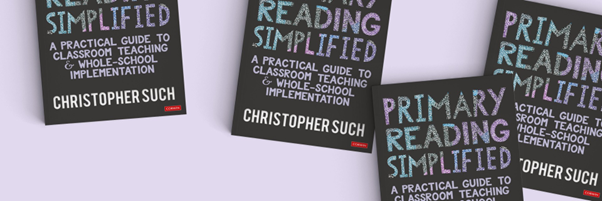
I have just completed a series of four professional development videos on the subject of teaching effective whole-class reading lessons.
These videos contain high-quality footage of me teaching each part of the reading lesson structures from Primary Reading Simplified.
>>
There’s a fundamental chronological problem with this argument. The cohorts demonstrating England’s recent educational improvements have barely entered the workforce, if at all- and they would be a tiny fraction of the national workforce of millions anyway. The economic stagnation Forth describes predates them. We’re judging the economic returns of something long before it can generate impact. This is a really thoughtful piece, but on that problem alone, the argument doesn’t hang together.
I have just completed a series of four professional development videos on the subject of teaching effective whole-class reading lessons.
These videos contain high-quality footage of me teaching each part of the reading lesson structures from Primary Reading Simplified.
>>
@Suchmo83 The best reading CPD in forever. 🙂 The video clips were so helpful in clarifying what is already explained beautifully in his books. Really helped cement my understanding and build confidence in the model.
I would also love to study the targeted teaching of blending with pupils in key stage 2 who struggle with decoding.
It amazes me how much reading research there is and yet how little of it targets some of the most basic practical questions.
I want to listen to a few thousand children read in English schools and systematically document what patterns and reading difficulties I find and their prevalence.
>>
Does anyone else have a fantasy Ed doctorate topic? I have several.
Most recently, I want to study the role and function of break times in secondary ed. Every lunchtime I give out footballs and frisbees to our nearly 900 KS3 students.
It’s FASCINATING.
@alexpethickPKC@berniewestacott To be clear, I would consider myself an advocate of free play and guided play in reception classrooms (alongside an appropriate amount of explicit instruction). I'm just wary of meta-analyses on subjects where the objects of comparison are so broadly defined.
@alexpethickPKC@berniewestacott I'm sure that some of the papers in this meta-analysis involve less dubious comparisons than this, and I hope to take a look at some of them. But it does shed some light on the issues with meta-analysis (especially where a given outcome might be preferred from the outset).
>>
@JohnYoung18 In contrast, if we are defining explicit instruction as tightly constrained (or even fully scripted) with near-constant teacher-pupil interactions and almost no time for extended application in a more relaxed way, then I agree that this would be overwhelming if solely used.
@JohnYoung18 If we are defining explicit instruction in a way that is broad enough to encompass the art lesson described above, then I'd have no issue with explicit instruction from most of the school day (alongside things like shared reading, singing assembly, etc).
>>