One major challenge political parties in Ghana will now have to confront after the Supreme Court’s 5–2 decision is the huge financial cost of conducting expanded primaries. The ruling, which struck down the delegate system and opened the door for broader participation by party members in presidential and parliamentary primaries, will likely make internal elections far more expensive to organise and supervise.
This is why Gary Nimako Marfo’s concern is not a minor one. Once primaries move from a small, controlled delegate base to a much larger electorate, parties will need more money for voter registration verification, polling logistics, security, transport, accreditation, printing, and general administration. In practical terms, the cost of running a primary will no longer be manageable in the same way, especially for parties with large memberships spread across many constituencies.
The bigger risk is that, instead of reducing money politics, the new system could simply shift the pressure upward. Under the delegate model, aspirants could target a limited number of delegates; under an expanded system, parties may face even more expensive campaigns, bigger financial expectations from members, and greater pressure on aspirants to spend heavily to reach a much wider voting base. That means the ruling may improve inclusiveness, but it also creates a serious test of party financing, internal organisation, and election discipline.
For that reason, parties will need clear funding models, stronger internal rules, and stricter controls on campaign spending if the new primary system is to work. Otherwise, the financial burden itself could become one of the biggest obstacles to implementing the judgment effectively.
One major challenge political parties in Ghana will now have to confront after the Supreme Court’s 5–2 decision is the huge financial cost of conducting expanded primaries. The ruling, which struck down the delegate system and opened the door for broader participation by party members in presidential and parliamentary primaries, will likely make internal elections far more expensive to organise and supervise.
This is why Gary Nimako Marfo’s concern is not a minor one. Once primaries move from a small, controlled delegate base to a much larger electorate, parties will need more money for voter registration verification, polling logistics, security, transport, accreditation, printing, and general administration. In practical terms, the cost of running a primary will no longer be manageable in the same way, especially for parties with large memberships spread across many constituencies.
The bigger risk is that, instead of reducing money politics, the new system could simply shift the pressure upward. Under the delegate model, aspirants could target a limited number of delegates; under an expanded system, parties may face even more expensive campaigns, bigger financial expectations from members, and greater pressure on aspirants to spend heavily to reach a much wider voting base. That means the ruling may improve inclusiveness, but it also creates a serious test of party financing, internal organisation, and election discipline.
For that reason, parties will need clear funding models, stronger internal rules, and stricter controls on campaign spending if the new primary system is to work. Otherwise, the financial burden itself could become one of the biggest obstacles to implementing the judgment effectively.
This Supreme Court decision is a major turning point for internal party democracy in Ghana. By declaring the delegate-based electoral college system unconstitutional and holding that all members of a political party are entitled to vote in choosing presidential and parliamentary candidates, the Court has opened the door to a far more inclusive process. The 5–2 majority ruling, delivered on 29 July 2026, challenges a system that has long concentrated power in the hands of a small group of party executives and delegates.
In my view, this is one of the strongest steps yet toward reducing money politics in our primaries. When only a limited number of delegates decide outcomes, it becomes easier for aspirants to target, influence, and sometimes financially induce a small voting bloc. Expanding the electorate to the wider party membership makes that kind of capture harder, more expensive, and more visible. In that sense, the ruling has the potential to weaken vote buying, reduce elite manipulation, and make candidate selection more reflective of the true will of party members rather than a few gatekeepers.
That said, we should be careful not to pretend this ruling magically ends political corruption. If parties do not build clean membership registers, transparent internal procedures, and credible campaign finance controls, money will simply move from buying a few delegates to buying influence at a larger scale. So the judgment is a breakthrough, but the real test is implementation. Ghana now has an opportunity to make party primaries broader, fairer, and less vulnerable to money powerbut only if parties and regulators take the ruling seriously and enforce it in good faith.
This is a welcome move, and if properly enforced, it can help restore trust, deepen internal democracy, and make party leadership more accountable to ordinary members instead of a privileged few.
This Supreme Court decision is a major turning point for internal party democracy in Ghana. By declaring the delegate-based electoral college system unconstitutional and holding that all members of a political party are entitled to vote in choosing presidential and parliamentary candidates, the Court has opened the door to a far more inclusive process. The 5–2 majority ruling, delivered on 29 July 2026, challenges a system that has long concentrated power in the hands of a small group of party executives and delegates.
In my view, this is one of the strongest steps yet toward reducing money politics in our primaries. When only a limited number of delegates decide outcomes, it becomes easier for aspirants to target, influence, and sometimes financially induce a small voting bloc. Expanding the electorate to the wider party membership makes that kind of capture harder, more expensive, and more visible. In that sense, the ruling has the potential to weaken vote buying, reduce elite manipulation, and make candidate selection more reflective of the true will of party members rather than a few gatekeepers.
That said, we should be careful not to pretend this ruling magically ends political corruption. If parties do not build clean membership registers, transparent internal procedures, and credible campaign finance controls, money will simply move from buying a few delegates to buying influence at a larger scale. So the judgment is a breakthrough, but the real test is implementation. Ghana now has an opportunity to make party primaries broader, fairer, and less vulnerable to money powerbut only if parties and regulators take the ruling seriously and enforce it in good faith.
This is a welcome move, and if properly enforced, it can help restore trust, deepen internal democracy, and make party leadership more accountable to ordinary members instead of a privileged few.
The Law of Creation: "Life doesn't just happen; it requires our participation." We are co-creators of our experiences, and life responds to our efforts and intentions.
The Law of Humility: "What you refuse to accept will continue for you." Embracing humility and acknowledging our limitations helps us learn and evolve. Resistance to learning from experiences can lead to repeated patterns.
#followers#health#healthylifestyle
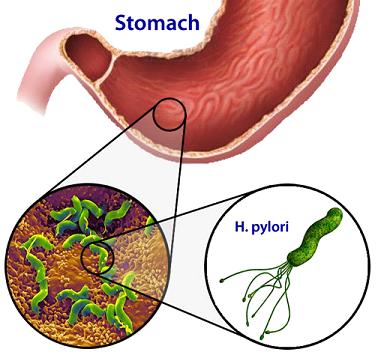
Stomach ulcers are often linked to the bacterium Helicobacter pylori, which can lead to complications when fasting. The absence of food and the increase in gastric acid production during fasting can aggravate symptoms and hinder the healing process.
9/ Preventive measures include the use of insecticide-treated bed nets to prevent mosquito bites, as well as community-based interventions to reduce the spread of the disease. #Microbiology#Prevention#LymphaticFilariasis
8/ Mass drug administration programs have been successful in reducing the burden of lymphatic filariasis in endemic regions, highlighting the importance of public health interventions. #Microbiology#PublicHealth#LymphaticFilariasis