@labourlewis Thats very naive. I'm not a landlord but was i to buy a property to rent out the cost of the property and mortgage must be taken into account. To a large extent the problem therefore is the cost of housing in tbe UK is the problem whomever rents it out.
@FarmingUK Lets be honest here. Its not always the tractors going slow that can be a problem. Them harvest lads don't hang around. Few near misses myself.
How to be a great climate activist:
1. Write the book on avoiding climate disaster
2. Take 392 private flights in one year
3. Pay a Swiss firm $10m a year to suck it back out of the sky
4. Announce that this makes you part of the solution
5. Become the largest private farmland owner in America
6. Have a management company farm it for you
7. Say all rich countries should move to 100% synthetic beef
8. Fund a company that makes butter out of thin air
9. Say you honestly couldn't tell it from the real thing
10. Tell a man with thirty cows he is the emergency
11. Fund a programme to fix African cattle breeding, a thousand years after the herdsmen worked it out
12. Assure everyone there is no grand scheme
13. Publish 17 pages explaining it was never the end of the world after all
14. Refuel. Keep the farmland.
@premnsikka It's not the what it the how. How will you tax people that manage their finances using corporate structures? Anything is possible but good luck getting that sorted anytime soon. You know that, anything else is gaslighting.
@SamaHoole I bought 5kg recently by post. Cost about £20 but a lot of that was postage. Went straight into the chip pan with more than enough left over for roast tats and fried bread for a year.
@premnsikka If we didn't have such high energy costs they wouldn't be asking. Our insane energy policy is going to cost us 40k jobs. This needs to be framed in the wider context as yet another victim of the UKs Net Zero madness
@GuidoFawkes I beleive they have taken to redefining a working person. Apparently anyone who earns over 100K doesn't qualify as a working person. That of course includes all MPs and the cabinet. But then we knew that
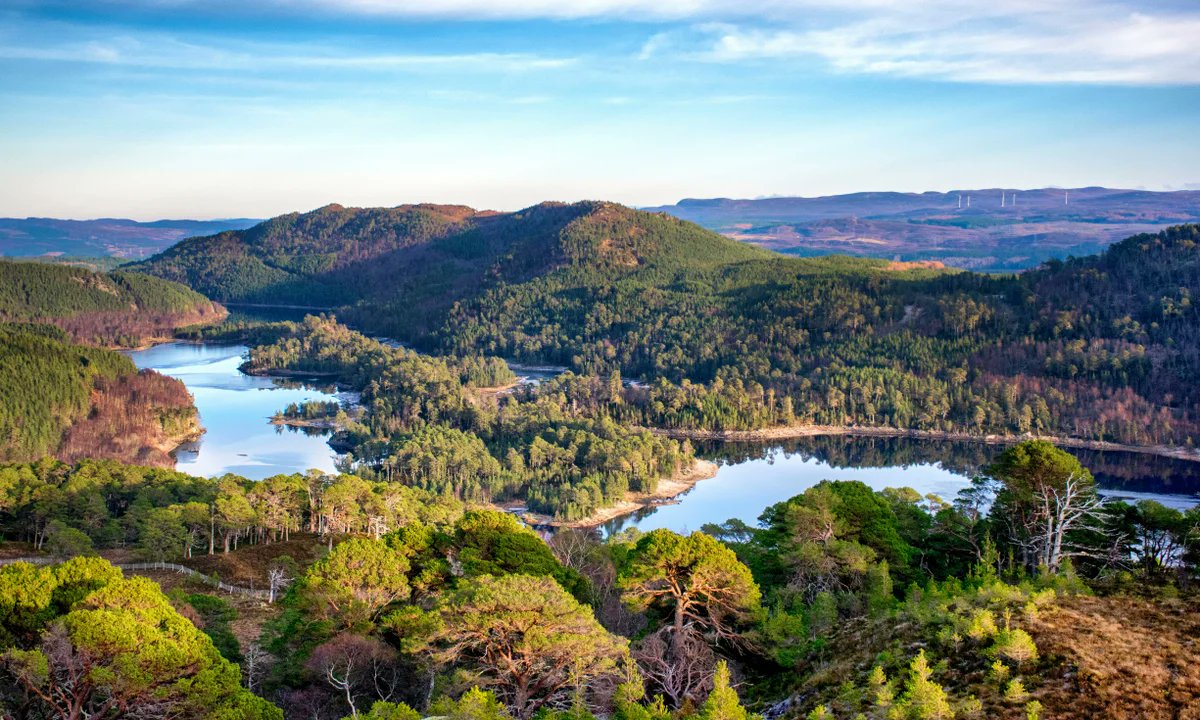
Scotland's Rewilding Failure
2003: Environmental groups celebrate a major victory in the Scottish Highlands. Large tracts of land are designated for "rewilding." The goal is to restore the landscape to "natural" conditions.
Step one: Remove the sheep and cattle that have been grazing there for centuries.
The theory is simple. Livestock are "unnatural." Remove them and nature will recover.
What actually happens next is documented extensively, though rarely discussed outside specialist ecology circles.
Year 1-2: Without grazing, the grass grows tall and rank. Coarse species dominate. The flower diversity that existed under grazing pressure begins declining.
Year 3-5: Bracken invasion. Bracken is toxic to most herbivores, so it faced no natural check once livestock were removed. It spreads aggressively, shading out other plants.
Biodiversity drops.
Year 5-10: Scrub encroachment. Without grazing to control it, woody shrubs spread rapidly. This sounds good - "more trees!" - except it's the wrong kind of succession.
Ground-nesting birds that need open grassland lose their habitat. Species like curlew, lapwing, golden plover - all declining.
The tick population explodes. Without livestock to host on, they wait in vegetation for deer or birds. Lyme disease cases in surrounding areas increase.
Fire risk increases dramatically. Ungrazed vegetation creates massive fuel loads. Summer fires become a serious problem where they were previously rare.
Meanwhile, the soil isn't improving. Plant matter isn't being trampled in. No dung to feed soil microbes. The carbon sequestration that grazing provides isn't happening.
Year 10+: The land is assessed. Biodiversity has decreased. The landscape is dominated by a few aggressive species instead of the diverse grassland that existed under grazing.
The "rewilding" failed to restore what was there before livestock. It created something else - and something worse for most species.
Ecologists quietly start reintroducing grazing.
Sometimes with native breeds of cattle. Sometimes with Highland cattle specifically selected to mimic wild herbivore behavior.
The land begins recovering. The diverse grassland returns. Birds come back. Flowers reappear.
The lesson is clear: The British uplands evolved with large herbivores. Before cattle, there were aurochs. Before aurochs, there were other large grazers for millions of years.
Removing grazing doesn't restore nature. It disrupts the process that built the ecosystem in the first place.
But this story doesn't fit the narrative. So it's not publicized.
Environmental groups continue campaigning to remove livestock from hills while the ecological evidence shows this makes things worse.
"Rewilding" sounds natural. Until you realize the land evolved being grazed and removing that process is the actual disruption.
@phil_whatever@ThatAlexWoman Technically speaking as a sovereign country with our own currency we can't actually go bankrupt. However the bond markets may cause the £ to unravell and inflation to go through the roof bankrupting us citizens
@JimFergusonUK Scaremongering nonsense. Europe and the UK have nothing Russia wants. No energy, no industry, falling wealth, no military, millions of migrants that need feeding. Why would they want any of that
The crime they see: 15,415 litres of water to produce one kilogram of beef. Every campaign, every documentary, every leaflet through the door since about 2012.
The crime they do: not reading the paper.
The figure is real. It comes from Mekonnen and Hoekstra at the University of Twente, and it is careful, peer-reviewed work. What the campaigns strip out is that the same authors split that number into three parts, because the three parts are not the same thing at all.
Green water is rain. It falls on the grass. The cow eats the grass. For beef, green water is about 94 per cent of that headline.
Blue water is the stuff that matters. Rivers, lakes, aquifers. The stuff that gets pumped, metered, fought over in court, and does not come back.
So here is the blue water, in litres per kilogram, from the same authors, same method, same units.
- Pistachios: 7,602
- Almonds: 3,816
- Walnuts: 2,451
- Dates: 1,250
- Cashews: 921
- Beef: 550
Read that last line again, then go and look at what is in your granola.
The 15,415 counts rain that fell on a Welsh hillside as a cost, against an animal that was standing in it, on land where nothing else grows, in a country where rain is the one thing we have never once been short of.
The pistachio is drinking fourteen times more of the water that actually runs out.
She is outside in the rain right now, getting blamed for it.
The World Bank ranked every country on earth for practical solar potential.
Britain came second from bottom. Not second from bottom in Europe. On the planet. Out of everywhere they measured, the only place with worse conditions for a solar panel is Ireland. Norway is above us. Norway, where the sun clocks off entirely for part of the year, is a better bet than Lincolnshire.
The reasons are not a mystery. We sit at 53 degrees north, the same line as Edmonton, Alberta. The sun in December gets about as high as a first-floor window and then thinks better of it. And there's the cloud, which is not a detail, it is the national personality. A square metre of London gets 0.52 kilowatt hours of sunlight a day in December and 4.74 in July, so the panel does nine times less work in the month your heating is on than in the month it isn't. Across the whole of 2024, British solar ran at 9.5% of what it's rated at. The other 90.5% is a photograph of a power station.
Now the other column.
The ground we're bolting it to is Trent valley silt and Lincolnshire fen. Some of it took three hundred years to drain. It grows wheat at yields that most of the planet cannot get near, in a climate so reliably damp that grass grows here without anyone asking it to, which is the entire reason this island has cattle and cheese and a butcher.
So we are, measurably, one of the worst places on earth for sunlight and one of the best on earth for food.
And we've had a good long look at both of those numbers and gone with sunlight.
Somewhere in Namibia, which the same report ranked first, there is a patch of absolutely nothing, in full sun, wondering what it did wrong.