WE ALL HAVE 24 HOURS IN A DAY, and no, you don’t get more.
At some point, you have to accept this: What you do with your time matters just as much as what you don’t do.
In 2026, especially if you’re building a startup…you are not just competing on product anymore.
I understand why some founders are careful about what they share.
You don't want to expose a customer's private information.
You don't want competitors knowing your next product move.
How did you figure it out?
Seriously.
How did you get your first client?
How did you land your first job?
How did you make your first sale?
How did you get your startup off the ground?
I'm tempted to tag all the public speakers I know.
There's something I respect about them: how they get over stage fright and learn to handle feedback.
I've attended presentations and seminars where I was nervous on behalf of the presenters.
Every post is an opportunity to help people understand something about your business, remember what you stand for and recognise why it matters to them.
Life can become one long to-do list, leaving little room to ask ourselves how we're really feeling. But your emotional wellbeing deserves attention, too.
Read more on making space for your emotions and how you can start prioritizing your wellbeing.
https://t.co/JQ8qhF6xoM
Everyone in the world needs more than 24 hours in a day.
That's why you see people rushing to meet deadlines, close sales, reply to texts and run errands before the day ends.
But founders?
Omo, these people need at least 4 extra hours in a day.
Imagine spending three hours trying to write one LinkedIn post when you could have used that time to handle a customer issue, speak to your team or work on your product. Founders have enough on their plates already.
The easiest way to get better at writing content fast:
Read your best posts out loud.
Then read your worst ones.
You'll immediately hear the difference.
The best ones sound like a person talking.
The worst ones sound like a person writing.
Write the way you talk.
(*At least.. most times)
Then edit for clarity.
That's the whole process.
The thing nobody says about building online:
Some of your best content will get ignored.
And some of your most throwaway posts will perform.
The algorithm is not a meritocracy.
What IS a meritocracy:
the trust you build over time with the people who consistently come back.
Build for them.
Let the algorithm sort the rest.
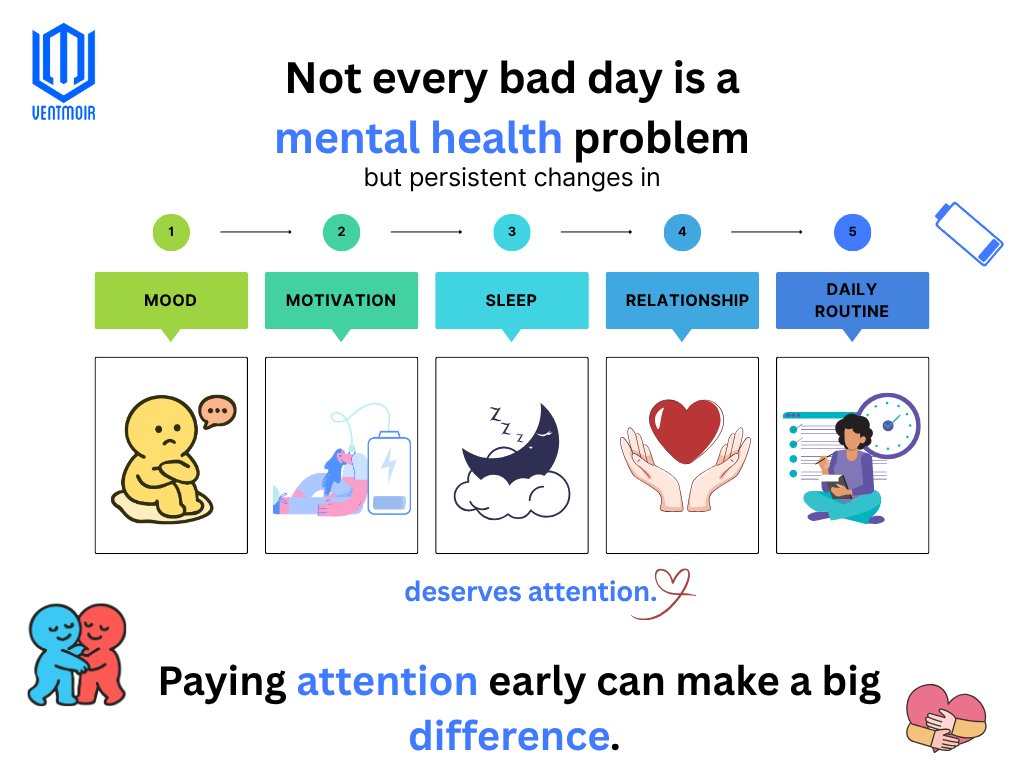
Not every difficult day means something is wrong. But when changes in your mood, sleep, motivation, relationships, or daily life persist, it may be time to pay closer attention.
If a B2B founder hired me tomorrow to build their LinkedIn presence from zero, here's exactly what I'd do. They've never posted, have maybe 300 connections from accepting random requests over the years, and their entire marketing budget is going to conferences and content syndication.
First thing I'm doing is blocking 90 minutes on their calendar. Not to write posts. To extract stories. Every founder has 15 to 20 stories they tell in sales calls, board meetings, or over drinks that would make incredible LinkedIn content. They just never think to write them down. My job in that first session is to pull those out and turn them into a content bank.
I'm recording the conversation with their permission, transcribing it, and tagging every story by theme. Product decisions they agonized over, customer wins that surprised them, hiring mistakes they learned from, industry opinions they're afraid to say publicly. That transcript becomes the raw material for the next 60 days of content.
Then I'm setting up a dead simple cadence. Three posts a week. Monday is a tactical post about the problem their product solves, written from the founder's perspective. Wednesday is a story. Something specific that happened, a decision they made, a bet that paid off or didn't. Friday is an opinion. Something they actually believe that their competitors would disagree with.
Three posts. Three formats. I'm not adding carousels, newsletters, LinkedIn Lives, or anything else until this rhythm is locked in for at least six weeks.
The posting itself takes the founder maybe 20 minutes a week. I write the drafts. They review them in a shared doc, make edits in their voice, and approve. Most founders who say they don't have time for LinkedIn actually mean they don't want to stare at a blank screen. When someone hands them a draft that sounds like them, the approval takes three minutes.
Now here's where most founder LinkedIn programs fall apart. The team posts consistently, gets some likes, the CEO feels good about it, and nothing connects to pipeline.
The piece most teams skip is the engagement strategy. The founder needs to spend 15 minutes a day commenting on posts from people in their ICP. Actual responses that reference something in the post and add a perspective. If the founder's product sells to VPs of Finance, I'm building a list of 30 to 40 VPs of Finance who are active on LinkedIn and the founder is commenting on their posts before they ever see a single piece of content from us.
This does two things. It gets the founder's name in front of the exact people they want as customers. And it trains the LinkedIn algorithm to show the founder's posts to those people's networks.
I'm also connecting the LinkedIn activity to the CRM from day one. Every new connection request that comes from a post gets tagged. Every DM conversation gets logged. Every demo that books where the prospect mentions LinkedIn gets flagged in the opportunity record. If you're not tracking this, you will never prove ROI and the program dies in quarter two when someone asks what all the posting actually did.
The metrics I care about in the first 90 days are profile views per week, connection request volume from ICP titles, DM conversations started, and demos booked where the prospect engaged with content before booking. Follower count is vanity at this stage. A founder with 800 followers and 20 DM conversations with target buyers is outperforming a founder with 10,000 followers and zero pipeline.
Every founder-led LinkedIn program I've seen die has died because the CEO posted for two weeks, didn't see results, and decided it wasn't working. My job is to set expectations upfront. Pipeline impact shows up around month two or three. The early signals are profile views and inbound connection requests from the right people. If those are climbing, the program is working even if no deals have closed yet.
One more thing. I'm not letting the founder post from the company page. Ever. People follow people. The company page can reshare the founder's posts, but the original content lives on the personal profile. Company pages on LinkedIn get a fraction of the reach that personal profiles do and every B2B company I've worked with that tried to build a brand through their company page alone ended up with 200 followers and a content calendar nobody looked at.
This whole setup costs almost nothing compared to what most B2B companies spend on paid acquisition. A founder posting three times a week with a 15 minute daily engagement habit and someone managing the drafts and tracking the pipeline impact. That's the program. Just a founder willing to show up consistently and someone making sure the effort connects to revenue.