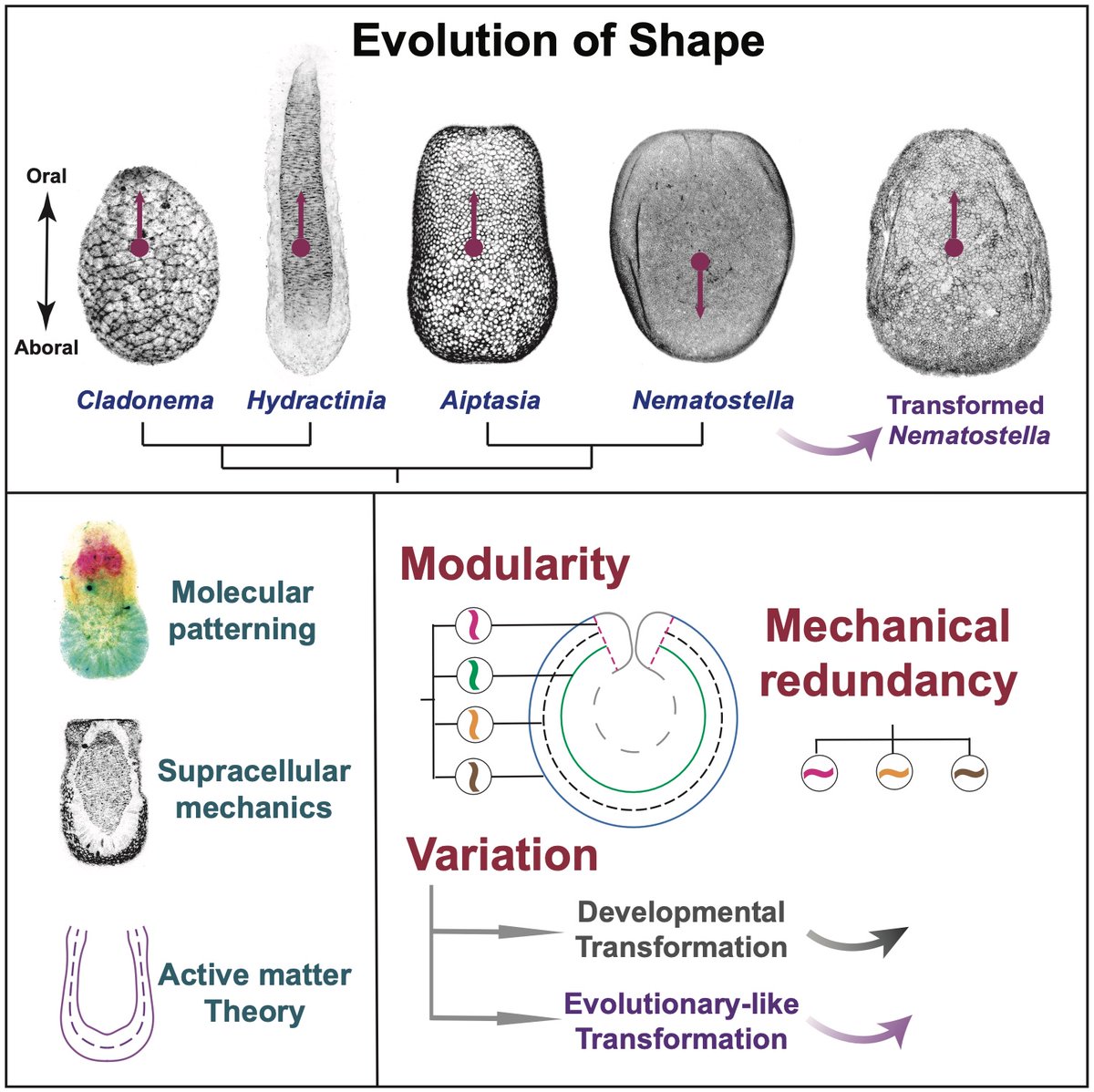
Our study on shape diversity in cnidarians is now published. The final version includes extensive new data that substantially extend the original bioRxiv preprint. Congrats to everyone who contributed to this work! https://t.co/jD86YnSinC
@embl
This work also builds on my previous research, where I aim to understand the role of plasticity in evolution and how factors such as plasticity, noise, and robustness contribute to biological diversity and developmental decisions (7).
It was my pleasure to work on this piece with @AissamIkmi. I enjoyed it and genuinely appreciate his way of articulating thoughts. Here, we suggest that lifelong developmental processes can be understood comprehensively through the lens of phenotypic plasticity and modularity (1)
It was a rewarding experience to speak to an audience with diverse scientific backgrounds. The DB seminar series, including introductory lectures and presentations from external speakers, provides valuable insights for many department members. I look forward to the next sessions.
It was my pleasure to give an introductory lecture titled "Plasticity, Transgenerational Response, and Evolvability: A Conceptual Framework" as part of the Developmental Biology (DB) seminar series at EMBL Heidelberg. (1)
🧬A new imaging technique developed by the Liu Lab uses a novel DNA barcode system to track hundreds of RNA & protein molecules in single cells within thick biological samples, providing a full picture of how these structures are organized inside tissues. https://t.co/GAS8BalQMI
The evolution of shape diversity through the lens of physics—explored in our new paper! A fruitful collaboration between our lab @EMBL, Salbreux’s lab @unige & others, led by @BailleulRichar1—now independent at @ENS_ULM—& Nicolas Cuny. https://t.co/Dzwbeg3sGM
Optimized husbandry and targeted gene-editing for the cnidarian Nematostella vectensis
Read this Techniques & Resources Article by @Joao_E_Carvalho, @EricRottinger (@ircaninstitute) & co.:
https://t.co/uz9iFaSEyu
🎥1 week-old N. vectensis polyp first feeding with live Rotifers
🔬 The Shroff Lab & collaborators have developed a new AI method that produces sharp microscopy images throughout a thick biological sample without using adaptive optics, adding additional hardware, or taking more images.
🔗https://t.co/FugWwpP0Tq
My entire team wrote an opinion paper about Common misconceptions of speciation research. Each section is written by 1-2 team members. The bulk of the writing happened during two writing retreats. It was a lot of fun and I am very happy with the result. https://t.co/4UHcFFODlG
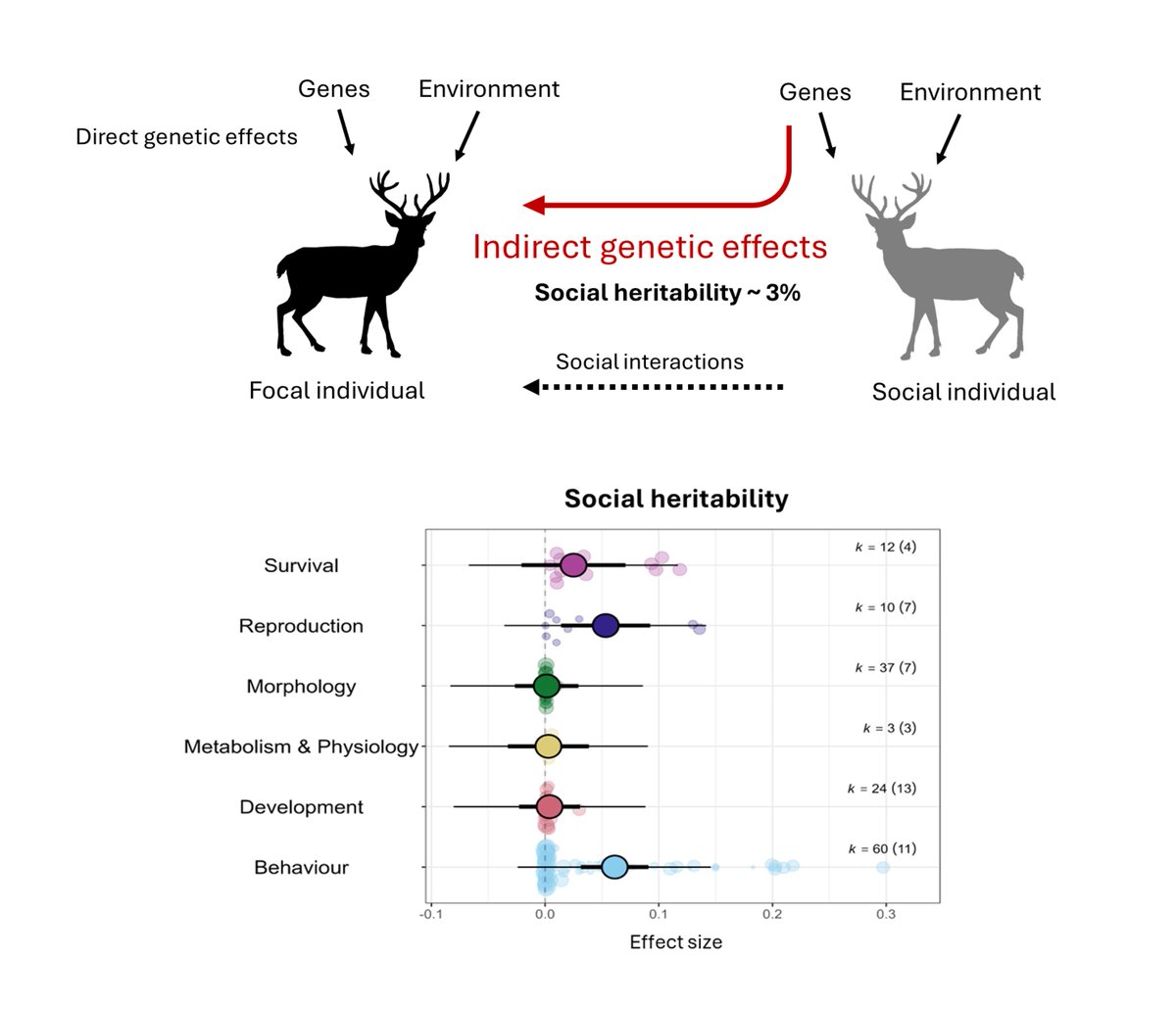
Behaviors and reproductive characteristics may evolve faster than other traits, thanks to the genetic effects of social interactions
https://t.co/hj3DfBCraV
Now in @EvolLetters by Francesca Santostefano, @MariaMoironn, Alfredo Sánchez-Tójar, David N Fisher