Dear Poles, seems to me you have a great great huge problem with ruzzian interference in your country. Being honest, I only see Rihard Kols from Latvia and Dutch politicians talking this problem seriously.
Another controversy has erupted in Poland.
This time, the trigger was a Polish historian.
Kazimierz Wójcicki attempted to explain to his fellow citizens why Ukrainians view the UPA differently than Poles do.
The result?
After a single television appearance, the state broadcaster TVP Info reportedly decided to stop inviting him to its programs, while Poland's media regulator demanded an explanation from the channel.
What exactly did the historian say?
During a discussion about the UPA, he stated:
> "The Home Army (AK) and the UPA were two national liberation armies."
In his view, regardless of how particular chapters of history are assessed, both organizations saw themselves as forces fighting for the independence of their respective nations.
Wójcicki also recalled a fact that is rarely mentioned in public debates:
> "Veterans of the 27th Volhynian Division of the Home Army met with UPA veterans and shook hands."
When an opponent raised the issue of the Volhynia tragedy, the historian responded:
> "You are characterized by a shameful lack of knowledge about Ukraine."
After references to UPA crimes against Polish civilians, he added that the victims of the Polish-Ukrainian conflict were not only Poles. Ukrainians also suffered at the hands of Poles, he argued, pointing to the destruction of Orthodox churches and attacks on Ukrainian villages.
The following day, in an interview with Rzeczpospolita, he elaborated on his position:
> "A significant part of the Polish reaction to the UPA is based on a lack of knowledge of Ukrainian history."
According to him, many Poles view the UPA exclusively through the lens of the Volhynia massacres.
For many Ukrainians, however, the memory of the UPA is primarily connected with its long struggle against Soviet rule, political repression, deportations, and resistance to the USSR after World War II.
The historian also observed:
> "Every nation-state creates its own pantheon of heroes."
This, he argued, helps explain the attitude of part of Ukrainian society toward the UPA and the decisions of Ukrainian authorities regarding historical memory.
Another of his remarks provoked particularly strong reactions:
> "The identification of the Bandera movement with Nazism is the result of Russian propaganda."
These comments were received very negatively in Poland.
Agnieszka Głapiak, head of Poland's National Broadcasting Council, stated that historical memory requires special responsibility and demanded explanations from TVP Info.
Meanwhile, deputy channel director Jan Józefowski responded even more sharply:
> "His equating the Home Army with the UPA is not only a historical falsehood and simply nonsense, but a thesis that I oppose as a Polish journalist."
Following the controversy, TVP Info ended its cooperation with the historian.
This story is significant not only because it represents yet another dispute over Volhynia.
It revealed something broader.
Even in Poland, where people have spoken for decades about the need for Polish-Ukrainian reconciliation, an attempt to explain the Ukrainian perspective on the UPA can become politically toxic.
And it increasingly appears that the main problem is no longer that Poles and Ukrainians hold different views of the past.
The problem is that the very attempt to understand the other side's perspective is increasingly perceived as a threat to one's own historical memory.
Obywatele Ukrainy nas nie nienawidzą. Niestety po polskiej stronie wygląda to zapewne inaczej. Ukraińców ruska propaganda i dezinfo nie da rady zbałamucić, w Polsce Putin ma sukces.
The Polish-Ukrainian relationship resembles the Ukrainian-Russian.
90% of Ukrainians continue to hold positive views of Poles (see new poll by KIIS). Yet in Poland there has been a growth over the last 10-15 years of anti-Ukrainian sentiment, fanned by politicians from PiS, Confederation, etc.
Meanwhile, 58.3% of Poles said they believed Zelenskyy's attitude towards Poles is negative. (30.1% took the opposite view) https://t.co/h3xf0Borgd
Similarly, most Ukrainians held positive views of Russians even as Russian Ukrainophobia increased from the mid-2000s. In 2014, Ukrainians became negative towards Russian leaders but not the Russian people. In 2022, Ukrainians became negative to everything Russian.
Conclusion:
Anti-Ukrainian attitudes in Poland and Russia have been fanned by politicians in these 2 countries. New Ukrainian poll on Poland and historical disputes https://t.co/Dk21E6VGhs
90% Ukraińców dąży do konstruktywnego dialogu z Polską w celu rozwiązania sporów historycznych - wynika z sondażu przeprowadzonego przez Kijowski Międzynarodowy Instytut Socjologii.
Tylko 5% Ukraińców podziela konfrontacyjne podejście do rozwiązywania sporów historycznych: zaledwie 1% uważa, że Ukraina powinna ustąpić Polsce w tych kwestiach, a jednocześnie tylko 4% oczekuje, że to Polska powinna ustąpić Ukrainie. Natomiast 90% Ukraińców opowiada się za konstruktywną współpracą z Polską.
Badacze doprecyzowali, że większość respondentów (57%) podziela pragmatyczny pogląd, zgodnie z którym każdy naród może mieć swoich bohaterów, a inne narody nie powinny ingerować w te kwestie. Kolejne 33% uważa, że możliwe jest wypracowanie wspólnego stanowiska dzięki pracom wspólnych komisji historyków, a nie polityków.
Польські політики б'ють на сполох,кажуть,що до антиукраїнських погромів у Польщі залишився один крок.
Хто міг подумати про це ще 4 роки тому?
Українці щиро намагалися інтегруватись у їхнє суспільство.Чесно працювали,вчили мову та платили податки.
Натомість отримали у відповідь це
„Rosjanie zrobili wszystko, by dziś dla większości polskiego społeczeństwa cała wspólna historia Polski i Ukrainy sprowadziła się do Wołynia. Obawiam się, że mało kto w Polsce śledzi ten właśnie wątek rosyjskiej propagandy i wpływu”
https://t.co/QjoEpXBtrY
Tusk complains to E5 leaders about Zelenskyy.
Stupid, arrogant, irresponsible kids, that’s the best I can say about most of Polish politicians. Nobody is going to forget this circus, you need to play in the sand and not in geopolitics with the intelligence of 8 years old kid, no wonder they like Trump…
"I will inform our European friends about the situation on the Russian-Ukrainian front, as well as the dispute that arose after President Zelenskyy decided to name one of the Ukrainian military units after the heroes of the UPA, and why this is unacceptable for Poland," said the Prime Minister of Poland.
Sobota- kobieta ciężko bije bez powodu Ukraińskie dziecko w Gdańsku, sobota Mężczyzna bez powodu ciężko bije Ukraińskiego chłopca nad jeziorkiem Czerniakowskim w Warszawie. W Niedzielę tonie Ukraiński chłopiec w Wiśle w Warszawie a potem drugi w Gliniance w Zielonce pod Warszawą i w obu przypadkach internet zalewają nienawistne komentarze antyukraińskie… To tylko nagłośnione przypadki z ostatnich 5 dni. Ludzie, co się tu dzieje? Gdzie my teraz żyjemy? To nie jest normalne, oczekuje stanowczej reakcji premiera i służb! Proszę o nagłośnienie.
Aleksander Kwaśniewski punktuje krótko: Nawrocki to niebezpieczny radykał, a jego antyukraiński cynizm polityczny jest nie do usprawiedliwienia. Podpalanie relacji i niszczenie sojuszy w imię wyborczych punktów to skrajna nieodpowiedzialność i dawanie paliwa Putinowi.
Невже Польща не відчуває вдячності до України?
Невже поляки так бояться визнати, що ми їх врятували, що ладні нас зненавидіти?
Чи це польські фермери так бояться за свої дотації
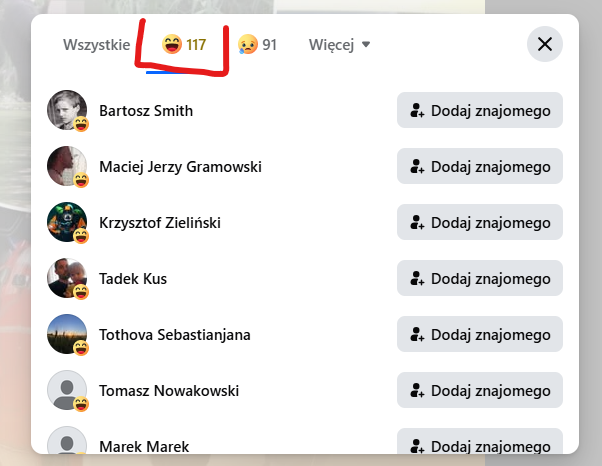
Czytam informację o śmierci 15-letniego chłopaka z Ukrainy. Dziecka....
A pod nią 117 reakcji z uśmiechem...
Nie wiem, co trzeba mieć w głowie, żeby przy śmierci dziecka klikać uśmiech. Nie wiem, ile nienawiści trzeba w sobie nosić, żeby cudza tragedia stała się powodem do satysfakcji...
To jest moralna zapaść...
I naprawdę zaczynam się zastanawiać, czy my jeszcze potrafimy być ludźmi?
Чому поляків більше хвилюють події 100-річної давнини, аніж більш свіжі, коли в 2010 році московити збили літак із польским президентом. Реакція дуже така слабенька, і в польському інфопростоі майже забута.
Зате українцям закидувати історичну образу - аж бігом
Poles proudly sing about Stefan Czarniecki in their national anthem about his fight to liberate Poland from Sweden, and that's fine.
But what else did this national hero of Poland do?
Is Ukraine starting scandals about Poland glorifying their commander who massacred 100,000 Ukrainians? No.
European history is brutal.
During the Right-Bank Uprising (1664–1665, Ukraine), Stefan Czarniecki led a massive, highly brutal punitive campaign to re-establish Polish control over Ukrainian territories.
In his own military correspondence and official reports detailing the summer battles of 1664, Czarniecki explicitly stated that his forces had successfully eliminated 100,000 Ukrainians including both insurgent Cossacks and civilians. His campaign utilized strict scorched-earth tactics, which included the total annihilation of towns like Stavyshche, where the entire civilian population was massacred following a secondary revolt.
In 1664, Czarniecki’s punitive raids brought his army to Subotiv, the family estate and final resting place of the leader of the Cossack Rebellion, Bohdan Khmelnytsky.
According to primary historical accounts, most notably the Cossack Chronicle of Hryhoriy Hrabianka, Czarniecki ordered his troops to plunder the family crypt at the Illinska (St. Elias) Church. Under his explicit command, the remains of both Bohdan Khmelnytsky and his son Tymish were exhumed and thrown out of their graves to desecrate their memory.
Moscow will not miss the opportunity to exploit the conflict ignited by Poland’s President, Karol Nawrocki. A narrative is already taking shape: that Ukraine is the “real enemy” and that the only way to counter it is through closer ties with Russia.
Polish citizens, is this really the future you want? Is this the scenario you support?
Звернення до українців і поляків
Криза, у якій останнім часом опинилися польсько-українські відносини, викликає в нас серйозне занепокоєння. Саме тому ми вирішили опублікувати спільне звернення в польських та українських медіа.
Україна вже дванадцять років протистоїть злочинній агресії Путіна, а майже п’ять років ця агресія триває у формі повномасштабної війни. Вона захищає Польщу та Європу від російського імперіалізму.
Цей захист має свою драматичну ціну. Сотні тисяч українок і українців загинули або зазнали поранень, мільйони були змушені залишити свої домівки, значна частина країни перебуває під окупацією, а на міста й села щодня падають бомби.
Польща з перших годин російського вторгнення разом із європейськими союзниками поспішила на допомогу Україні, передаючи військову техніку, фінансову допомогу, гуманітарну підтримку та прийнявши майже 2 мільйони українських біженців. Масштаб польської солідарності з Україною у 2022 році вразив світ.
На жаль, нинішня напруженість також негативно впливає на ставлення до українок і українців, які стали важливою частиною польського суспільства, а також на сприйняття поляків українцями. Це створює додатковий виклик для політиків, медіа, громадянського суспільства та громадян обох наших країн.
Ми усвідомлюємо трагічні сторінки польсько-української історії, які політики використовують у власних цілях. Однак сьогодні нашим спільним завданням є зупинити путінську Росію. Час для серйозної розмови про минуле, визнання провини та примирення настане тоді, коли Україна — за підтримки союзників — переможе агресора.
Росія вже багато років веде масштабну дезінформаційну кампанію та намагається вбити клин між поляками й українцями. Нинішня криза у відносинах лише полегшує їй ці дії.
Це час випробування для поляків і українців. Наші політики повинні проявити мудрість і розсудливість, шукати порозуміння та шляхи виходу з кризи. Натомість наші суспільства не повинні піддаватися маніпуляціям і мають надалі підтримувати одне одного. В ім’я спільного майбутнього, у якому Польща та Україна разом можуть відіграти ключову роль у Європейському Союзі.
У 2013 році у спільній заяві Президент України в 1994–2005 роках Леонід Кучма та президент Польщі в 1995–2005 роках Александр Квасневський написали: «Напередодні 70-х роковин трагічних подій на Волині просимо наших співвітчизників зробити все можливе, щоб ушанування пам’яті жертв давніх конфліктів не стало інструментом загострення відносин і не змарнувало досягнень процесу примирення між нашими народами».
Сьогодні цей обов’язок покладається на всіх нас.
Редакція "Газети Виборчей"
Редакція ТОК ФМ
Редакція Газетhttps://t.co/jmDjDCqgsZ
Редакція ОКО.пресс
Редакція Онет.pl
Редакція тижневика «Політика»
Редакція Newsweek Польща
Редакція Пісмо.Журнал думок
Прес Клуб Польща
Редакція Сестри.еу
Редакція Слава ТВ
Редакція Еспресо ТВ
Редакція «Європейської правди»
Редакція «Української правди»
Асоціаціa «Незалежні регіональні видавці України" (Коло.News, Новини Рівного:Інформаційний портал https://t.co/kWzW6WHj2f, «Одеське життя», МИГ Запоріжжя, Кременчуцький Телеграф, "20 хвилин", "Всім", Газета "РІА", портал https://t.co/DIIhsN8Btg, Газетa "Гривна", Мололий буковинець, Чернігівська Медіа Група)
Звернення також опублікує "Kyiv Independent"
@d_foubert Unless you are not in frontlines you have no right to tell how we can name in Ukraine our devisions or streets
If everybody starts digging into history then all Europe can be at war with each other as each country might have their own Heroes that other country might not like