I am a freelance writer, journalist, copywriter, Holistic Management educator, practical environmentalist, sheep and cattle producer and hazelnut farmer.
@m_jones_1797@Addyspectre1@dommedebbiexx@Rachelle_Hulme Such a hard decision. I love the way the light catches your hair in the colour shot but there is something about a really good b&w shot that is hard to define but I know it when I see it.
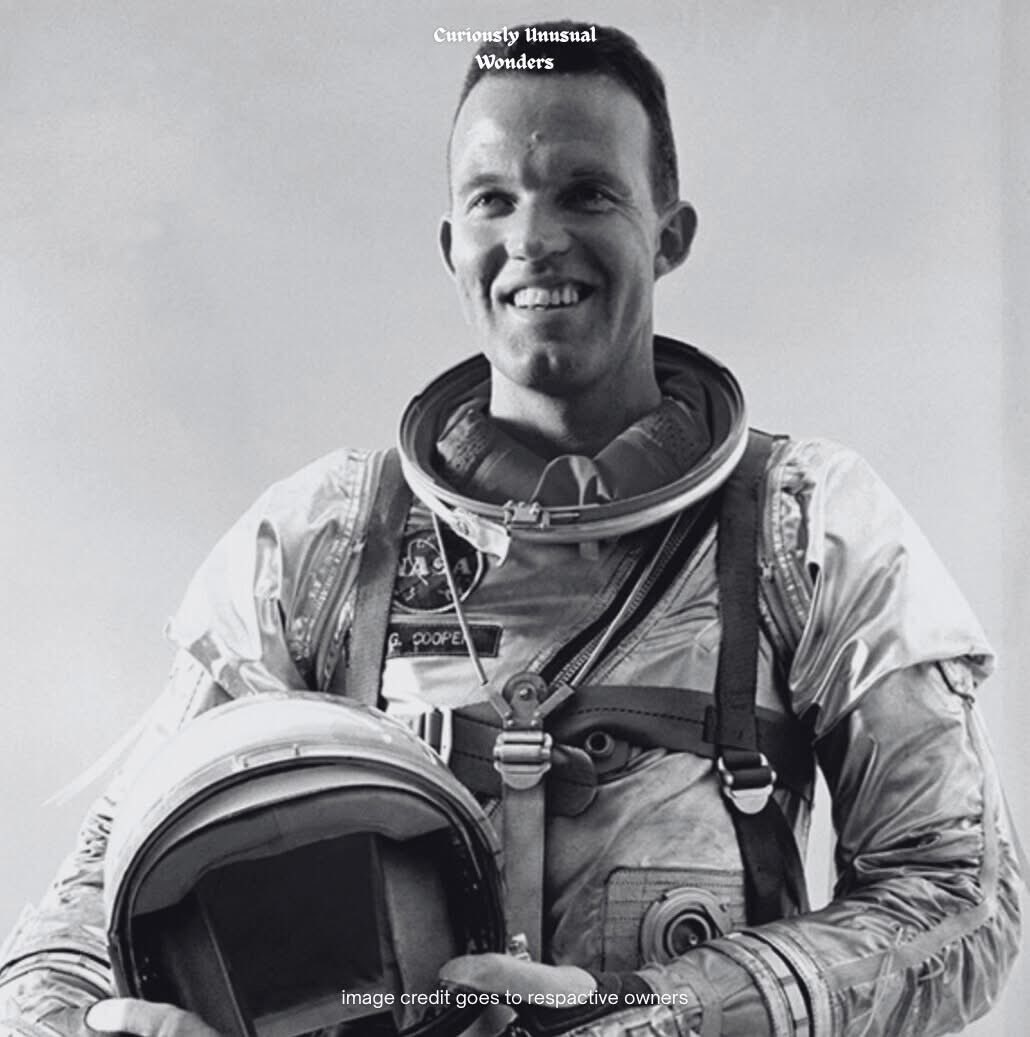
May 16, 1963. Gordon Cooper was orbiting Earth alone inside a capsule barely big enough to turn around in, moving at 17,500 miles per hour.
He had been up there for over a day.
Then the warnings started.
First a faulty sensor screaming that the ship was falling — it wasn't. He switched it off. Then something far worse: a short circuit knocked out the entire automated guidance system. The one that kept the capsule steady. The one that was supposed to bring him home.
Without it, reentry was nearly impossible.
Too shallow an angle and the capsule would bounce off the atmosphere back into space. Too steep and it would incinerate. The margin for error was razor thin — and every computer that was supposed to hit that margin was dead.
Down on the ground, NASA engineers watched the telemetry in silence. They could see everything going wrong. They could fix nothing.
Cooper didn't panic.
He uncapped a grease pencil and drew lines directly on the inside of his window to track the horizon. He looked up at the stars he had spent months memorizing and used their positions to orient the ship by eye. Then he set his wristwatch.
Because when you have no computers left, you become the computer.
At exactly the right moment — calculated in his head, confirmed by the stars outside — he fired the retrorockets. The capsule shook. The sky turned to fire. For several minutes, no one on Earth could reach him as plasma swallowed the ship whole.
Then the parachutes opened.
Faith 7 hit the water just four miles from the recovery ship — the single most accurate splashdown in the entire Mercury program.
The man with a wristwatch and a few pencil marks on a window had outperformed every automated system NASA had.
We talk a lot about technology saving us. And it often does.
But Cooper's story is a quiet reminder that behind every machine, there still has to be a human being who can look out the window, think clearly under pressure, and decide what to do next.
The final backup was never the software.
It was him.
I just helped ensure the Heard and McDonald Islands Marine Park protects important seafloor habitats and feeding grounds for millions of penguins, seals and seabirds. Take action here: https://t.co/SqoolBxxor
There are 28 new coal mines awaiting Federal Government approval #CoalMineTracker#auspol
Approving even one new coal mine goes against our climate goals.
Urge the Environment Minister to reject new coal mines. ADD YOUR NAME > https://t.co/tEgZXCXSlN
The government must invest in communities, not fossil fuels. Add your signature to demand an end to fossil fuel subsidies in the May budget! https://t.co/4RDe9PG1N8