@ZimEye Tamujaira uyu. Pointless accusations that never amount to anything. A proper journalist would have come out with a proper story not a recording that means nothing.
@CrimeWatchZW They knew this well before hand and chose not to advise customers about it. Only now that a problem has surfaced and been put out on socials do they put forward their statements. @JMafume and @cityofharare2 need to do better. You can't always be on the backfoot for everything.
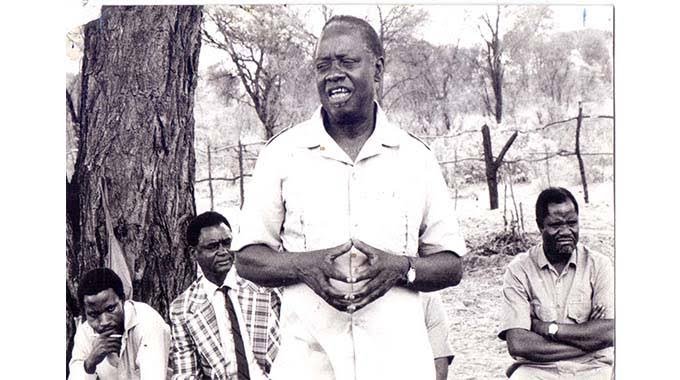
Architect of Freedom: The Enduring Legacy of Herbert Wiltshire Chitepo
Herbert Wiltshire Chitepo stands as an indelible pillar of Zimbabwe’s liberation struggle, remembered for his revolutionary leadership, intellectual brilliance, and selfless devotion to justice. As a pioneering jurist and strategic revolutionary, he dedicated his life to dismantling colonial oppression and forging a path toward self-determination.
Born on June 15, 1923, Chitepo demonstrated early academic brilliance, breaking racial barriers to become Zimbabwe’s first Black barrister. In an era dominated by systemic discrimination, he transformed the courtroom into a battleground for human rights, defending political dissidents and challenging the legal apparatus of colonial rule. His historic achievements served as a beacon of hope, proving to generations of young Africans that excellence and resistance could dismantle systemic barriers.
Recognizing the limits of legal recourse under a colonial regime, Chitepo transitioned from legal defense to revolutionary leadership. As the Chairman of the Zimbabwe African National Union (ZANU), he became the chief strategist of the armed struggle. Under his stewardship, ZANU refined its military tactics, built robust organizational frameworks, and secured vital diplomatic alliances across Africa and the globe. His vision was rooted in solidarity, discipline, and the firm belief that unity was the ultimate catalyst for victory.
On March 18, 1975, Chitepo’s life was tragically cut short by an assassination in Lusaka, Zambia. While his murder sent shockwaves through the continent, it failed to extinguish the movement he built; instead, his martyrdom galvanized the liberation forces to push forward until independence was realized in 1980.
Today, Herbert Chitepo is revered as a founding father of modern Zimbabwe. His legacy endures not only in the nation’s independence, but in the enduring values of integrity, courage, and service he embodied. He remains a timeless symbol of patriotism—a leader whose vision helped shape the destiny of a nation.
Today, on the 17th Anniversary of his passing, Zimbabwe solemnly joins the Msika family to commemorate the life of a staunch veteran nationalist and our former Vice President, Cde Joseph Wilfred Msika.
From his sacrifices during the liberation struggle to his unrelenting support for the Land Reform Programme, Cde Msika’s life was defined by an unreserved commitment to social justice and the empowerment of the black majority.
As we enter Heroes Month and march towards Vision 2030, let us uphold the noble values of sacrifice, patriotism, unity, and tolerance that he espoused.May his soul continue to rest in eternal peace.
Long live our Unity, Peace, and Freedom!Long live Zimbabwe! 🇿🇼
Mabvuku Interchange is making impressive progress, with precast beams ready for installation, bridge support structures developing, and ongoing structural work. 🇿🇼 Building top-tier infrastructure for Zimbabwe.
@MinistryofTID@ZimGvt_NDS1@MhonaFelix@enkudheni@pelamutunzi
UNSAFE‼️ Nightime driving in Harare unpleasant because of unmarked roads, unlit roads.
City Mayor Mafume, @JMafume please step up🤔
Zimbabwean driving flagged by the @UNRSC as some of the deadliest in the world. Just like our drink-driving, speeding neighbours South Africa.
The vast majority of road crashes in Zimbabwe kindled by recklessness, distracted driving, stupid speeding, DUI and critically - THE LACK OF USEFUL @PoliceZimbabwe ENFORCEMENT‼️
@tscz1@MoHCCZim@PoliceZimbabwe@MinistryofTID@MhonaFelix@HonSacco@JSCZim@NPAZim@UNRSC@UN_RSF
STOP IT⛔️
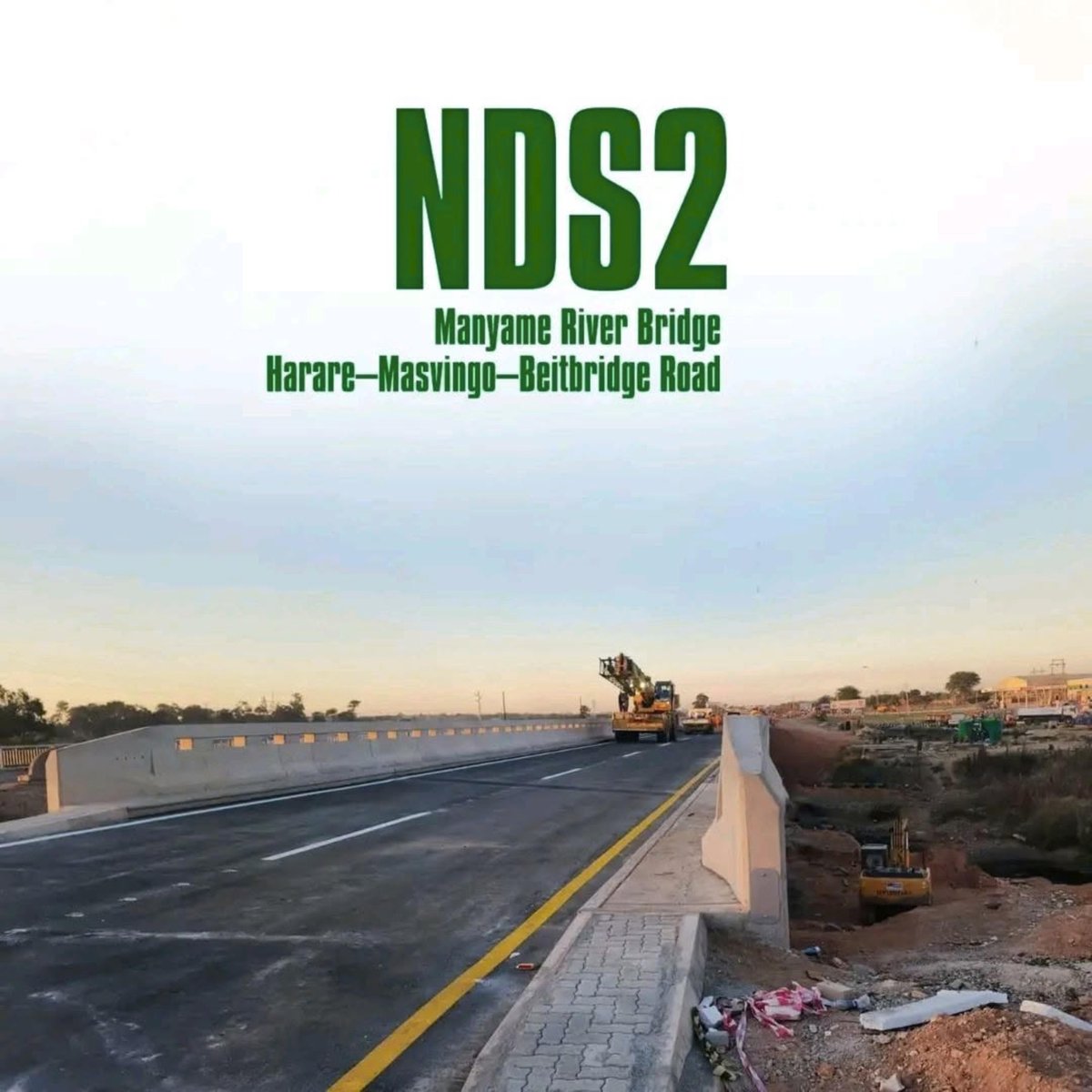
NDS2 in Action | Manyame River Bridge
Another milestone in Zimbabwe's infrastructure transformation is taking shape with the completion of the new Manyame River Bridge along the strategic Harare–Masvingo–Beitbridge Highway.
This project is more than just a bridge—it is an investment in national development. By improving road safety, reducing travel times, facilitating trade and strengthening regional connectivity through the North-South Corridor, the bridge supports economic growth and creates opportunities for businesses and communities alike.
Under the National Development Strategy 2 (NDS2), modern infrastructure remains a key pillar for industrialisation, investment attraction and improved service delivery. Every kilometre of quality road and every completed bridge brings Zimbabwe closer to Vision 2030.
Infrastructure is not just concrete and steel, it is the foundation for jobs, commerce, tourism and a more competitive economy.
#NDS2 #HarareMasvingoBeitbridge #BuildingZimbabwe #EconomicGrowth
Zim eyes 4000MW generation capacity by 2030: Hwange Power Station
ZIMBABWE’S quest for lasting energy security is gathering momentum, with about 4 000MW in new generation capacity lined up for commissioning by 2030, as the country increasingly turns to independent power producers (IPPs), renewable energy, captive generation and regional power trading to support economic growth and Vision 2030.
The planned projects, if realised, would expand the country’s generation base and could take total installed capacity from about 3 000MW to around 7 000MW, providing the reserve capacity required to meet rising electricity demand.
The expansion comes as the power utility has received new and expansion load applications totalling about 2 500MW, highlighting the growing electricity requirements of an economy driven by mining, manufacturing and other productive sectors.
Zimbabwe Electricity Transmission and Distribution Company (ZETDC) managing director Mr Howard Choga said in an interview that the country would have to rapidly expand its generation capacity if it was to meet rising demand while maintaining adequate reserves.
“The current Zimbabwe power system that started being developed since the 1960s is of capacity of about 3 000MW and the energy being used is around 2 500MW,” he said.
“The new demand means that the Zimbabwe capacity developed over more than 50 years has to be doubled in the coming five years.”
Projects lined up for commissioning by 2030 have a combined capacity of about 4 000MW, with the strategy increasingly focused on diversifying the country’s energy mix and reducing dependence on a few major generation sources.
Mr Choga said most of the planned projects were designed to withstand climate-related risks, particularly drought, which has periodically constrained generation at Kariba.
“Most of the projects are climate-proof and therefore address the eventuality of drought-related challenges for the hydropower stations in Zimbabwe,” he said.
The planned expansion dovetails with the Government’s National Development Strategy 2 (NDS2), Zimbabwe’s second five-year development plan for 2026 to 2030, which seeks to accelerate the country’s transformation into a “prosperous and empowered upper middle-income society” towards the realisation of Vision 2030.
Reliable and affordable electricity is regarded as a critical enabler of that transformation, supporting industrialisation, mining, manufacturing, agriculture, digitalisation and other productive sectors.
NDS2 places emphasis on expanding generation and electricity networks, increasing regional integration, promoting distributed renewable energy and strengthening private-sector participation in the power sector.
The policy shift comes as Zimbabwe seeks to move away from a power system heavily dependent on large-scale utility generation towards a diversified model in which public utilities, IPPs, captive generators, renewable-energy producers and regional markets complement one another.
Currently, Hwange and Kariba are contributing an average of about 1 600MW, while IPPs are supplying approximately 175MW.
Rooftop solar is contributing slightly more than 100MW through the net-metering scheme, while regional imports are being used mainly during peak demand periods.
The diversification of generation is expected to provide greater resilience against the shocks that have historically triggered load-shedding, particularly droughts and major plant failures.
Kariba’s generation has previously been severely affected by low water levels, while ageing thermal units at Hwange have also suffered breakdowns and required extensive maintenance.
The improved performance of Hwange and increased water allocation at Kariba have, however, helped Zimbabwe navigate the current winter period without the prolonged load-shedding experienced in previous years. #Vision2030InAction #Vision2030 #MyZimbabwe2030 #ZimbabweForward
ED4TheNation 🇿🇼 🇿🇼 🇿🇼
This feels less like a serious political intervention and more like an attempt to stay relevant by riding the current news cycle. Every time there's a trending issue, the same familiar faces emerge with the same recycled messaging, but very little in the way of practical solutions.
DOWNWARD TRAJECTORY.
The numbers don't lie. Annual inflation has eased from 4.7% in June to 3.2% in July—a clear testament to the effectiveness of the Reserve Bank of Zimbabwe's monetary policy interventions. This significant decline signals strengthening macro-economic stability and reinforces confidence in the country's financial trajectory. Steady progress. Measurable results. The foundations of a resilient economy are being laid brick by brick. 🇿🇼📊
Blueberry exports are more than just an agricultural success story—they are a catalyst for Zimbabwe's economic transformation.
As global demand for premium blueberries continues to grow, Zimbabwe has a unique opportunity to strengthen its position in high-value horticultural exports. Expanding blueberry production and exports directly supports the goals of the National Development Strategy 2 (NDS2) by:
🍇 Driving Economic Growth & Stability – Increasing export earnings and contributing to a resilient, export-led economy.
🌱 Transforming Agriculture – Promoting climate-smart, high-value farming while improving productivity and competitiveness.
💼 Creating Jobs & Livelihoods – Generating employment across farming, packaging, logistics, and export value chains, particularly for rural communities, women, and youth.
🚚 Supporting Infrastructure & Value Chains – Encouraging investment in cold-chain logistics, transport, irrigation, and post-harvest handling to reduce losses and improve market access.
🌍 Enhancing International Competitiveness – Strengthening Zimbabwe's reputation as a reliable supplier of premium fresh produce to regional and global markets.
By investing in quality, innovation, and sustainable production, the blueberry industry can become a key contributor to Vision 2030, demonstrating how horticulture can drive inclusive economic growth, foreign currency generation, and rural industrialisation.
#BlueberryExports #NDS2 #Vision2030 #Horticulture #Agriculture
@lacksonq@bbmhlanga@BitiTendai Fast-food chains have become increasingly expensive, making them far from the "cheap" option they once were. In contrast, cooking staple foods at home is often less expensive per meal. Reality is fast food in Zimbabwe is a treat and NOT a cheap alternative.
The Constitution is clear: the role of the Zimbabwe Republic Police is to maintain law and order, protect life and property, prevent and investigate crime, and enforce the law without fear or favour. The Zimbabwe Defence Forces, on the other hand, are mandated to defend Zimbabwe's sovereignty, territorial integrity and national interests—not to mobilise citizens for political action.
Calling on the military to encourage civilians to "rise" against the Government is inconsistent with the constitutional roles of the security services. In a constitutional democracy, political disagreements are resolved through elections, the courts and other lawful institutions—not by inviting security forces to take sides in political contests.
Criticism of Government is a democratic right, but expecting the police or military to abandon their constitutional mandates in favour of partisan political objectives undermines the very rule of law that protects all Zimbabweans.
My European friends from Italy visited me in Zimbabwe, and I took them on a tour of the Trabablas Interchange (Spaghetti Road). They were shocked by the transformation achieved under President ED Mnangagwa’s leadership in just eight years. They even remarked that if he had been given the opportunity to lead earlier, Zimbabwe could already have become the Dubai of Africa.