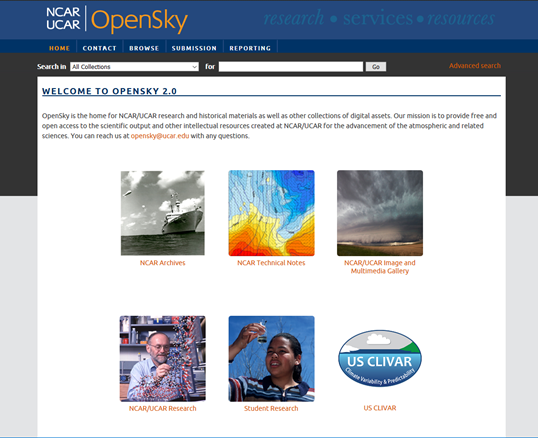
Our https://t.co/M9Tjqzraqx poster is live at #EarthCube2020 - so many improvements in usability, building dataset collections, Jupyter Notebook integration - 1.6M records. Beyond Search!
Leave a comment at our iPoster: https://t.co/2puXr3cS3f
.@sciencegateways is a wonderful group to work with. We encourage any platform, portal, gateway, or software tool with user interface to seek them out. Here's an SGCI resource EVERYone can learn from right now - @drpaulparsons webinar on usability testing https://t.co/bhFYbdKWLW
We're here to support #sciencegateways. This takes on different meanings depending on the project, as some only require a quick consultation, while others seek more in-depth support. Find out how we helped grow @DataDiscStudio in this new blog post: https://t.co/nWMaoWe0fU
Honored to be featured by @sciencegateways as one of their success stories! #SGCI supported https://t.co/qNzXiPXJ5q in work to improve usability, security, & outreach - and we're still improving. Come find the data you need - over 1.6 Million records!
@EarthCube @NSF_GEO @NSF
#OSM20 scientists: Find the Data You Need!
Come test out https://t.co/qNzXiPG7GQ at the #DataHelpDesk, booth 322, 4-6pm today.
Also available: the new EarthCube Resources Registry, part of GeoCODES, to help make software tools findable and interoperable!
@EarthCube@ESIPfed
Looking forward to being at the Ocean Sciences Meeting #OSM20 this afternoon, where https://t.co/qNzXiPG7GQ will be shown by Ilya Zaslavsky.
We're up to 1,669,735 searchable records from 40 repositories - you can add your repo or dataset too!
#DataHelpDesk booth #322, 4-6 pm.
Coming up at #Gateways2019 - @GeoInTechWorld David Valentine presents https://t.co/VEzBIYFMLC - a cross-disciplinary searchable data catalog with >1.6 M records has integrated JupyterHub to enable a dataset-to-analysis workbench: https://t.co/lEJpdcruqd
@DataDiscStudio@EarthCube
Last stalwart at #GSA2019 hosting the @GSAGeoinfo booth 535 is Stephen Richard @smrariz , @USGeoNet President, open science advocate, geoinformatics expert, geologist-turned-software-architect with https://t.co/VEzBIYFMLC and other @EarthCube projects.
Go Ask Him Anything!
There are ~100 EarthCube members presenting at #GSA2019 plus several projects: CHORDS, StraboSpot, Sparrow, OpenTopography.
EarthCube geoscience domains & tools are diverse. Uniting us are principles & approaches to data challenges & solutions.
Come talk @GSAGeoInfo booth 535.
https://t.co/qNzXiPG7GQ is pleased to join the SGCI @sciencegateways annual conference this week in San Diego!
Schedule: https://t.co/cs9ISh3vH4
#Gateways2019
Thanks to a coordinated effort by >1100 contributors, 27 @datacarpentry, @libcarpentry, @swcarpentry lessons have just been updated and released on Zenodo! https://t.co/qODOwLQTSU
We are now accepting applications for the next session of Gateway Focus Week [formerly Science Gateways Bootcamp], happening Sept. 9-13, 2019, in Chicago, IL.—Apply Now! - https://t.co/hzwNtW6lZ4 #ScienceGatewaysBootcamp#GatewayFocusWeek
We had fun bringing chocolate to a demo of https://t.co/qNzXiPG7GQ at the @NSF_GEO @EarthCube#ECAM19 meeting! Thanks to all the folks who helped test features (robust Save for results, and Collection building & sharing with a new Tour) - compiling your valuable feedback now!
EarthCube is excited to have Jess Phoenix and Shaowen Wang as Keynote Speakers at this summer's Annual Meeting. Read more about them here: https://t.co/p0InK1LM85 @jessphoenix2018@swuiuc#ECAM2019
Don’t miss the FSCI course “The Scientific Paper of the Future” by @dkhider@yolandagil@dgarijov. View the 27 courses taught by 40 instructors at https://t.co/TyOsTsVak1 #FORCE11 Scholarly Communication Institute Aug 5-9. #FSCI#UCLA
In the Earth sciences, our “research data is a world heritage...” stated in @theAGU data position stmt. Making our data open & FAIR helps support the integrity of our work. Coordination of policies, incentives, and funding is now needed #FAIRdata. https://t.co/VXiesmFbhh
@dkhider@HelpfulTangent@IS_GEOCommunity I like this idea. Might also consider left half of #2 (green and blue planet) and right half of #1 (both arcs orange) - fewer colors means faster comprehension. That would also allow the spokes / data focal spots to get more attention.
"Ecological Data Should Not Be So Hard to Find and Reuse". A new perspective piece byDataONE CEO working group member @tpoi and colleagues: https://t.co/XYdjrQAfD5









![sciencegateways's tweet photo. We are now accepting applications for the next session of Gateway Focus Week [formerly Science Gateways Bootcamp], happening Sept. 9-13, 2019, in Chicago, IL.—Apply Now! - https://t.co/hzwNtW6lZ4 #ScienceGatewaysBootcamp #GatewayFocusWeek https://t.co/T1neF2u88S](https://pbs.twimg.com/media/D88lkgoW4AokdP2.jpg)