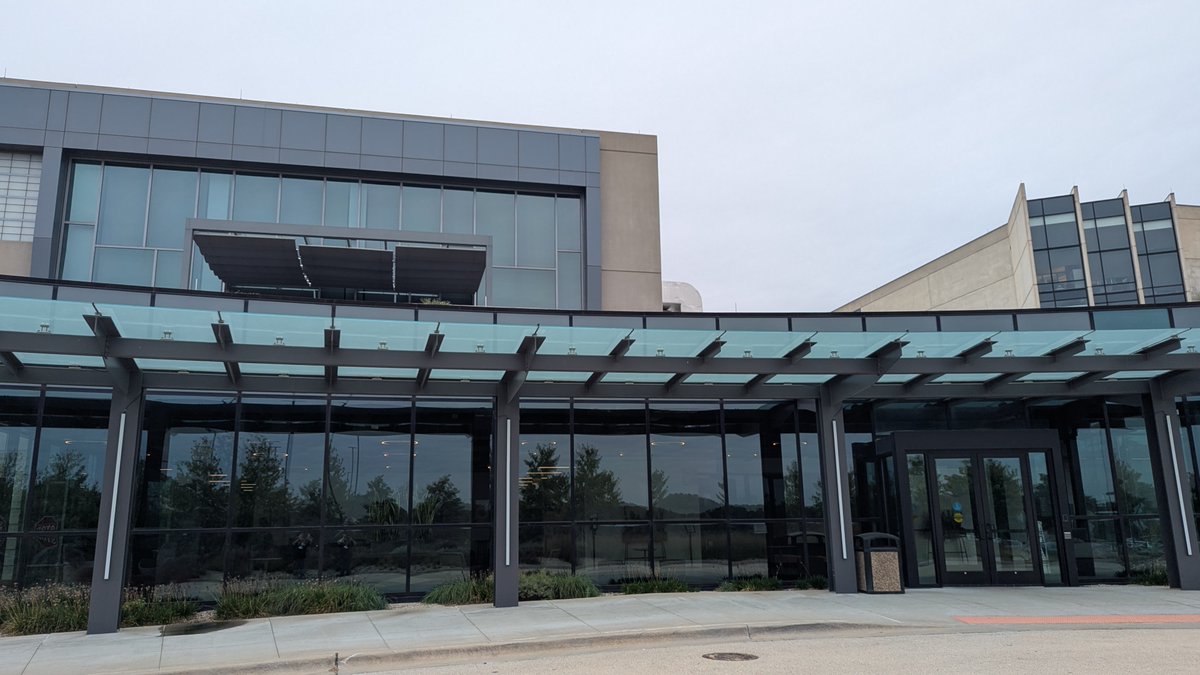
Enjoyed being back in Chicago to attend the NSDF (https://t.co/x9DExCIDIL) Summit on Federated Autonomous Science (https://t.co/JquEyv9jmS). A great program and some wonderful discussions on what people are doing with data and knowledge graphs in support of AI ready data for science.
Andrew Chien gave an interesting keynote on UpDown: A Supercomputer co-designed for Graph Computing and Data Transformation. 6.8 billion records/second for JSON documents is mind blowing for me. It was fascinating to hear about the accelerator node design, parallelism over key-value maps and more.
https://t.co/mLINe5tkPS https://t.co/o6ICc6ORQ5
Did you miss SEMANTiCS 2026? Not a problem, here you can find Prof. Deborah McGuinness' keynote exploring the evolution from traditional AI to GenAI, highlighting why semantics, ontologies, and knowledge graphs remain vital in the era of LLMs.
https://t.co/OBrv3btkaY
Welcome to our Monday Meditations! 🌞
Today @badlogicgames and @mitsuhiko are talking why we built Pi Durable, a harness build around a small task-based workflow engine so long-running, multiplayer agents can suspend and resume anywhere. Also: why not Temporal or Effect.ts.
Hey, yeah, way back I was involved with this graph https://t.co/1mmd4qssIO. I had to step away for some family reasons.
I also know the people working on:
* https://t.co/5V5WQrq2hp
* https://t.co/ugc0YU2xTz
All great groups and I'm looking forward to exploring the other elements in the graph too. Just need to find the time (or a good excuse via work).
This was a fun one to see! https://t.co/br7Z1xSvZ5
I might start there!
Have to confess, love seeing NSF pushing a SPARQL endpoint! Check out the "query" tab at https://t.co/cEcYhdXvdM
If you are new to SPARQL, check out the interactive tutorial at https://t.co/Yu0z5Pz4gU
https://t.co/91nsWJ1C4s
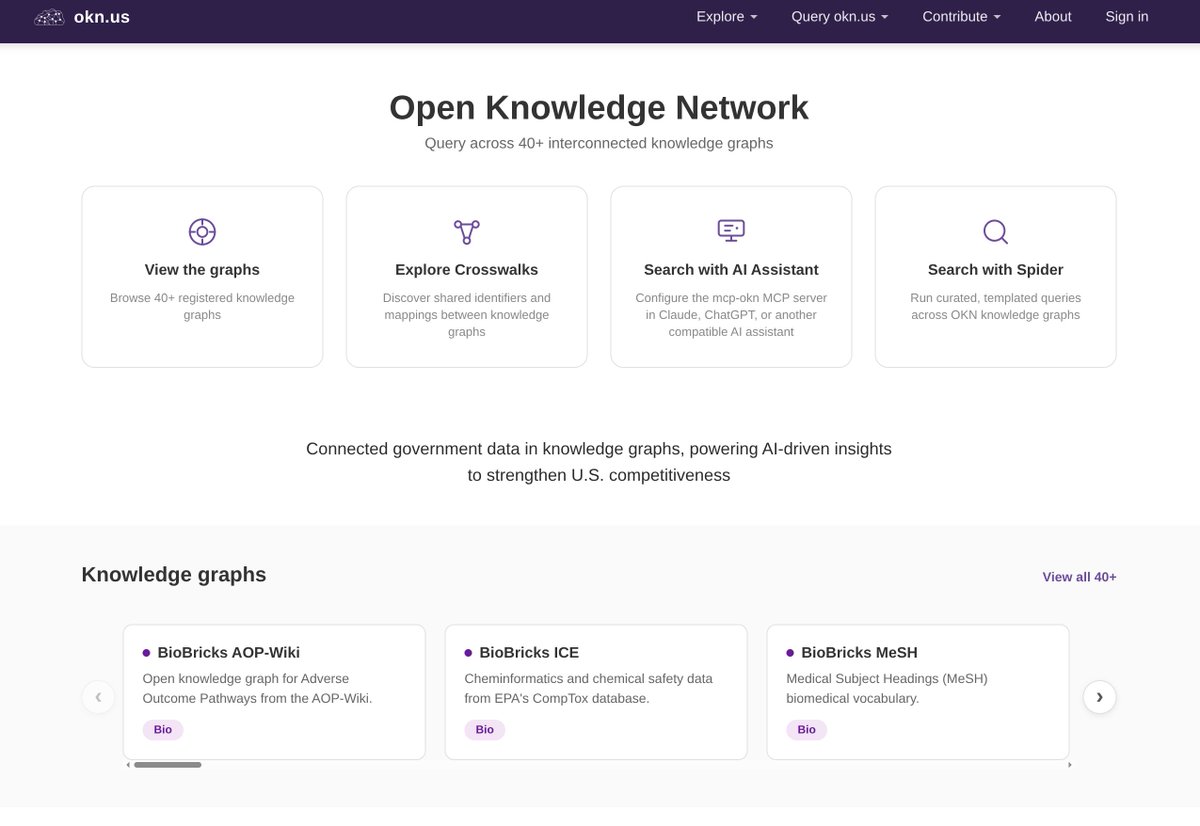
NSF launched the Open Knowledge Network at https://t.co/LIJJIsPHUE, an open-data infrastructure linking 43 knowledge graphs & tens of billions of connected facts on health, environment, justice, manufacturing & national security. It's live and open to all. https://t.co/67SxZWZal8
DSPy 3.4.0 out, with:
(1) native support for Jev and System One models - in the timeless DSPy syntax.
(2) a brand new optimizer, ReAnchor, specifically for calibrating outputs with confidence.
(3) lightning-fast import speeds for the LLM abstraction, via sibling library LM15)
Last week I had the good fortune to be back at Argonne for the NIAID-BRCs Codeathon v2.0, tag line: Accelerating FAIR data and tools for infectious disease research. https://t.co/l37D5kIjda
As in most cases it was the people you meet and connections you make that were the most rewarding. Not to take away from the fun of the project I was on, I learned a lot, and the enjoyment of seeing what others were doing in their projects.
Argonne is a great host too!
Gliner is well worth looking at. I've used it in the past, but looking forward to seeing what is new. You can see some good tutorials here: https://t.co/7bzSdbg4mD
Also suggest looking at DSPy. You can see the classification tutorial for email here: https://t.co/yiuPogAeWq
I played with Jev quickly for a simple extractor for populating a JSON-LD schema,. Think is would be fun to try the same approach in Gliner and DSPy just to see the differences.
Looking forward to playing some more with Jev. And, also revisiting Gliner. ;) If nothing else, Jev has brought some attention back to an important approach.
Oh and of course, DSPy and GEPA need to be in the mix.
Seeing this topic being all the rage now is nice at least.
https://t.co/xLvLDBW28h
Had the pleasure to meet the people behind this app in the past. Love seeing this being updated.
https://t.co/wq0cRoN1As
Can't wait to try out the new release on my next flight! Will definitely be requesting a window seat.
After co-inventing ChatGPT, I kept asking myself: why have superhuman chat models not led to AGI?
I’ve spent the last 2 years in stealth building a new way to train models (RLCD), and a new type of frontier AI model that we are releasing today: Jev
• 20-200x faster
• 40-400x cheaper (w/ output tokens free)
• Frontier composable intelligence optimized for decisions
AFAICT the shortest path to AI-based economic revolution
still pre-realese, but damn i am getting excited!
lm15 is meant to be a replacement for native provider specific sdks, the one dependencies to AI frameworks and harnesses. LM15 is not about nice ergonomics it is about being easy / nice to build an AI framework done, I have put into it everything that would have made dspy lm so much easier to make (e.i. not needed). i expect to be ready for release in about 2 weeks.
if you know what you are doing:
> pip install lm15==1.0.0rc1
it also pretty much 1.0.0 rc in rust and typescript but i want to check their interfaces a bit more and the DOCS, i want good docs!