Data provenance is becoming a key parameter in the GenAI landscape. Lawmakers are demanding it and the cost of non-compliance is extremely high.
Luckily, we've built a toolkit for building an immutable and auditable data trail. No 3rd party needed and standard-agnostic. 👇👇👇
@OpenAI@huggingface@METR_Evals@AnthropicAI@ethswarm 8/8 A record proves nothing changed.
Not that the agent was right.
That's enough to hold it to account.
Our open-source toolkit, in pre-release. Try it in a minute: https://t.co/VRpmO2MXdy
1/8 Could you prove what your AI agent did yesterday?Not what it told you it did. What it actually did.We're handing agents our code, our money, our customers. Staying in control starts with that answer. 🧵
@OpenAI@huggingface@METR_Evals@AnthropicAI 7/8 Why @ethswarm: every record is stored at an address computed from its own content.
Change one byte and you get a different address. The original stays put until its stated expiry.
There is nothing to quietly overwrite.
@jenzhuscott Many people running many agents ;) The magic happens when there's no AI lock in and you're running claude, codex, hermes, openclaw, opencode, and dsh.
The tools are early but the architecture makes provenance capture simple and reliable. Check out the POC demo below. We'd love your feedback, especially if you're an agent builder, researcher or practitioner.
This is why we built our provenance toolkit and MCP POC at Datafund. It lets agents capture and store provenance at creation and write it to a decentralised backend for public scrutiny. Try the POC and tell us what is missing.
Data provenance is important because it tells us how the world is vs. how somebody wants us to see it. It tell us if the source was legitimate, if the capture was authentic or if the data reflected reality.
If we cannot verify origin, authenticity or context, data becomes a liability. And as AI agents move into research, finance, science and public systems, they will act on inputs no one can trace. We need provenance captured at the source.
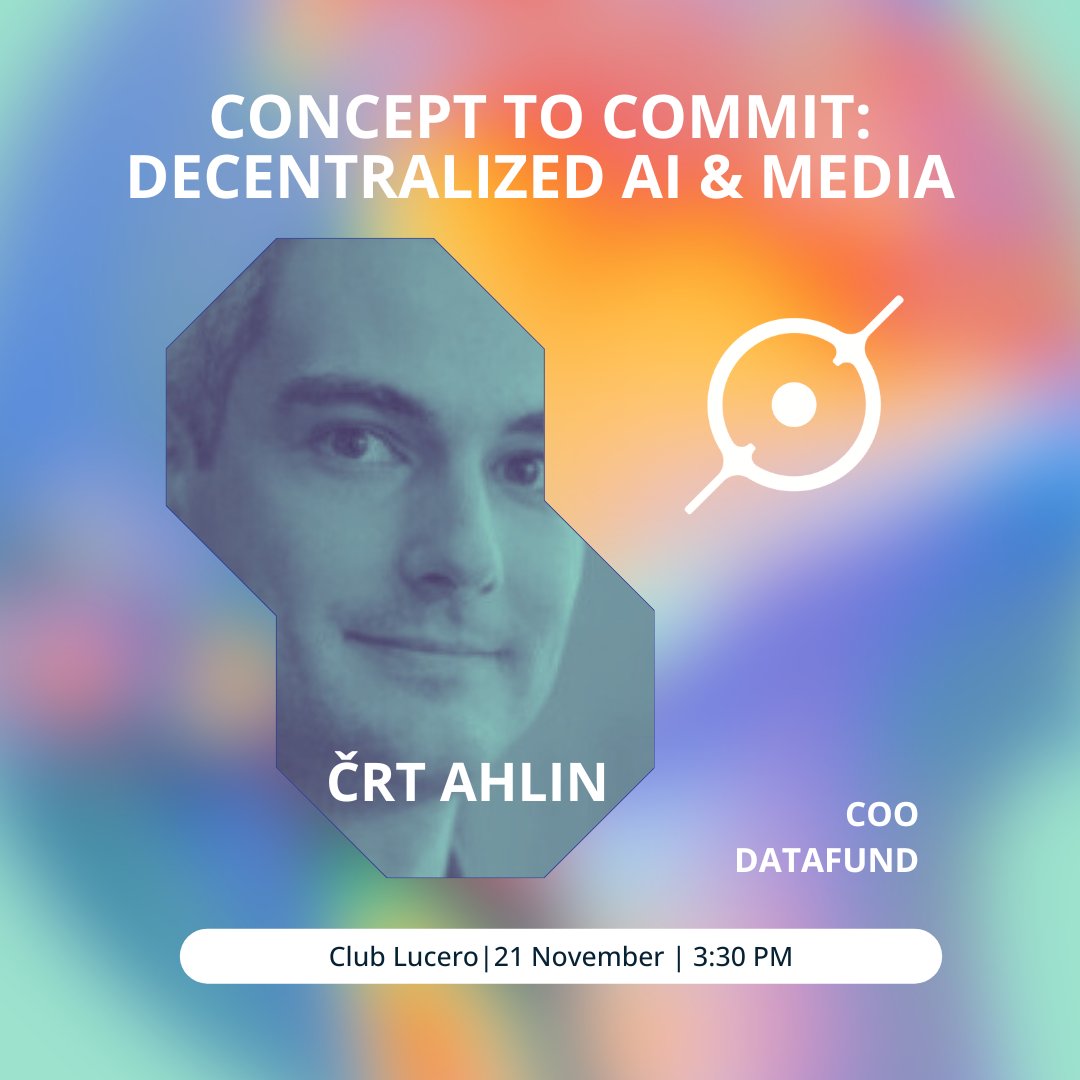
We're pleased to welcome @crtahlin to our Decentralized AI panel discussion! 🤩
Data flows are the pillar of the emerging AI economy. It is important to think about how AI agents can work with data and how trust can be established in decentralized AI.
👇
https://t.co/zwwpjtKXCQ
AI needs a provenance infrastructure that unifies ethics, law and technical aspects. That's what we're building for with our latest provenance POC.
👇👇👇
A recent paper (https://t.co/K4JI1KDR8N) highlights that a growing issue with provenance tools is their piecemeal nature. 🧩
Dev teams can’t reliably assess safety, legality or copyright across thousands of mixed datasets. Creators, on the other hand, can’t track their content.