DAX with AI: Scenarios is complete!
The video course includes ten business scenarios: currency conversion, comparable-store sales, budget vs. forecast, shared-cost allocation, inventory from sparse snapshots, financial statements, workforce analytics, and more. The training also includes seven "concept" lessons that are shared across several scenarios.
We announced it in September for November 30, and we're proud to release it four weeks early.
If you already purchased the video course, log in to your SQLBI account: the whole training is ready for you!
You don't need to watch it from start to finish (but you can if you want to): Pick the scenario closest to your next project, check the concepts it lists, and start there.
The details are in my blog post: https://t.co/xgmk3vRiiz
If you haven't enrolled yet, there's a launch offer on the course and on the bundle: https://t.co/QXs75tTdaA
@Hugo_Kornelis It's hard to find the right words after hearing news like this, but I’m sending you my warmest wishes and hoping with all my heart that you win this fight.
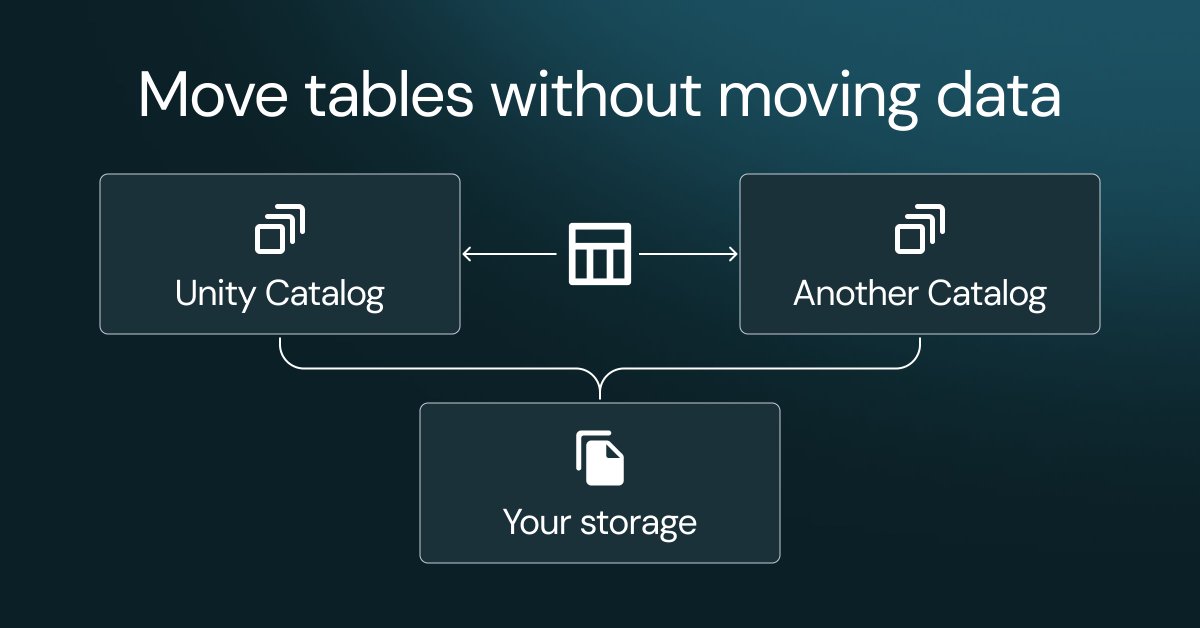
Open table formats are important. But they don’t answer the harder question: who actually controls the data, and can you move it without copying everything somewhere else?
That’s the standard we use for openness in Unity Catalog.
Your managed tables can live in customer-owned storage. The best table features work on those tables. And with REGISTER and UNREGISTER in Private Preview, tables can move between catalogs while the underlying data stays in place.
For us, an open catalog should give you storage ownership, full capabilities on the tables you own, and a clean way out.
https://t.co/tWSC056uFB
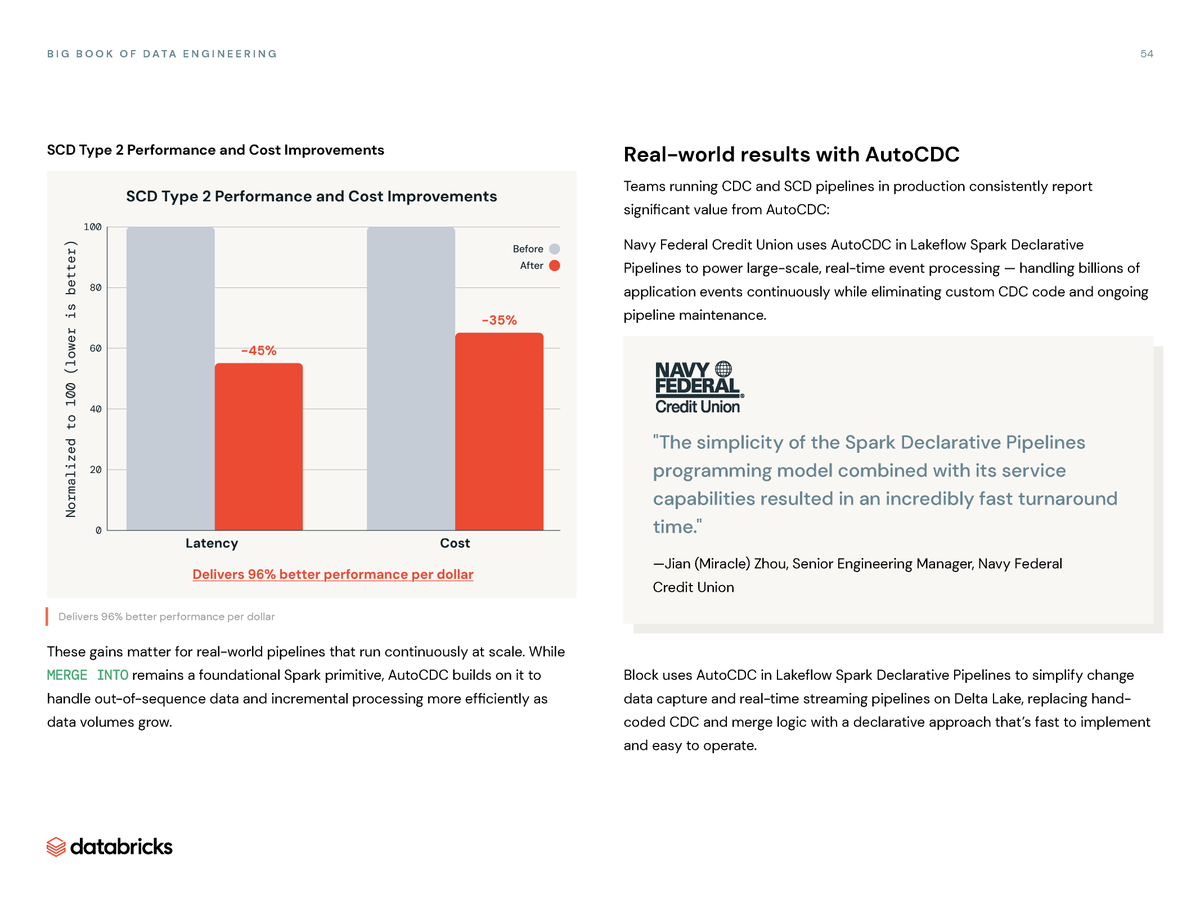
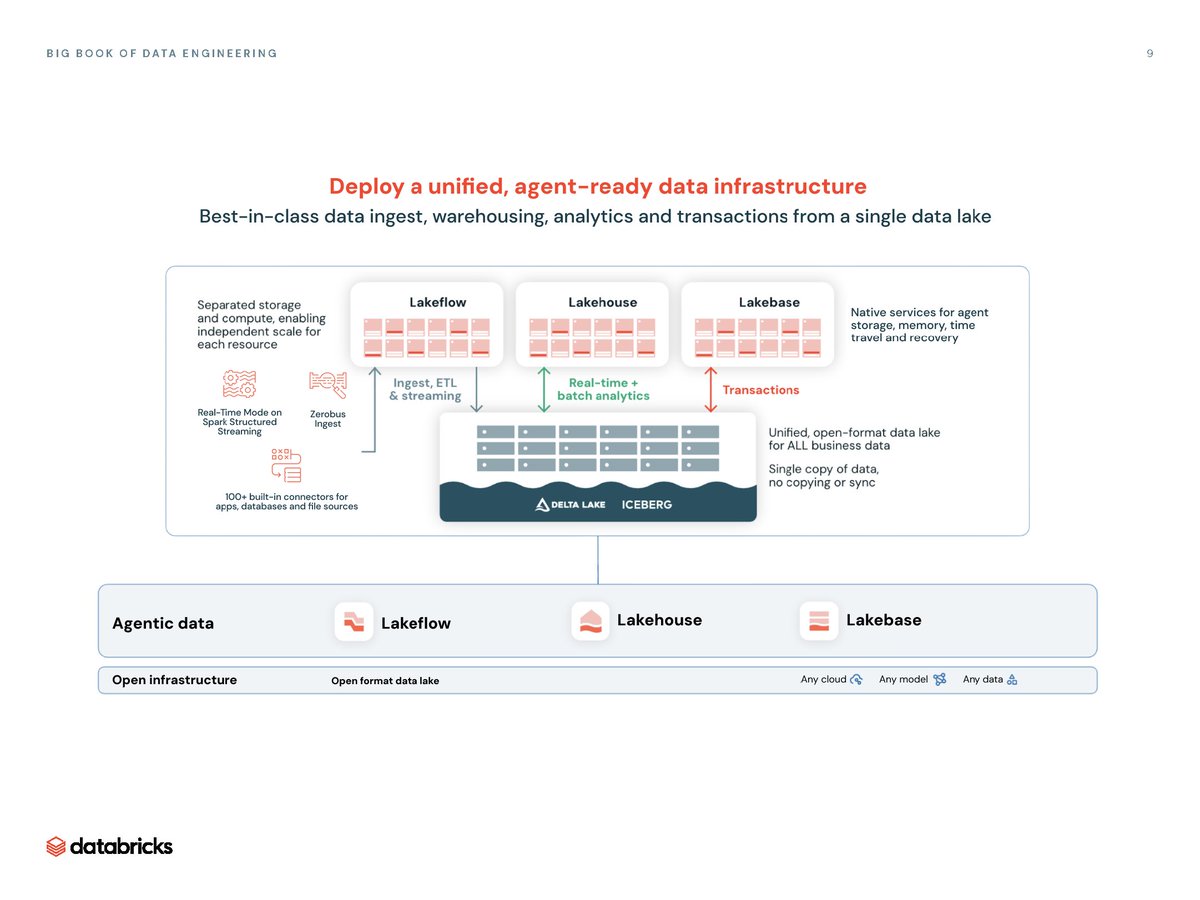
The fifth edition of the Big Book of Data Engineering is here.
This one covers how to bring ingestion, transformation, and orchestration onto a single governed platform, build millisecond-latency streaming pipelines at scale, and use built-in AI agents to accelerate pipeline authoring and resolve data failures.
Includes real-world examples from NAB, Panasonic, Toyota, AccuWeather, Daikin, and Coinbase.
📙 Download now: https://t.co/VazZGxAjGR
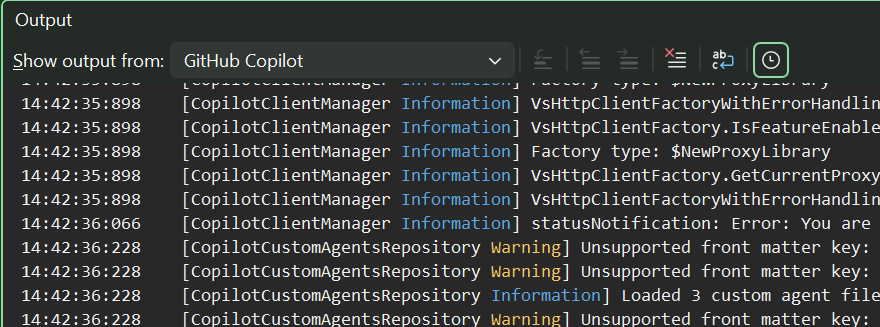
🧠 HydraFusion is now available in @code as a Research Preview.
Instead of relying on a single model, HydraFusion orchestrates multiple models and workflows to tackle coding tasks.
Give it a try today! 🚀
https://t.co/CCB7TN69Rz
We are happy to announce the first pre-release of Polars 2.0.
Polars 2.0 will bring the streaming engine as a default and improves overall strictness of Polars.
Give it a spin and share your thoughts. We expect the final Polars 2.0 release in 3-4 weeks.
https://t.co/0KyuugiDqq
Exploring artificial intelligence reveals opportunities to transform lives and industries. Yet, we must address ethical concerns and impact on employment. By fostering discussions and regulations, we can harness AI's power while safeguarding our values. https://t.co/tk6lZzQnwq
🦆🤓
When Denis Hirn implemented DuckDB’s first recursive CTE operator in 2020, correctness determined the design: evaluate the non-recursive term once, then evaluate the recursive term until the next working table is empty.
That established the right semantic contract, but reusable runtime state was scoped too narrowly. In the upcoming DuckDB v2.0 release, we assign those scopes explicitly.
#DuckDB’s recursive CTE engine now treats recursion as one long-lived computation: it retains eligible epoch-invariant state, chooses execution modes from exact frontier cardinalities and physical work, probes keyed state directly and gives `USING KEY ... UNION` changed-key semantics.
Read more in this preview of the forthcoming v2.0 release: https://t.co/IxXeinuQsc
Today, @ducklabs_com is joining @awscloud. The move is expected to be completed by early September.
Joining AWS gives DuckLabs the resources and reach to bring DuckDB, DuckLake, and the Quack protocol to many more developers and organizations – and to pursue ideas at a scale that would have been difficult for us to reach alone.
The DuckLabs team will remain together in Amsterdam and will continue working for the Duck Stack community as an AWS subsidiary.
Most importantly, #DuckDB and the other open source components of the Duck Stack will remain free and open source under the MIT license, with the non-profit DuckDB Foundation continuing its stewardship of the projects.
This is a significant moment for DuckLabs and the Duck Stack community. It marks the end of one chapter that we are immensely proud of, and the beginning of another that we believe will take DuckDB much further.
Read the full announcement here: https://t.co/ayzbna3gxQ
#AWS
Quack, quack! A DuckDB v2.0 preview is here! 🦆 🦆⚡
In this post, #DuckDB co-creators Mark Raasveldt and Hannes Mühleisen preview the headline features of DuckDB v2.0 (expected to arrive this autumn):
• DuckDB as a server
• Triggers
• The VARIANT type
• Asynchronous I/O
• A new SQL parser
• A new storage format
• and much more! 🤩
Dive into the details:
https://t.co/j9gcA1K6OL
Imagine Microsoft watermarking the text you write.
Imagine Visual Studio Code watermarking your source code.
I can’t wait for the copyright trial where Big AI start claiming ownership of anything that bears their watermark.