Jarell Quansah has his red card ban extended to two matches. FIFA will consider an appeal, if the England defender can prove he’s either American or Argentinian or a brown envelope stuffed with cash
BREAKING NEWS! MET Firearms officer SGT NX121 (I’ve NEVER & WON’T name him) who LAWFULLY shot dangerous criminal Chris Kaba to death will NOT face any disciplinary action for? >Doing his Job🤷♂️👇
NX121 was Suspended & Charged with Murder & faced Life Imprisonment BUT> was cleared by a Jury in just MINUTES who themselves sent a note to the Trial Judge & Questioned why he was EVEN CHARGED🤷♂️👇
For doing his Job? NX121 was Suspended for couple of years; was named & targeted had death threats against him & was forced to move home;👇
He was away from the job he loved his Promotion to Insp was put on hold he would have gone through stress & fear of what could happen to him & could have faced decades away from his wife & children for? DOING HIS JOB!!👇
Although NX121 has been completely EXONERATED the FOUR YEARS of absolute hell will ensure that he will never be the same man again!👇
I wish NX121 & his family well as they pick up the pieces & try & rebuild their lives now knowing that the HELL they went through & continue to go through has now been brought to a HALT!
🙏
NHS FRAUD CAUGHT ON CAMERA, NOBODY CARED
Sharmila Chowdhury @sharmilaxx gave the @NHS 30 years of clean service. Not one blemish. Then she did something apparently unforgivable. She noticed two consultant radiologists at Ealing Hospital, now part of London North West University Healthcare NHS Trust @LNWH_NHS, were billing the NHS for shifts they were actually spending at a private hospital down the road.
Getting paid twice for the same hours. That is fraud everywhere except, it turns out, inside the NHS complaints system.
She reported it. To her line manager. To the Medical Director. To the HR Director. To Counter Fraud. To the Chief Executive. To Number 10. To the Treasury. She built a paper trail so thorough that ITV @itvnews later sent an undercover team into the hospital and filmed the same consultants years on, still taking cash from patients for private ultrasounds inside NHS premises.
The Trust's response to all that diligence was to sack her, based on counter allegations later shown to be fabricated.
The man behind those allegations reportedly signed off an email too crude to print here ..........
....... He picked up a Top Mentor award from the Trust that same year. You could not write comedy this good on purpose.
Sharmila took it to tribunal and won. She won her appeal too. The judge told the Trust to reinstate her. The Trust said no. She was then quietly blacklisted across the NHS. One job offer was withdrawn the moment they worked out who she was. Legal costs hit £130,000.
Somewhere in the middle of it she developed breast and lung cancer, which her doctors link to years of sustained stress.
The two consultants kept their jobs. George Osborne could not get involved. Andrew Lansley could not get involved. David Cameron could not get involved. Every one of them filed it under employment matter, which is Whitehall for we would rather not know.
A proven fraud case, covered by ITV @itvnews, the Guardian, Daily Mail @DailyMail, Channel 4 News @Channel4News, the Independent @Independent, BBC News @BBCNews, the Times @thetimes and the Daily Mirror @DailyMirror. The official position of Her Majesty's Government was still not our problem.
This is the reward system in action. Report fraud, lose your career, lose your health, and watch the people you reported get promoted.
On Christmas Eve 2007 I was pronounced dead. Twice. When I woke up I was missing both legs and my right arm, and I was told I'd never walk again.
Fourteen weeks later I marched on parade on prosthetic limbs 🦿🦾
The hardest part wasn't the surgeries or the rehab. It was choosing to start when every fact said there was no point.
You don't need better circumstances to start. You need to stop negotiating with yourself.
The gym. The business. The hard conversation. Whatever it is, start ugly, start scared, start today.
Excuses are easy to justify. Standards are harder to keep.
If this hit home, share it with someone who's been waiting for a sign. This is it.
💎 Earlier this year, a trio of masked suspects smashed the window of a Richmond jewellers with a sledgehammer before reaching in to grab jewels worth around £225,000 and making off.
They thought they’d got away with it, here’s how it’s going for them...
As an American medic serving in the Armed Forces of Ukraine, I would like to thank everyone still standing with us after four years.
The world has a short attention span. You didn't.
We will not forget who stayed. 🇺🇦
These Police Officers should be no where near the Edgware Road right now.
They should be responding to emergencies in Ealing, Hounslow and Hillingdon. That’s what the ‘WA’ means on the back of their helmets - it’s where they should be working - ‘West Area BCU’.
But they volunteer to be ‘Level 2 Public Order Trained’ or more simply ‘Riot Trained’.
So right now they’re clearing the streets of Central London, because someone lost a football match, and they’re the only trained Cops available to do it.
The strain on frontline policing is rarely seen, understood or talked about.
And it’s not going to change anytime soon.
#ThinBlueLine 🚨
I hope that one day, whenever people hear the word “russia,” they will think of Ukrainian families killed beneath the ruins of their homes instead of its literature, its ballet, or anything else it once convinced the world to admire.
📷Efrem Lukatsky
A chilling clip of a British soldier carrying a wounded comrade through the trenches whilst under shell-fire on the first day of the Battle of the Somme, July 1, 1916. Filmed by British war kinematographer Lieutenant Geoffrey Malins on July 1, 1916.
Had we been born in the early 20th century, this would have been you or someone you love. Instead, our bygone ancesters were the ones who physically or mentally perished miles from their homes.
What a waste 🕊
Every carton of milk you have ever pulled from a refrigerator was designed by a woman locked inside a freezing boxcar in 1905.
Her name was Mary Engle Pennington. She was thirty-two years old. She was a Quaker-raised bacteriological chemist from Philadelphia with a Ph.D. from the University of Pennsylvania. She was the first woman ever hired as a scientist by the Bureau of Chemistry — the federal agency that would eventually become the U.S. Food and Drug Administration.
Her job, on paper, was to sit at a back desk and file paperwork.
Instead, she strapped a thermometer to her belt, climbed into a moving freight train in the Chicago rail yards, and let them lock the door behind her.
Then she did it again. And again. Five hundred times over two years.
In 1905, most Americans died young because of food.
Milk shipped from Wisconsin dairies to Manhattan tenement apartments arrived in wooden barrels packed with dirty lake ice harvested from frozen ponds. By the time it reached the city, half of it was curdled. Dairies covered the sour smell with formaldehyde. Butchers rubbed borax on decomposing beef to hide the rot. Children in New York and Philadelphia were dying by the thousands every summer from milk-borne bacterial infections.
The federal government had almost no power to stop it.
Dr. Harvey Wiley, the head of the Bureau of Chemistry, was fighting to change that. He needed a scientist willing to prove — in hard, incontrovertible temperature-log data — exactly how and why the American food supply was rotting in transit.
He needed someone who would ride in the refrigerator cars.
He knew exactly who he wanted.
Pennington was the daughter of a Quaker family that had moved from Nashville to West Philadelphia when she was three. She had discovered chemistry at twelve by borrowing a college-level textbook from the public library. She had completed the coursework for a bachelor of science in chemistry at Penn's Towne Scientific School — and the university's trustees had refused to grant a woman a degree. They handed her a "certificate of proficiency" instead.
She stayed anyway. She kept working. She wrote a doctoral thesis. She forced the same trustees to grant her a Ph.D. at twenty-two.
Wiley had known the Pennington family for twenty years. He knew what she could do.
In 1905 he had her take the federal civil-service exam under the signature M. E. Pennington. The score guaranteed a hire. When she walked into the Bureau of Chemistry office the following Monday, the personnel officer realized what had happened. Federal law required them to hire her anyway.
They tried to bury her at a back desk.
She spent one week doing filing. Then she walked into Wiley's office and asked for the rail schedules.
The Bureau had no cold-weather field gear cut for a woman. She went to a Washington department store and bought her own — heavy wool skirts, oversized men's sweaters, thick wool socks, leather-lined boots. She packed a glass thermometer, a set of sterile glass sampling vials, a leather-bound ledger, and a fountain pen.
She walked into the Chicago slaughterhouse rail yards at dawn.
She climbed into the ice bunkers of moving freight cars packed with raw poultry and beef. The doors were locked from the outside. She sat in the freezing dark for hours. She measured the temperature wall by wall, floor to ceiling, corner to corner. She sampled the meat every three hours. She wrote everything down in the ledger.
She did five hundred of these expeditions over the next two years. She slept in cabooses on rural sidings. She caught pneumonia twice. She kept going.
The rail companies had believed for fifty years that cold air, once loaded into a boxcar with ice, would fill the space evenly.
Pennington's measurements proved them wrong.
Cold air fell to the floor. It stayed there. Warm air generated by rotting cargo rose to the ceiling and stagnated. The meat stacked near the roof was slowly cooking in its own bacterial gases while the meat near the floor was flash-frozen solid. The corners of the cars had dead zones the cold air never reached at all.
She discovered that a constant thirty-two degrees Fahrenheit — exactly at the freezing point of water — completely halted the growth of the specific bacterial strains that caused most food-borne deaths.
The average American refrigerator car was operating at forty-five degrees.
She drafted a complete redesign specification. Exact ice-bunker dimensions. Elevated floor racks so cold air could circulate underneath the cargo. Precise insulation thickness in the walls. Ventilation channels to move air through the dead zones in the corners.
The rail industry fought her. Their lawyers, their lobbyists, their Congressional influence, and the political backing of the meatpacking monopolies. They argued a female chemist could not tell railroad engineers how to build trains.
She did not argue back.
She published the temperature data.
The rail companies could not dispute the math. They eventually adopted her specifications wholesale. Spoilage rates collapsed. Big-city childhood mortality from milk-borne infection dropped inside a decade.
Her defining test came in April 1917.
The United States entered the First World War. The War Department needed to move thousands of tons of perishable American beef across the Atlantic to the Western Front. The commercial rail industry contributed forty thousand refrigerator cars to the war effort.
Pennington evaluated every single one.
Only three thousand of the forty thousand — seven and a half percent — met her institutional standard. She spent the next eighteen months personally overseeing the emergency retrofit of the other thirty-seven thousand cars. She standardized freezing at the slaughterhouses before the meat ever touched a train. She specified the exact temperature the ocean cargo holds had to maintain from Chicago to Brest.
The spoilage stopped. The troops were fed.
She served on Herbert Hoover's War Food Administration through the end of the war. In 1919 she left the federal government. In 1922 she founded her own refrigeration-engineering consulting firm, which she ran until she died. In 1923 she founded the Household Refrigeration Bureau to educate American consumers about the emerging home-refrigerator revolution.
In 1940 the American Chemical Society awarded her the Francis P. Garvan Gold Medal.
She was still consulting on a commercial refrigeration project the week she died — on December 27, 1952, in New York City, at eighty years old.
In 2018, sixty-six years after her death, she was inducted into the National Inventors Hall of Fame.
You walk into a grocery store in July. You pull a carton of milk from the back of the case. You do not smell it for rot. You open it. You pour it.
You are drinking from the specification of a woman who let them lock her in the freezing dark for two years to prove she was right.
If her story stayed with you, drop one word in the comments — Mary, ice, thirty-two, anything that comes to mind. Tap the like button so more people find this story. The page is small. Every reaction helps us keep telling stories like this one.
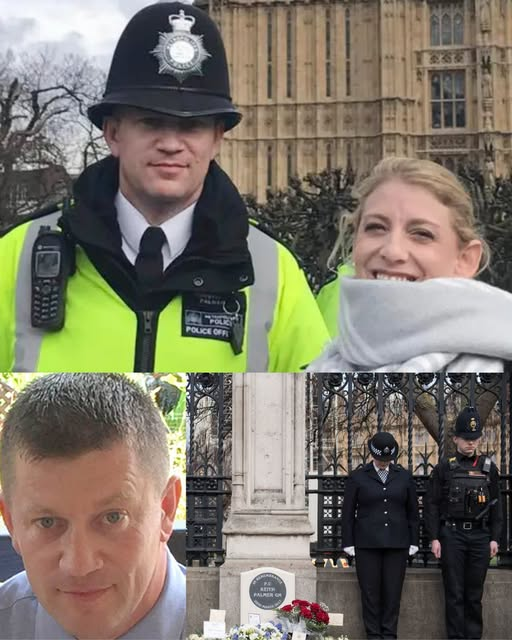
At the gates of Parliament stood one unarmed police officer.
Behind him were hundreds of people who would never know his name—until the day he gave his life protecting theirs.
That officer was PC Keith Palmer. R.I.P.
> Be Richard Feynman
> Teaches himself advanced calculus at age 15
> Fixes neighborhood radios for fun during the Great Depression
> Recruited to work on the Manhattan Project at Los Alamos in his 20s
> Gets bored while building the atomic bomb and starts picking locks
> Breaks into his colleagues' top-secret safes just to leave them mocking notes
> Completely breaks down the government's security system for fun
> Loses his wife to tuberculosis and uses the grief to dive deeper into physics
> Reinvents quantum mechanics by drawing simple sketches (Feynman Diagrams)
> Wins the Nobel Prize in Physics for his breakthroughs
> Refuses to take himself seriously or act like a stuffy academic
> Spends his free time playing the bongo drums in a Brazilian samba band
> Learns how to paint at age 44 and sells his art under a pseudonym
> Travels to remote regions to decode ancient Mayan hieroglyphics
> Investigates the tragic Challenger Space Shuttle disaster on live TV
> Drops a piece of rubber into a glass of ice water in front of Congress
> Instantly proves the O-rings failed due to the cold, cracking the case single-handedly
> And Richard Feynman is still the most brilliant, chaotic mind to ever live who proved geniuses can have fun.
> Feynman is badass.
David Tynan O’Mahony (AKA Dave Allen) was born on this day in 1936. One of Ireland’s great comic voices and a brilliantly sharp satirist, his work made a lasting impression on British and Irish entertainment, not least because he had such an easy, distinctive way of drawing people in. Sitting on his stool, glass in hand, he made it feel as though he was simply talking to you, pointing out the absurdities of life, religion, authority, and human behaviour with a calm smile and a perfectly timed punchline.
On what would have been his 90th birthday, Dave Allen is worth remembering not only as a very funny man, but as someone who encouraged people to think, question, and laugh at the strange business of being human x
This painting shows the most heartbreaking reunion in all of literature. To understand it, you have to know who the dog is...
His name is Argos, and he belongs to Ulysses, the Greek hero also known as Odysseus. Before Ulysses sailed away to fight in the Trojan War, he had raised Argos from a puppy, a fast and beautiful hunting dog. Then the war called, and Ulysses left.
He would not come home for twenty years.
When Ulysses finally set foot on his own island again, he came in disguise, dressed as a beggar, so that no one would know him. His house was full of men trying to steal his wife and his kingdom. To survive, he had to remain a stranger in his own home.
No one recognized him. Not his loyal servants. Not the people who had known him all his life. But lying in the dirt by the gate, old and forgotten, covered in ticks, too weak to stand, was a dog. Argos had waited twenty years. And the moment he saw him, he knew. He was the only one. Nearly blind, half dead, he lifted his head and pricked up his ears, and he wagged his tail for the master he had never stopped waiting for.
Ulysses saw him. And because he was in disguise, surrounded by enemies, he could not run to him, could not kneel down, could not say his name. He could only look at his old friend and, turning his face away so no one would see, let a single tear fall.
And then, in Homer's own words, "the dark shadow of death closed down on Argos' eyes, the instant he had seen Odysseus, twenty years away."
He had held on to life for one reason only: he was waiting to see him come home. And the moment he did, he could finally let go...
It is such a beautiful painting, and the look on that dog's face is so universal, so instantly understood by anyone who has ever loved and waited, that it is enough to bring a grown man to tears.
At his prom, 15-year-old Egor Holodryha danced the graduation waltz alone.
His partner, his classmate Maria, was supposed to be there beside him. They had spent months rehearsing together, dreaming about this night.
But on May 14, Russia killed her in a missile strike on Kyiv. Maria died alongside her father and grandmother.
Egor refused to find another partner.
“It would have been a betrayal of Maria,” he said.
So while other couples danced together, he finished their dance alone.
This is what Russia steals. Not just lives, but futures, dreams, first dances, and memories that should have lasted a lifetime.
Photo by Oksana Parafeniuk for The New York Times.
You know what would really help the perception of leadership?
Chief Inspectors and above actually policing. At least once a month.
Why? Not working shifts, not being assaulted and not having a camera shoved in your face, really does remove you from reality…🤷🏼♂️
#ThinBlueLine 🚨