Only 30 drivers lock themselves into the #SnowballDerby based on qualifying, but just how close is it? Take a look at the difference in laps of pole sitter, @joshberry and the first car out, @DerekGriffith12 👇
📹: @RaceTrace1
California has 225,000 NGOs that handle $610 billion per year.
They do not want you or Nick Shirley investigating them.
California passed AB 2624 aka “The Stop Nick Shirley Act” instead of stopping the fraud.
The corrupt and fraud is staggering.
Ignore Bessent at Your Peril
Machiavelli’s central lesson of statecraft was simple: dangers seen from afar can be managed; dangers ignored until they are obvious become unmanageable.
Wall Street should apply that rule to Scott Bessent. Ignore him at your peril.
The bond market is still treating Washington’s new posture as a technical adjustment. It is not. It is a regime change. Bessent is not merely managing the Treasury market; he is beginning to set the rules of the global digital financial system.
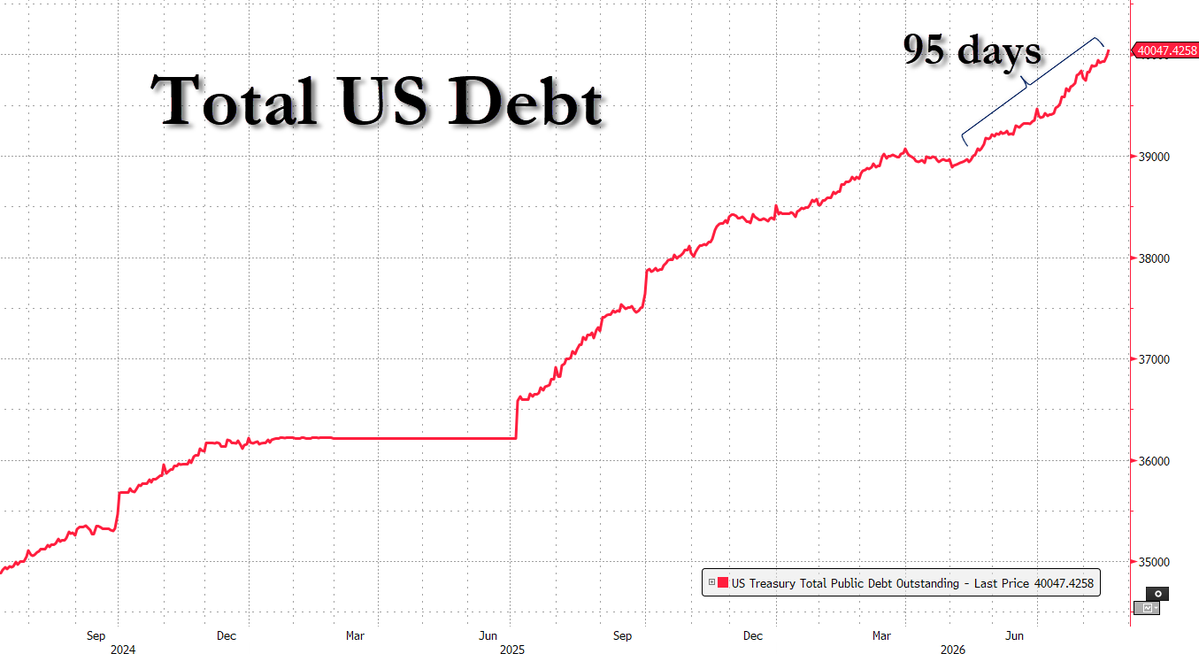
The forcing function is debt. With US interest costs rising alongside structural deficits, the long end of the Treasury curve can no longer be left entirely to the Federal Reserve. Funding costs are now a question of fiscal capacity, geopolitical power and financial stability.
Bessent has made the direction explicit: the administration will do what it takes to lower yields. Treasury’s decision to double buybacks to $4B per operation from September 9 through November 4 is nominally a liquidity measure. Yet its promise of further detail on futures buybacks on November 4 matters more. It suggests that Treasury’s market-management toolkit is widening.
The yen intervention was the appetizer. It demonstrated that currencies, liquidity and market structure are now instruments of strategy. The next phase is more consequential: active management of the Treasury curve while constructing the rails for a dollar-centred digital financial order.
That is where the Genius Act fits. Properly understood, it is not simply crypto regulation. It is an attempt to bring dollar stablecoins, reserve standards and digital-payment infrastructure within an American legal and financial perimeter. Stablecoins backed by short-duration Treasuries transform global demand for digital dollars into demand for US government debt. They extend dollar distribution beyond banks, correspondent networks and the legacy payments system.
Bitcoin is the complementary signal. It is a coiled spring because it captures two trades at once: demand for scarce, non-sovereign money, and anticipation of a much larger regulated digital-dollar ecosystem. Washington can regulate the perimeter of crypto, but it cannot manufacture Bitcoin’s scarcity.
This is fiscal dominance with a digital dimension. Treasury increasingly sets the incentives; the Federal Reserve reacts within constraints shaped by debt service, market functioning and dollar strategy.
Wall Street keeps parsing buybacks, currency intervention, stablecoin legislation and Bitcoin as unrelated events. They are not. Debt is the constraint. Yield management is the response. Digital dollars are the distribution channel.
And Bessent is defining the rules.
- 1913: "The income tax will only hit the top 1%."
- 1935: "Social security numbers will never be used for identification."
- 1971: "The gold suspension is temporary."
- 2001: "These surveillance powers are only for terrorists."
- 2020: "Two weeks to slow the spread."
- 2026: "CBDCs will never be used to control spending."
- You: "I'm noticing a pattern."
- Government: "There's no pattern."
- You: "That's what the pattern would say."
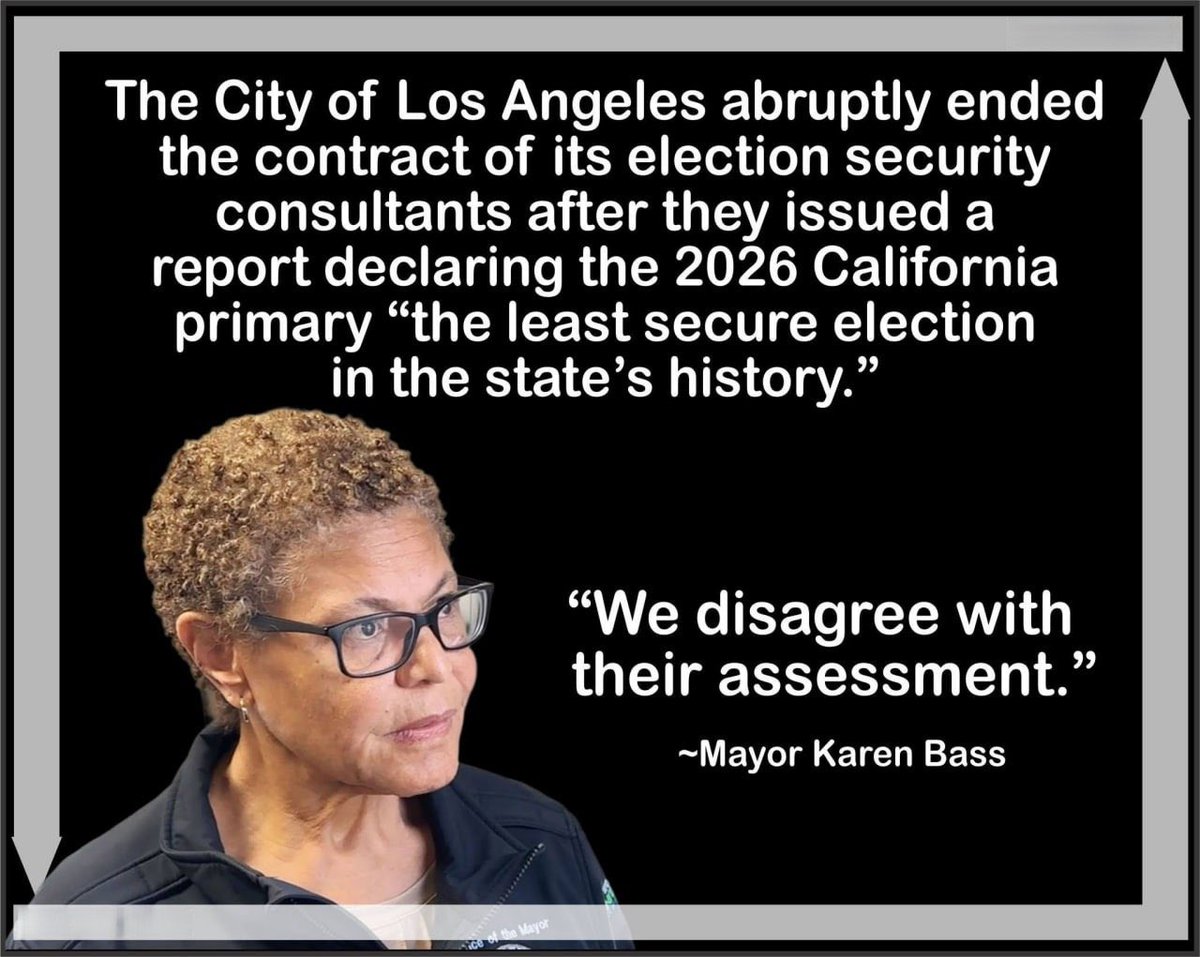
🚨THE CITY OF LOS ANGELES JUST FIRED ITS OWN ELECTION SECURITY CONSULTANTS AFTER THEY DECLARED THE 2026 CALIFORNIA PRIMARY “THE LEAST SECURE ELECTION IN THE STATE’S HISTORY!”
They didn’t like the answer they paid for.
Los Angeles abruptly ended the contract of the election security consultants it hired after the firm issued a report calling the 2026 California primary the least secure election in the state’s history. Mayor Karen Bass’s response? “We disagree with their assessment.”
Let’s be clear: these were the consultants THEY hired. They expected a rubber-stamp report. Instead, they got the truth — and immediately fired the messengers.
When even the people you pay to look the other way refuse to play along, you know the election was a disaster.
@AmericaPulseNew
Share this everywhere so every Californian sees what their leaders do when the truth comes out!
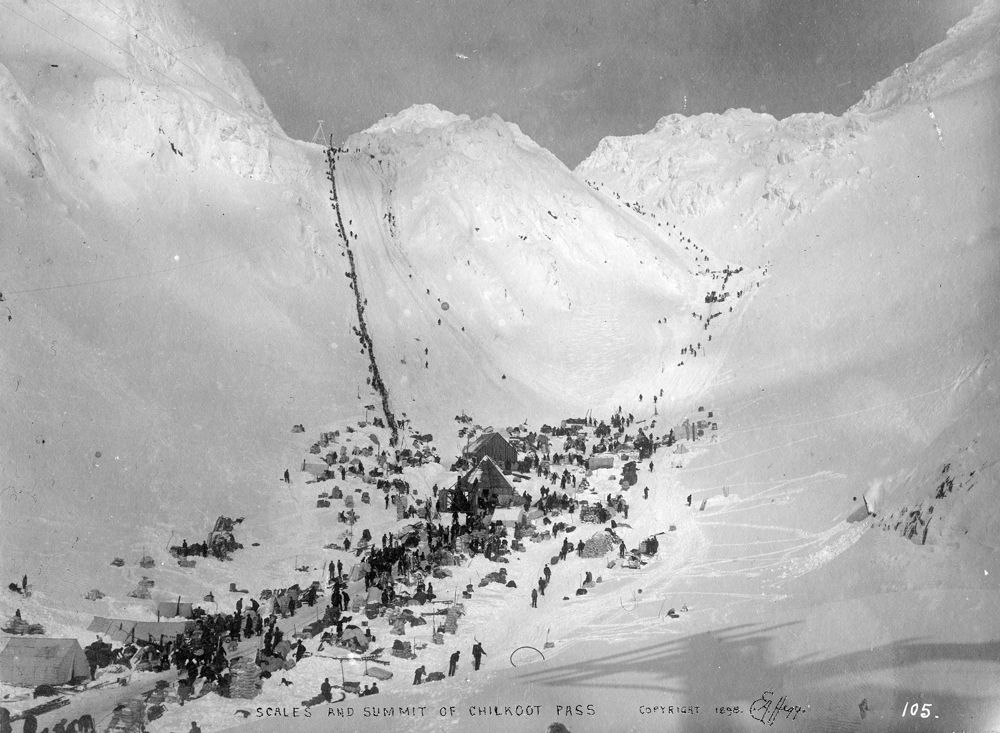
The Klondike Gold Rush of 1896 is one of the purest natural experiments in spontaneous order you will ever study. George Carmack and his companions struck gold at Bonanza Creek on August 16, 1896, and within two years over 100,000 people had attempted the brutal journey to Dawson City in Canada's Yukon Territory. No government planned this. No bureaucrat allocated the labor. The price signal embedded in gold did what prices always do: it coordinated the decisions of tens of thousands of strangers without a single committee meeting.
What actually made the rush function was a system of private property rights that miners invented and enforced themselves before Canadian authorities had any meaningful presence in the region. Miners formed local committees, established claim registration systems, and created enforceable rules about staking dimensions (typically 500 feet along a creek). Disputes got settled through peer arbitration. Men who cheated found themselves expelled from the community and effectively blacklisted. Order emerged from the bottom up, forged by people who had skin in the game and zero patience for freeloaders.
The Canadian government eventually showed up, of course. The North-West Mounted Police imposed royalty schemes (initially 10% of gross output, later modified under pressure), created licensing requirements, and generally inserted themselves into an already-functioning productive order. Costs rose. Smaller operators got squeezed out. The big corporate dredging operations that dominated the Klondike after 1900 were partly a product of regulatory overhead that only large capital could absorb. Regulation priced out the little guy instead of protecting him.
The deeper lesson here is about scarcity and title. The frozen ground had zero economic value until individual human action transformed it. A man who spent months hacking permafrost to extract gold had a legitimate property claim not because a government granted him a certificate, but because he mixed his labor and his life with that resource. Property rights precede the state. They don't flow from it. Dawson City proved it empirically in one of the harshest environments on earth.
People like to treat property rights as a polite legal convention, something courts invented to keep things tidy. Try to tell that to a man who spent the winter of 1897 in a canvas tent at forty below, defending his claim with a rifle and a handshake agreement.
Mao Zedong killed roughly 45 million people between 1958 and 1962, and the backyard steel furnace campaign sits at the center of that catastrophe as a textbook case of central planning consuming itself alive.
The logic of the Great Leap Forward went like this: if the Soviet Union industrialized through state-directed production, China would do it faster and bigger. Mao ordered peasants across every province to smelt steel in small furnaces built on collective land. Party officials set output quotas with no reference to actual resources, actual skills, or actual demand. Farmers melted down their own plows, woks, and door hinges to hit the numbers. They stripped hillsides bare for fuel. What came out of those furnaces was overwhelmingly pig iron so brittle it had zero industrial use. The quotas got reported as fulfilled, the statistics traveled up the command chain, and Beijing celebrated a triumph that existed only on paper.
You have to understand what those farmers were abandoning to stand at furnaces all day. The 1958 harvest was, by most estimates, actually decent. But with the rural labor force diverted to smelting operations, crops rotted in the fields unharvested. Free market economists call this opportunity cost: every hour a farmer spent producing worthless slag was an hour not spent producing food. The price system, had anyone been allowed to use it, would have made this tradeoff immediately visible. Prices signal scarcity. Planners just issue directives and wait for reality to disobey them.
Local officials faced execution or labor camps for reporting shortfalls, so they reported surpluses. Beijing then exported grain abroad, partly to service debts to the Soviet Union, partly to project an image of socialist success, even as provinces like Anhui and Sichuan descended into mass starvation. The state had monopolized food distribution, so when the numbers were wrong, there was no private market, no informal trade network, no alternative channel to move grain to the dying. The apparatus designed to feed people became the mechanism that starved them.
This is what the elimination of private property and price signals actually produces in practice: 45 million corpses and a generation of Chinese children who grew up stunted by famine.
Le plus grand rebelle anti-système de l'art moderne n'était en fait que la marionnette la plus docile de la CIA.
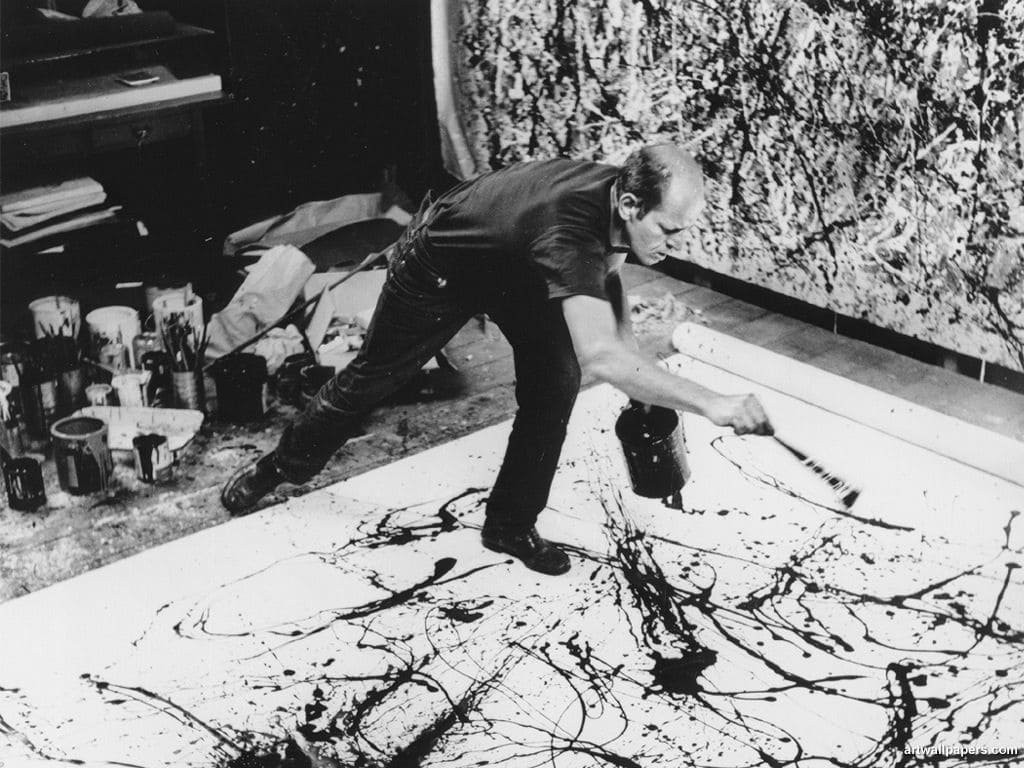
New York, 1950. Jackson Pollock est ivre. Fauché. Profondément anti-américain.
Dans son atelier crasseux, il jette violemment de la couleur sur la toile.
Il veut détruire l'ordre bourgeois. Il est persuadé de cracher au visage du gouvernement à chaque éclaboussure.
Mais à 350 kilomètres de là, dans un bureau sécurisé de Washington, quelqu'un l'observe.
Cet homme s'appelle Thomas Braden. Il porte un costume sur mesure. Il dirige les opérations culturelles de la CIA.
La Guerre froide s'intensifie. En Europe, l'URSS impose son « réalisme socialiste ». Un art lisse, parfait, glorifiant le communisme.
L'Amérique doit riposter. Elle doit prouver qu'elle est la patrie de la liberté d'expression absolue.
Le problème ? Le public américain et le président Truman haïssent viscéralement l'art moderne.
Braden prend alors une décision radicale. Il va pirater le marché de l'art mondial. Dans le secret le plus total.
Là où tout le monde voit des gribouillages d'ivrogne, l'espion voit une arme psychologique dévastatrice.
Le chaos abstrait de Pollock est l'antidote parfait à la propagande soviétique.
La CIA déclenche l'opération.
Braden met en place des fondations écrans. Il blanchit des millions de dollars de fonds secrets.
Cet argent noir va tout contrôler. Payer les critiques d'art. Acheter les toiles. Et propulser l'œuvre de Pollock dans les plus grands musées d'Europe.
Le braquage est un succès absolu. L'Europe est subjuguée par cette avant-garde féroce. L'Amérique gagne la guerre de l'image.
Pollock, lui, est mort en icône mondiale.
Il était persuadé d'avoir fait plier le système par la seule force de son génie subversif.
Il n'a jamais su que sa rébellion avait été intégralement financée par l'agence qu'il détestait le plus au monde.
Marlon Brando once told Dick Cavett that everyone on Earth is an actor.
Then he proved it, live on air, by dissecting Cavett himself.
It remains one of the most disarming exchanges in talk show history.
Cavett opened by pressing Brando on something he had read for years: that Brando considered acting "not a fit profession for a man." Brando deflected at first. "We can't believe the press; I don't know what we can believe in this country."
But then, in his words, "in an effort to help your ratings," Brando laid out his real view of acting:
"I think that we couldn't survive a second if we weren't able to act; acting is a survival mechanism, a social lubricant, and we act to save our lives every day."
People lie constantly, he explained. By not saying what they think. By showing something they don't feel. By trying to give the appearance of feeling something they don't actually feel.
Cavett pushed back: "But that's not acting."
Brando disagreed:
"That is acting. When you're nervous or frightened in this chair, or distressed and angry, you know that is not what is necessary to be shown here, so you control your face. You're a highly controlled person and you have to do that."
Cavett argued there had to be gradations. He was motivated in the moment, but he couldn't wake up the next morning and repeat that same performance on command, take after take. Surely that skill, the thing Brando did better than almost anybody, was something different.
Brando refused the compliment. He pointed to the office worker who hates his boss but performs enthusiasm for his "impossible notions" day after day to keep his job.
Cavett countered that delivering the same line six times, getting "something deeper into it time after time," takes an actor. Everyday performances are one-time things with immediate motivation.
"No, they're not one-time things because it's a daily procedure," Brando replied. "The dialogue changes but the motivation doesn't."
Then came the moment the interview is remembered for. Brando turned the lens directly on his host:
"Right now, you're thinking of 60 things at once: 'Is it getting dull? Is he upset? Is he bored? Is he offended? Here's a good time for a joke.' You're doing this editing at an insane rate with a demeanor of levity and zest, and that finally isn't what goes on in your mind or feelings at all."
Cavett's response said everything:
"I just feel like all my clothes have been taken off."
Brando softened it. "I couldn't do what you do, and that's a different kind of acting; you're playing a different kind of role."
Cavett tried one final test. He handed Brando a commercial script and challenged him to read it, any way he wanted. Brando refused flatly: "No, I won't do it."
Cavett's closing line: "I'm glad you didn't. The man's incorruptible, and that's what I hoped."
Source: The Dick Cavett Show, interview with Marlon Brando (1973)
@MacroScope17 I remember the part where people were taking axes to their pianos to burn the wood in their fireplaces. They had held onto to them because they were "so valuable," but then they all wanted to sell at the same time and there were no buyers. Illiquid assets.
⚡️Karp is naming the real enterprise AI split.
The frontier labs sold intelligence as a universal product.
Enterprises are discovering that raw model access is not enough, and in sensitive environments it can become a sovereignty problem.
The issue is not only performance. The issue is control.
Who owns the model behavior?
Who owns the weights?
Who owns the prompts?
Who owns the data exhaust?
Who owns the workflow knowledge?
Who owns the company’s operational alpha after the model has observed it?
That is the center of the rant.
Karp is saying the frontier model layer is trying to become a tax on every enterprise’s private knowledge. Companies pay token fees, hand over context, expose workflows, and then fear the model provider can learn from, replicate, commoditize, or eventually compete with the very business it serves. Even if the lab says it will not do that, the trust problem remains because the customer does not control the full stack.
That is why Palantir plus Nvidia matters. The pitch is: keep compute, models, ontology, data, and operational logic under customer control. Use models as replaceable components. Do not let OpenAI, Anthropic, or any single frontier lab become the owner of the enterprise brain.
The strongest line is “they want to know they own the means of production.”
That is the whole architecture war.
In consumer AI, users tolerate dependence. In enterprise, battlefield, manufacturing, healthcare, intelligence, energy, and regulated finance, dependence is unacceptable. The model cannot be a black box that absorbs secret workflows and charges tokens forever. The model has to be embedded inside a controlled operational layer where the customer owns the data, governs the model, controls compute, switches providers, and preserves institutional alpha.
This is extremely bullish for Palantir’s ontology thesis.
Karp is basically saying the value is not just the model. The value is the application layer that turns models into usable, safe, governed action inside real institutions. That is exactly Palantir’s lane. Frontier labs provide cognition. Nvidia provides compute. Palantir provides the operating structure that makes cognition useful in environments where mistakes, leaks, hallucinations, IP loss, or data exposure are existential.
That is also why he is attacking token economics.
Token billing works when AI is a tool. It becomes offensive when AI is sold as transformation but the customer cannot see value, cannot control the stack, and suspects the vendor is capturing the business’s hidden knowledge. Enterprises do not want to rent intelligence from a potential future competitor. They want sovereign capability.
The AI bubble point is more precise than “AI is fake.”
Karp is not saying AI is fake. He is saying the frontier-lab business model may be mispriced, overtrusted, and structurally wrong for serious enterprise deployment. Compute plus application layer plus model is real. Raw model subscription sold as enterprise transformation is weaker. That is the knife.
So the likely outcome is not enterprise AI demand collapsing. The likely outcome is enterprise AI spend migrating away from generic chatbot/token subscriptions and toward controlled stacks: private compute, open or controllable models, Nvidia infrastructure, secure application layers, ontology, governance, auditability, and domain-specific deployment.
That is bullish for Nvidia.
Bullish for Palantir.
Bullish for sovereign AI stacks.
Bullish for open models when paired with secure deployment.
Bearish for frontier labs that assume they can own the customer relationship, the model layer, the data interface, and the economics forever.
The deeper geopolitical read: battlefield AI cannot be outsourced to consensus Silicon Valley. Karp is saying American warfighting, critical infrastructure, and industrial command systems need AI, but they cannot be dependent on model providers whose governance, safety ideology, product incentives, and data posture are misaligned with sovereign use. That is why he keeps saying Department of War, Ukraine, Israel, critical infrastructure. He is framing Palantir as the patriotic enterprise operating layer between uncontrolled frontier labs and national power.
The cleanest read:
The AI stack is splitting.
Model layer: powerful but commoditizing and politically distrusted.
Compute layer: scarce, profitable, strategic.
Ontology/application layer: where enterprise value, trust, control, and workflow ownership live.
Karp is arguing that the model companies overplayed their hand by acting like the model owns the future. Enterprise customers are realizing the future belongs to whoever controls the operational layer around the model.
That is exactly Palantir’s thesis.
And he is probably right.