Let’s look at history through law’s lens. First Amendment lawyer, historian & writer; Ed’r Emeritus Tx. Sup. Ct. Hist’l Soc. Journal; Trustee, Pilgrim Hall.
Start spreading the news! The Texas Supreme Court Historical Society will re-enact SCOTX’s 1925 All-Woman Court at the SBOT Ann. Mtg., 1:30-2:30 PM, 06/12/2026, Marriott Marquis, 1777 Walker St., Houston. 🏛️📜⚖️📃✍🏻
Re-Post pls.
More than $1 million was raised at this year’s Champions of Justice Gala benefiting civil legal services for low-income Texas veterans.
I was honored to serve as master of ceremonies for this important event hosted by @TexasATJ and @statebaroftexas. Veterans have given so much for all of us, and legal aid can help them with earned benefits, housing, family matters, and financial stability.
Grateful to everyone who helped make this year’s gala such a success.
Join me for my presentation at the 2026 @statebaroftexas Annual Meeting. Thank you for the invitation from the Appellate and Constitutional Law Sections!
#SBOT#SBOT26
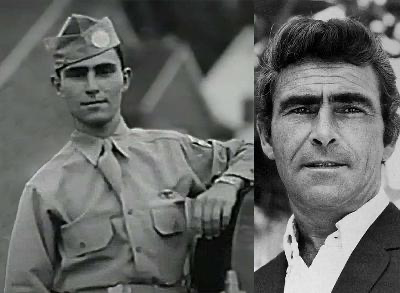
Like so many, my dad was plagued by PTSD and nightmares after the war. In college he switched his major to language and literature because, as he said, "I needed to get it out of my gut...write it down. This is the way it began for me."
Images: Rod Serling 1943 & 1975
Speaking of the Hueco Tanks, Traces of Texas reader Carrie Gonzales was at the tanks a few years ago when this gorgeous rainbow appeared. It's such an ethereal place. Being there feels sacred, somehow, and it's easy to imagine the people who were there 10,000 years ago.
Thank you Carrie. I'm jealous!
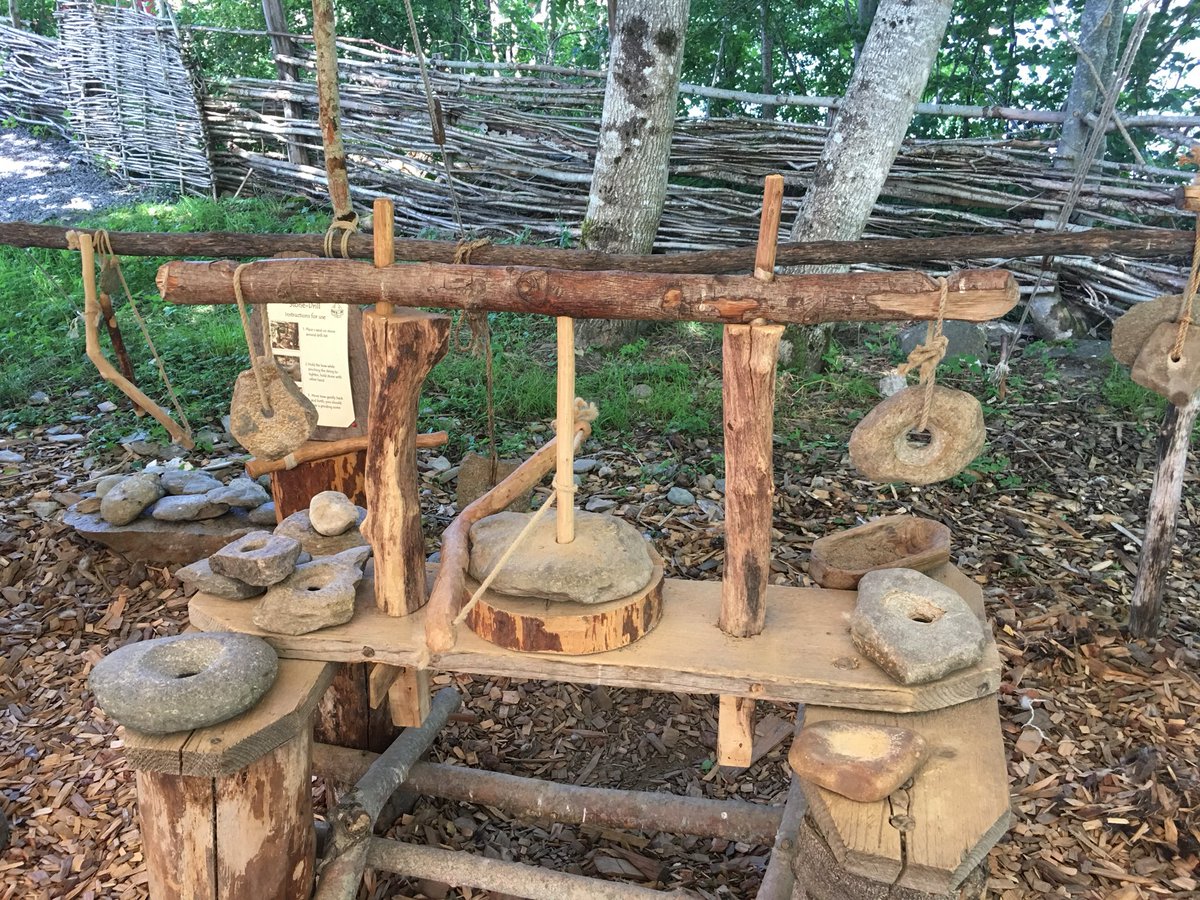
The Scottish Crannog Center has long been one of Scotland’s finest centers of archaeology, history, and heritage. I loved taking my family there in 2017—and I plan to visit the new Crannog on Loch Tay.
Thanks to #NationalLottery players @HeritageFundUK is supporting the construction of the new Crannog on Loch Tay with £281,198 funding for the Scottish Crannog Centre's Our House project.
Very exciting to see the project reach this stage.
I’m honored by the invitation to speak at UT Law CLE’s annual Dawson Conference on Criminal Appeals! It was to speak on AI and appeals, and it was even better to see former students, colleagues & friends, and of course fellow appellate judges from all over Texas!
We are excited to announce the election of the 2026-2027 Officers for the @SCOTXHistSocy. Their new terms will begin on June 1, 2026. Congratulations to our new Officers, and thank you for your service to the Society!
#SCOTX
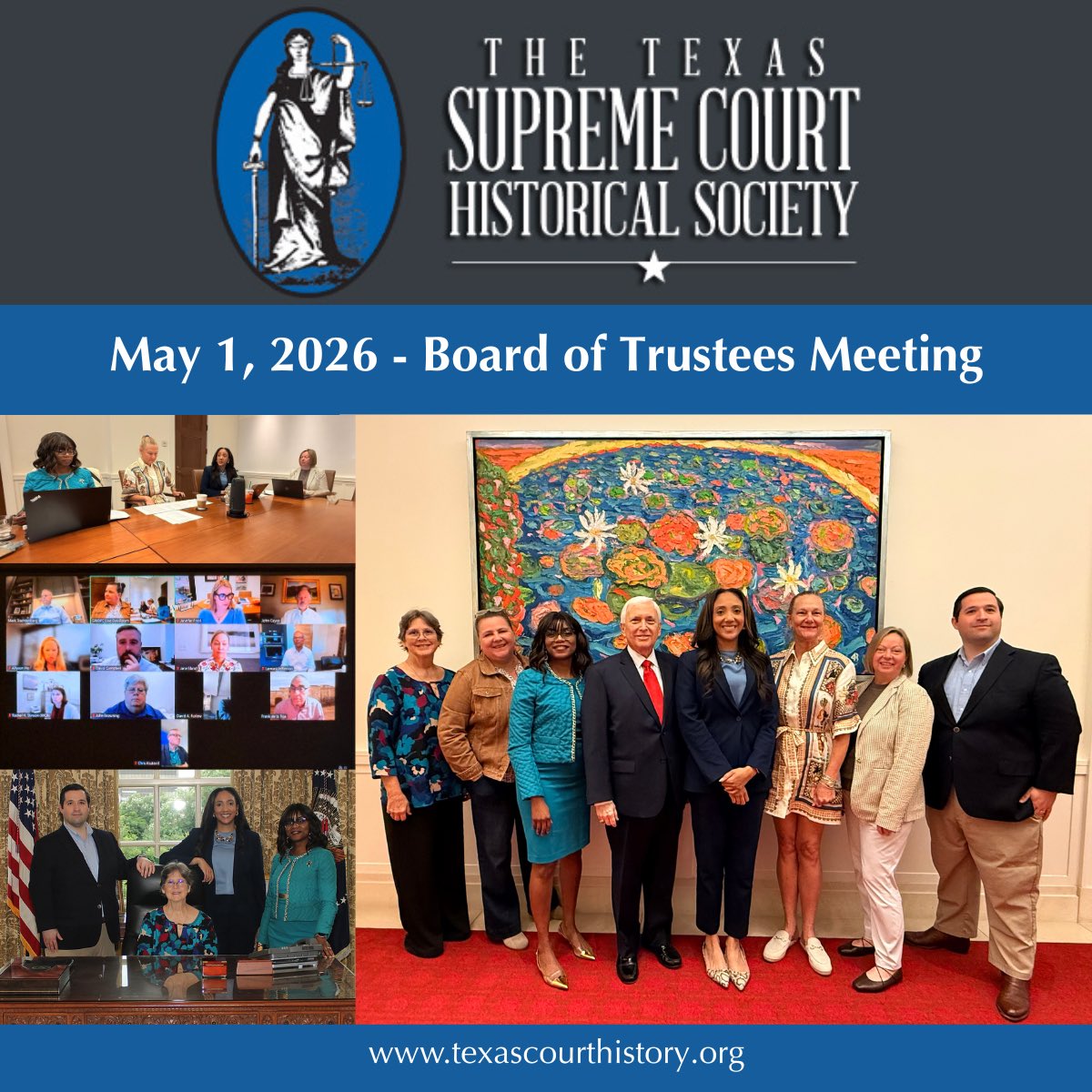
We had a wonderful meeting in Dallas with the @SCOTXHistSocy Board of Trustees. Thank you to all of the trustees who attended and contributed to a productive discussion. #TXlaw#TXlawyer#TXlawyers#TSCHS#SCOTX
There is a myth that America was settled largely by penniless adventurers here for a new start, and that they rose into men of prominence
Once you start investigating the myth, that's not really true. Virginia is a good example: it was a place where second sons and the middle classes could become leading men, or poor adventurers had a shot at becoming struggling yeomen. It was not, however, really a place where the penniless could be become great men
A good piece of evidence on this is that ALL of Virginia's leading families arrived with a bit of startup capital, enough to give them a shot but not enough to be a fortune back in England.
Evans makes a good point on this in A "Topping" People. As he puts it, all of the eventual FFV lines "came with substantial financial backing," and "theirs was not a 'rags to riches' story."
Giving an example, he notes, "William Fitzhugh, who arrived in 1670, had made a fortune by 1690 when he wrote that it took £300 to £400 to get started properly: £150 to £200 for land and a similar amount for slaves. This estimate may be high, especially for earlier years, but it is clear that this group had enough money."
Similarly, Bruce, in Social Life of Virginia in the 17th Century, notes: "THE quickness with which the founders of such fami lies as the Lee, Wormeley, Jennings, Randolph, Robinson, and Beverley rose to great influence after their arrival, shows that they were in a position to acquire lands in the Colony at once, because they had brought over with them the necessary means, which they had either inherited or received from their fathers. John Page, Miles Cary, and Nicholas Spencer continued to own property in England long after they had been in possession of large estates in Virginia. The earliest patents sued out by nearly all of the emigrants whose names soon became socially distinguished in the Colony, prove that they had, quite from the beginning, some fortune at their command with which to secure a share in the soil, and to establish a home; the large properties accumulated by them all were, like those of William Fitzhugh, Robert Beverley, and the elder Nathaniel Bacon, the result of extraordinary foresight and prudence, but a prudence and foresight which had something more than a mere determination to win success to start with."
And, as Louis B. Wright notes in The First Gentlemen of Virginia, "During the period of settlement, let it be repeated, the fundamental fact determining social status was capital. That some families were founded by the sons of gentlemen was of far less importance at the moment than whether they had money enough to bring over servants and take up large tracts of land. The tradesman, the merchant, and the gentleman who were adequately financed at the start gained a similar foothold in the economic structure of the colony, and, if they prospered sufficiently, they all became members of the ruling class, and, in the course of time, developed similar ideas about family, position, and social obligations. All of them had definite notions of what they would do with wealth, once they had attained it: they would become landed proprietors as much as possible like the country gentry of England, but they would adapt their "gen-tility" to the requirements of new conditions. And, whatever their background, that is what they did."
By contrast, there were but one or two planters whose lines started as indentured servants who rose to any position of prominence in the colony.
I think this is important, in that it shows what sort of opportunities are possible, even when the seeming opportunity is immense, and how being prudent about building up startup capital early on can lead to far greater opportunities down the line. This is often forgotten in the mythology of the frontier
“At the gray tea hour there were always rooms that throbbed incessantly with this low, sweet fever, while fresh faces drifted here and there like rose petals blown by the sad horns around the floor.” — F. Scott Fitzgerald, The Great Gatsby
Alamo Archaeology Church Preservation update!
Work was ongoing in excavation units 63, 67, 103, and 105. European earthenware, a partial Guerrero Point, gunflint, and a cuprous shot fragment were found. https://t.co/noJBArH3XI
Rangers at Inks Lake State Park have discovered a rare cluster of white bluebonnets growing beside the park's headquarters.
FULL STORY: https://t.co/t5wxZX9Fzt
Grateful to start the week by being quoted in the https://t.co/JKc7CKc1Zz article “ Figuring it Out How to Deal With This: How Are Courts Grappling With Disciplining AI Hallucinations?” Having worn the hats of advocate, judge, and professor gives me unique insights @FaulknerLaw!
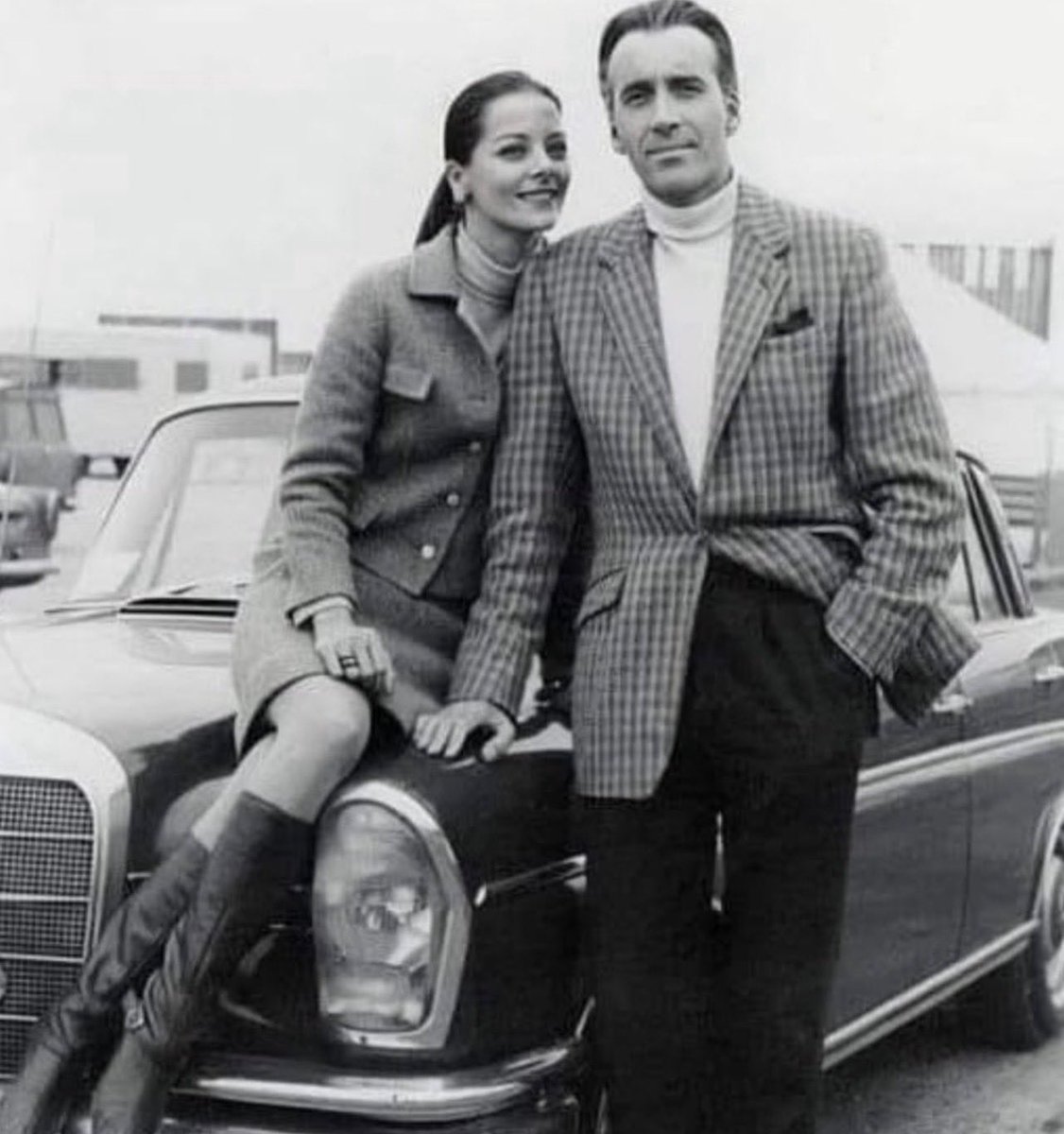
Sir Christopher Lee met Rasputin's assassins, was a RAF intelligence officer in WWII, spoke 9 languages, was Ian Fleming's cousin, and was the only actor in “The Lord of the Rings” to have met J.R.R. Tolkien. He was also married to the same woman for over 50 years. What a life!
The effective way the clarinet player does a musical call and response to the singer is just mesmerizing.
"Tu vuo' fa' l'americano" by Renato Carosone: cover by Hetty and the Jazzato Band, an Anglo-Italian jazz quintet.