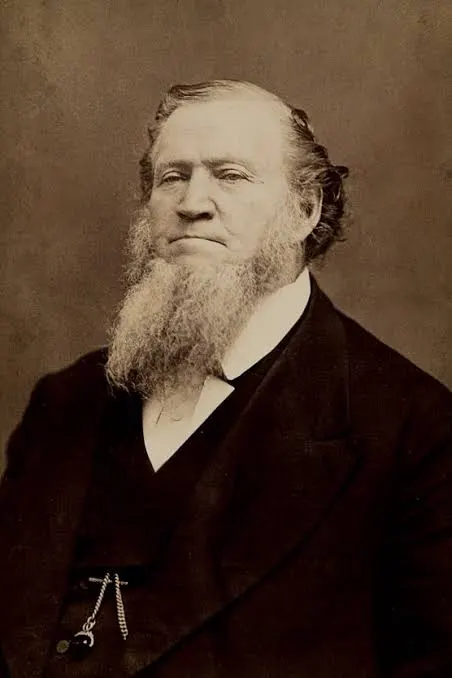
In the First Vision, Joseph Smith said that the Lord told him “all their creeds are an abomination in his sight”.
In 1820, the word "abomination" did not just mean "something I really dislike" (which is how we use it today). Historically and scripturally, it meant something that was misaligned with God's order or a counterfeit of the true covenant.
Many Christians today take that statement and apply today’s standards and focus on it. As with most things in history, its important that we look at what was happening at the time.
Historians now call the area where Joseph Smith grew up and where the first vision occurred as the “Burned-over District” because revivalism swept through it so intensely that “there was no more fuel to burn”.
Revival preachers frequently attacked rival denominations by using their creeds as weapons in revival sermons.
Methodists accused Presbyterians of “cold Calvinism.”
Presbyterians accused Methodists of “Arminian heresy.”
Baptists accused both of infant baptism error.
This was not an isolated practice. Newspapers published creedal summaries. Ministers debated creeds in pamphlets. Churches advertised their creeds to attract converts.
Today, people focus on the 4th century creeds as a dividing line, but in the world where Joseph Smith grew up, there were other, more hotly debated creeds that were used to distinguish one Protestant group from another.
Presbyterians used the Westminster Confession
Methodists used the Articles of Religion
Baptists used the Philadelphia Confession
While these creeds applied the 4th-century definitions of God that alone wasn’t enough to stop a bitter argument about how salvation actually works and what would get them to heaven. (Sounds like the same arguments we hear today)
Much like how the 4th century creeds are used to gatekeep members of the Church of Jesus Christ, these creeds were not optional. They defined who was “orthodox” and who was not. Most of the churches during this time required an assent to a creed before baptism, communion, or full membership.
This is very important to understand, because when the Lord instructs Joseph Smith about creeds makes sense when you understand how they operated in the world which the 14-year-old boy lived.
Creeds divided Protestants. They excluded people from membership. They defined who was saved and who was damned. They fueled the firestorm of religious activity at the time.
This is why members of the Church of Jesus Christ react as they do to creeds (which mostly in today’s environment are the 4th-century creeds that are the current marker of a “true Christian”). When the First Vision calls the creeds an abomination, it isn’t saying every line in them is wicked. It’s pointing to the bigger problem: people using man‑made formulas to police belief and divide Christ’s followers. That’s what had corrupted Christianity.
President Hinckley gave us some of the most profound quotes on the family:
“The family is divine. It was instituted by our Heavenly Father. It encompasses the most sacred of all relationships. Only through its organization can the purposes of the Lord be fulfilled.”
“As long as persecution comes from without, we can combat it, and it does not injure the work of the Lord; but when there is disunion among the people, and a tendency to disregard counsel, then there is danger in Zion.” - Abraham O. Woodruff
Many have criticized President Nelson for announcing so many temples.
I work in real estate development. Major projects often take years before they ever go vertical. Those outside the industry rarely see the, politics, permits, approvals, legal work, and countless hurdles that happen long before construction begins.
What if President Nelson announced so many temples because the Lord knew they needed to be in the pipeline years in advance?
I believe we’re entering a season of remarkable worldwide growth. The difference this time is that the temples will already be there, ready to receive new converts as they continue on the covenant path.
The Lord sees the end from the beginning. President Nelson was inspired. This was revelation.
ONE WEEK AWAY until we return to the Hollywood Bowl! The Tabernacle Choir performed at the Hollywood Bowl in 1962. The countdown is on for 'Songs of Hope' with the Tabernacle Choir and Orchestra at Temple Square, joined by Donny Osmond, David Foster, Katharine McPhee, Stephanie J. Block, Sebastian Arcelus, and the Bonner family! June 24–25 is almost here -- see you soon for an unforgettable night of music and hope. Don't forget to purchase your tickets! https://t.co/Z0R7I5pLot
Jesus answered them, and said, My doctrine is not mine, but his that sent me.
If any man will do his will, he shall know of the doctrine, whether it be of God, or whether I speak of myself. - John 7:16-17
If you want to know if a principle is true and from God, do it. You will know by experience and the power of the Holy
Ghost
Two brothers in a family are troubled by the same Gospel concern. Over time, one brother grows jaded, and criticized the Church and its leaders. Meanwhile, the other brother's testimony grows steadily brighter.
What makes the difference? The answer is 1 Nephi 2:11-16.
Neither Laman nor Nephi initially received a testimony of Lehi's prophetic call. Neither one knew "the dealings of that God who created them" in this aspect. But while Laman filled the gaps in their understanding with cynical conjecture, Nephi sought revelation.
Note that Nephi didn't receive a full *answer* at that time. He only says the Lord "did soften my heart that I did believe... wherefore, I did not rebel."
There are countless supposed controversies popular right now in the Church, and it's all too easy to resolve them with criticism or even rebellion.
You may not learn in this life WHY the Lord forbade tea, commanded polygamy, or allowed the racial ordinance ban. But if you seek it, you will receive a softened heart and a conviction that the Lord is at the helm.
Protestant:
There was never a Great Apostasy.
Latter-day Saint:
Did the medieval Church become corrupt?
Protestant:
Yes.
Latter-day Saint:
Were false doctrines taught?
Protestant:
Yes.
Latter-day Saint:
Were unauthorized practices introduced?
Protestant:
Yes.
Latter-day Saint:
Did reformers need to recover lost truth?
Protestant:
Yes.
Latter-day Saint:
So you believe there was corruption, false doctrine, unauthorized practice, and a need to recover truth…
You just don’t want to call it an apostasy.
Words Of Wisdom From Children. These Are
Brilliant.
1. Never trust a dog to watch your food. Patrick,
age 10
2. When your dad is mad and asks you, "Do I look stupid?* don't answer him. Michael. 14
3. Never tell your mom her diets not working.
Michael, 14
4. Stay away from prunes. Randy, 9
5. Never pee on an electric fence. Robert, 13
6. Don't squat with your spurs on. Shelly, 13
7. Don't pull dad's finger when he tells you to.
Emily, 10
8. When your mom is mad at your dad, don't let her brush your hair. Bridgett, 11
9. Never allow your three-year old brother in the same room as your school assignment. Traci, 14
10. Don't sneeze in front of mom when you're
eating crackers. Mitchell, 12
11. Puppies still have bad breath even after eating a tic lac. Andrew, 9
12. Never hold a dust buster and a cat at the
same time. Timmy, 9
13. You can't hide a piece of broccoli in a glass of
milk. Jeffrey, 9
14. Don't wear polka-dot underwear under white shorts. Kellie, 11
15. If you want a kitten, start out by asking for a
horse. Naomi, 15
16. Felt markers are not good to use as lipstick.
Lauren, 9
17. Don't pick on your sister when she's holding a baseball bat. Joel, 10
18. When you get a bad grade in school, show it to your mom when she's on the phone. Amy, 13
19. Never try to baplize a cat. Jason, 8
My thoughts after 3 months in the US/Texas🇺🇸:
- Americans are way more extroverted than Europeans
- Talking to strangers is normal here
- My first H-E-B trip felt like Boris Yeltsin seeing an American grocery store
- Some food is more artificial, but the amount of choices is insane
- You can still eat healthy. You just have to choose it
- High risk, high reward is real
- Way more people are entrepreneurial
- People dream bigger than in Europe, and they actually execute
- Obv not everyone is smarter, but the smart people are world-class
- Successful people here are way more down-to-earth. In Europe, successful people care about status and can be arrogant
- Cars. Enough said
- Americans have perfected artificial sweets
- There’s still more freedom here than in Europe
- One thing I didn’t expect: some Americans talk down on America
- As an outsider, that’s weird, because imo it’s still the greatest country on Earth🇺🇸🇺🇸
Mormon: What do I need to be saved?
Evangelical: Do you believe in Jesus?
Mormon: Yes.
Evangelical: The Jesus of the Bible?
Mormon: Yes.
Evangelical: That Jesus is the Son of God?
Mormon: Yes.
Evangelical: That He died for your sins?
Mormon: Yes.
Evangelical: That He rose from the dead?
Mormon: Yes.
Evangelical: That He’s the only way to salvation?
Mormon: Yes.
Evangelical: Then why don’t you believe in Jesus?
Mormon: …I just said I do.
Evangelical: No, not that Jesus.
Mormon: Which Jesus?
Evangelical: The Biblical Jesus.
Mormon: The one who is the Son of God, died for sins, rose from the dead, and is the only way to salvation?
Evangelical: Yes.
Mormon: That’s the one I believe in.
Evangelical: No, you believe in a different Jesus.
Mormon: How is He different?
Evangelical: Because you don’t believe in the right Jesus.
Mormon: Which Jesus is the right Jesus?
Evangelical: The Biblical Jesus.
Mormon: …
Evangelical: …
Mormon: We’ve been standing in this same circle for three hours, haven’t we?
Evangelical: That’s exactly what someone who doesn’t believe in the Biblical Jesus would say.
“Every faithful Methodist that has lived up to, and faithfully fulfilled the requirements of his religion, according to the best light he had, doing good to all, and evil to none; injuring no person upon the earth, honoring his God as far as he knows, will have as great a heaven as he ever anticipated in the flesh, and far greater. Every Presbyterian, and every Quaker, and every Baptist, and every Roman Catholic member, every reformer of whatever class or grade, that lives according to the best light they have, and never have had an opportunity of receiving a greater light than the one in their possession, will have and enjoy all they live for.” - Brigham Young
God loves ALL His children. God is fair. God is good.
The fundamental principles of our religion is the testimony of the apostles and prophets concerning Jesus Christ, ‘that he died, was buried, and rose again the third day, and ascended up into heaven;’ and all other things are only appendages to these, which pertain to our religion.
- Joseph Smith
For 20 years, students at a strict Catholic school in Los Angeles feared their calculus teacher.
Then they discovered where he spent three nights every week.
His name was Jim O’Connor.
Former Navy veteran.
Math teacher.
Relentlessly demanding in the classroom.
At St. Francis High School, students knew him as the teacher who never accepted excuses.
Discipline mattered.
Effort mattered.
Precision mattered.
Nobody would have described him as soft.
Then one day in 1989, a friend asked Jim to donate blood at Children’s Hospital Los Angeles.
He had Type O-negative blood — the universal donor type.
He gave once.
Then he kept coming back.
Over time, hospital staff noticed something else about him.
After donating blood, Jim would stay.
He learned about a small volunteer group that cared for infants who were sick, abandoned, withdrawing from drugs, or simply alone for long stretches of time.
Babies who needed to be held.
So Jim signed up.
Three days a week.
For 20 years.
After finishing work at school, he’d drive to the hospital, walk into the neonatal ward, pick up whichever baby needed comfort most, and quietly rock them to sleep.
He fed them.
Walked the halls with them late at night.
Sang softly to them.
Held them against his chest for hours.
Nurses said he could calm even the fussiest infants.
And he never told anyone at school.
Not coworkers.
Not students.
Nobody.
For two decades, the toughest teacher on campus spent his evenings comforting fragile newborns in dark hospital rooms.
Then a group of students organizing a blood drive visited the hospital.
The moment they mentioned St. Francis High School, hospital staff lit up.
“Do you know Jim O’Connor?”
The students were confused.
Then they saw the plaque listing the hospital’s top blood donors.
At the very top was their calculus teacher’s name.
Jim O’Connor had donated 72 gallons of blood.
And volunteered with infants for 20 years without ever mentioning it.
When reporters later asked why he kept it secret for so long, Jim looked genuinely confused by the question.
“I wasn’t hiding it,” he said.
“I just didn��t think it was anybody else’s business.”
That’s probably why the story still moves people.
Because real kindness rarely announces itself.
Sometimes the people who seem hardest on the outside are carrying the softest hearts in complete silence.
And sometimes the most extraordinary things a person does are the things they never felt the need to tell anyone about.