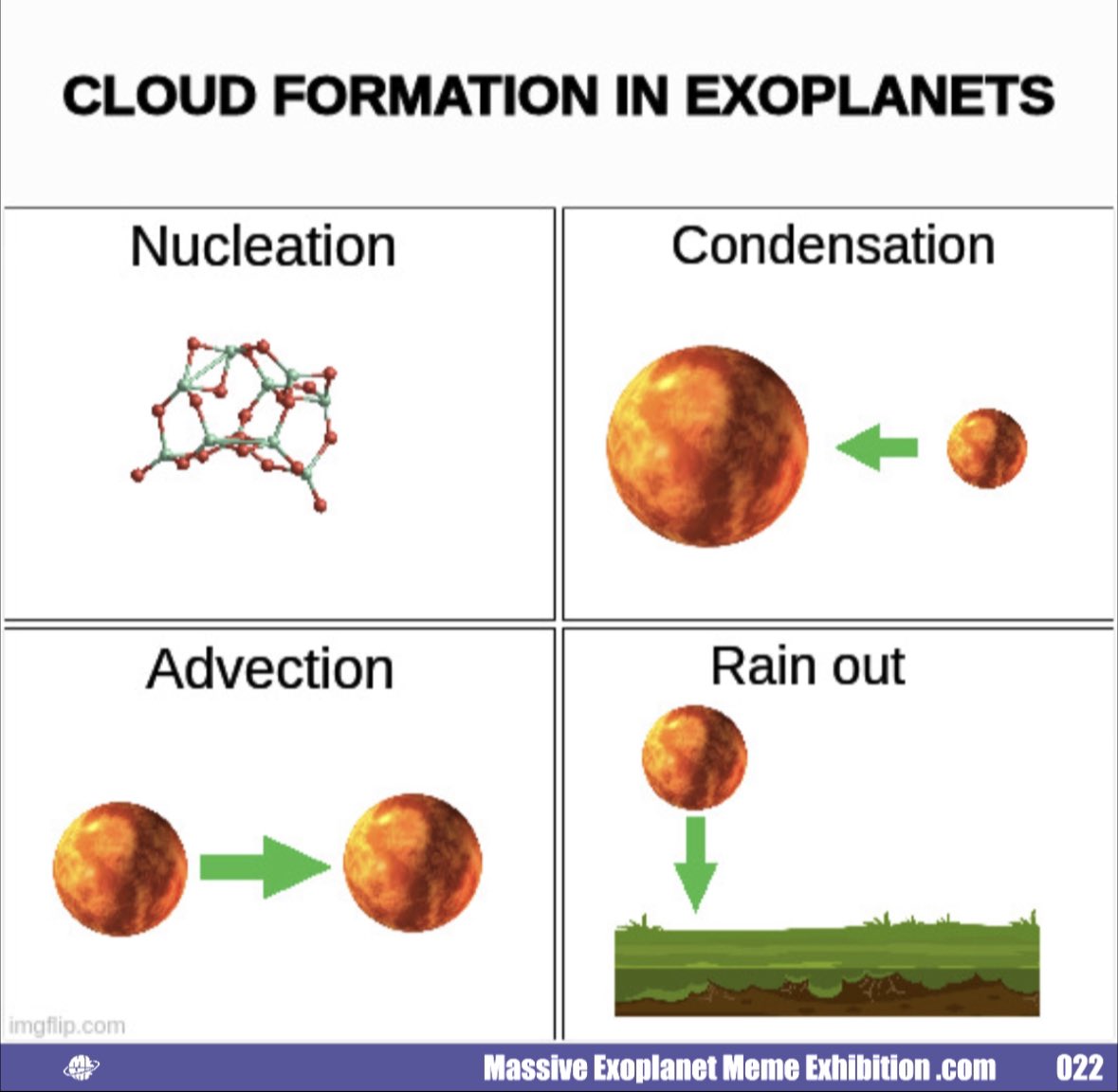
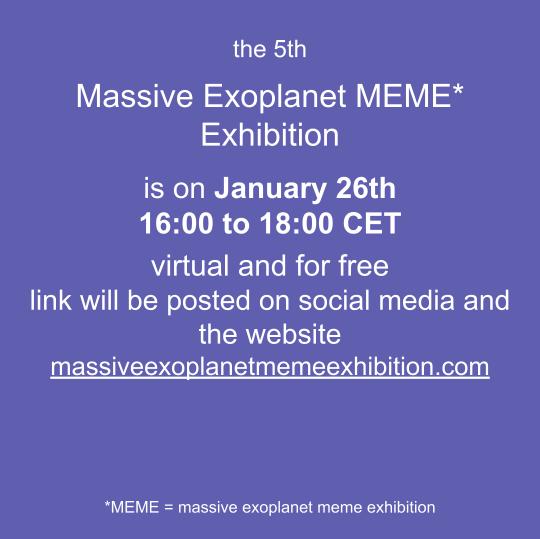
SAVE THE DATE: The MEME2025 Exhibition is happening on January 31st! If you want your memes featured in the exhibition make sure you send them to us as soon as possible! You can submit your memes through our website: https://t.co/NdU24968ZC
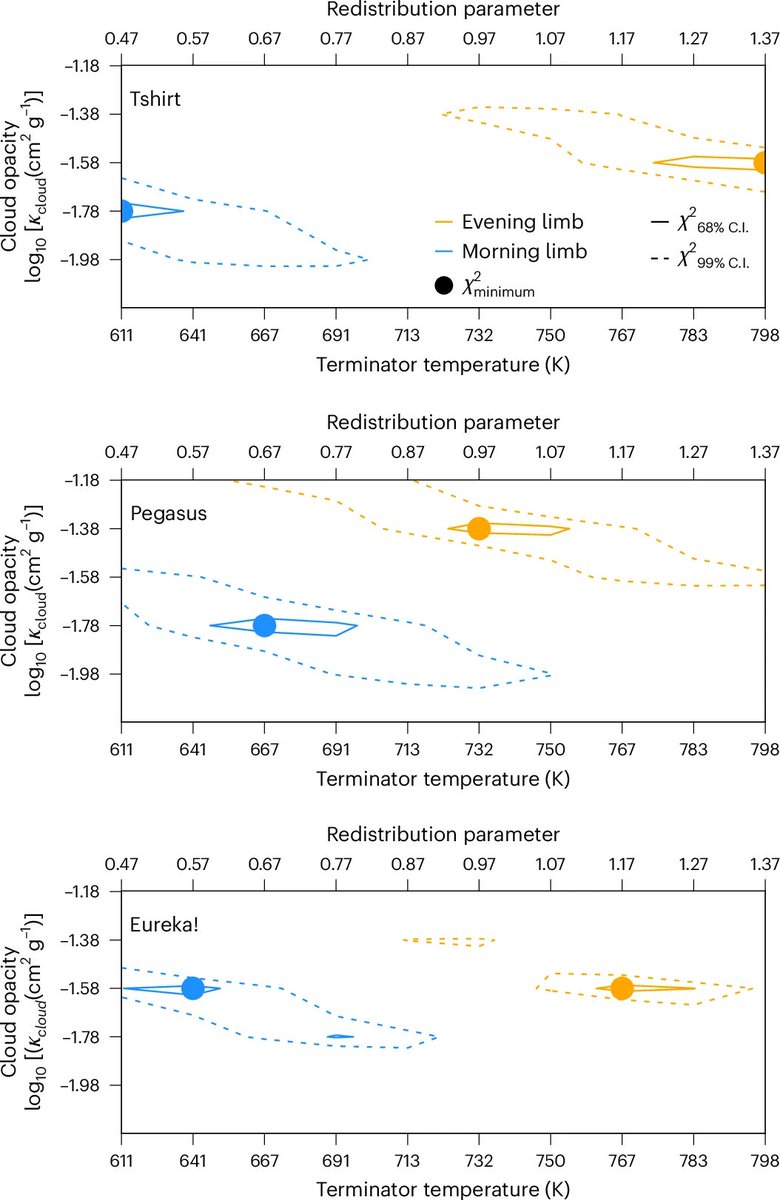
WASP-107 b is a cool low-density exoplanet that experiences ~100 K of morning-evening temperature difference usually found in much hotter planets. Complex atmospheric models are needed to explain this behaviour. Murphy et al.: https://t.co/h71frb5UIk / https://t.co/P4MZqZPFHi
Do you want to do PhD in planet formation theory? 🪐 If yes, you should apply to join my group at @MPSGoettingen! The deadline is on October 1st, 2024. Details here: https://t.co/VLCOjk7dXT
Webb's stability and precision allowed scientists to separately observe both sides of WASP-39 b's day/night boundary. Unlike what we may expect on Earth, the evening side of WASP-39 b appears hundreds of degrees hotter than the morning side, with morning likely to be cloudier.
WASP-39 b is a tidally locked planet: One side is in eternal day, the other in eternal night.
By observing the day/night boundary, Webb has confirmed — with extraordinary precision — the differences in temperature and cloud cover between the two sides. https://t.co/HDQCBRLLPh
The program for this years exhibition has been set! We are still accepting meme submissions so submit yours through our website if you want it featured in the exhibition: https://t.co/NdU2495Ba4
Today is the day!! We will post the link to the exhibition here at 15:45. It will also be available on our website: https://t.co/LgBsE5XdLW
The map of the exhibition hall is already available:
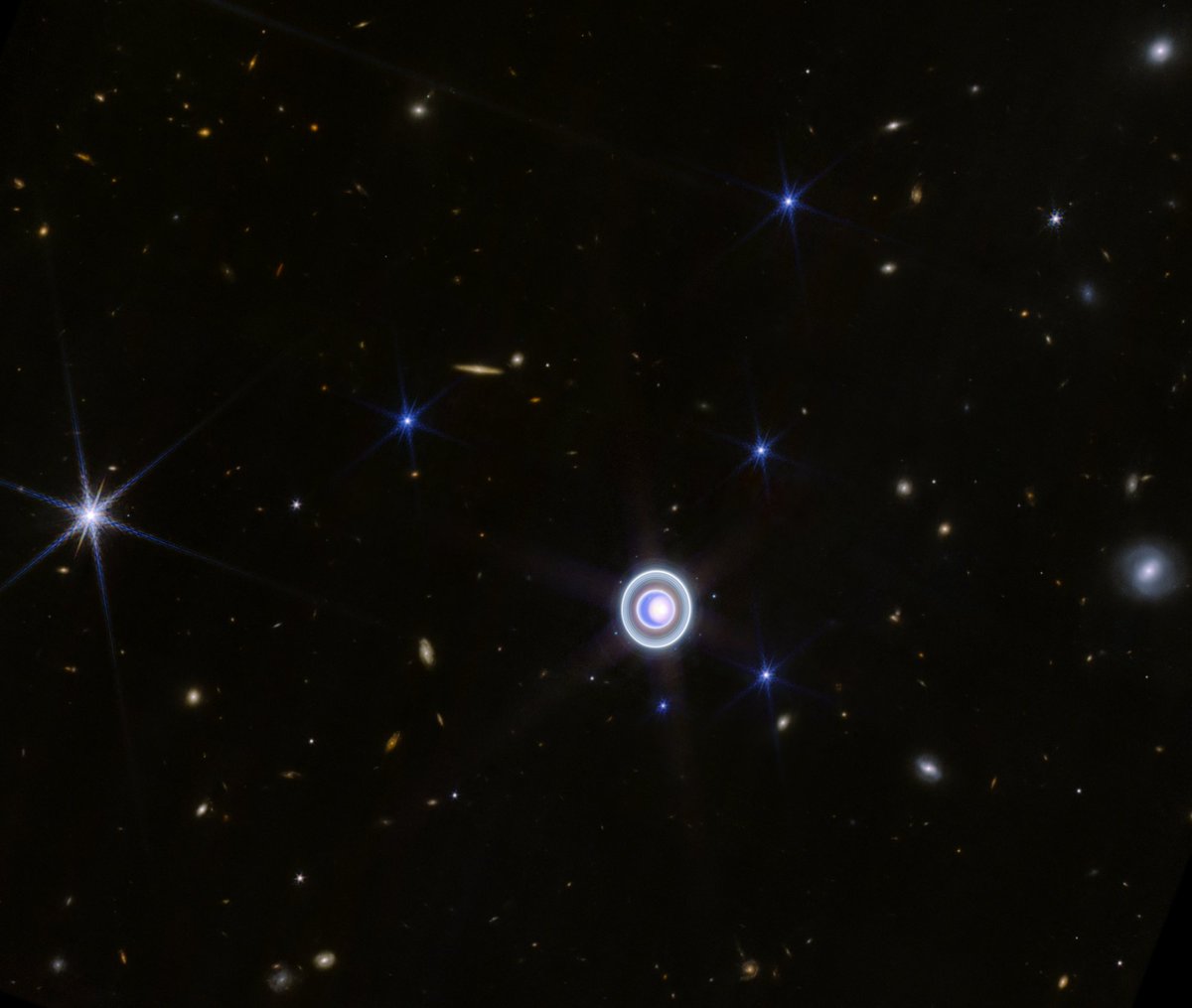
In visible wavelengths, #Uranus may appear a frigid blue ball, but looking at it in infrared with @ESA_Webb has revealed a dynamic world with rings, moons, storms, and other exciting atmospheric features!
Read more 👉 https://t.co/gDI8g8jrFH
Seen here by Webb, ice giant Uranus is a dynamic world with rings, moons, storms, extreme seasons, and more. Webb’s sensitivity has even captured the close-in Zeta ring, faint, diffuse, and elusive. https://t.co/T85e7JHwrm
Earlier this year, my colleagues at the @IWF_oeaw and I collaborated with artists for an exhibition on exoplanet atmospheres as part of the #Steiermarkschau - this week, that exhibition opened its doors at the @ACFNY in New York City 😀
Go and check it out if you're in the area!
Of course Saturn brought its ring light 🪐
Webb took its first near-infrared look at Saturn on June 25. The planet appears dark at this wavelength, as methane gas in its atmosphere absorbs sunlight — but its icy rings stay bright! Learn more: https://t.co/M27lrHPaTM