Very cool model by @reve. The details and edibility are mind-blowing!
From the researchers' posts, I can gather the following:
1. Pixel-space diffusion: they explicitly said "no latent auto-encoders". This is the main reason behind their text rendering quality and realistic/non-plastic-like results (my guess). Latent models somehow create these very distinctive plastic-like textures but pixel-space doesn't (corroborated in the AsymFlow (https://t.co/fYd2XylPol) paper). Of course, training data is another factor but I wouldn't know.
2. Layout as conditioning: they use hierarchical bounding boxes as the actual conditioning input to the diffusion model (they have some text-to-layout generator, again, my guess). This is a much cleaner way than having crazy prompt expanders or json structures. Visual layouts can obviously allow for more fine-grained control compared to pure text. It's also much easier to define coarse-to-fine structures with hierarchical layouts than prompts.
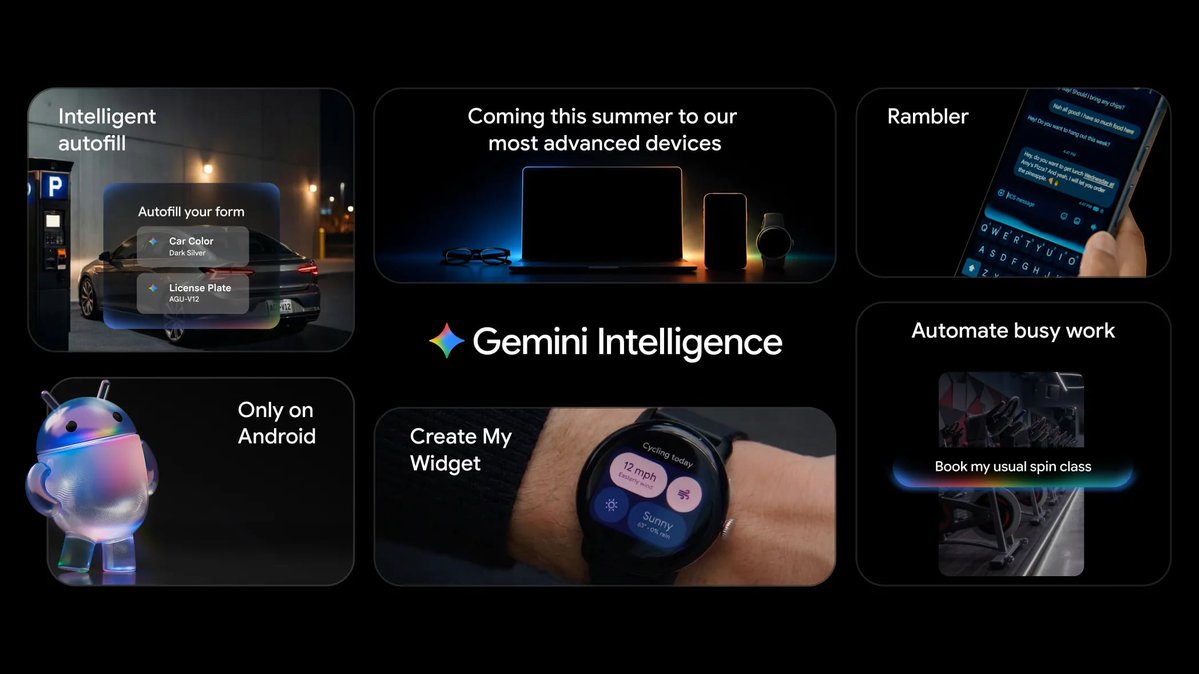
🧵 HILO: Google acaba de reinventar Android para 2026. 🚀
Desde laptops con IA nativa hasta un sistema operativo que "hace tus tareas por ti". Aquí te resumo lo más brutal de #TheAndroidShow I/O Edition. 👇
10/10 ¿Cuándo llega? Android 17 y estas funciones de Gemini Intelligence empezarán a desplegarse este verano, comenzando con dispositivos Samsung Galaxy y Google Pixel. El futuro ya está aquí. ⚡