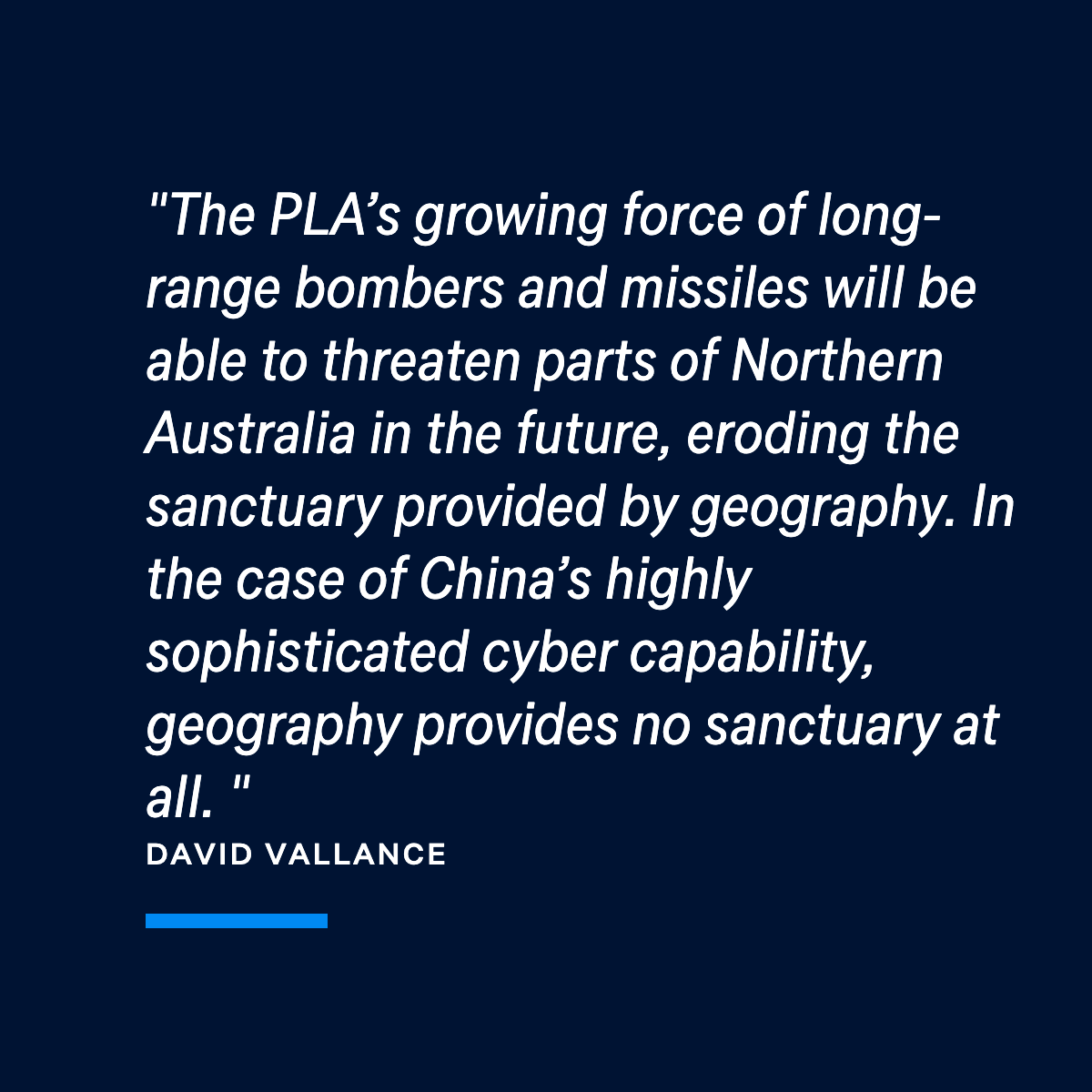
Very pleased to be able to share this @LowyInstitute analysis in which @SamRoggeveen and I examine what China's long-range strike capabilities could do to Australia, now and in the future. 1/
https://t.co/3jzOmbKvBf
Department of War Restores U.S. Pacific Command Designation.
CAMP H.M. SMITH, Hawaii — The Department of War announced today that the U.S. Indo-Pacific Command (USINDOPACOM) will officially restore its name to the U.S. Pacific Command (USPACOM).
Originally established on January 1, 1947, by President Harry S. Truman, the command operated under the USPACOM banner for over 70 years, standing as the oldest and largest of the United States' unified combatant commands.
Restoring the legacy USPACOM designation honors the command’s deep historical roots, fostering a sense of pride and collective spirit among all who serve in the Pacific. From its critical role in establishing the post-WWII regional security architecture to its coordination of joint forces during the Korean War, the Vietnam War, and countless humanitarian operations, the USPACOM namesake carries decades of military heritage and enduring regional partnerships.
USPACOM’s vast area of responsibility—spanning from the waters off the West Coast of the United States to the western border of India—remains exactly the same. The command's fundamental mission and its unwavering commitment to maintaining a free and open theater alongside regional allies and partners are unchanged.
https://t.co/5zeycP2lip
The paper is not saying China is an enemy or a friend, a partner or an adversary. It makes no judgments about those questions. In fact, we're implicitly saying that such questions need to be set aside when planning the nation's defence.
In response to some commentary about the @LowyInstitute paper I co-authored with @DavidGVallance, published yesterday, a few thoughts on military capabilities and the intentions to use it: https://t.co/Ng9YIMjTwa
Thank you to my co-author Sam Roggeveen, to @MihaiSora for his notes and suggestions, to @ClareECaldwell for her excellent edits, and all many other colleagues who have made this possible with their advice and assistance. 7/
Very pleased to be able to share this @LowyInstitute analysis in which @SamRoggeveen and I examine what China's long-range strike capabilities could do to Australia, now and in the future. 1/
https://t.co/3jzOmbKvBf
Debates about how best to act within these changed circumstances must be supported by facts and not speculation. It is not enough to say that the balance of power has changed - it is important to show how, which is what we have done here. 6/
China's capacity to hit the Australian mainland will grow substantially over the next decade, warn @SamRoggeveen & @DavidGVallance in a new Lowy Institute Analysis.
https://t.co/gNEj8KFPlS
@redunley@SamRoggeveen Wilkins is a great one. Only Aussie photographer to win the MC during WWI, first person to land a plane on pack ice, nearly shot by the Ottomans for spying in the Balkan Wars - plus a great naturalist
https://t.co/ibnq84mpEZ
Most interesting in this is the idea of the USN operating foreign designs. I'm not sure they've done that in their history. New FFMs for everyone?
https://t.co/mlWxWp96yM
Graham Allison (Harvard), qui a popularisé ce concept dans son ouvrage, ayant accès au plus haut niveau du Parti à Pékin.
PS: Thucydides a en fait une argumentation beaucoup plus nuancée et complexe que la seule transition de puissance pour expliquer la guerre.
Graham Allison (Harvard), qui a popularisé ce concept dans son ouvrage, ayant accès au plus haut niveau du Parti à Pékin.
PS: Thucydides a en fait une argumentation beaucoup plus nuancée et complexe que la seule transition de puissance pour expliquer la guerre.
@ArchieHall@TheEconomist The deal has never focused on repatriation for Chagossians. It’s about preserving the base while avoiding accusations of hypocrisy, mainly from China.
https://t.co/phUAF2bb8F