The real split isn't optimizing vs living, it's whether the data is quietly informing you or quietly running you. Same tracking, two completely different relationships. For some people a number is just ambient awareness they barely think about. For others it becomes the thing every day gets graded against, and only the second group "forgot how to live." The tech doesn't decide which one you are, your relationship to the number does. The healthiest version is probably data you can feel in the background and then ignore, the way you don't think about a fuel gauge until it's low. Most of the criticism you're getting is aimed at that second mode, not at paying attention at all.
The part that usually gets missed is that the busy schedule isn't just hiding the anxiety, it's often manufacturing it. Packing the calendar feels like coping, like if you just stay productive enough you'll outrun the feeling, so the schedule keeps growing and the load underneath it grows with it. And because being busy reads as "handling it" to everyone including yourself, nothing tells you to stop. By the time it surfaces as anxiety you've usually been running that deficit for months. The tell is almost never how you feel on a given day, it's the pace you've quietly normalized.
The reason "just don't miss days" is so much harder than it sounds is that no single day feels like it matters. Skipping today has almost no visible cost, and doing today has almost no visible reward, so the part of you deciding whether to show up is working with basically no feedback. That's why the people who are actually consistent almost always have some way of seeing the streak or the trend, something outside their own in-the-moment motivation. Kerr's real weapon isn't discipline exactly, it's that he stopped letting any single day's feeling get a vote.
The "I thought I felt great" part is the whole trap. Being revved up all day doesn't feel like a problem while you're in it, it feels like being productive and capable, which is exactly why nobody stops. There's no moment where your body taps you on the shoulder and says you're running too hot, until something eventually gives. That's what makes chronic sympathetic load so much sneakier than acute stress. You can't feel the baseline creeping up. The only people I've seen catch it early are the ones watching their own downshift over time instead of trusting how they feel in the moment, because in the moment it genuinely feels fine.
Worth warning anyone who tries this: heat acclimation wrecks your wearable data for the first week or two, and it looks exactly like overtraining or getting sick. Elevated resting HR, suppressed HRV, worse readiness, because your body's handling the thermal load on top of the training. People see that, assume they're breaking down, and back off right when the adaptation is actually happening. If you go chase the Houston plan, expect the numbers to look bad before they look good, and judge it by how you're running in week three, not by your recovery score on day four.
This applies just as hard on the recovery side, and it's where most people go wrong with their wearables. They pick one number, usually HRV or a readiness score, treat it as the verdict, and then panic when it dips. But recovery is the same kind of composite you're describing for performance. Resting HR, HRV, sleep, and how much life is throwing at you all move semi-independently, and any one of them can look off while you're actually fine. The read worth anything is the pattern across all of them over a couple of weeks, not today's single top-line number. Chasing one parameter up is how you end up optimizing the thing that was never the bottleneck.
@siimland The honest reason people skip this whole list for actual peptides is that none of it feels like you're doing anything. There's no dose, no protocol, no before-and-after photo at week six.
@femalelongevity The corrective bucket is the part most people skip, and it's the whole game. Foundational stuff is easy to take on faith. But "targeted to my current labs, re-checked quarterly" means you're actually closing the loop between what you take and what changes, and almost nobody does
@bryan_johnson This is the sentence, and almost nobody feels it until something breaks. No diagnosis gets read as healthy, when really it just means nothing has gotten bad enough to earn a name yet.
@maxlugavere here's a real mechanism under this. The guys redlining every session never give the adaptation a chance to happen, because it happens during recovery, not during the circuit.
@thegarybrecka The cycle part is right, the 90-minute math is where it falls apart. Cycles aren't a clean 90 minutes. They run roughly 70 to 120, and they stretch and shorten across the night and from one night to the next.
@thegarybrecka Most of that list is subjective and easy to explain away as a bad week. The one that isn't is elevated resting HR. That's the one that shows up in the data before you're willing to admit you're overtrained.
your wrist wearable reports a breathing rate every night. it isn't measuring breathing. it's inferring it from tiny changes in your heart rate. works ok lying still, falls apart the second you move.
the "recovery" number your watch hands you every morning is a guess stitched from resting heart rate, HRV, and how much you moved overnight. some mornings it says you're fine when you feel wrecked. that's not the watch being wrong. it measured three things. you're feeling fifty.
@Brady_H Worth adding for anyone about to go check their watch: the "cardiorespiratory fitness" or VO2max number on a wearable is an estimate pulled from your heart-rate-to-pace, not a lab measurement, so the absolute value can be off by a good margin.
@foundmyfitness That first one is the big one, and it's the piece a wearable actually gets close to right. People read 8 hours in bed as 8 hours slept, and the gap is often over an hour once you count how long it takes to fall asleep plus the wake-ups you don't remember.
@thegarybrecka This matches what shows up in the data too. When people track it, those boring fundamentals are what actually move their overnight recovery numbers. The fancy stuff most people chase, the cold plunges, the twelve-supplement stacks
@thegarybrecka Good list, and if anyone tracks their nights, two of these show up in the data more than you'd expect. Consistent wake time moves overnight resting heart rate and HRV the most, it's the real anchor.
@thegarybrecka This part is real, and it's basically what a wearable is trying to put a number on with overnight resting heart rate and HRV. The humbling bit: the felt version and the measured version disagree a lot. Plenty of mornings you feel wrecked and the numbers say recovered.
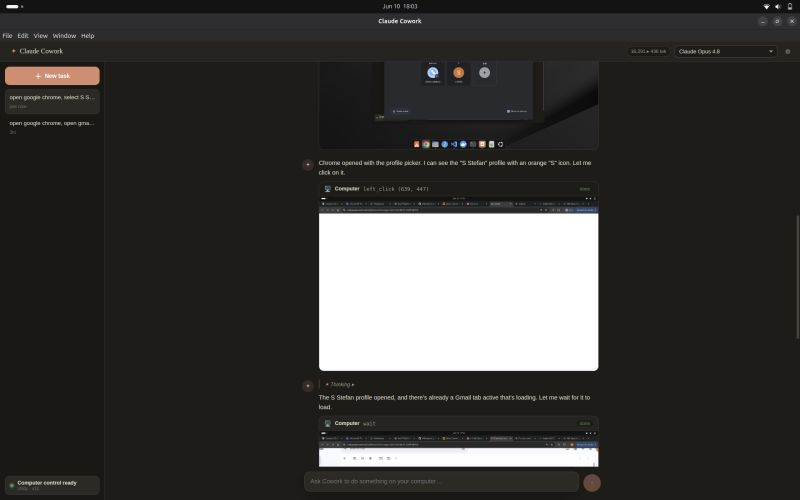
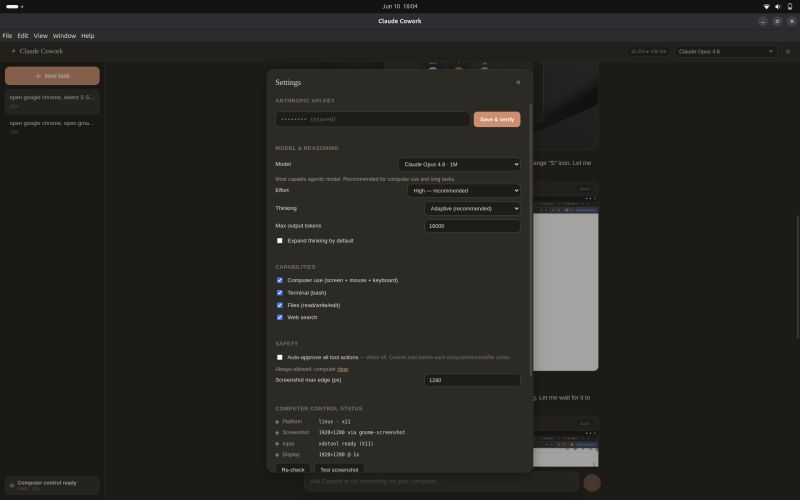
Hey Claude, can you help us build Claude?”
That was pretty much the idea that started this experiment.Together with @Steze9 I wanted to test the new Claude Fable 5 model and see how far we could push it in a real agentic workflow.