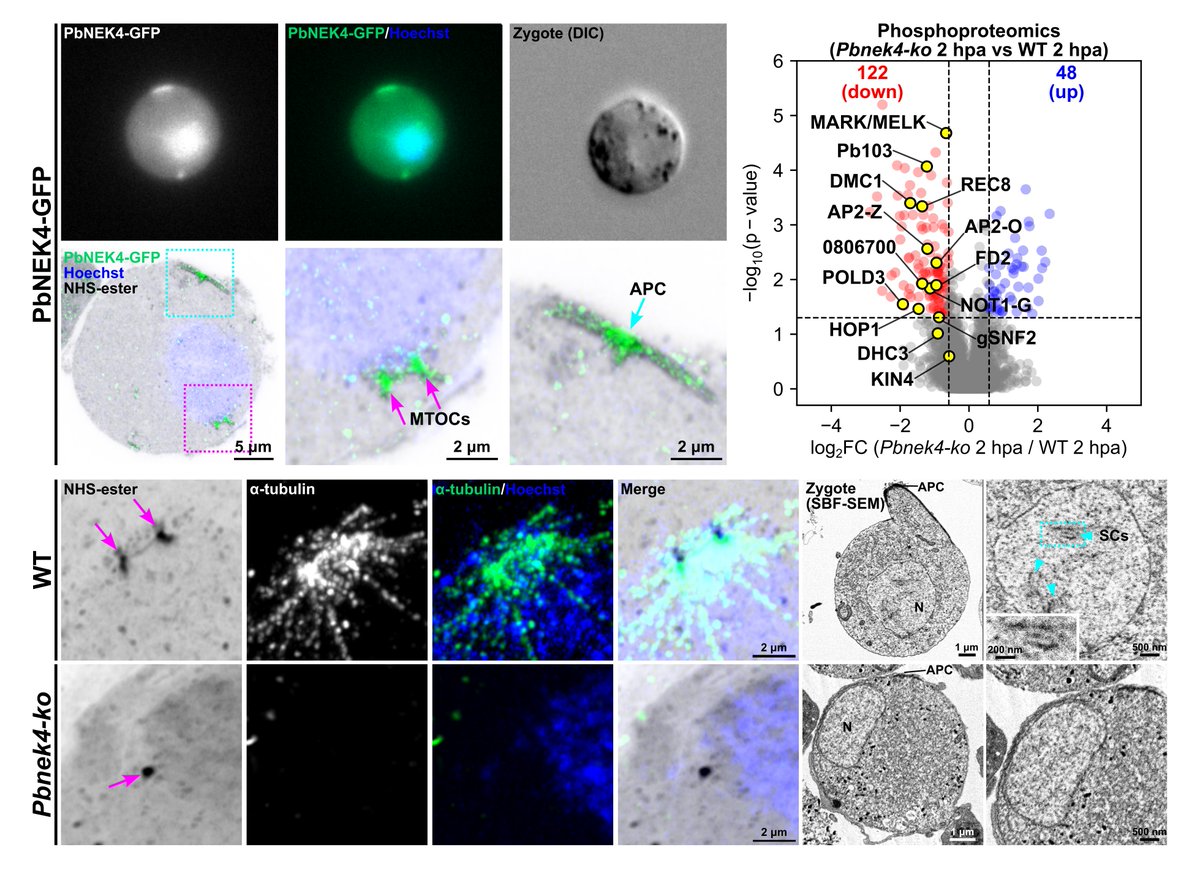
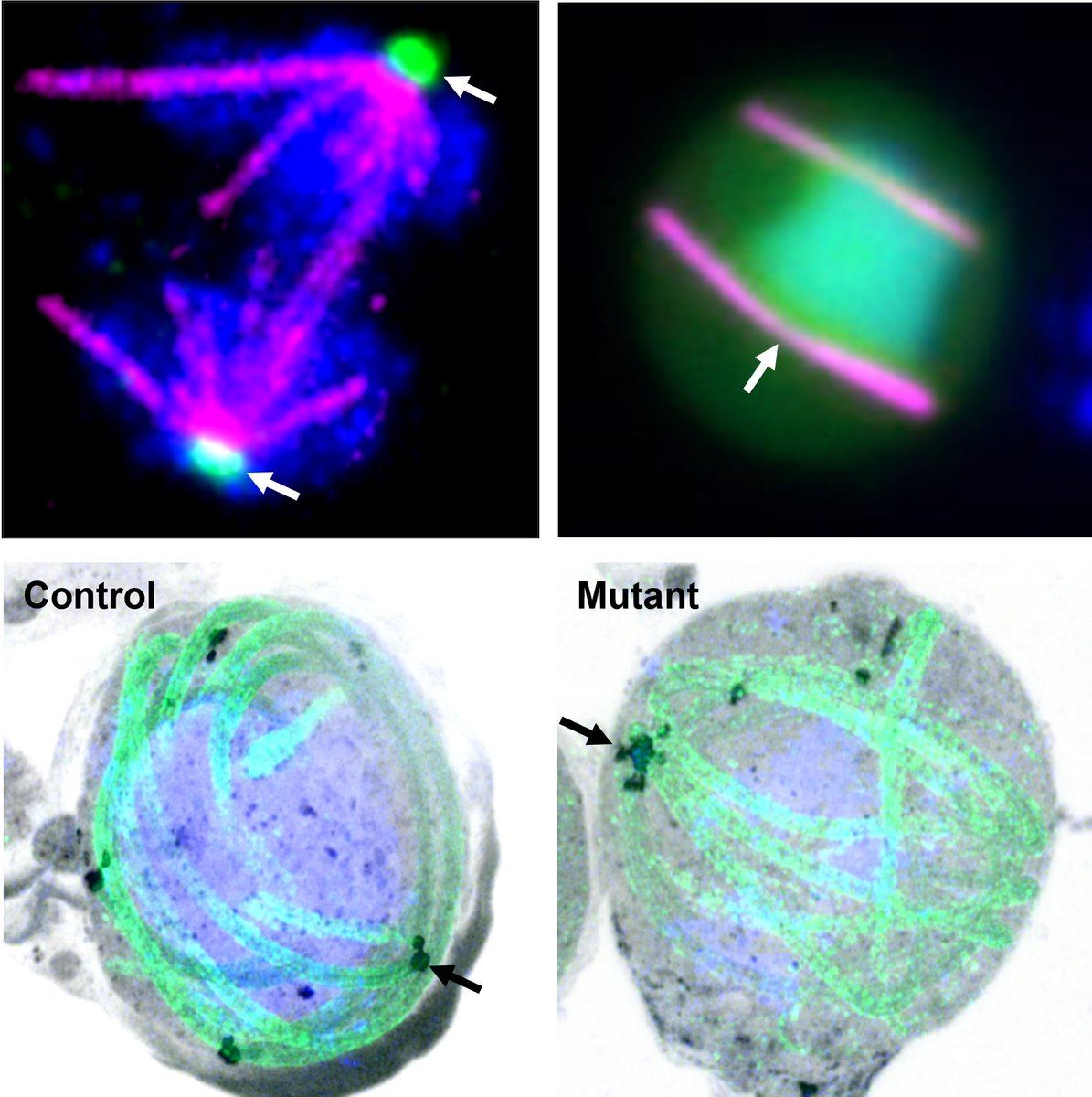
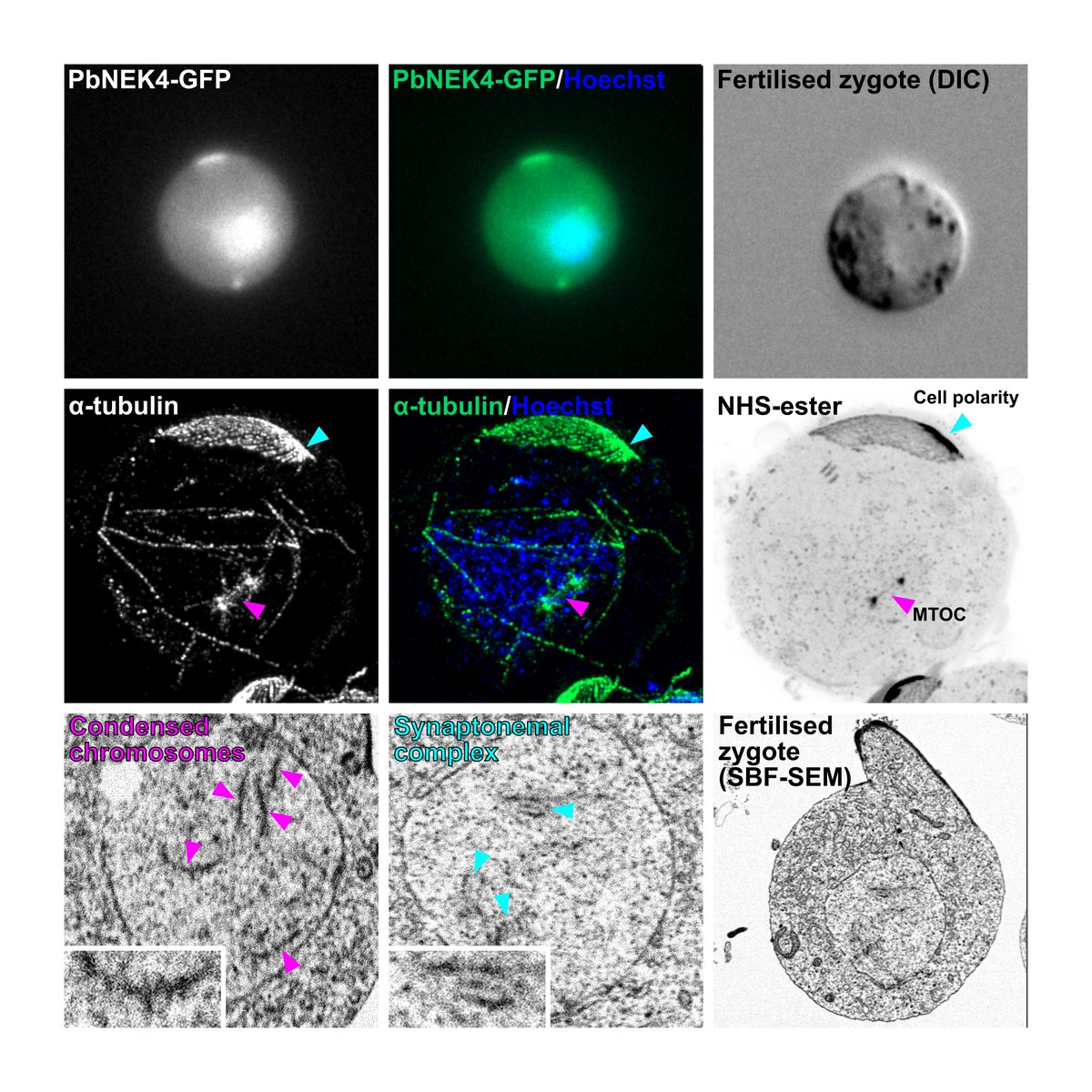
Pleased to share that our paper on Plasmodium NEK4 is now published in @NatureComms.
NEK4 act as a key regulator coupling meiotic entry with cytoskeletal morphogenesis in malaria parasites.
Huge thanks to @RitaTewari, @David_Guttery & all our co-authors.
https://t.co/WKy1pU4UCE
We are looking to recruit two highly enthusiastic and motivated research fellow to work on Plasmodium cell division (unusual mitosis and meiosis). Funded by @ERC_Research ;@BBSRC. please apply below .
https://t.co/h6kLIcmAtl
https://t.co/IvFcWePMut
Two posts open to work on Plasmodium cell division (unusual mitosis in male cells and meiosis in ookinete). Funded by @ERC_Research and @BBSRC
Research Associate/Fellow in Plasmodium Meiosis: https://t.co/6AD7Medd8n
Research Associate/Fellow: https://t.co/1l86INGOQk.
I have officially started my new position as a Senior Research Scientist at the National Institute of Infectious Diseases (NIID) 🇯🇵. My group will focus on the cell/molecular biology of parasitic Excavata & amoebae (incl. Trypanosoma, Naegleria, Acanthamoeba, & more) (1/3)
Chromosomes stuck behind the spindle are ticking time bombs for aneuploidy. We uncovered a mechanical rescue mechanism where microtubule pivoting repositions these high-risk chromosomes! Out last week in @NatureComms, here's a thread 🧵
https://t.co/BBLyswTXK9
Our new preprint describes Plasmodium NEK4 as a key regulator coupling meiotic initiation and morphogenesis—a critical step for malaria transmission. This involves MTOC-driven nuclear movement strikingly analogous to "horsetail" movement in fission yeast.
https://t.co/MQyky1Vvc1
Apicortin in malaria parasite are part of conoid like apical pole in invasive stages present only in female mosquitoes.
Many thanks @Zeeshan_MF Carolyn Moores Tony Holder.
Plasmodium ARK1 regulates spindle formation during atypical mitosis and forms a divergent chromosomal passenger complex https://t.co/jYMXdYpWIh #biorxiv_micrbio
Pleased to share our new preprint: "Plasmodium ARK1 regulates spindle formation during atypical mitosis and forms a divergent chromosomal passenger complex". A huge thanks to all our collaborators.
@RitaTewari@EelcoTromer@David_Guttery@Zeeshan_MF
https://t.co/voxPYhczPH
This World Mosquito Day, let’s remember: to halt malaria transmission, we must uncover the fundamental secrets of parasite cell division during its critical stages inside the mosquito. This is what drives the research here in Nottingham. @RitaTewari@RyujiYanase@akki_mish
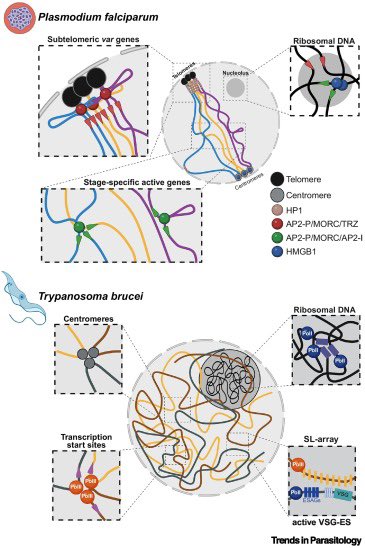
How do parasites strategically organise their genomes to influence gene expression? If you’re curious, check our latest review in @TrendsParasitol! A great team effort with @singh_parul Maureen Cabahug, Leon Walther & and the amazing Jessica Bryant!!
https://t.co/GFBsMj5cT2
We are looking for motivated and enthusiastic research fellow to join our group to investigate on #ERC project on cell division in malaria parasite. Job Vacancy at the University of Nottingham: Research Associate/Fellow (fixed term) https://t.co/HyTLdQv5c7.
Looking for a fully-funded D. Phil. / Ph.D. studentship in structural biology and vaccinology? Come to join our team. Fully and generously funded by a donation from the Kyner-Field family with full fees at overseas level. Join us??
https://t.co/KZMGLmTGI3
In @eLife: A novel SUN1-ALLAN complex coordinates segregation of the bipartite MTOC across the nuclear envelope during rapid closed mitosis in Plasmodium berghei https://t.co/IQwqJjFKqb. Out today. If you are at @biomalpar then happy to show the poster on it.
It was a great pleasure to have @ChristophidesG at Nottingham telling us all about gene drive in transmission zero for controlling malaria transmission.@David_Guttery @RyujiYanase