🔥 Anthropic put a price on how cheap it is to find smart contract exploits with AI right now.
$1.22 per contract scan, reconstructing over half of known 2025 exploits. I read that expecting to find AI fingerprints all over this year's biggest DeFi hacks.
Ngl in Drift ($285M) and @KelpDAO ($292M) hacks, my gut says AI helped find at least one of these bugs, though nobody's confirmed it on record yet.
But instead of everyone leaving DeFi and going home, the system started protecting itself:
- @aave + the ecosystem coordinated a rescue
- DeFi United raised $318M+ in ETH in weeks
- ~$72M of attacker ETH was frozen on @arbitrum
- Kelp got rsETH backing back above 100% in ~5 weeks
Meanwhile Drift TVL collapsed >50% and it took 15 days before Tether came in with a ~$147.5M recovery package.
What's interesting is why they recovered differently:
- Aave had ~$190M sitting in the blast radius, so allowing Kelp to die was directly worse for everyone connected to it
- Drift had been generating around $47M/month in trading fees, so revenue became the collateral for survival
Recovery speed has little to do with trust returning to DeFi imo. It's whether the hacked protocol is plugged into something too systemically important to let rot.
And as AI makes attacking the long tail cheaper, ppl are also literally accepting less yield to rent better security.
If you're asking how DeFi recovers post-AI-hack, it's 3 things stacked:
1/ ETH/SOL pumping back, since TVL is USD denominated cope
2/ new capital entering stuff like RWAs, synthetic dollars. RWA active TVL got back toward ~$3.77B post-Kelp and @ethena added ~$835M in one 7d window
3/ capital leaving weak protocols straight into Aave, @Morpho, @sparkfinance, @LidoFinance, @Uniswap instead.
Across historical incidents with usable data, most hacked protocols retain <10% of pre-hack TVL.
DeFi surviving a hack does not mean the hacked protocol survives.
Exploit size matters less than whether there is credible capital, revenue and coordination behind the protocol after it happens.
Long run this just means TVL keeps consolidating into the handful of protocols that can actually afford to keep paying for audits, monitoring, insurance as a permanent opex line.
Maybe AI is just forcing liquidity to move upstairs.
I mentioned last week in The Edge Weekly #68 that a #BNB memecoins wave was starting to heat up.
Now the signs are becoming even clearer that a BNB mini snz is already running right under our noses.
That said, I still believe we’re early.
Because I think the capital flowing in is still largely driven by speculation that CZ will push the BNB chain harder in the coming days.
Until that happens, memecoins will keep getting pumped and a few tokens could easily print 10-20x.
Some BNB tokens currently on my radar:
$CAT, $TUT, $Broccoli, $Mubarak, $BOB, $Cake, $TST, $Bananas31
Open-source AI may be strengthening the moat it was meant to break.
Open models now trail frontier cyber capabilities by just 4–7 months.
My read: cheaper offensive AI makes trusted frontier defense more valuable.
How much of AI revenue ends up priced around security?
Did you see a wave of Vampire Attacks heating up across consumer apps this week?
- @OndoPerps dropped $100 into accounts that already did $1M+ volume on HIP-3 but never deposited
-> exact traders driving stock and commodity perps volume on #Hyperliquid.
- @Kalshi is paying $150 per successful referral through Kaito Studio with no cap.
- And now @Pumpfun is paying @fomo users up to $30k per month to delete their FOMO accounts and move activity onto the https://t.co/EDRUHA4pi4 app.
Platforms are no longer just competing on product but directly poaching users from their competitors.
I think consumer apps are entering a growth phase that looks similar to #DeFi Summer 2020.
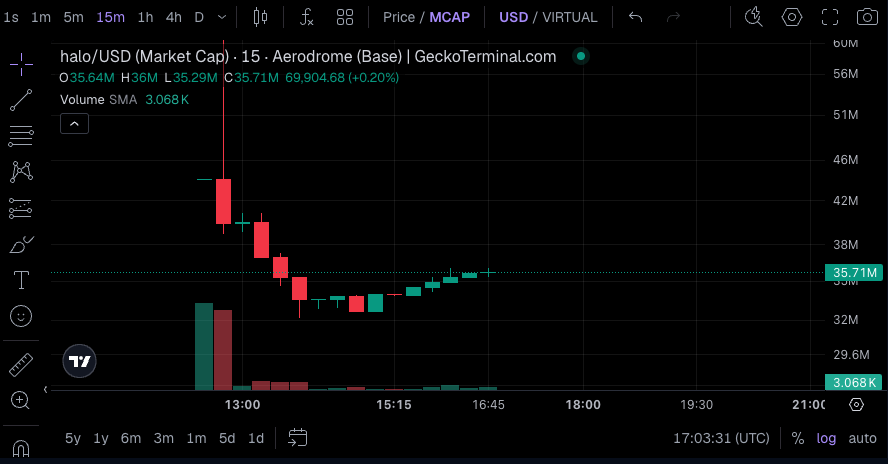
Halo | @wardenprotocol just went live on Virtuals and I think this is worth keeping an eye on.
Halo is a p2p marketplace for AI inference that’s already live on Base mainnet.
Users pay per prompt in USDC to access any model. On the other side, anyone with hardware or an API can serve models and earn USDC for every result.
The network was running in public alpha long before the token launched.
It has already served over 8 billion tokens across 200+ models, with real USDC settlement on Base.
$HALO is trading at ~$35M mcap rn. I’ll keep following and plan to test it myself.
If they can maintain solid quality and fast settlement, the potential looks pretty interesting.
Alternative Asset Tokenization season
Tokenization is starting to reach assets most investors have never been able to access directly.
Real estate income. Private credit. Gold. Art. Watches. Even graded Pokémon cards.
Now the tokenized asset does three things:
→ Produces income from real underlying assets.
→ Settles and transfers onchain.
→ Becomes usable collateral in DeFi.
That is why tokenized alternatives matter to the world of finance, you’ll see the impact real soon.
This part of the RWA market interests me because the addressable market is much larger than what is currently onchain.
Global alternatives and private-market AUM could exceed $30T by 2030.
Meanwhile, current onchain value remains small:
→ Tokenized credit: ~$6.93B
→ Tokenized commodities: ~$7.46B
→ Tokenized real estate: ~$203M
The gap is huge, but each asset class requires a different structure.
[1] Real estate tokens usually represent equity in an SPV that owns the property.
Investors receive rental income and part of the final sale proceeds.
@Reental_co + @lofty_ai already offer access to individual US properties from around $50 + also distributes rental income daily.
[2] Commodities use a more direct model.
One PAXG represents one fine troy ounce of gold held in a London vault.
@tethergold | XAUT and @KinesisMonetary provides a similar claim on allocated physical gold.
Investors gain onchain exposure without managing storage themselves.
[3] Collectibles are where the concept gets more interesting.
@Courtyard_io stores physical cards, comics and watches, then issues an NFT for each item.
The holder can trade the NFT or burn it to receive the physical asset.
@Collector_Crypt applies the same model to graded Pokémon cards on Solana.
Its cumulative volume passed $1B in May 2026, and some card NFTs can already be used as collateral to borrow USDC.
These 2 interesting protocols i’m watching as well = @4KProtocol@freeportmarkets
[4] Private credit is the category I’m watching most closely.
The global private credit market is estimated at $1.5T-$2T, while only around $6.93B is currently tokenized.
The products also have clear cash flows from interest and principal repayments.
Apollo’s ACRED provides tokenized access to an existing diversified credit fund.
Janus Henderson’s JAAA gives eligible investors exposure to AAA-rated CLO tranches.
@maplefinance's syrupUSDC and syrupUSDT deploy stablecoins into institutional loans and other strategies.
Some of these assets can already be posted as collateral in onchain lending markets.
Eligible ACRED holders, for example, can use sACRED on @Morpho or Drift Institutional to borrow USDC.
That is the point where tokenization becomes more useful to me.
The asset can generate income, settle onchain and support additional financial activity after issuance.
Still, I would never evaluate these products by token supply or TVL alone.
A token does not remove the risks attached to the underlying asset.
It only changes how ownership, cash flows and transfers are managed.
I think tokenized treasuries proved that regulated financial assets can operate onchain.
Alternative assets are the next serious test.
If the legal rights, custody and secondary liquidity work, crypto could open access to a major part of the financial market that has historically been limited to institutions and wealthy investors.
That is a much bigger RWA thesis than putting another asset ticker onchain.
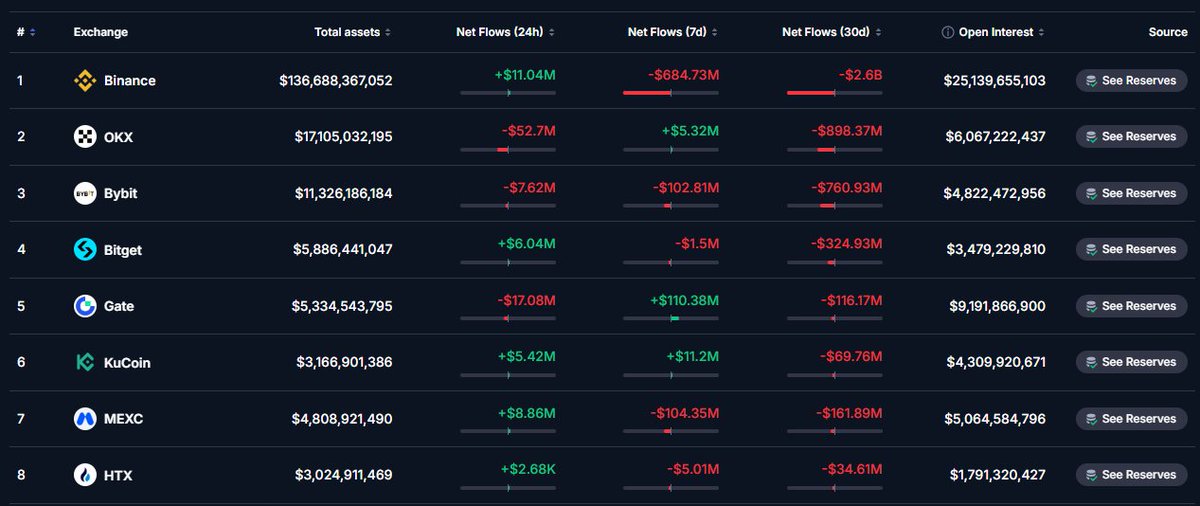
One mistake I see CT make all the time:
Treating exchange flow data as a trading signal.
It isn't.
It's context.
Context is what gives you conviction chads.
Coins leaving an exchange could mean self-custody, DeFi, OTC settlement, or capital rotating elsewhere.
Without understanding the reason behind the move, the number is just noise.
Anyone can read the dashboard ✝️





![Defi_Rocketeer's tweet photo. Alternative Asset Tokenization season
Tokenization is starting to reach assets most investors have never been able to access directly.
Real estate income. Private credit. Gold. Art. Watches. Even graded Pokémon cards.
Now the tokenized asset does three things:
→ Produces income from real underlying assets.
→ Settles and transfers onchain.
→ Becomes usable collateral in DeFi.
That is why tokenized alternatives matter to the world of finance, you’ll see the impact real soon.
This part of the RWA market interests me because the addressable market is much larger than what is currently onchain.
Global alternatives and private-market AUM could exceed $30T by 2030.
Meanwhile, current onchain value remains small:
→ Tokenized credit: ~$6.93B
→ Tokenized commodities: ~$7.46B
→ Tokenized real estate: ~$203M
The gap is huge, but each asset class requires a different structure.
[1] Real estate tokens usually represent equity in an SPV that owns the property.
Investors receive rental income and part of the final sale proceeds.
@Reental_co + @lofty_ai already offer access to individual US properties from around $50 + also distributes rental income daily.
[2] Commodities use a more direct model.
One PAXG represents one fine troy ounce of gold held in a London vault.
@tethergold | XAUT and @KinesisMonetary provides a similar claim on allocated physical gold.
Investors gain onchain exposure without managing storage themselves.
[3] Collectibles are where the concept gets more interesting.
@Courtyard_io stores physical cards, comics and watches, then issues an NFT for each item.
The holder can trade the NFT or burn it to receive the physical asset.
@Collector_Crypt applies the same model to graded Pokémon cards on Solana.
Its cumulative volume passed $1B in May 2026, and some card NFTs can already be used as collateral to borrow USDC.
These 2 interesting protocols i’m watching as well = @4KProtocol @freeportmarkets
[4] Private credit is the category I’m watching most closely.
The global private credit market is estimated at $1.5T-$2T, while only around $6.93B is currently tokenized.
The products also have clear cash flows from interest and principal repayments.
Apollo’s ACRED provides tokenized access to an existing diversified credit fund.
Janus Henderson’s JAAA gives eligible investors exposure to AAA-rated CLO tranches.
@maplefinance's syrupUSDC and syrupUSDT deploy stablecoins into institutional loans and other strategies.
Some of these assets can already be posted as collateral in onchain lending markets.
Eligible ACRED holders, for example, can use sACRED on @Morpho or Drift Institutional to borrow USDC.
That is the point where tokenization becomes more useful to me.
The asset can generate income, settle onchain and support additional financial activity after issuance.
Still, I would never evaluate these products by token supply or TVL alone.
A token does not remove the risks attached to the underlying asset.
It only changes how ownership, cash flows and transfers are managed.
I think tokenized treasuries proved that regulated financial assets can operate onchain.
Alternative assets are the next serious test.
If the legal rights, custody and secondary liquidity work, crypto could open access to a major part of the financial market that has historically been limited to institutions and wealthy investors.
That is a much bigger RWA thesis than putting another asset ticker onchain.](https://pbs.twimg.com/media/HO-EzLEagAAhR0i.jpg)