"It means more than 320 Kenyans have now been caught by the AIU since it was set up in 2017, a figure that casts a shadow on the country that will host the 2029 World Athletics Championships." https://t.co/sKUJ7IzOkh
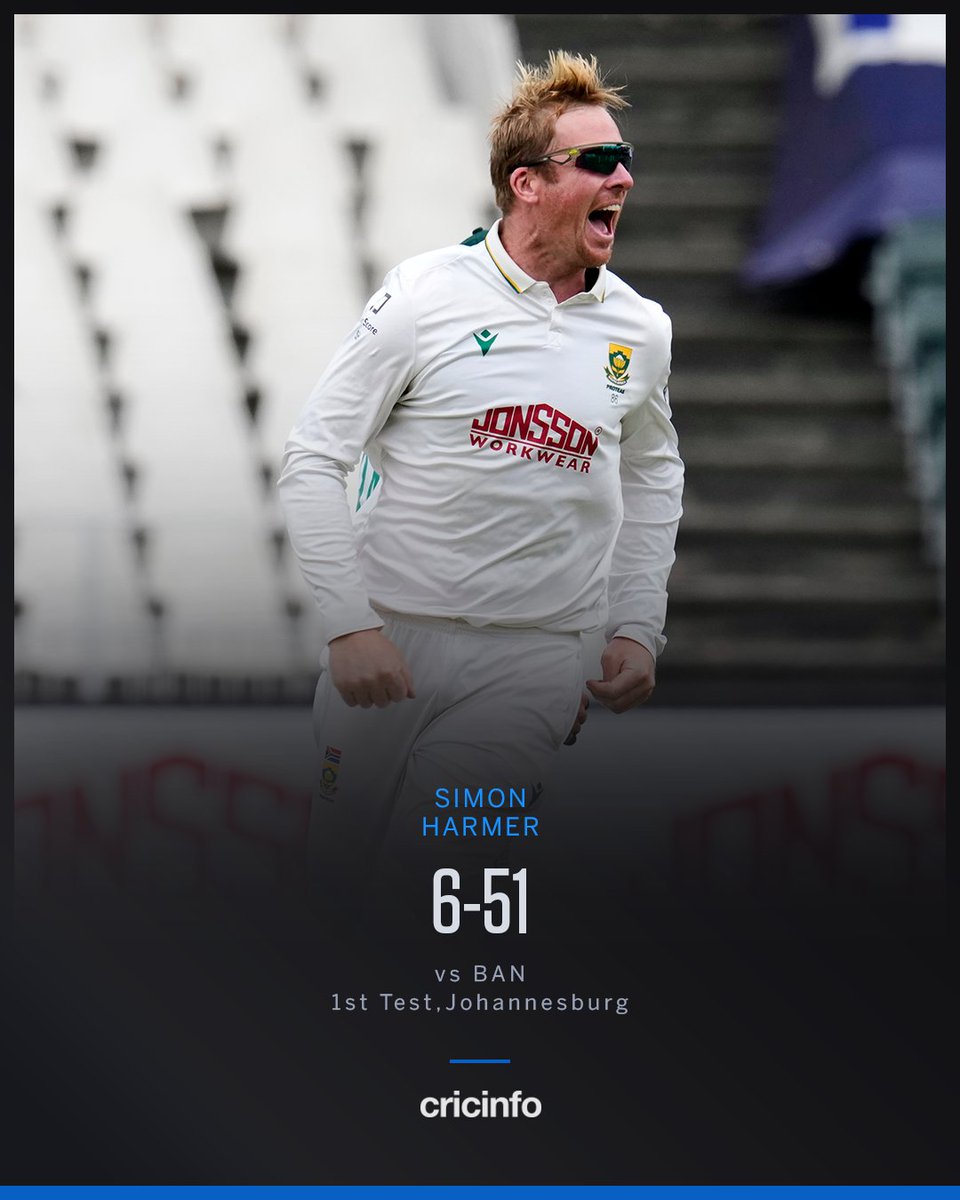
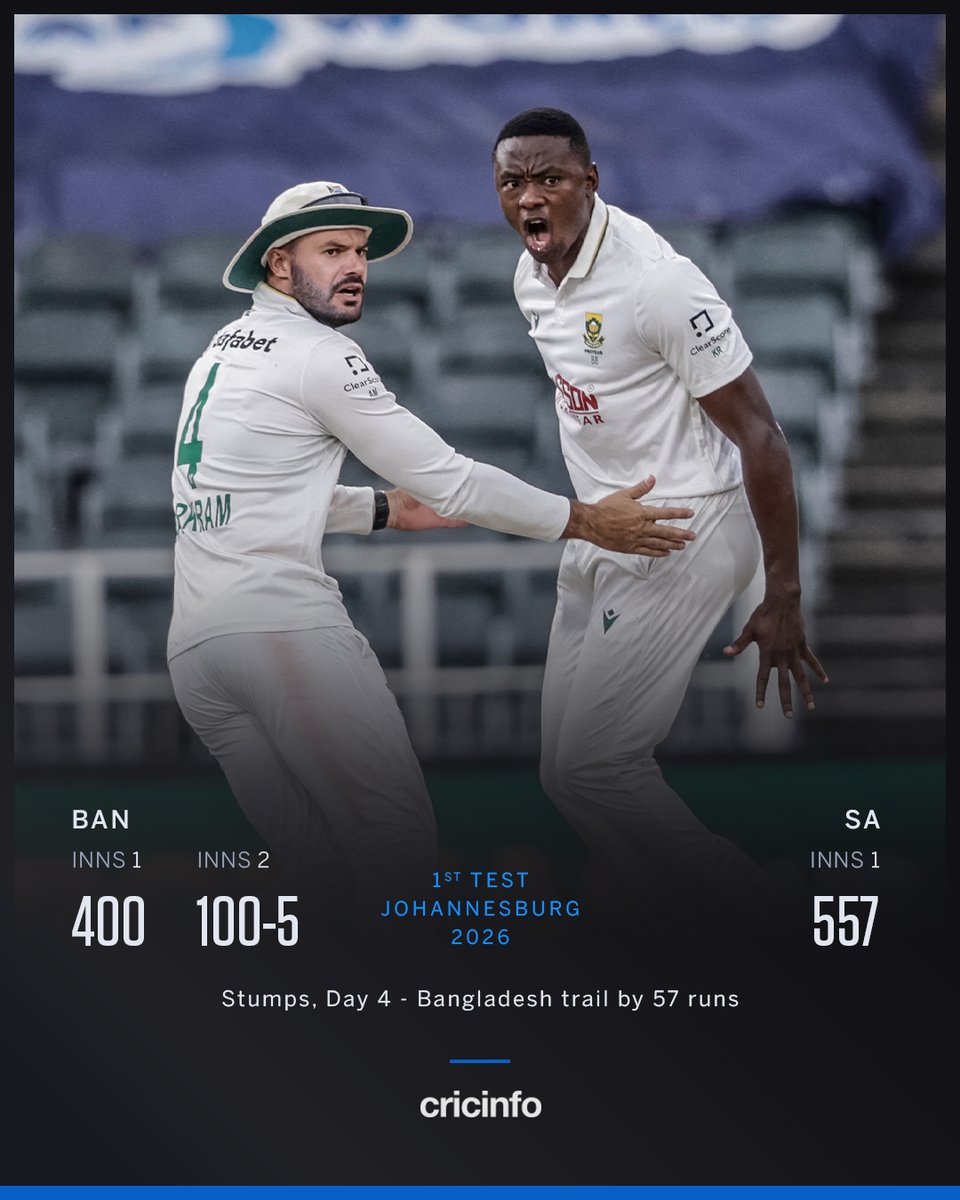
Bad light brought an early end to Day 4 at the Wanderers, after Rickelton, Bavuma and Rabada put South Africa in position for a final-day push for victory 💪
Can sit and moan or make the best of it. I’ll be watching the match at the hotel. Not keen to watch in on my own. So lets give it a go and hope I get the “tech” sorted = TV on, My Laptop camera on, and you’re welcome to join me. Sign up here (adults 18+): https://t.co/PqNV1vc8Fk. This is personal, not official.
"The Economics of Intelligence: How and when does AGI lead to economic transformation?" Smarter AI will increase productivity, but real economic transformation hinges on agents learning to coordinate.
I joined @GoogleDeepMind to develop a research program on the economics of AGI. Today, together with Andrew Koh (@andrewjkoh) and Shane Legg (@ShaneLegg), we are incredibly excited to release The Economics of Intelligence, the first in a series of projects from our group on how AGI will change the economy.
How do capability improvements transform the economy, and when? In this project, we define thresholds of economic capabilities, e.g., minimal AGI, based on how they transform the economy. We then track how the economy–market structure, employment, and wages–changes during the transition across capability regimes.
We have seen exponential increases in what AI agents can do but the broader economy seems almost remarkably unchanged. Part of the reason is that the solo AI agent is the wrong economic object; economic transformation is an equilibrium outcome where organizations compete. Looking at how intelligence functions within organizations, transformation will depend on when two key capability thresholds are crossed: competence (gains on individual skills, e.g., coding, math) and coordination (gains on ability of agents to cooperate and work together).
We show that what economic transformation looks like depends on whether AI becomes supercompetent, supercooperative, or both—the regime of artificial superintelligence (ASI). Tracking this transition shows why the real visible transformation may come from improvements in coordination—a capability most benchmarks don’t yet track. Past a certain threshold, AI capabilities can break the Coasian ceiling on firm size and lead to an economy that looks drastically different than the one we see today.
Two main takeaways:
1. To understand the path of transformation, we should be tracking agentic coordination more closely.
2. The impact of AI will likely show up in wages before market structure or employment.
We are really excited about this paper. Excited to hear people’s thoughts.
Link: https://t.co/9DTGSeKoSA
Apropos of nothing, we have a new paper out called Organizing Intelligence. You should check it out.
https://t.co/fozyOugreB
Summary: https://t.co/SdGeyVHFrd
Explosive! 💥💥💥
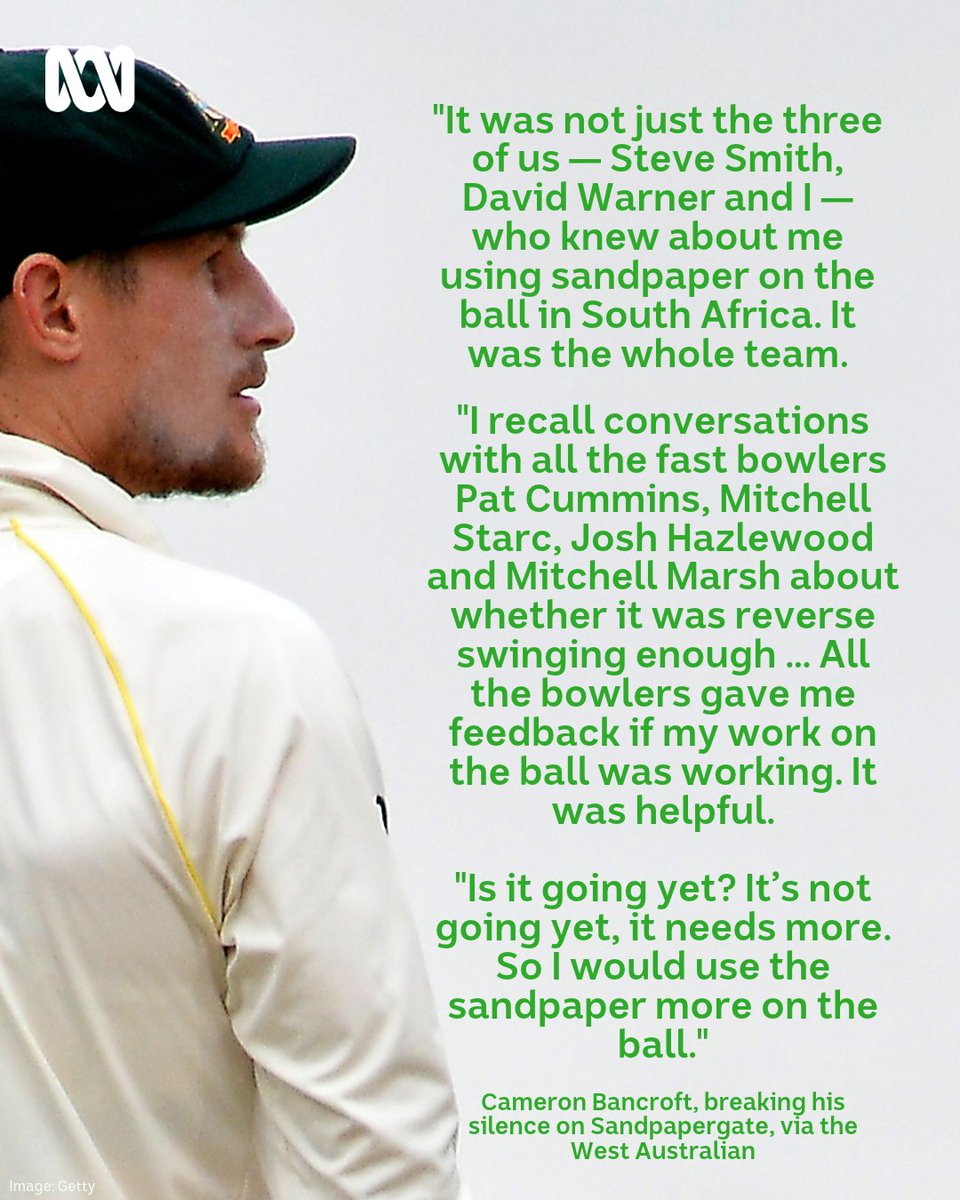
"It was not just the three of us ... it was the whole team."
Cameron Bancroft reveals his account of what happened during the sandpaper ball-tampering scandal in South Africa in 2018.
https://t.co/iykwDF0Vxw
As soon as Oom Rassie said the words “match-fixing” and “manipulation”, he was screwed. I don’t think he meant what some of us heard. And in some ways, he has a fair point.
The real issue is that we’re all missing where this ACTUALLY starts.
I don’t believe for a second that Rassie meant the ref was getting money in a brown paper bag. shoved under his chair in the changing rooms. He was going through his thoughts in real time. Stream of consciousness. Upfront and honest (jeez how much do we neeed more of that in our game!). In his second language. In a room full of experienced journalists who know how to ask the right leading questions to get the headline they’re looking for.
What he was trying to get at is this. When you ratify a bunch of new laws and tell the world “this is what we’re going to enforce”, and then you DONT enforce them, the referees and the officiating team have an unduly high effect on the outcome of the game. A penalty that should be given and isn’t can have as much influence on the result as a penalty that is given.
But there’s a side of this we are missing. World Rugby explicitly told the TMOs not to get involved as much! Most of us fans have been complaining about this whole “team of four” concept. Where the ref, the ARs and the TMO work as a team. Each chipping in at various points. "Its gone too far" we cry. We’re getting too many calls, particularly from the TMO.
So at its briefing for referees and coaches before the November Tests, World Rugby gave the TMOs a mantra: “If in doubt, stay out; in the grey, stay away.”
https://t.co/bn3jF2DhRQ)
That’s World Rugby explicitly telling TMOs not to get involved where they don’t need to.
In that very same briefing, hip-drop and knee-drop tackles were named as a priority.
Think about the absurdity of that. You bring in new laws to police, then tell one quarter of your refereeing team to get involved less. That crack is the hole Rassie has fallen into.
As an aside, if you want a conspiracy theory, here’s the one I think belongs here. Felix Jones was apparently heavily involved in getting the hip-drop and knee-drop rules written. From all accounts, he was influential in shaping World Rugby’s stance and pushed hard to get it included.
https://t.co/OUIWpNjsWi
I wonder if this wasn’t the strategic, tactical part from the Boks. We all know they worked pretty hard on the hearts and minds campaign around the maul laws. Which obviously benefits them. Its one of their primary attacking weapons.
The Springboks are very much a "carry-more, pass-less" team. They gets massive benefit from post-contact metres. "We’ve got big boys who can carry hard at you and through you." Post contact meters = quicker ball = better attack. A knee drop is a way for a smaller, less physically imposing team to stop big ball carriers in their tracks. Limit their post-contact metres =slow the ruck = get more jackals etc.
I actually wonder if the Boks pushed really hard to get the knee-drop law brought in because it benefits them strategically. That’s why they’re so pissed. They got a law brought in that should help their big ball carriers. And at the first opportunity it’s not really being enforced.
Anyway, that’s my conspiracy theory.
Back to the point at hand.
All of this, all the wailing and gnashing of teeth, the clipping of videos, all of it, stems from one thing. Rugby is trying to litigate out every chance of injury. It’s a trend of injury catastrophism that started with all the concussion stuff five or six years ago. Its almost like we believe every injury deserves a law to counteract it.
I want to introduce a concept here: realpolitik. Realpolitik is an approach to governance that doesn’t worry about what the ideal situation is. It worries about what can actually, practically be done. A German writer, Ludwig von Rochau, coined the term in 1853, after the liberal revolutions of 1848 failed. He started out as an idealist. His lesson was that ideals change nothing unless you deal with the world as it actually is.
An example. We all know that if every speed limit was 20 km/h, fewer people would die on our roads. Nobody actually does that. We care about lives, but we also accept that people need to get to work and get around. So we accept some risk as the price of getting on with life. The idealist sets the limit at 20 and wonders why the country has stopped moving. The realist sets it at 110 on the freeway, comes down hard on drink drivers and hoons, and accepts that driving will never be perfectly safe. But life can function.
Should rugby be safer? Yes. But it should be as safe as PRACTICAL, not as safe as POSSIBLE. The game has made massive strides towards being safer, but don’t for a second think you can ever make rugby safe. Yet we keep piling law upon law upon law, under the guise of safety, into a game that’s already incredibly complex.
Every new law creates more scenarios where fans, journalists and coaches can nitpick decisions on minor technicalities and highly subjective views. It’s toxic for the game.
Rassie says there were 17 knee drops. Planet Rugby says it found two clear and four marginal. @CharlieFelix went through all 223 French tackles and found something different again.
(https://t.co/NBKj8uaJXu)
So we’ve got professional coaches, professional journalists and armchair experts all finding different stuff. And that’s after the game, with the benefit of sitting down and going through the video frame by frame.
Yet we expect referees to make those decisions in real time.
To me, this is not the fault of the referee. It’s not the fault of Rassie. It’s World Rugby. They are creating cognitive overload for everyone.
Newsflash for you: rugby is a dangerous fucking sport. Every contact/combat sport is. You can get hurt, and sometimes in ways that have long-term, even permanent, consequences. I said this years ago and got absolutely blasted for it. Anyone who says to me “I didn’t realise I could get hurt playing rugby in a way that affects me for the rest of my life”, I’m sorry, but that is naive. Anyone remember Max Brito? That was 1995. Anyone seen Muhammad Ali and Joe Frasier in their latter years? Hear their slurred speech and glazed eyes. Come on mate, please dont tell me no one had any concept theres a risk here.
Rugby is a dangerous sport. But let me tell you the other truth, and the boys from @RugbyPodcast are 100% correct on this: the RISK IS THE REWARD. The risk is what attracts us to the game. The risk is what makes it so special to have a beer with someone in a different jersey than yours after the game. Bash each other during the 80 minutes, share a laugh after. No matter what you do, you will never, ever remove that risk. And you dont want to. World Rugby seems intent on doing its best though.
Does that mean we just let everyone smash each other willy-nilly? No, absolutely not. Remove the dirtiest foul play. If you want to protect the head, which I think is absolutely right, then penalise or card a straight shot to the head. Not a shot to the shoulder with incidental head contact. Looking at you Lood. That’s rubbish. We need to embrace the concept of a rugby incident. Simplify the tackle laws. Simplify the breakdown laws. Stop creating scenarios where people can nitpick tiny little things. It’s not healthy for the game.
Referees do an unbelievable job. Trust me, going out there and getting 95% of your decisions right means you are elite at what you do.
The issue is the denominator. Say a ref has 500 decisions to make and gets 99% right. He gets 5 wrong. But we’ve now created a game where instead of 500 decisions, he has 2,000. Same 99%, and now he gets 20 wrong. He didn’t get worse. The game got more complicated.
So now we need a team of four to make those decisions. Then we tell different parts of that decision-making team: "Get involved, ummm actually don’t get involved, get involved with this, ahhh no, don’t get involved with that". The goalposts are constantly moving. There’s no way these guys can win.
Again, as soon as Rassie said the words “match-fixing” and “manipulation”, he was in trouble. Even though it isnt what he meant, in my view. You just cannot say that. You open yourself up for punishment. But that is not where the problem starts.
Stop trying to add laws to remove every type of injury. In rugby it’s not IF you’re going to get hurt. You ARE going to get hurt. No matter how many hip drop or knee drop laws we add.
The risk is the reward.
Simplify the tackle. Simplify the breakdown. Simplify the game. Stop giving people avenues to nitpick every little decision. And let the boys and girls play.
#RassieErasmus #Rugby #Springboks
Writing in the West Australian, Cameron Bancroft has broken his silence on Sandpapergate.
He says the whole team knew, including Pat Cummins and the rest of the fast bowlers.
Keep up with all the latest sport news and analysis on ABC listen: https://t.co/rrC1e8eWwc
"That elephant in the room stays there no matter what. Erasmus could choose his words more carefully, & he could be more diplomatic about things, but that is not his way. But ... not addressing the cause, will make that elephant grow bigger every day." https://t.co/8S6BNx3TtT
"South Africa are a remarkable sporting nation & their rugby players remain first among equals. They deserve to be fronted by someone w/ rather more class."
"Rassie Erasmus’s tired ref-blaming act is wearing thin–South Africa deserve better."
South Africa deserve better? Really?
Seems fitting to bring up this topic today as another thing that should worry rugby fans in regard to the governance and transparency in our game.
Who thinks its a good idea that all of these betting companies are major sponsors of rugby across the world?
#worldrugby #governance #rugbygovernance
Over the past week, I’ve been overwhelmed by the love and support of friends, industry colleagues, and people I've never met. Thank you to everyone who has shown kindness to my family and me. It means the world to me.
I came to the United States 53 years ago, and becoming an American citizen is one of the greatest gifts and proudest moments of my life. NVIDIA has been my life’s work. Building it into the company it is today alongside my colleagues has been a privilege and an honor. Nowhere but in America could a company like NVIDIA be possible. I love our country, and I love NVIDIA.
I did not live up to the standards expected of everyone at NVIDIA, and I have made serious mistakes in my personal life. I created problems for the Board that I deeply regret. I own my mistakes completely, and I am committed to cooperating with the Board’s independent investigation.
Since my departure, I’ve seen an outpouring of calls from NVIDIA’s employees, investors, business partners, and customers for me to return as CEO. Many continue to reach out to me directly as the company navigates complex technology, market, competitive, and geopolitical dynamics. NVIDIA is a once-in-a-generation company. If the Board of Directors decides that my return is in the best interest of our shareholders, our employees, the company, and America, I would be honored to answer these calls and return as CEO.
Thank you again to everyone who has shared their good wishes. I am profoundly humbled by your support. To my family: I love you, and I will spend the rest of my life being worthy of yours.
Jensen
Statement: SA Rugby is requesting a full misconduct hearing for Springbok coach Rassie Erasmus following his sanctioning by an independent World Rugby panel for comments made in a press conference in Dublin on Monday - more here: https://t.co/ENZJLXa4Tp