🚨 I’M CALLING IT NOW: BETHANY DONAPHIN WILL BE THE NEXT WNBA COMMISSIONER!
While everybody is throwing around big names to replace Cathy Engelbert, I believe Adam Silver already has his ideal candidate sitting inside the WNBA.
And her name is Bethany Donaphin.
Here’s why I believe she’s getting the job:
Donaphin is currently the Head of WNBA League Operations. She understands the league’s internal structure, officiating, player relations, and day-to-day operations better than most outside candidates.
She’s also a former professional basketball player, meaning she understands BOTH sides of the business.
But here’s what really stands out to me.
Adam Silver has publicly emphasized the importance of bringing players and ownership together. Donaphin fits that description almost perfectly.
She’s already inside the NBA/WNBA ecosystem, has established relationships, and wouldn’t need to spend her first year learning how the league operates.
And let’s not forget, Breanna Stewart has publicly spoken highly of Donaphin’s ability to communicate with players.
MY THEORY? The NBA isn’t necessarily looking for the biggest name. They’re looking for someone they trust to stabilize the league, improve relationships, and lead its next chapter without creating another public relations nightmare.
That’s why Bethany Donaphin is my No. 1 candidate.
I’m not reporting that she’s been offered the job. I’m predicting she’s going to get it.
Bookmark this post.
Do you agree, or do you think Adam Silver has someone else in mind?
Like, Comment & Share. 🔥
#WNBA #BethanyDonaphin #AdamSilver #WNBANews
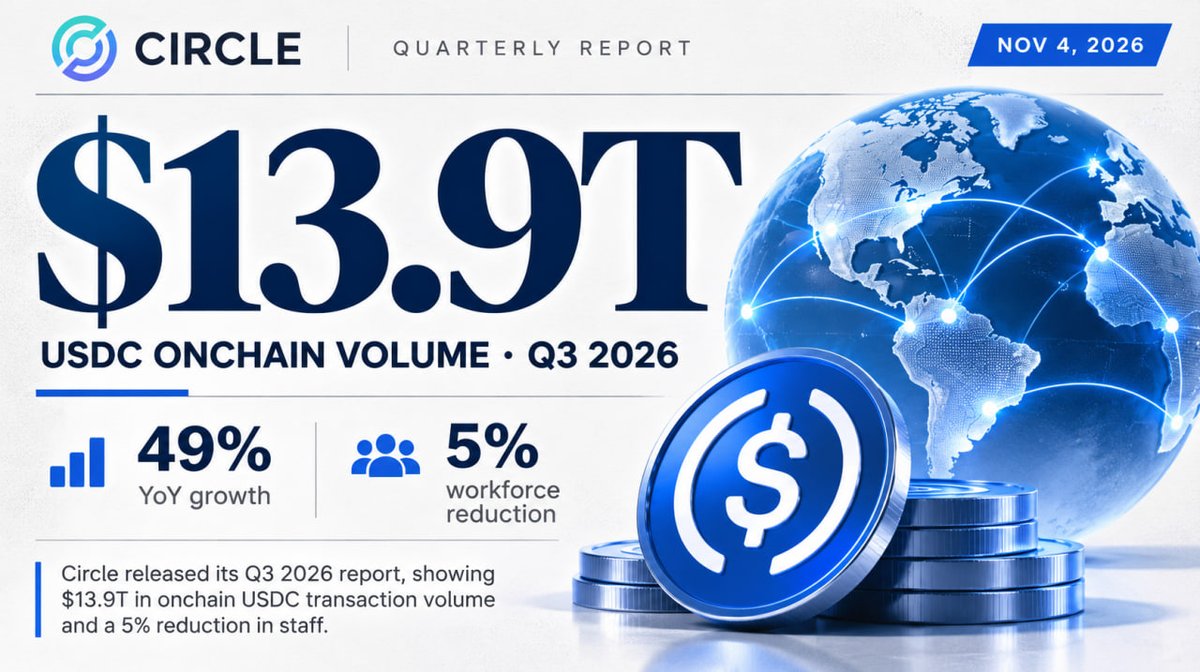
🚨 $13.9 TRILLION IN USDC TRANSACTION VOLUME
That's what Circle reported for Q3.
Up 49% year-over-year.
At the same time, the company announced a 5% workforce reduction.
Crypto adoption and company growth don't always tell the same story.
What matters more to you: usage or revenue?
#USDC #Stablecoins
Understanding Vangrid's Bounty Marketplace
One interesting part of @vangrid_io is its Bounty Marketplace, which connects people who need real-world spatial data with contributors who can capture it.
But how does it work?
Imagine a company needs a 3D model of a shopping mall, warehouse, street, or public space. Instead of sending its own team to capture everything, it can post a bounty on Vangrid.
There are two options:
1. Single Bounty
This is for requesting one specific capture. You provide a title, describe what you need, select a supported network (Base or Arc), set your USDC reward and deadline, then fund the request.
A contributor can accept the task, capture the location using the Vangrid app, and submit the data. After processing and 3D reconstruction, you review the result. Once accepted, the payment is released to the contributor.
2. Bulk Bounty
This allows you to request multiple captures using one brief.
For example, if you need data from 10 different locations, you can create one bulk request, set the reward per capture, specify the quantity, and choose the review mode.
The bigger picture is simple:
Requesters provide demand and funding. Contributors collect real-world data. Vangrid connects both sides through its marketplace.
What I find interesting is that contributors can work on specific data requests rather than relying only on random captures.
That's how Vangrid is building an economy around real-world spatial data.
🪙 TOKENIZATION: @Chainlink launches 24/7 pricing for tokenized stocks, commodities, and real-world assets.
During market hours, prices come from equity data. On weekends and holidays, from perpetual futures venues.
@aave Horizon is the first adopter, accepting high-volume U.S. equities as stablecoin loan collateral.
Chainlink already prices $1.6B+ in tokenized stocks across six chains, including Ondo, xStocks, Robinhood, and Coinbase.
If a stock crashes over the weekend, should loans be judged by the real-time price or by where it opens Monday?
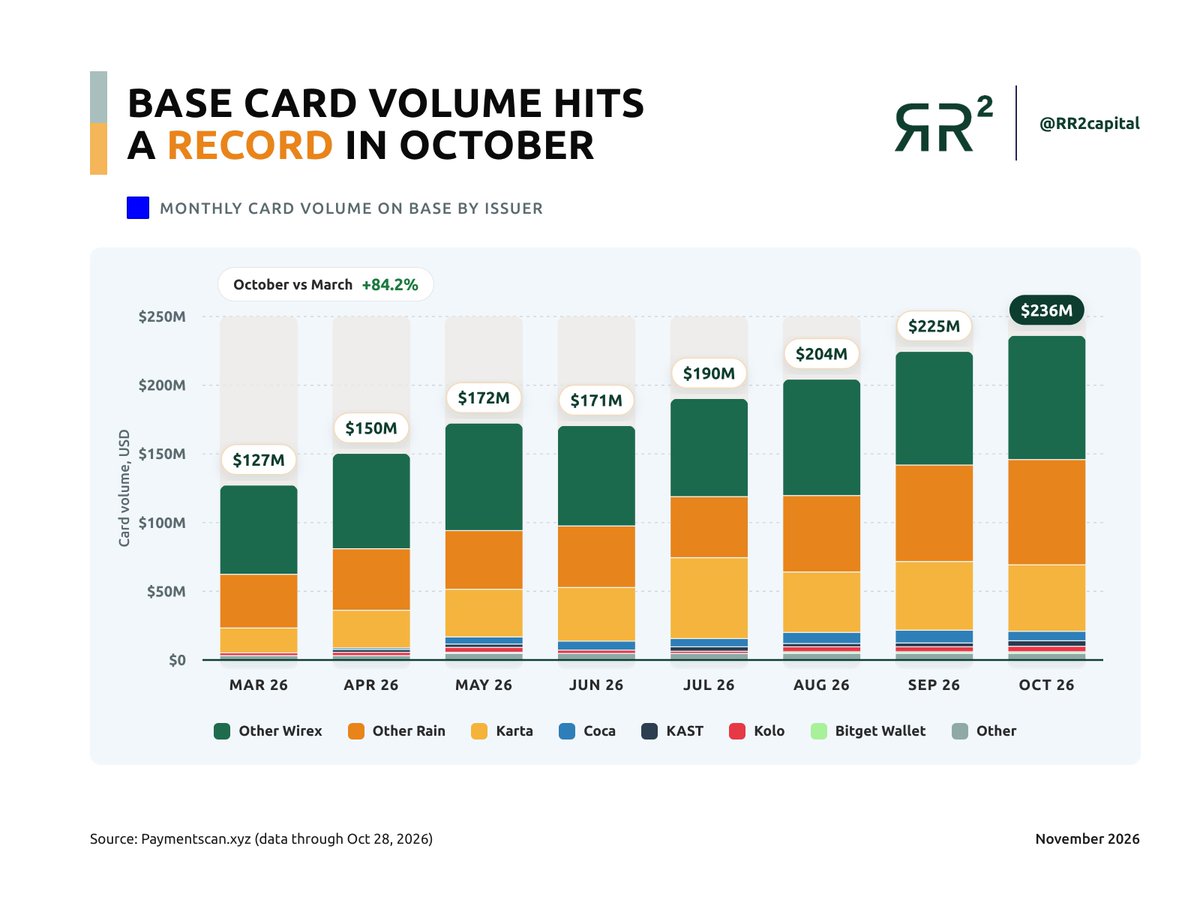
Stablecoin card spending on Base just hit a new all-time high!
October volume reached around $236M, up 84.2% since
March, marking 8 consecutive months of tracked activity. Stablecoin payments are gaining real-world traction.
Your portfolio is in crypto winter. Wall Street just told a room full of investors it is institutional summer.
That line came from the CEO of Figment, the largest institutional staking provider, on a tokenization panel at SALT with leaders from Ondo, Centrifuge and Diamond Lake.
While most alts bled, these people were signing banks, insurers and trillion dollar asset managers.
Here is what they revealed, and what it means for you.
1. Institutions do not want trustless. They want boring.
Crypto sells itself as trustless. Institutions want the opposite: someone accountable who picks up the phone at 3am.
When Morgan Stanley chose Figment for its ETH and SOL products, almost none of the process was about crypto. It was compliance, audits, reporting and reliability.
Figment's CEO joked that his job was making staking boring enough for Morgan Stanley. He said they may think they are in the validator business, but they are really in the compliance business.
That is the real moat in institutional crypto. Anyone can run a validator. Very few can pass a bank's vendor review.
2. Every new deal is happening faster
Centrifuge shared a timeline that tells the whole story.
• First product with Janus Henderson: over a year from first call to launch
• Second product: four months later
• Third product: two months later
Then New York Life, a $900 billion asset manager, launched its first tokenized fund with them.
Their explanation was simple. BlackRock went first, and its brand gave everyone else permission to follow.
3. The adoption curve keeps getting steeper
Ondo shared the math most people never see.
• Stablecoins took about 3 years to reach $1 billion
• Tokenized treasuries took about 18 months
• Ondo's tokenized stocks did it in 8 months
Each wave is reaching scale faster than the one before it.
Ondo's speaker spent 20 years in ETFs. He reminded the room that ETFs were once called weapons of mass destruction, and are now taking in about $1.5 trillion a year.
He expects tokenization to grow two to three times faster than ETFs did.
His reason: about $85 trillion in US wealth is set to pass to younger, digitally native generations over the next 7 to 10 years.
4. The real edge is what only works onchain
Putting an old asset on a blockchain is not exciting on its own. Figment compared it to turning a document into a PDF.
The magic is what you can do with it after:
• Treasury bills used as collateral 24/7, not just during banking hours
• Instant redemptions instead of waiting a day, like Centrifuge's $500 million instant redemption facility
• Tiny machine to machine payments for AI agents
• Strategies like yield looping, once reserved for professionals, now open to anyone
5. Crypto is not taking over Wall Street. It is becoming Wall Street.
One line from the panel stuck with me: crypto set out to disrupt Goldman Sachs, and now the industry is wearing Goldman swag.
Figment's view is that traditional firms will not become crypto native. Crypto native firms will become more institutional.
What they expect next:
• Fewer blockchains and many more stablecoins, including branded ones
• On ramps going from country roads to highways, with assets moving freely between stocks and tokenized stocks
• Asset managers building their own onchain strategies
What this means for you
The money is real. The rails are being built. The institutions are already here.
But one thing has not changed. Product growth and token growth are not the same thing.
The companies winning this are selling compliance, reliability and access. Before you buy any RWA token, ask the question I keep asking: when institutions use this product, does any of that value reach the token you hold?
The winter is in prices. The summer is in adoption. The gap between them is where the next cycle gets decided.
Which side of that gap are you positioned on?
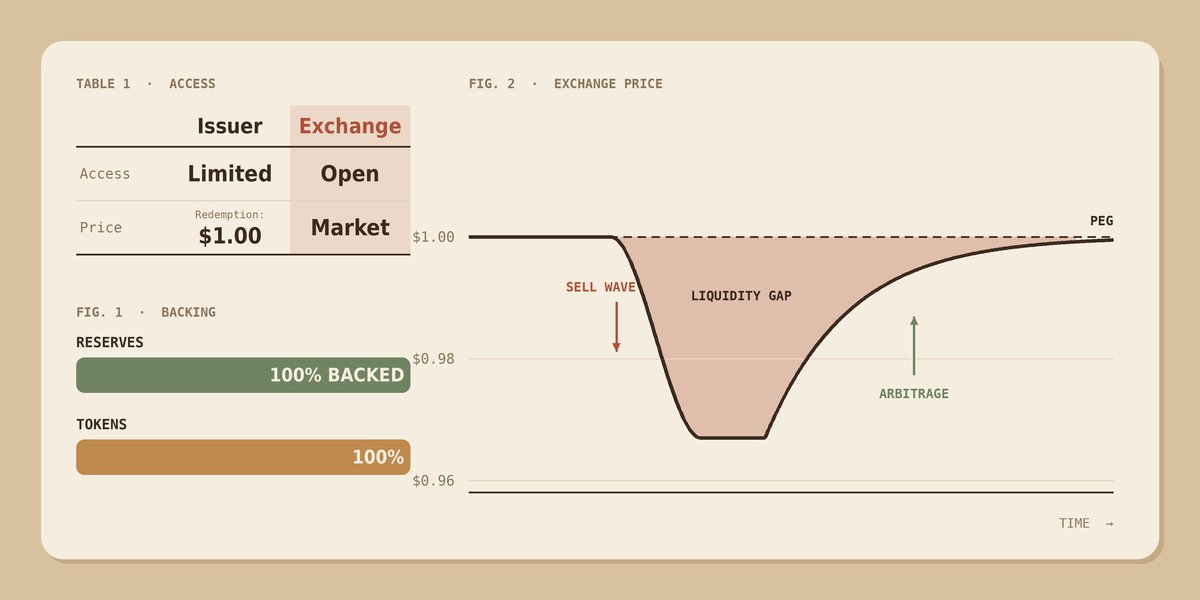
a stablecoin can have enough reserves to back every token and still lose its $1 peg
having the money in reserve doesn't mean every holder can redeem directly with the issuer.. most people buy and sell through exchanges, where the price depends on actual market demand.
if a lot of holders start selling at once and buyers aren't there to absorb the pressure, the price can slip below $1
arbitrage usually helps bring it back, but that process takes time.
so a temporary depeg doesn't always mean the reserves are missing
sometimes, it's simply a liquidity problem.
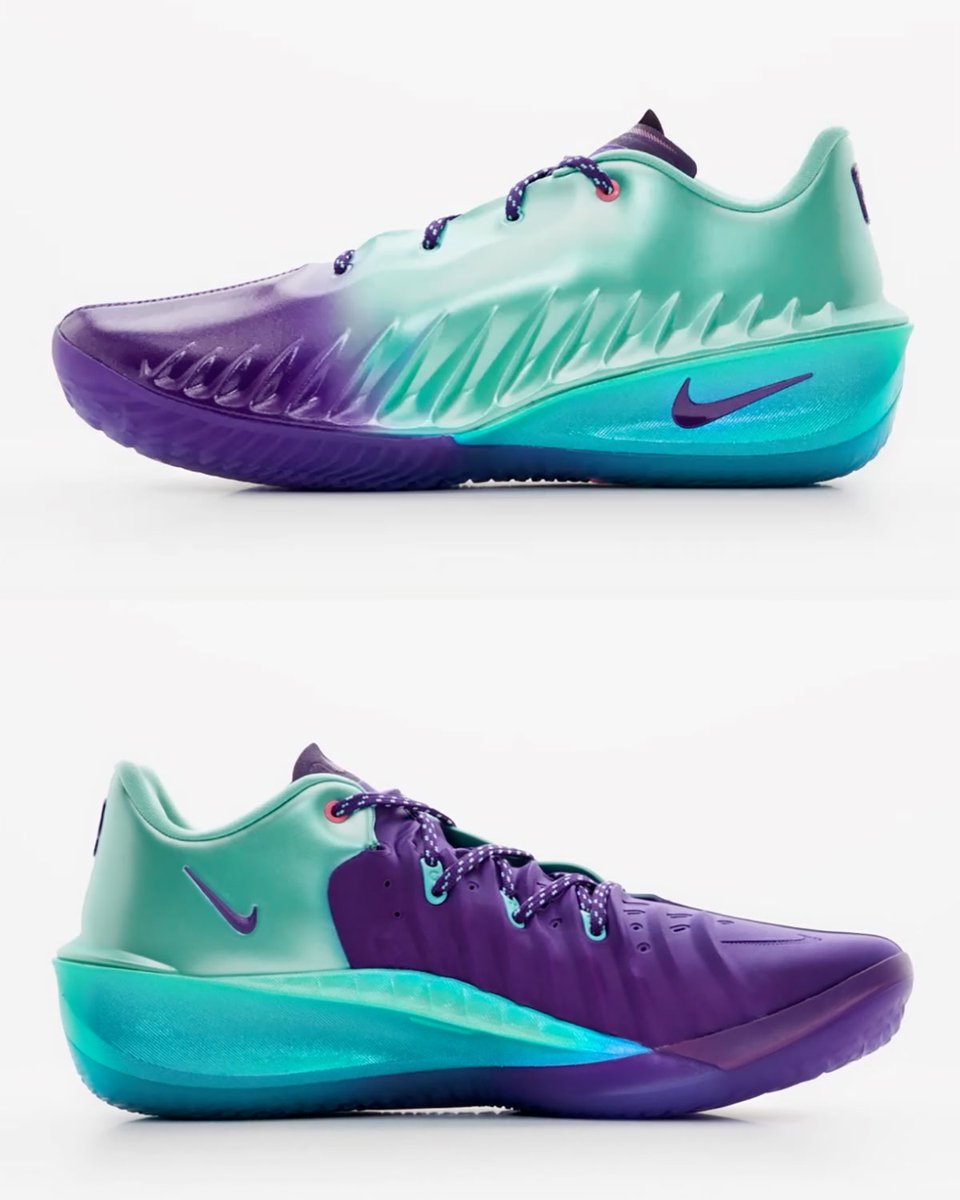
Paige Bueckers and Nike are dropping a Mountain Dew Baja Blast PE 🥤
Her next GT Cut 4 release is inspired by her favorite soft drink 🤤
Get a closer look >> https://t.co/6FjiRxGIT7
you can pay with usdc on @base while the shop receives local currency. that’s a setup i can actually see merchants wanting.
base’s latest shopify breakdown explains how eligible merchants can accept usdc through shopify payments, inside their existing order flow. buyers don’t need eth for gas because coinbase sponsors it.
but the part i found most interesting was what happens when an order goes wrong.
online shopping needs cancellations and refunds. the commerce payments protocol holds authorised funds in escrow until the merchant captures payment, supporting cancellation before capture and refunds afterward.
those details matter if stablecoins are going to work for everyday purchases. a merchant needs payments to fit how the business operates, including when a customer changes their mind.
my take: making usdc useful at checkout means solving the whole purchase experience. paying, receiving the money and handling a refund all need to work.
this gives base a route into commerce through tools merchants already use. i’d rather see more useful integrations like this than ask every shop to figure out crypto operations from scratch.
@shopify@coinbase
#base #usdc #stablecoins
Building with stablecoins shouldn’t mean you have to become a payments company.
There are some solid providers making it easier to ship faster, with clean APIs, good documentation and actual developer support.
Here are a few worth checking out:
1.Nuvion @ournuvion: AI-powered global banking and stablecoin rails in one API. Accounts, cards, payouts and support for USDC, USDT and RLUSD.
2.RampHub @ramphub: Aggregates multiple African on/off-ramp providers into one platform. Compares rates, speed and provider uptime in real time, then routes transactions through the best available option instead of relying on a single provider.
https://t.co/8Dzwp3hKDW @circle: A USDC-native infrastructure stack with Circle Payments Network. Great for businesses building around USDC.
4.Bridge (Stripe) @stripe: Great developer experience for payment orchestration and fiat-to-stablecoin conversion. Especially useful if you’re already in the Stripe ecosystem.
5.Sumsub @sumsub: KYC/KYB infrastructure with solid APIs and global coverage.
6.Persona @persona: Flexible identity verification with a developer-friendly API.
7.Onfido (Entrust): Document and biometric verification for businesses that need reliable identity checks.
8.Fireblocks: Institutional-grade custody and payment infrastructure with MPC security, so you don’t have to build your wallet infrastructure from scratch.
Who else should be on this list?
Drop them below and tag a founder who might find this useful.
XDC Network's stablecoin supply is growing...
According to DefiLlama data, @XDCNetwork's stablecoin market cap is up +7.5% on the week, despite most major networks seeing reductions in the period.
Following the growth, xdce-crowd-sale:native's stablecoin supply stands at nearly $61M which, though impressive, places it only 34th among other chains.
Can XDC Network break into the top-30? This would mean adding around $20M in stablecoins to its ecosystem.
Angel Reese is taking a step back this offseason to focus on herself, announcing that she won’t be recording new episodes of her podcast over the next six months.
In a message to fans on IG, Reese said she plans to make Florida her home base, where she’ll rest, work out, build her personal brand and spend time with her partner. She added that fans can still expect occasional vlogs on YouTube.
📷 IG: @ / barbieeearchive