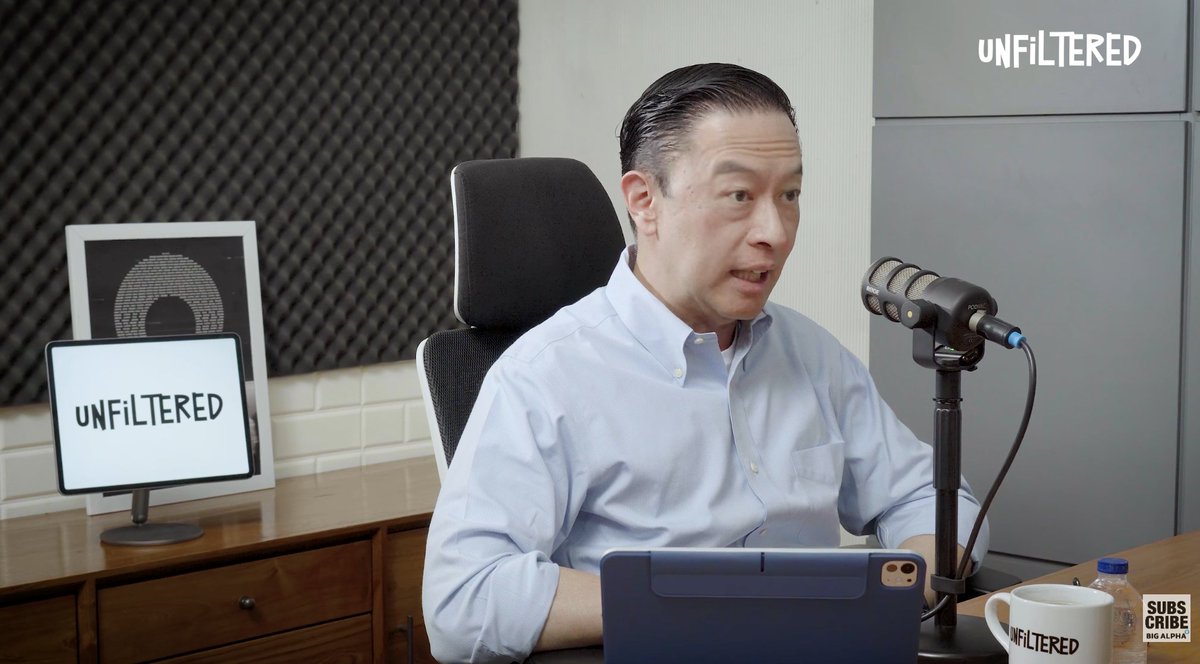
TOM BILANG KALO RUPIAH TERUS MELEMAH SIAP SIAP BUAT WNI KALO ADA KRISIS
kenapa rupiah bisa melemah terus
menurut tom, belanja pemerintah terlalu boros dan nggak masuk akal, jadi investor dalam dan luar negeri udah malas beli surat utang pemerintah, kecuali dikasih bunga tinggi banget, tiap lelang, peminatnya makin sedikit
kalau suatu saat surat utangnya nggak laku, biasanya kementerian keuangan bakal lari ke bank indonesia, minta bi cetak uang, kalau rupiah dicetak makin banyak sedangkan dolarnya tetap, ya rupiah jadi makin murah, kayak barang yang kebanyakan stok
tom bilang udah ada tanda bi diam-diam banyak beli surat utang pemerintah dalam setahun setengah terakhir, dan bi susah naikin bunga buat ngimbangin karena ada tekanan politik, menurut dia, nyampurin urusan bank sentral sama urusan belanja pemerintah itu berbahaya banget
ditambah lagi, sejak amerika nyerang iran dan ada krisis di selat hormuz, harga minyak melonjak, harga bbm di seluruh dunia ikut naik, terus bikin harga barang naik, ini bikin surat utang makin nggak menarik
18 ribu ke 20 ribu itu “cuma” 10%
tom bilang kita sering kaget sama angka bulat kayak 20 ribu, padahal dari 18 ribu ke 20 ribu itu cuma turun sekitar 10%, kalau dihitung sejak 2024, rupiah udah turun sekitar 14%, ditambah 10% lagi jadi sekitar 24% dalam 2-3 tahun, lumayan, tapi belum ekstrem
waktu krisis 98, rupiah anjlok dari 2.500 ke 17.500, turunnya sekitar 85%, tom nggak ngira kali ini bakal separah itu, tapi kalau dalam 4-5 tahun rupiah total turun 40-50%, itu masih mungkin
dua kemungkinan yang harus disiapin
pertama, krisis mendadak, semua orang panik, rupiah anjlok, ekonomi kayak masuk ugd, pemerintah kehabisan uang dan kejebak, kalau minta bi cetak uang, rupiah makin hancur, kalau nggak cetak uang, pemerintah nggak punya uang, pln sama pertamina juga bisa ikut susah karena uang subsidinya telat cair, akhirnya susah beli batubara dan minyak dari luar negeri
kedua, nggak ada krisis besar, tapi tiap tahun kayak tahun ini terus selama 3-4 tahun ke depan, tom nyebutnya “mati perlahan”, menurut dia ini bisa lebih berat, karena kalau krisis, habis itu bisa bangkit lagi, kalau pelan-pelan, susahnya berlarut-larut
bedanya sama krisis 98
tahun 98, yang bangkrut cuma jakarta, yaitu konglomerat sama bank yang punya utang dolar, di daerah malah ada yang untung, petani kopi, karet, sama pengusaha mebel yang jualan ke luar negeri tiba-tiba dapat rupiah berlipat, tom cerita jokowi yang dulu pengusaha mebel juga pesta pora waktu itu
sekarang beda, kata tom, mau kota besar atau kota kecil semuanya susah, dana daerah sama dana desa dipotong, bbm subsidi langka, bbm nonsubsidi mahal, belum lagi bencana yang belum beres
uangnya ditaruh di mana
saran tom, simpan di yang gampang dicairkan, kayak rekening dolar amerika atau dolar singapura, atau obligasi pemerintah amerika dalam dolar, tapi pilih yang jangka pendek, 1 sampai 3 tahun, bunganya sekitar 4,8 sampai 4,9% setahun
yang dia nggak saranin:
saham amerika, harganya udah kayak gelembung, suatu saat bisa pecah
rumah dan apartemen, kalau dihitung pakai dolar harganya stagnan, apartemen malah cenderung turun, susah dijual cepat, kalau buru-buru harus banting harga 20-30%
mobil, harganya selalu turun, kecuali mobil koleksi
saham indonesia, harganya masih bisa turun lagi, ditambah rupiahnya ikut melemah
tom sendiri nggak punya rumah, mobil, atau saham indonesia, selain soal harga, dia juga lagi di politik dan sering berseberangan sama pemerintah, jadi risikonya udah besar, nggak mau nambah lagi
tapi dia bilang suatu saat pasti bakal beli rupiah dan saham indonesia lagi, kalau udah benar-benar anjlok, waktu krisis 98 dia nggak beli di tahun 99, 2000, atau 2001, padahal udah murah, dia baru borong di tahun 2002, kapan waktunya beli lagi? dia janji bakal ngomong kalau udah saatnya, sekarang “belum”
pesan tom
daripada berdarah-darah ekspansi usaha, mending simpan uang di yang aman dan gampang dicairkan, terus fokus nyuarain kebenaran dan keadilan kayak mahasiswa kemarin, karena menurut dia cuma itu yang bisa bawa perubahan
Huge regulatory nod for $SHIB 🐕 Japan placed the @Shibtoken memecoin on the same approved list as Bitcoin and Ethereum.
Here's the screening it had to pass first.
Get ahead:
https://t.co/YUd6Yeodq2
Teranode 0.16.1 has been released following nine beta versions, bringing changes to how nodes validate blocks on BSV Blockchain.
One important correction concerns the first transaction in a block, which pays the miner. Earlier Teranode versions could accept certain blocks that the new release rejects, bringing its checks into alignment with SV Node.
Because older and newer Teranode versions may disagree on block validity, the development team calls for a coordinated upgrade. The release also removes default administrative credentials, requiring operators to configure their own.
The update is publicly available, although its release does not establish how widely it has been deployed.
Teranode 0.16.1 Leaves Beta With Changes to Which Blocks Nodes Accept
https://t.co/TomcIKrzVp
#BSV #DigitalInfrastructure
Boom! - $SHIB hits 1.7 MILLION holders.
A long time coming @Shibtoken now has over 1,700,000 non-empty holder addresses on @Ethereum, per @etherscan.
The current total stands at 1,700,770 at time of writing, the figure having risen steadily over the past two weeks.
In fact, when you consider that $SHIB also has a presence on chains like @Base, @Solana and @BNBChain, the real figure is likely much higher.
Not to mention that the count does not include centralised exchange holders.
Latest SHIB news: https://t.co/OxrWivBLWi
📢 IMPORTANT ANNOUNCEMENT — $STRX SNAPSHOT 🚀
We are excited to announce that the StarX Network team will be taking the official community snapshot on December 10, 2026! 🎉
Please make sure your wallet address is correctly submitted and that you are using a compatible wallet.
👛 WALLET REQUIREMENTS
Your wallet address must be a BNB Smart Chain (BEP20) address from a supported Web3 wallet, such as:
• MetaMask
• Trust Wallet
• Any compatible Web3 wallet supporting BNB Smart Chain (BEP20)
⚠️ IMPORTANT:
- Make sure your wallet is set to or supports the BNB Smart Chain (BEP20) network.
- Double-check your wallet address before submitting it.
- Do not submit exchange wallet addresses (such as Binance or other centralized exchanges). Only use your personal Web3 wallet.
- Make sure you have access to your wallet because you will need it in the future.
📅 Snapshot Date: December 10, 2026
Stay tuned for further updates, and make sure you're prepared before the snapshot date! 👀🔥
Thank you for being part of StarX Network. The journey continues! 🚀
🔗 OFFICIAL RESOURCES
📲 Google Play Store:
https://t.co/jBp1414gaz
📄 Whitepaper:
https://t.co/c5msTkWHyh
— StarX Network Team
🇺🇸🇮🇩NEW ARTICLE: The US is Behind Indonesian Protests (Again)
(Note: Because X censors NEO links, I am reproducing the entire text of the article below)
Indonesia, located in Southeast Asia, is the 4th most populous nation on Earth with 287 million people. It constitutes China’s 12th largest trade partner on Earth and 3rd largest trade partner in Southeast Asia following Vietnam and Malaysia.
Indonesia is also strategically located near the Malacca Strait, a critical waterway the vast majority of China’s imported energy and resources as well as exported goods travel through, and a waterway the US has planned and prepared for years to close as a means of implementing a “distant blockade” on China.
Today, the US is already implementing a variation of the “distant blockade” through its invasion and capture of Venezuela, its proxy war on Russia through Ukraine, and its wars across West Asia - directly on Iran and through its Israeli and Saudi proxies against Lebanon and Yemen respectively. Together, these conflicts have all served to either sever or drastically reduce energy exports to China.
Destabilizing or politically capturing Indonesia would serve US interests in both encircling and containing China with a united front of US-captured proxies or an arc of destabilization denying China viable economic, trade, political, and military partnerships. It would also enhance the US’ ability to either directly or indirectly threaten maritime shipping through the Malacca Strait - significantly expanding its “distant blockade” on China.
For all of these reasons and the US’ general desire to prevent any powerful independent nation-state from rising and undermining US primacy either worldwide or regionally - the US seeks to undermine Indonesia through extensive political interference.
In recent years this has taken the shape of protests promoted by the collective Western media as “youth,” “Gen-Z,” or “student-led” protests following similar patterns of US interference elsewhere around the globe.
Students, who have not even finished studying their own chosen area of focus in life, do not possess the resources, experience, or knowledge to organize nationwide movements capable of contesting, let alone ousting existing political orders, and instead serve as the rank and file for interests that do.
Examining the organizations promoting and defending the protests taking place in Indonesia over the past 2 years reveals a vast network of US government-funded media outlets, “human rights” organizations, and legal foundations promoting and amplifying narratives, promoting the protests themselves, as well as providing support for and legal defense of the protests and their participants.
US-funded Media in Indonesia and its Role in Boosting US Interference
US interference in Indonesia was exposed last year with lists of specific Indonesian media organizations promoting the protests receiving US government and/or foundation funding.
This included Tempo, Kompas, Tribunnews, Remotivi, New Naratif and Project Multatuli.
These admissions were made by these organizations themselves in a 2025 Mongabay article titled, “‘Without us, no scrutiny’: Indonesia’s independent media count cost of US funding cuts.”
The article not only admits Remotivi, New Naratif, and Project Multatuli received significant US government funding through USAID and the National Endowment for Democracy (NED) and that it would be virtually impossible to function without this funding, it is admitted that US government “program coordinators” discussed editorial policies with its grantees and were involved in whether or not specific content was published.
Kompas and even the Jakarta Post were mentioned as associated with this US-funded network.
Tempo, on its own website, admitted to US funding through Media Development Investment Fund (MDIF) money - the MDIF itself admittedly a product of European government funding and funding from George Soros’ Open Society Foundations.
Kompas, Tribuunews, and Tempo are among the top news platforms within Indonesia’s information space alongside CNN Indonesia and BBC News, demonstrating US information dominance within Indonesia, part of extensive US information dominance worldwide.
US-funded media organizations are critical in shaping, promoting, and amplifying the narratives and slogans of US-backed opposition groups. Because of their large share of Indonesia’s information space, the Indonesian public is exposed to these narratives, ensuring larger percentages of public support and participation in US-backed opposition movements.
Because Indonesia - like many other nations around the globe - is almost entirely dependent on US-based social media platforms including Meta’s WhatsApp, Instagram, and Facebook, as well as X and Google’s YouTube, their algorithms ensure the vast majority of content Indonesians consume is connected to US interests and US-backed movements and organizations, while opposing views or attempts to expose US interference are suppressed.
As early as 2008 the US State Department organized what it called the “Alliance of Youth Movements,” in which it was admitted that:
“This Alliance of Youth Movements had organic beginnings in the sense that already, youth movements from around the world that were utilizing online, mobile and digital media were interacting to discuss best practices. The State Department acted as a facilitator to help provide some structure to this trend by partnering with entities like Facebook, Howcast, Google, MTV, and Columbia Law School.”
And that:
“The aim of the Alliance of Youth Movements is to look at the success stories where youth have used the online space as a tool for youth empowerment against violence and oppression, synthesize the best practices that made these possible, and inspire new movements.”
The US State Department and its Western social media partners were preparing region-wide networks of opposition groups to be sent back to their home countries to destabilize and if possible, overthrow them on behalf of the US government.
By 2011, the New York Times in its article, “U.S. Groups Helped Nurture Arab Uprisings,” admitted the US NED and the State Department were behind the opposition groups driving regional unrest. The same article specifically mentioned “a 2008 technology meeting” (the Alliance of Youth Movements) sponsored by the US State Department and US-based social media platforms where opposition groups involved in the “Arab Spring” were “taught to use social networking and mobile technologies.”
Beyond training and equipping US-backed opposition groups themselves, US-based social media platforms abuse their monopoly over global information space to facilitate US interference and even warfare.
In a 2016 Independent article titled, “Google planned to help Syrian rebels bring down Assad regime, leaked Hillary Clinton emails claim,” it is admitted that:
“An interactive tool created by Google was designed to encourage Syrian rebels and help bring down the Assad regime, Hillary Clinton's leaked emails have reportedly revealed.
By tracking and mapping defections within the Syrian leadership, it was reportedly designed to encourage more people to defect and 'give confidence' to the rebel opposition.”
The article would continue:
“The email detailing Google's defection tracker purportedly came from Jared Cohen, a Clinton advisor until 2010 and now-President of Jigsaw, formerly known as Google Ideas, the company's New York-based policy think tank.
In a July 2012 email to members of Clinton's team, which the WikiLeaks release alleges was later forwarded to the Secretary of State herself, Cohen reportedly said: “My team is planning to launch a tool on Sunday that will publicly track and map the defections in Syria and which parts of the government they are coming from.””
In other words US-based social media companies are in direct contact with the US government overseeing, aiding, and abetting US interference and even proxy war within targeted nations.
The rigging of US-based social media algorithms and the deployment of custom-tailored applications to promote US-backed protests and suppress attempts to expose or neutralize them is a daily reality playing out in the information space of nations around the globe, and to the immediate detriment of these nations’ national security.
US-Funded Media in Indonesia Covering Up US Interference
In addition to US information dominance inside Indonesia’s information space, Indonesia’s dependence on US-based social media platforms, and their abuse of algorithms to manipulate Indonesian public perception, US-funded media outlets in Indonesia have taken part in concerted attacks against individuals researching and exposing their activities.
The above-mentioned Jakarta Post in a June 2026 article titled, “Media probe reveals disinformation behind ‘foreign-backed’ 2025 protests,” claims:
“A collective study into allegations of foreign influence behind last year's sweeping protests has instead uncovered what appears to be an anti-Western disinformation campaign.”
However, it also claims (emphasis added):
“The collective probe by Tempo magazine, https://t.co/zvSfLYoisH, https://t.co/Cw02xY3GaG, https://t.co/NIOYoqxCxA and social media monitoring platform Drone Emprit, conducted as part of a European Union-backed media development program run by international nonprofit Internews, found indications of foreign information manipulation and interference (FIMI) that aimed to frame last year’s sweeping protests as foreign-backed.”
In other words, a “probe” into claims regarding US interference in Indonesia was conducted by verified, admitted US-funded media organizations receiving additional funding from foreign interests - the European Union and Internews.
Internews is funded by - among others - Open Society Foundations, Ford Foundation, Rockefeller Foundation, as well as the very US-based social media companies involved in facilitating US interference worldwide including Facebook and Google.
Elsewhere on Internews’ own official website is an “About Internews” page admitting the organization’s work “was carried out as a longtime implementing partner of USAID.”
Thus, the “probe” was simply a concerted Western-funded attack on those researching and exposing actual, verified Western interference in Indonesia. Together with admitted efforts taken by US government funding organizations like the NED to cover up public disclosures, it serves as further evidence of how deceitful and malicious US intentions are regarding Indonesia in general and specifically through its funding of organizations within Indonesian social, political, and information space.
Student Protesters and their US-Funded Defenders
Yayasan Lembaga Bantuan Hukum Indonesia (YLBHI) and the Legal Aid Institute/Foundation (LBH) was also revealed to have received US, Canadian, and Australian government funding spanning the entire 21st century. It is listed as a “partner” of the Freedom Fund, which in turn is funded by the US State Department.
YLBHI/LBH was established to provide legal aid to US-backed opposition groups, individuals, and participants in US-backed movements.
During the protests last year it published a statement regarding the “right to protest” co-signed by a long list of likewise US, European, and Western foundation funded fronts - many of which are not even located in or related to Indonesia. The very next organization on the list following YLBHI/LBH was “Asia Justice and Rights” (AJAR) - while based in Indonesia, according to its most recent annual report, receives European government funding as well as from Open Society Foundation. Also signing the statement was the “Cambodian Center for Human Rights (CCHR)” which admitted in previous disclosures to be funded by the US State Department, the British Embassy, the European Union, USAID, and NED-subsidiary Freedom House.
One of the most frequently cited student groups involved in Indonesia’s protests is the “student executive body” at the University of Indonesia (BEM UI). YLBHI regularly promotes (along with US-funded media outlets) and legally defends events and marches “organized” by BEM UI, from 2021 all the way to recent months. Like many other US-funded “human rights” or “legal aid” organizations, protester violence is ignored or excused and any efforts by state security agencies to maintain order are condemned as “human rights violations.”
BEM UI and other student groups - without massive networks of US-funded media organizations promoting their activities across Indonesia’s information space, rigged by the US-based social media platforms controlling the algorithm throughout which information flows to Indonesia’s citizenry, and defending them legally through US-funded organizations like YLBHI - would not have achieved the nationwide recognition and influence they are claimed to have.
Corruption, environmental issues, and economic hardships are neither unique to Indonesia nor necessarily the fault of Indonesia’s current government. Systemic corruption does not appear overnight, nor do environmental issues. Economic hardships including rising energy prices and the price of all commodities dependent on those energy prices are actually a direct result of the US war of aggression across West Asia waged as a deliberate attempt to choke the rest of Asia off from cheap, reliable imports of energy from the region and create the very conditions for unrest in the streets of Indonesia, Malaysia, Myanmar, and Thailand.
Far from a spontaneous decentralized movement - just like with the 2011 “Arab Spring” - the US spent years building up these networks, infiltrating and capturing controlling shares of Indonesia’s information space, and even directly and deliberately contributing to the very real economic problems Indonesians face. And just like with the “Arab Spring” in 2011, or Ukraine’s “Euromaiden” in 2014, no matter what Indonesians being led by US-funded organizations into the streets believe they will achieve - the US has only greater hardship and humiliation in store for the nation of Indonesia.
The protests taking place across Indonesia this year are simply a continuation of protests already exposed last year as US-backed interference - and it is interference the US-backed opposition in Indonesia received additional Western assistance to specifically cover up.
They are protests that fit into a wider regional campaign - previously referred to as the “Milk Tea Alliance,” and is a deliberate attempt to recreate the US-engineered “Arab Spring” across Southeast Asia to surround China with the same death, destruction, and destabilization the US has surrounded Iran with in West Asia from 2011 onward.
The US is waging a global war on multipolarism. Not just on the nations proposing and leading the rise of multipolarism - nations like Russia, China, and Iran - but also any and all nations that could potentially contribute to and benefit from multipolarism - Indonesia among the most important of those nations.
Exposing US interference in Indonesia not only helps avert the disasters similar US interference caused across the Arab World from 2011 onward or in Ukraine from 2014 onward, it also is the first step to eliminating foreign-hijacked activism and replace it with real, pragmatic activism that could potentially help alleviate the problems Indonesia - and all other nations - have.
Ignoring the empirical evidence of the US government promoting, defending, and benefiting from political crisis in Indonesia and surrendering to emotions US-funded narratives are scientifically designed to exploit - will only add Indonesia to the long and still growing list of nations the US has destroyed from the inside out, without firing a single shot itself.
Brian Berletic is a Bangkok-based geopolitical researcher and writer.
🚨CAA ALART: STARX NETWORK ($STRX) @StarxCoreTeam
StarX Network just announced a CoinMarketCap listing submission (ID: 1474161) and shared its BNB Chain contract(0x6922a60739f978cF84cA60712CaE1f3FAa1E52aa) ahead of its December 2026 launch window.
At the Crypto Accountability Alliance (CAA), we understand how Web3 infrastructure actually works beneath the marketing headlines and we stand 100% with the community. CAA has eyes on StarX Network. In December 2026, we will inspect every single on-chain move, including smart contract permissions, token distribution, and real liquidity pools.
Before you celebrate a CMC ticket, let’s educate the community on what this announcement actually means in Web3
The Headline: StarX posted CMC Submission ID 1474161.
How Web3 Works: CoinMarketCap is a price tracking aggregator, not a cryptocurrency exchange. Anyone who has deployed a token contract can fill out a CMC application form for free.
What It Does NOT Do: A CMC submission ticket does not mean CMC has approved $STRX, does not create liquidity where you can sell your tokens, and is not a Binance, Bybit, OKX, or MEXC listing.
Always verify the exact BNB Chain contract (0x6922a60739f978cF84cA60712CaE1f3FAa1E52aa) so you never confuse it with older, unrelated STARX tickers.
CAA understands smart contract architecture we don't just read announcements, we read BscScan:
The Setup: $STRX is deployed on BNB Smart Chain (BEP-20) with a stated 90,000,000 total supply (60% / 54M allocated to mobile mining rewards).
What CAA Is Watching: Because upgradeable/proxy contracts allow administrators to interact with contract functions, our technical team monitors admin ownership privileges, multi-sig security, transfer restrictions, and wallet concentration. Real Web3 decentralization means code rules not hidden admin switches.
A token on BscScan is worth $0.00 until real liquidity is added to a Decentralized Exchange (DEX) like PancakeSwap. In December 2026, CAA will scrutinize four critical on-chain metrics to protect everyday miners:
Initial Liquidity Depth: How much real USDT or BNB does the StarX team pair with $STRX? Thin liquidity allows insiders to drain the pool while retail users are stuck unable to sell.
Verifiable LP Lock: Are the Liquidity Provider (LP) tokens locked in a verifiable smart contract locker (like PinkSale or UNCX) or burned? Unlocked liquidity means developers can pull the funds at any moment.
Clean Community Distribution: Do the 54,000,000 mining rewards actually flow smoothly to real retail wallets without sudden lockups, tiny 5% drip bottlenecks, or hidden "gas/verification fee" traps?
Team & Vesting Wallets: Monitoring the 15% team allocation (13.5M STRX) and deployer wallets on BscScan to ensure zero insider dumping on the community.
Because CAA puts community safety first, follow these three non-negotiable Web3 security rules between now and December 2026:
Use a Separate Airdrop Wallet: Only submit a dedicated BNB Smart Chain (BEP-20) wallet address never expose your primary savings wallet.
Never Buy Unverified Pre Market Pairs: Wait until CAA verifies the official liquidity pool and lock contract in December before risking a single dollar.
We want StarX Network to succeed because when a project builds honestly, the community wins.
To the StarX team: CAA is monitoring everything on-chain. Deliver deep locked liquidity, transparent vesting, and fair payouts to your miners in December 2026, and we will applaud you publicly.
Cut corners or trap retail users, and every BscScan receipt will be exposed to the world.
Web3 Literacy Is Power. Code Over Claims Always!.
Join official CAA security & Web3 education hubs:
🟢 WhatsApp: https://t.co/uyqUQUssFO
💬 Telegram: https://t.co/PHDRjealGF
#CAAWatchdog #StarXNetwork #STRX #BNBChain #Web3Education #CodeOverClaims #CryptoAccountability