My daughter and I got to meet @ScottPresler at the Great American State Fair, being the man of the people he is, on our great country's 250th anniversary.
#HappyJuly4th#250YearsStrong
Lettre à l'Amérique, d'un Français qui a vu la fin du film.
Vous vous croyez encore le dernier pays libre. Vous l'êtes pour l'instant. Je vous écris depuis un pays qui l'était aussi, et qui a signé sa reddition sans qu'un seul coup de feu ne soit tiré.
En France, l'État capte et redistribue 57% de tout ce que la nation produit. Cinquante-sept pour cent. Arrêtez-vous sur ce chiffre. Pour chaque unité de valeur créée par un ingénieur, un ouvrier, un fondateur qui a risqué sa peau, plus de la moitié transite par une main qui n'a rien bâti. Ce n'est pas une ligne budgétaire. C'est une hypothèque permanente sur l'existence des gens.
Et voici ce que personne ne vous avouera : ça n'arrive jamais par la révolution. Personne ne vote pour le déclin. On vote pour la compassion, pour la sécurité, pour la justice, pour la planète. À chaque étape, on troque un morceau de liberté contre une promesse. Et les promesses sont toujours belles. C'est ça, le piège.
Le collectivisme d'aujourd'hui n'agite plus le drapeau rouge il a compris que ça ne se vend plus. Il a appris à parler la langue du soin. ESG, gouvernance, conformité, « responsabilité » : ce sont les mots nouveaux d'une très vieille idée. L'idée qu'une élite éclairée sait mieux que vous ce qui est bon pour vous, et qu'il faut donc lui transférer, ligne après ligne, le pouvoir de décider à votre place. Ce n'est pas un complot. C'est pire : c'est un consensus. Personne ne se cache. Tout se fait à visage découvert, applaudi, subventionné.
Hayek l'avait écrit il y a quatre-vingts ans : la route de la servitude est pavée de bonnes intentions et de planification centralisée. La France a marché sur cette route en souriant. On a nationalisé le risque, socialisé l'échec, taxé l'audace, et administré tout le reste. Résultat : un pays magnifique qui ne construit plus rien, qui gère sa décrépitude avec une élégance funèbre, et où le jeune le plus doué rêve d'une seule chose partir. Beaucoup atterrissent chez vous.
L'Amérique a encore ce que nous avons perdu : le réflexe de bâtir plutôt que d'administrer. Le fondateur y est un héros, pas un suspect. La réussite y est une preuve, pas une faute à expier. C'est votre trésor. Et un trésor, ça se perd sans qu'on s'en aperçoive un formulaire, une agence, une « bonne cause » à la fois.
Alors ne cherchez pas d'ennemis cachés. C'est inutile et c'est indigne de vous. Regardez plutôt le chiffre. Regardez la France. Chaque point de PIB que vous laissez glisser vers l'État est un point de liberté qui ne revient jamais.
La liberté ne meurt pas assassinée. Elle meurt anesthésiée, sous les applaudissements.
Ne signez pas. Construisez.
This article was written by a 26 yr old college student by the name of Alyssa Ahlgren, who's in grad school for her MBA. What a GREAT perspecitve..👍🏽
My Generation Is Blind to the Prosperity Around Us!
I'm sitting in a small coffee shop near Nokomis (Florida) trying to think of what to write about. I scroll through my newsfeed on my phone looking at the latest headlines of presidential candidates calling for policies to "fix" the so-called injustices of capitalism. I put my phone down and continue to look around.
I see people talking freely, working on their MacBook's, ordering food they get in an instant, seeing cars go by outside, and it dawned on me. We live in the most privileged time in the most prosperous nation and we've become completely blind to it.
Vehicles, food, technology, freedom to associate with whom we choose.These things are so ingrained in our American way of life we don't give them a second thought.
We are so well off here in the United States that our poverty line begins 31 times above the global average. Thirty One Times!!!
Virtually no one in the United States is considered poor by global standards. Yet, in a time where we can order a product off Amazon with one click and have it at our doorstep the next day, we are unappreciative, unsatisfied, and ungrateful. ??
Our unappreciation is evident as the popularity of socialist policies among my generation continues to grow. Congresswoman Alexandria Ocasio-Cortez recently said to Newsweek talking about the millennial generation, "An entire generation, which is now becoming one of the largest electorates in America, came of age and never saw American prosperity."
Never saw American prosperity! Let that sink in.
When I first read that statement, I thought to myself, that was quite literally the most entitled and factually illiterate thing I've ever heard in my 26 years on this earth. Many young people agree with her, which is entirely misguided.
My generation is being indoctrinated by a mainstream narrative to actually believe we have never seen prosperity. I know this first hand, I went to college, let's just say I didn't have the popular opinion, but I digress.
Why then, with all of the overwhelming evidence around us, evidence that I can even see sitting at a coffee shop, do we not view this as prosperity? We have people who are dying to get into our country.
People around the world destitute and truly impoverished. Yet, we have a young generation convinced they've never seen prosperity, and as a result, we elect some politicians who are dead set on taking steps towards abolishing capitalism.
Why? The answer is this,?? my generation has only seen prosperity. We have no contrast. We didn't live in the great depression, or live through two world wars, the Korean War, The Vietnam War or we didn't see the rise and fall of socialism and communism.
We don't know what it's like to live without the internet, without cars, without smartphones. We don't have a lack of prosperity problem. We have an entitlement problem, an ungratefulness problem, and it's spreading like a plague."
Every major tech company on Earth is making the same bet.
Hundreds of billions in AI infrastructure. Data centers the size of small cities. Power plants built from scratch. Chip orders that would dwarf Cold War defense budgets.
The thesis is unanimous.
Scale is the moat.
Demis Hassabis: “You need to scale to the maximum the techniques that you know about. You want to exploit them to the limit, whether that’s data or compute scale.”
The head of Google DeepMind cosigning the largest capital deployment in the history of technology.
But that was only half his argument.
Hassabis: “At the same time, you want to spend a bunch of effort on what’s coming next, maybe six months, a year down the line, so you have the next innovation that might do a 10x leap.”
Not a 10% gain from better hardware.
A 10x leap from a single idea.
Then Sergey Brin said the thing no one spending $100 billion on data centers wants to hear.
Brin: “If you look at things like the N-body problem and simulating gravitational bodies, as you plot it, the algorithmic advances have actually beaten out the computational advances, even with Moore’s law.”
Moore’s law was the most dependable exponential ever recorded. Computational power doubling every two years for half a century straight.
And algorithms still outran it.
Brin: “If I had to guess, I would say the algorithmic advances are probably going to be even more significant than the computational advances.”
The co-founder of Google. A man who built one of the most compute-intensive empires in human history.
Telling you that math beats machines.
The transformer didn’t come from the biggest cluster on the planet. It came from eight researchers and a paper. That one insight did more for AI than every chip improvement of the prior decade. Combined.
The AI arms race today is a hardware story. Who builds the largest cluster. Who secures the most energy. Who stacks the most GPUs.
History keeps telling a different story.
Every time raw power went up against mathematical elegance, elegance won. And it wasn’t close.
You can photograph a data center. You can’t photograph the idea that makes it obsolete.
The infrastructure bet isn’t wrong. It might just be the second most important variable in the race.
Because intelligence, by definition, is what makes brute force unnecessary.
And we’re trying to brute-force our way to it.
Activist: "Your cows are putting carbon into the atmosphere."
Farmer: "Where did they get it?"
Activist: "What?"
Farmer: "The carbon. Where did the cow get it before it put it anywhere."
Activist: "From... eating?"
Farmer: "From eating grass. And where did the grass get it."
Activist: "The soil?"
Farmer: "The air. The grass pulled it out of the air last spring. The cow ate the grass. The cow breathed some of it back out. It went back into the air it came from."
Activist: "But it's still going into the atmosphere."
Farmer: "It's going back. There's a difference between a thing going somewhere and a thing going back. You've described a circle and you're frightened of it."
Activist: "Then just don't have the cow."
Farmer: "The grass still dies in autumn. It rots where it falls. The carbon goes back into the air either way, just without anyone getting fed in the middle."
Activist: "It's not that simple."
Farmer: "It's grass, cow, breath, grass. Or it's grass, rot, air, grass. Same circle, fewer dinners. If that's complicated for you I'd stay away from the water cycle. That one's got clouds in it."
Elon Musk just defended America better than every politician in Washington combined.
Musk: “After World War 2, the US could have basically taken over the world and any country. Like we got nukes, nobody else got nukes. We don’t even have to lose soldiers. Which country do you want?”
One nation on earth held a weapon nobody else had.
Total dominance. Zero competition. No risk of retaliation.
Every empire in history that held that kind of advantage used it.
Rome. The Mongols. The British. The Ottomans.
They conquered until they collapsed.
America had a bigger advantage than all of them combined.
And it rebuilt the countries it just defeated.
Musk: “The United States actually helped rebuild countries. So it helped rebuild Europe, it helped rebuild Japan. This is very unusual behavior, almost unprecedented.”
Almost unprecedented?
It had never happened before. Not once in 5,000 years of recorded history.
The Marshall Plan wasn’t foreign aid.
It was the most radical act of restraint any superpower ever committed.
America turned its enemies into allies. Turned rubble into economies. Turned surrender into partnership.
Germany went from ashes to the economic engine of Europe in a generation.
Japan went from unconditional surrender to the third largest economy on earth.
Three years after the war, America was flying food into Berlin.
A city in the heart of the nation that just tried to destroy it.
That’s not policy.
That’s a civilization deciding what it is at the exact moment it has the power to be anything.
You’re being told a story right now.
That America is the villain of history.
You hear it everywhere. Media. Universities. Social platforms.
Musk: “There’s always like, well America’s done bad things. Well of course America’s done bad things, but one needs to look at the whole track record.”
Every nation on earth has dark chapters. Every single one.
The difference is what a country does when nobody can stop it.
And when nobody could stop America, it fed its enemies and rebuilt their cities.
Musk: “The history of China suggests that China is not acquisitive. Meaning they’re not going to go out and invade a whole bunch of countries.”
Probably right.
China has historically built walls, not fleets.
But the real question isn’t about borders anymore.
We’re approaching a moment that mirrors 1945 in ways nobody has fully processed yet.
AI is going to give a handful of people a power advantage that makes nuclear monopoly look quaint.
If someone is going to hold that kind of power, who do you want it to be?
The country that conquered when it could? Or the one that rebuilt when it didn’t have to?
Every alliance. Every trade route. Every economy.
Billions lifted out of poverty.
All of it traces back to one act of restraint that had never been done before.
And carries no guarantee of being repeated.
The most powerful thing America ever did wasn’t building the bomb.
It was what it didn’t do after.
When a scientist or an engineer earns a Ph.D., it is usually based on reproducible, verifiable outcomes drawn from the laws of the natural world.
When a social "scientist" earns a Ph.D. in a "social science," it is based on collating the written opinions of other "social scientists" into a heavily footnoted thesis, and those people who were footnoted earned THEIR Ph.D. based on collating the written opinions of other "social scientists" into a heavily footnoted thesis, and those people who were footnoted earned THEIR Ph.D. based on collating the written opinions of other "social scientists" into a heavily footnoted thesis, and so on, and so on.
A Ph.D. in science or engineering is based on the laws of the natural world.
A Ph.D. in any "social science" is based on regurgitating the writings of other people who never had to prove anything. A "social science" Ph.D. is an intellectual Ponzi scheme--one based largely on restating the (often mistaken) opinions of those who came before you as if their opinions were fact, but arranging those opinions in such a way as to create your own novel and equally untrustworthy opinion.
We are at a point in society where anyone with a Ph.D. in a non-scientific or non-engineering field is more untrustworthy than random people on the street.
Starting June 1, we’re doing things better at Steak n Shake — all our beef will come straight from pasture-raised cattle. This beef will be 100% grass-fed and grass-finished, making us the only American burger joint serving the healthiest kind of beef.
Hey GOP, you can stop texting me now.
I’m not giving you a fucking penny until Thune starts doing his job. So the 8 texts a day while we’re not even trying to pass the SAVE act isn’t working. I block every number and you still bother me at all hours.
You’re dead to me.
I always felt like George Carlin was on the liberal side. Turns out I was wrong. He was right down the middle and found many issues on both sides. He had no problem calling it out. The man was brilliant and definitely ahead of his time. Too bad he wasn't here now. 🔥🤣🔥🤣🔥
Kids are waking up, and that last line says it all:
“I didn’t ask to be taught this.”
Enough already.
This isn’t education. It’s emotional validation for adults at the expense of children’s minds, and it only creates more confusion and division.
Parents want schools teaching math, reading, science, history and real-life skills, not identity obsessions and social programming.
More families are choosing homeschool and private school for a reason.
Used boat prices are collapsing. There are now insane deals on boats that only need a little TLC.
So are people rushing to buy them? Nope.
My brother spoke with a New York boatyard manager we've known for 35 years who specializes in 30-50 foot motorboats.
When he started, most owners repaired and maintained their own boats. He says 2008 wiped those guys out. Today his yard handles 90% of the maintenance and repair.
What’s fascinating is COVID brought in a younger generation willing to work on their own boats… but most failed.
He says millennials have more theoretical knowledge than any generation before them thanks to YouTube. The problem is they can’t translate that knowledge into hands-on skill.
First, they order the wrong parts. Wrong parts kill boat projects.
With local chandlers gone, one bad screw means waiting 24 hours for West Marine or Amazon… and suddenly a Saturday repair becomes next weekend’s problem.
He thinks AI maybe could help translating parts lists and scoping out projects.
Second, they struggle with basic mechanical skills: how to hold a wrench at the right angle, back off a nut without dropping it into the bilge, or manipulate tools in tight spaces.
Many get frustrated and quit too easily.
Some try to jump into difficult projects that look easy on YouTube instead of starting with simple things like changing the oil or repairing a handrail.
Worse, endless YouTube tutorials make them overthink simple problems.
And because there are no DIY people left in the yard there’s nobody to share a beer with at lunch and trade advice.
Meanwhile dock fees have exploded. Even if you get a steal on the boat itself, many middle-class buyers can’t afford to keep it.
Regulations don’t help either. In the 1990s plenty of people impulse-bought boats and learned as they went. Today many states require online boating safety courses first.
That friction kills spontaneity, and the courses often exaggerate danger enough to scare people away entirely.
His yard is still full, but repair work is falling because people barely use their boats. Some come back at the end of the season with single-digit engine hours.
Owners are terrified of scratches, docking mistakes, or becoming the next viral marina fail on Instagram.
He said the best old school boat handlers he knows had the biggest fiberglass repair bills while they were learning. When people do shown up with damage today they are often embarrassed for no reason.
But according to Chris, the biggest problem is simple: cheap travel.
Why spend invest time in mastering a new skill when you can book a $199 flight to tourist destination where you learn nothing more than how to follow the herd to the next instagram photo spot?
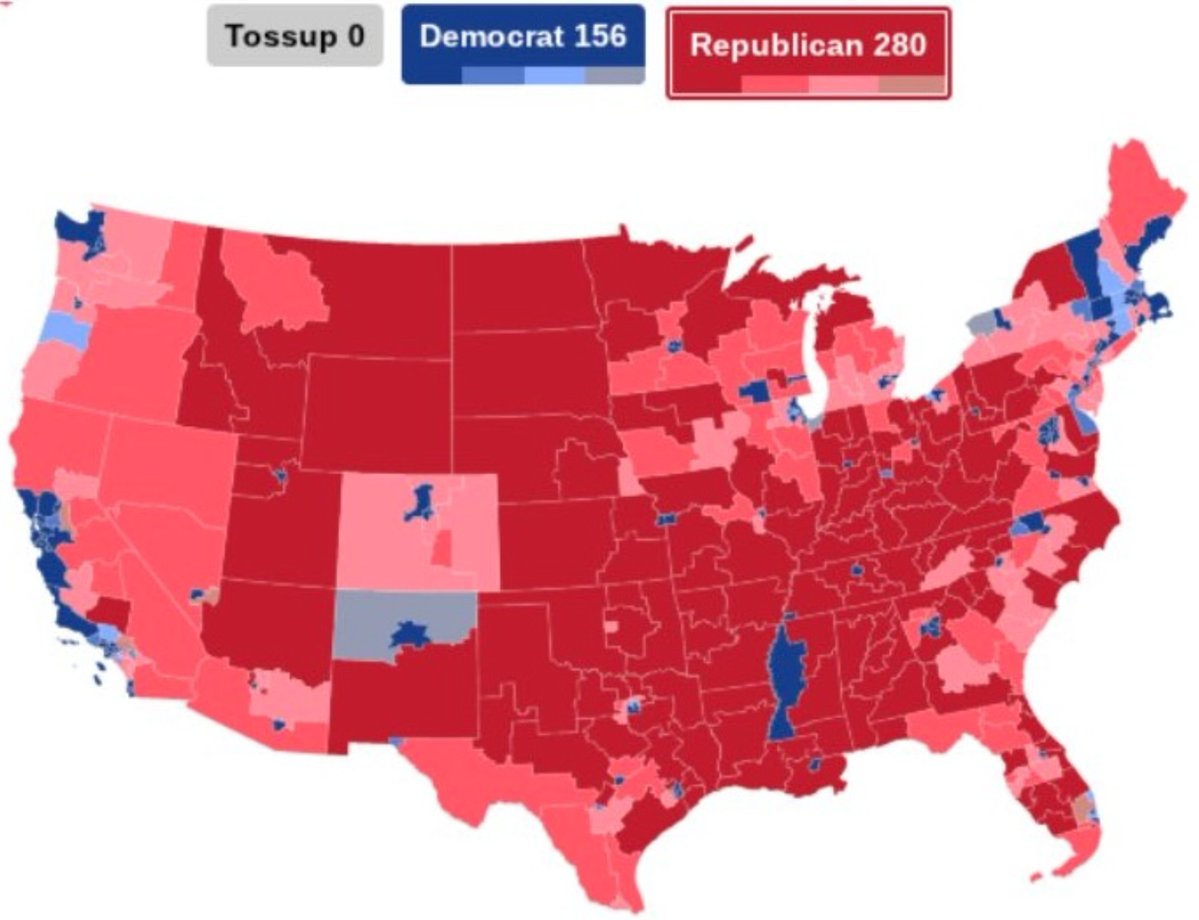
🚨 HERE'S THE CONGRESSIONAL MAP GROK COMES UP WITH IF YOU PUT IN THE FOLLOWING PROMPTS:
** Apportion seats by population (761,000 People Per District).
** Draw compact contiguous districts.
** No odd shapes. Districts should be as regular shapes as possible.
** No partisan considerations.
** No racial considerations.
** Draw districts as closely as possible to what America's founders envisioned when they wrote and ratified the Constitution of the United States.
THE RESULT:
We get 280 Republican-held seats to 156 Democrat-held seats.
Important goals of America's founders included that:
1) Rural areas not be subsumed by urban interests.
2) Big states not overrun the interests of small states.
You can do this exercise with any AI program: Chat GPT, Google Gemini, Claude, or Grok.
I'm not a Republican nor a Democrat and this is not a political channel.
But I am enjoying the amazing creativity of the LA mayor's race campaign ads.
They are off the charts.
Is this the future of politcal campaigns? (and Hollywood)?
You buy a German anvil. It contains 83 moving parts and requires winding twice a day. It's forged from excellent steel, holds tolerances across all three striking faces to within three microns, includes a beautifully indexed horn-adjustment mechanism nobody asked for, and requires a proprietary 11-point spanner should you need to replace the rebound calibration bushing. It runs flawlessly for years, but one day it starts up in limp mode because the onboard anvil-management system detects that it's overdue for its 50,000-strike inspection.
You search AliExpress for a Chinese anvil, and are presented with a multitude of offerings from such household-name brands as DUKXJYIBF, HDBTGMXI, AND UEJQIP. They're all priced to within a few pennies of each other, appear completely identical except for the nameplate, and obviously all came out of the same factory. You text your blacksmith friend to ask if they're legit. He tells you he got one like that from KIXJBU a few years ago, and that it's been great and a terrific deal. You thank him, but KIXJBU seems to have folded so you buy the one from UEJQIP. When it arrives, it feels suspiciously light. You scratch it and realize it's iron-plated aluminum.
You buy an American anvil. It's five times the price of the competition, but it comes from a brand that your great-grandfather used to love. It comes boxed with a warranty registration postcard, twenty pages of safety instructions, assay certificate, and a regulatory slip which lists its FCC certification and ITAR registration. It looks just like your friend's KIXJBU. There's a "Made In China" sticker on the bottom.
You buy a Russian anvil. It arrives coated in cosmoline, wrapped in newspaper from 1974, and weighing 40% more than advertised. The finish looks like it was machined with a shovel. The face is not flat, but somehow this does not matter. You drop it off a truck, accidentally leave it outside for six winters, and use it to straighten a bulldozer blade. It's fine.
You buy a Swedish anvil. It comes flat-packed in a long cardboard box with cheerful Neo-Grotesk lettering and a line drawing of a smiling man assembling it with an Allen key. The instructions contain no words, only pictograms showing the anvil face, horn, waist, feet, and 112 identical-looking fasteners. Halfway through assembly, you discover that the pritchel hole was installed upside down, but only because you used peg B17 where you should have used peg B71. Once assembled, it is clean, stable, and works better than it has any right to. You immediately wonder whether you should have bought two.
You buy a Japanese anvil. It arrives wrapped in rice paper inside a paulownia box, accompanied by a certificate bearing three generations of signatures and a photograph of the first production example being presented to the Emperor. The face has been hand-polished by a seventy-eight-year-old master whose family has made striking surfaces since the Muromachi period. You are given detailed instructions for oiling it with a cloth folded in a specific way. It is the most beautiful object you own. You never quite work up the nerve to strike it.
Extinction Rage
Suppose you train a monkey to push a button, by rewarding it with a banana every time.
Then you stop giving it bananas.
What happens next is called Extinction Rage (technically, "Frustrative Nonreward.") The monkey becomes angry and agitated.
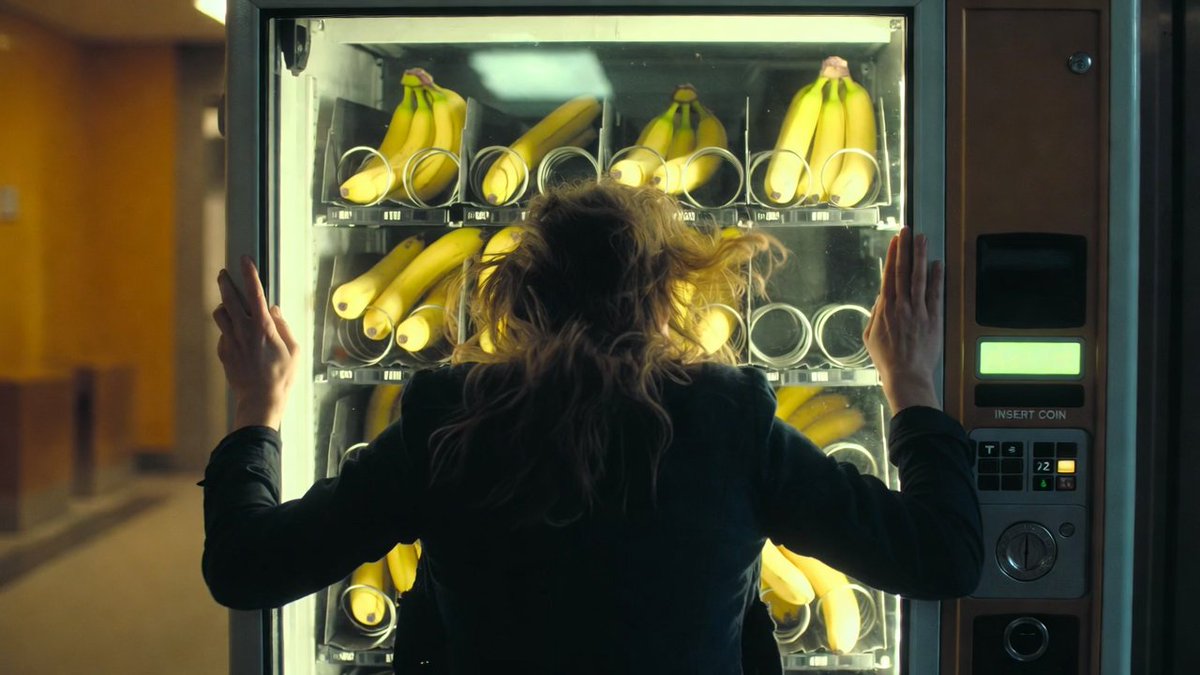
You may have experienced something similar, when a vending machine took your money and gave you nothing in return.
Extinction rage may be accompanies by an "Extinction burst." Paradoxically, when the bananas stop arriving, the monkey pushes the button more, at least for a while.
(In this context, the term "extinction" refers to the death of the monkey's belief that a button press will be rewarded with a banana. It's a sad time for the monkey.)
In the 60's, right-wingers trained leftists to call us racists. When they called us racists, we dropped loot.
Pushing the racist button was always rewarded with loot, and better yet, with the right-winger's cowering submission.
So leftists pushed the racist button a lot.
Then a few years ago, most right-wingers stopped dropping loot. In classic extinction behavior, leftists got angry and called us racists even more. They frantically pushed the racist button, hoping the bananas would resume, getting angrier and angrier when they didn't.
Some leftists are still pushing the button.
I'm sure you can make the connection to the sexist button, as well as the homophobe, islamaphobe, and trans-phobe buttons.