Thank you for the excellent analysis and modeling! The scariest part about embarking on your proposed path is the unknown economic affect AI will have in the near to mid term.
I believe AI and automation will eventually bring about the end of scarcity and the beginning of universal basic income. However, ‘eventually’ is the operative word here. There will likely be several years of economic pain in the middle.
If AI development continues on its meteoric path, millions of white collar jobs are going to evaporate before the kids currently starting college can graduate. Then there’s the millions of transportation related jobs that will gradually vanish along with them.
Working up to a fleet of 300 Cybercabs is an exciting proposition… as long as there are customer who can afford to do more than sit at home playing video games.
@elonmusk You can’t have peaks without valleys. I’ve had my fair share of valleys, but the view from the next peak was always worth the time spent in the lowlands.
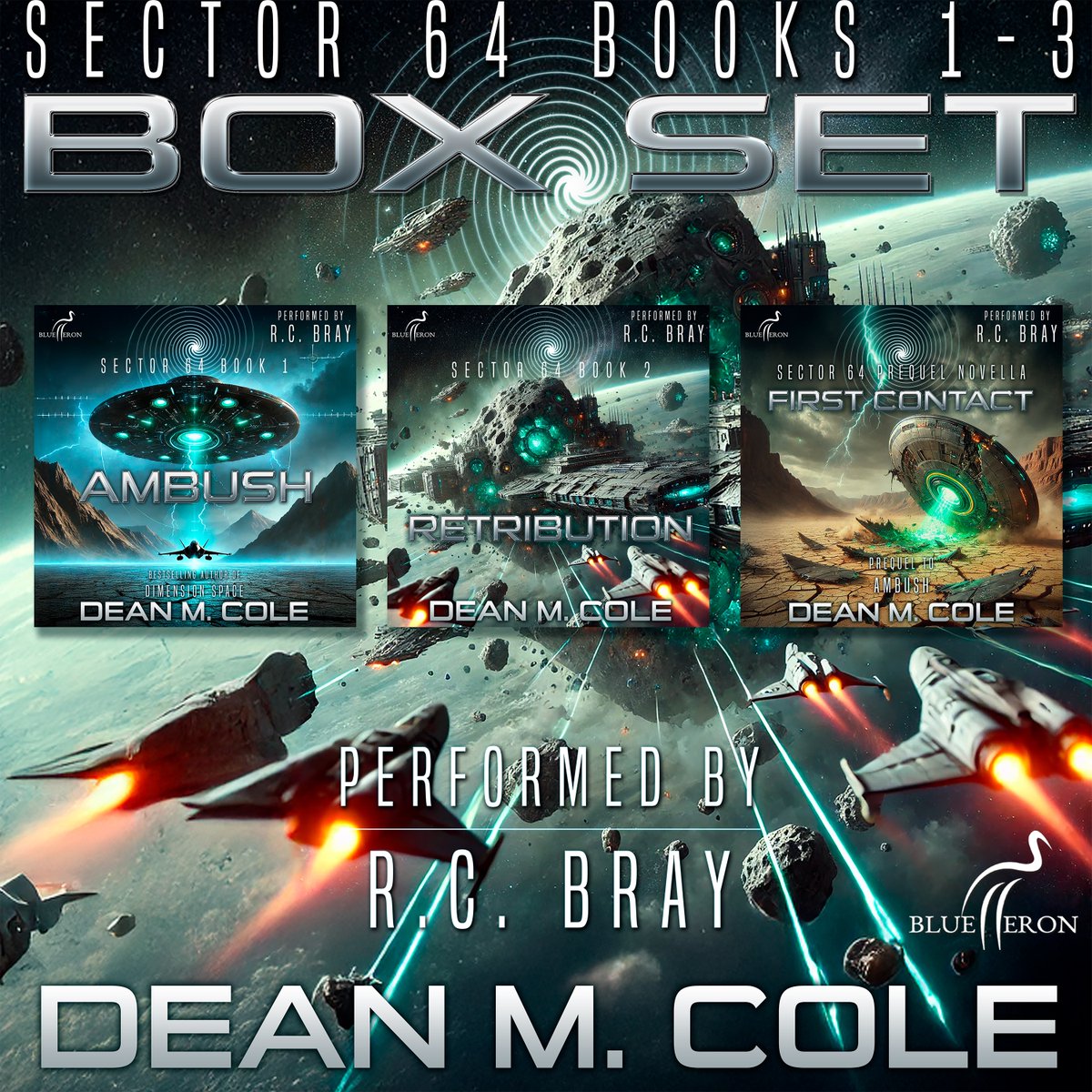
I did a thing. The success of my friend, @Writerfhorton Franklin Horton's Mad Mick audiobook Box Sets motivated me to do the same with my R.C. Bray-narrated Sector 64 series. Available for preorder now with a Dec 2 release. By the way, if you haven't already done so, I highly recommend you read Franklin's Mad Mick series. They are outstanding! I've read every one of them, and I'm chomping at the bit for the next release. Kevin Pierce, the voice of the apocalypse (and the Mad Mick), turned in spectacular performances in every one of them.
Live today at 8 PM ET → I’m chatting with the incredible Julia Whelan (@justjuliawhelan): award-winning narrator, author of Netflix’s #1 My Oxford Year, & co-narrator of my first 3 Dimension Space books with R.C. Bray.
Join us: https://t.co/SMlnMf2aeB
@audible_com@podium_ent Thank you, @audible_com! 🙌 You’ve been the launchpad for so many of my stories, and I’m thrilled to bring Sunburn Syndicate to life with your and @podium_ent help (and R.C. Bray’s golden pipes). Can’t wait for listeners to dive in. 😎🎧
New series alert! 🚨
Just wrapped the first draft of Silent Waters—Book One of Sunburn Syndicate. 🎉
If you caught R.C. Bray’s preview at the end of Infinitude, you’ve had a taste.
Full audiobook drops later this year from @podium_ent and @audible_com!
Now... rewrites. 🙃
🌌 Free streaming alert! R.C. Bray voices the captivating prequel First Contact of Sector 64, exclusively on X. 2:24 of interstellar intrigue awaits. Bookmark & share for more free streams! #scifi#audiobook
Is It Time for Full-Duplexing Radios in Aviation? The Argument For A Safety Upgrade
For decades, we aviators have struggled with a fundamental limitation of our communication systems: when two pilots or controllers transmit simultaneously, neither party hears the other. This technical constraint, inherent to the half-duplex communication systems used in aviation, has contributed to tragic accidents in the past. In today’s world—where even inexpensive cell phones allow seamless two-way conversations—this limitation seems outdated and avoidable. Is it time to modernize aviation radios with full-duplex capabilities?
The Current State: Half-Duplex Communication
Aviation communication systems primarily use half-duplex radios, which allow either party to transmit and receive—but not at the same time. While one party speaks, others on the frequency are effectively muted. If two transmitters key their microphones simultaneously, a heterodyne or “stepped-on” transmission results, creating a garbled noise that leaves both messages unintelligible. Moreover, when you’re the one transmitting, your speakers are muted, preventing you from hearing the interference, which further intensifies the problem.
As pilots, when we hear simultaneous transmissions, we usually call out “Blocked” to inform the involved parties. However, not all calls are made on the same frequency, which can result in the interference going unnoticed by others. Additionally, in time-sensitive situations, there may not be sufficient time for a second call.
This limitation persists despite the fact that most modern communication technologies—like cell phones—use full-duplex systems, which allow both parties to talk and listen simultaneously. Full-duplex technology is widely available, reliable, and affordable. Yet aviation, an industry where communication clarity can mean the difference between life and death, remains tethered to a communication paradigm designed in the mid-20th century.
Historical Lessons: Tenerife and Beyond
The deadliest aviation disaster in history illustrates the dangers of half-duplex communication. On March 27, 1977, two Boeing 747s collided on a foggy runway at Tenerife North Airport, resulting in 583 fatalities. A critical element in the chain of errors was a stepped-on radio transmission. When the KLM captain prematurely began his takeoff roll, the Pan Am crew and air traffic control tried to convey that the runway was still occupied. However, overlapping transmissions created an unintelligible squeal that contributed to the communication breakdown. Alongside procedural and human factors, this radio interference prevented the KLM crew from hearing the warning in time to avoid disaster.
In the aftermath of Tenerife, the aviation industry implemented procedural and training improvements, including standardized phraseology and Crew Resource Management (CRM). However, the fundamental radio technology remains unchanged. Nearly 50 years later, half-duplex radios still pose the same risk.
And Now, Again? Blackhawk and Commuter Jet Mid-Air Collision
The recent tragic mid-air collision involving a U.S. Army Blackhawk helicopter and a commuter jet have brought this issue back into focus. Preliminary indications suggest communication challenges may have played a role, potentially including overlapping transmissions that blocked a critical warning from the tower. This is an ongoing investigation, and there are certainly other contributing factors. However, this communications shortcoming has been a pet peeve of mine for decades, so it is disheartening to see it mentioned in yet another disaster.
Why Aviation Has Lagged
The reasons aviation radios haven’t evolved mirror the industry’s overall conservative approach to technology change. Safety-critical systems undergo rigorous testing, certification, and standardization. Implementing a new radio architecture would require:
1. Revising International Standards: ICAO and national regulators would need to redefine communication standards.
2. Updating Infrastructure: Air traffic control facilities worldwide would need compatible equipment.
3. Fleet-Wide Retrofits: Aircraft from airliners to general aviation planes would require new radio systems.
Despite these challenges, the transition to duplex communication is technically feasible and potentially life-saving.
The Path Forward
Aviation’s move toward digital communications, such as Controller-Pilot Data Link Communications (CPDLC), demonstrates the industry’s capacity for technological advancement. While CPDLC has proven effective in enroute and oceanic environments, it remains limited in tactical airspace, where real-time voice communication is critical. Full-duplex radios could bridge this gap, improving situational awareness and reducing misunderstandings. Introducing duplex-capable radios could follow a similar path:
1. Testing and Certification: Begin with limited trials in specific airspace.
2. Phased Implementation: Require duplex radios for newly certified aircraft while gradually phasing out half-duplex systems.
3. Crew Training: Update communication protocols to leverage full-duplex capabilities without introducing confusion.
Conclusion: Time to Break the Garble
As aviation communication transitions toward digital and satellite-based systems, the potential for full-duplex capabilities will grow. Emerging technologies, like software-defined radios and advanced modulation techniques, could enable duplexing without significantly altering existing infrastructure. By staying proactive, the industry can move closer to a future where no critical message goes unheard.
The tragic lessons of Tenerife, coupled with the indications from this most recent tragedy, make one fact clear: aviation communication needs a technological upgrade. Full-duplexing radios, already a staple of everyday telecommunications, could provide pilots and controllers the ability to speak and hear simultaneously—just like we can with our cell phones.
In an industry that prioritizes safety above all else, continuing to rely on outdated, one-way communication seems like an unnecessary risk. What do you think? Should aviation embrace duplex technology to ensure critical messages are never again garbled?
🚀 Ever wondered what it feels like to be utterly alone… and then not-so-alone in the most terrifying way possible? Good news! You can experience it all (safely) from the comfort of your headphones!
@BookBub Chirp Audiobooks is beaming down an Out-of-this-World Deal featuring Dimension Space books 1-3. That’s right, all three #audiobooks narrated by the incredible R.C. Bray and @justjuliawhelan and you’ll save enough credits to stockpile snacks for the journey.
Are you ready to dive into the multiverse? Or are you more of a “wait until it’s not trying to eat me” type? Let me know in the comments! I’ll drop the link down there, too.👇 #scifi #audiobook #thrillerbooks
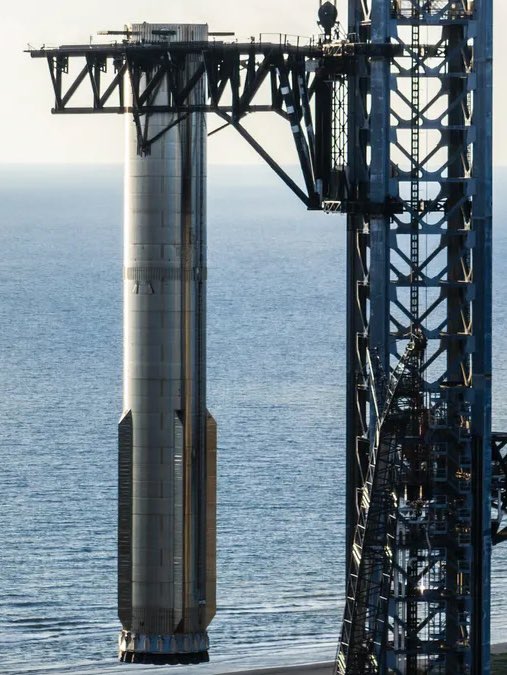
Starship booster landing as seen from Isla Blanca campground at the southern tip of South Padre Island. What an incredible experience. The skies were so clear, I could actually see the entire Starship launch all the way through to booster separation and returning to land on the tower. I was just under 5 miles away, and the ground was shaking like an earthquake. The sonic boom and sound hit us just as the booster landed. Volume up.
15 minutes to go until the @SpaceX#starship launch window opens. The sun is coming up and people are filing in by the hundreds. I’m on the roof of my RV with an excellent view. Let’s do this!
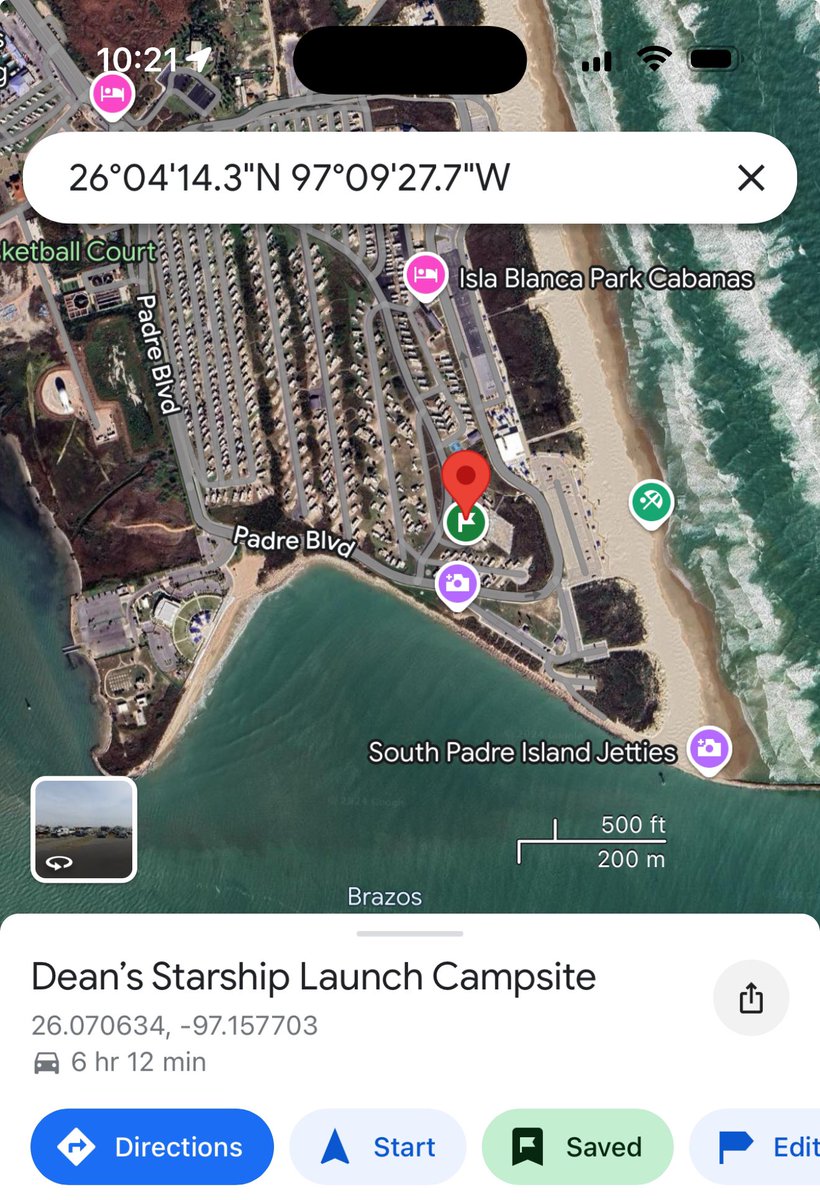
Here’s the view from the top of my RV. It looks like Jesus is ready to lend a hand with the booster catch if needed. Just finished setting up camp near the southern tip of South Padre Island. Excited for tomorrow morning’s @SpaceX#Starship launch.🤞 I’ll post videos and photos tomorrow.
Going to Watch The #Starship Launch? Come Say Hello!
Saturday, I’m heading down to South Padre Island to watch the most epic rocket launch in human history. Sunday morning, @elonmusk and @SpaceX are planning to launch the largest and heaviest flying vehicle ever, and they’ll cap it off by attempting to catch the booster stage in mid-air, using their massive launch tower’s chopsticks.
I reserved a prime camping site just a few dozen feet from the southern end of South Padre Island, the closest launch viewing spot outside of Mexico.
If you’re in the area, swing by and say hello. I might even share a beer or three with you.
I’m staying through at least Monday in case it gets delayed. Even if it doesn’t go, it’ll be a nice beachside writer’s retreat where I should continue to make tons of progress on Infinitude. The story is really shaping up. I can’t wait to share it with all of you. 
Finding meaning in the grind—not just the results—is the key to feeling real purpose & satisfaction in life. Sometimes our goals are too big & overwhelming, causing us to give up before we start. Treat the effort like the finish line & every step becomes a victory lap. The hard work is the reward that keeps you pushing forward and getting better. One of my most valuable life lessons, and one I’ve had to relearn on multiple occasions.