What every voter and apparently, the NY Times Editorial Board, should know about housing policy:
1. Rents reflect the balance of supply of apartments and demand for those apartments in a given area. That’s it; there’s no magic. If you want lower rents, you can hope for a recession that destroys jobs and, therefore, demand. Or you can add supply.
2. There is no amount of money that any big city government could feasibly spend that would add materially to supply. This is because, depending on the location, new apartments cost $250,000-1,000,000 to develop… building even a few hundred of those starts to stress any city budget, and many big cities need tens or hundreds of thousands.
3. On the other hand, investors (including pension funds and endowments, insurance companies, rich families, etc.) can collectively **easily** provide enough capital to build as much housing as we need **so long as they are confident they can get a reasonable return**.
To get those investors to fund the creation of the housing our society needs, we must do two things:
1. Dramatically reduce the time & complexity associated with securing governmental permission to develop housing. This means reviewing and simplifying the overlapping regulations that constrain housing production: zoning codes, building codes, parking, ADA, etc. But it also means changing the cultures within the relevant governmental agencies from “default no” to “how can we help you?”.
2. Provide certainty around on-going regulation of apartment operations.
The way investors get a return from building rentals is as follows: They hire managers to lease the apartments, collect the rents, pay operating expenses and any mortgage payments, and then send the investors the cashflow that remains.
But governments all over the country have been restricting the manner in which apartment buildings can be operated in all kinds of ways.
For example: Cities have been making it harder to screen tenants, while also making it much harder to evict tenants who don’t pay. You can see why both of those measures are politically popular. After all, who doesn’t want people to get second chances? And who wants anyone to get evicted? But, as a manager, the combination of those two regulations makes it much harder to predict, with any certainty, that the rent will get paid… and that makes it very difficult to get investors to provide capital to create more housing.
Another example: Rent control. Again, I understand why renters love rent control and why politicians want to give it to them. But, if, as has been the case in NY, LA and San Francisco, city governments hold annual rent increases below the rate of growth in the operating expenses of the buildings, the cashflow payable to the investors shrinks… making them much less likely to invest capital in building more apartments.
In conclusion: For ~every other good or service in the economy, we allow the market to function, and the result is that we have a surplus of choice at all price points (think of food or clothes or cars), which is spectacular for the consumer. If we want a surplus of choice at all price points in housing, we need to get comfortable with the idea of allowing the market to provide it.
And that means allowing investors to build rental apartments *and* allowing them to operate those apartments in a manner consistent with making a reasonable profit.
Remember: Every developer of rentals is either a landlord-in-waiting or hoping to sell to one.
Life is like a guitar. @ericchurch offers a brillianct commencement address (and guitar lesson) at his alma mater, UNC, that belongs in the pantheon of addresses of this sort with those of Steve Jobs (Stanford) and David Foster Wallace (Kenyon College).
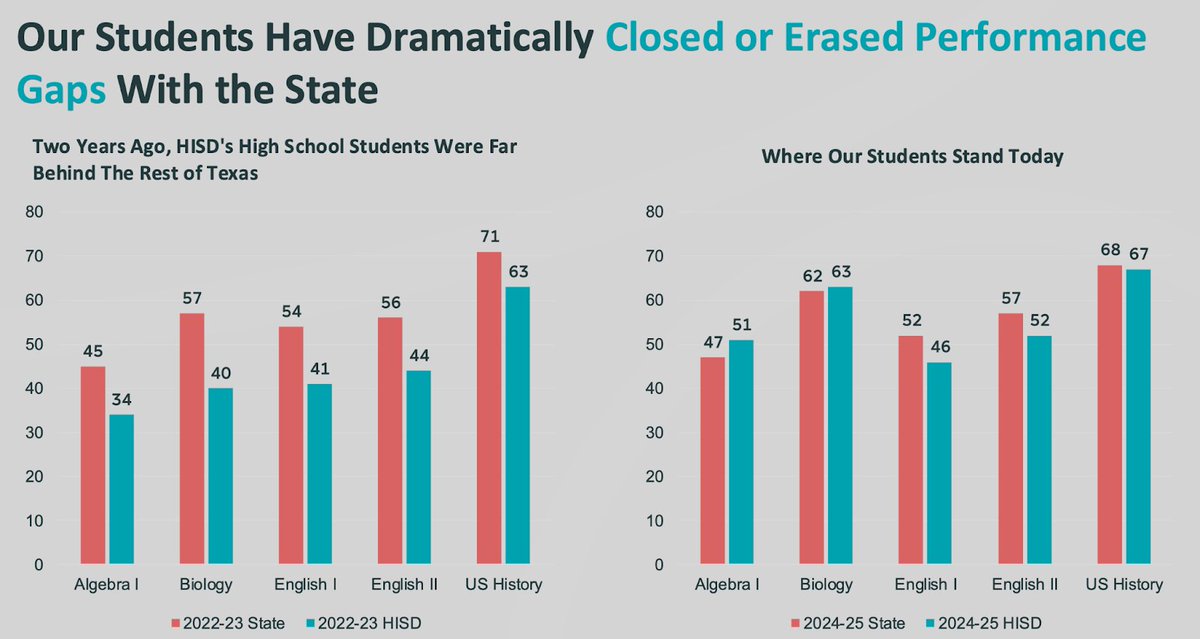
Nearly everyone has given up on urban K-12 reform. Politicians no longer talk about it. There's but one city, Houston, attempting wholesale reform and early results are incredibly promising. Cities from across the US are starting to pay attention.
In 2023, after years of falling outcomes, Texas took over HISD, dissolved the elected school board, and appointed a new superintendent. Freed from short-term electoral pressures, the district was able to make difficult but necessary reforms, particularly with personnel.
Houstonians knew the district was failing and wanted change, but not this change. The community was outraged by the state takeover and even more so with many of the changes. The conflict was palpable: state vs city, Republican vs Democrat, white vs black/brown.
The first year was incredibly tense around the city. There were protests. People pulled their kids out of the district for other options. The press was scathing. Everyone was waiting for the takeover to fail. But it didn't.
After the first year, the number of A and B rated schools rose from 93 to 170. The number of D and F rated schools fell from 121 to 41. Local criticism quickly became more muted. With substantial gains in year 2, criticism has quieted further.
School reform is hard. Many efforts have failed or fizzled out. The head will eventually leave, and local governance will return. The big question is whether the gains will endure.
Meanwhile, politicians in most other places have given up, settling for poor outcomes rather than making tough, unpopular decisions to improve them. That’s certainly not the right answer. Houston might be a blueprint for cities and states with the will for change.
every layer of management justifies itself by adding process, every process creates more need for oversight, & every inefficiency breeds a cottage industry of internal tooling, consultants, & cross functional alignment meetings.
what’s crazy is that this is actually considered economic growth.
@elonmusk The simple answer here is that “the people” always vote in their best interests, which almost always involves spending more today at the expense of the next generation. Gain the support for a restrictive fiscal constitutional amendment, instead
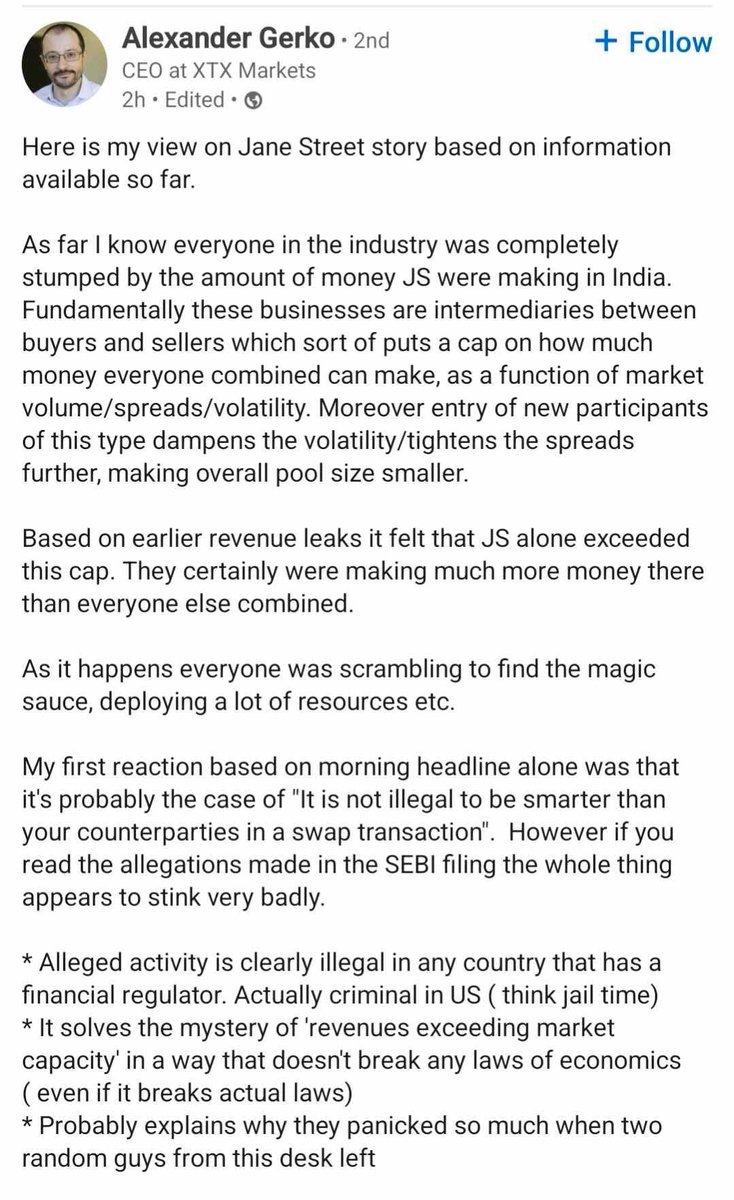
jane street tried to overthrow the sudanese government by supplying harvard educated rebels with ak-47s and you think mamdani is going to be able to raise taxes? lmao get real
With Zohran, a Twelver Shia, facing Eric Adams, a Turkish proxy, I think we can consider the NYC mayoral race the final phase of the Ottoman-Safavid conflict
“It is extremely alarming that the only candidates who genuinely excite our voters are the ones making absolutely insane promises on politically toxic positions,” one Dem strategist tells Playbook’s Adam Wren. “Leaving us in the spot of trying to execute on bad policy and losing terribly, or failing to keep our promises and reinforcing the idea that all politics is bullshit.”
--@politico