We trust teachers to take care of our kids, to meet their basic physical, social, and emotional needs.
So it shouldn't be a stretch to also trust them to teach readers, writers, listeners, communicators.
1/5
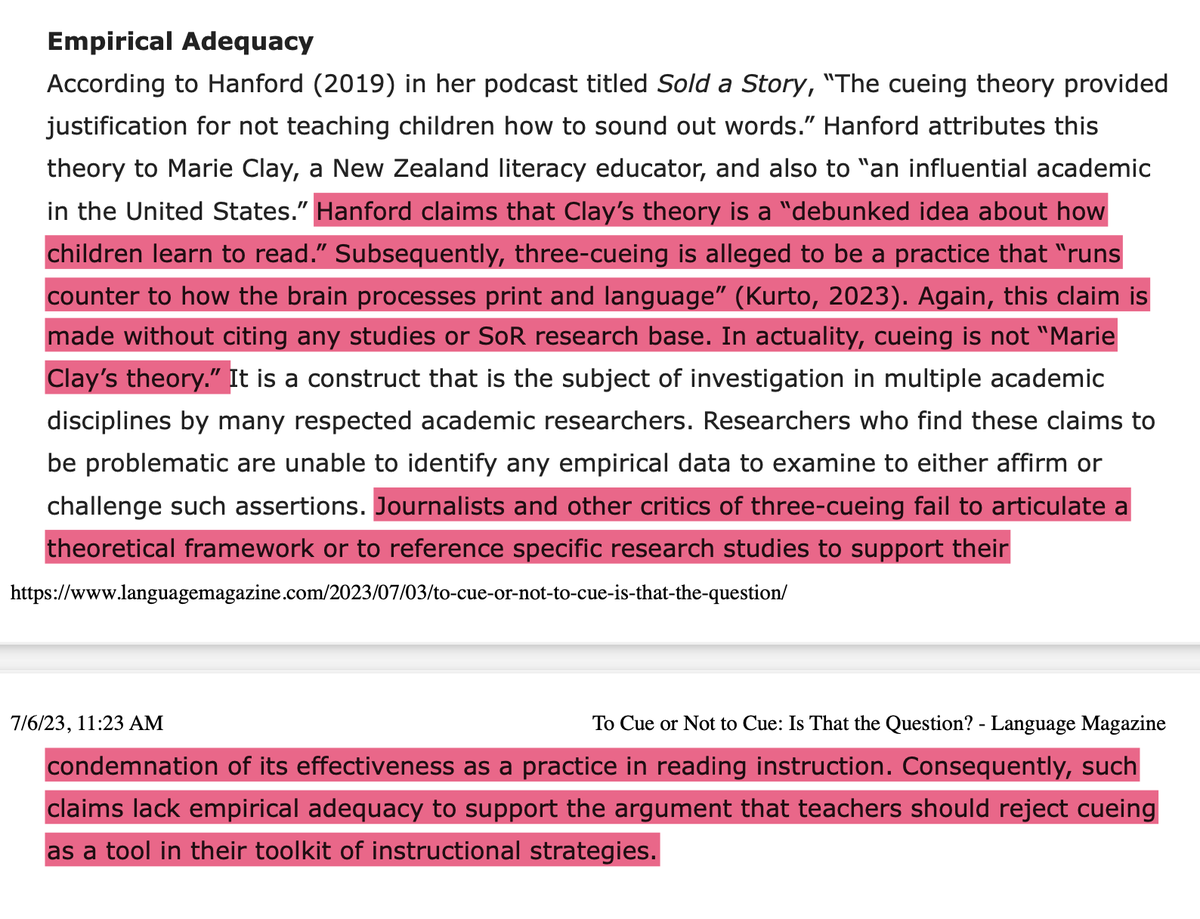
Please read/share this article grounded in research vs media misinformation.
Stories Grounded in Decades of Research: What We Truly Know about the Teaching of Reading (Catherine Compton-Lilly, Lucy K. Spence, Paul L. Thomas, Scott L. Decker)
https://t.co/tliWOu4IND
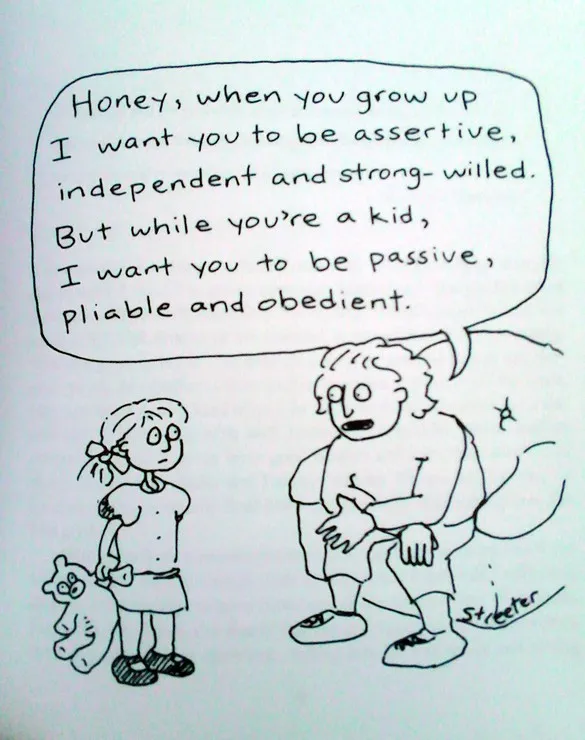
There aren't enough hearts in the universe to put on this post. We have reduced professionals to assuming a role of compliant disseminator in far too many schools. It goes against everything we know about being a knowledgeable profession who is responsive to kids (not STUFF) #G2Great
A3 FIRST we must let go of old curricular tools that are minimizing that complexity and thus blinding us to the unique needs of children. We must stop investing millions in scripted program with rigid tests. Gullibility is not a responsible approach. #G2Great
This 15 year old article could have been written today.
The 5 unscientific assertions listed here and in @ILAToday's Reading Today from this month in 1997 aren't SUPER different then and now.
https://t.co/6vFkXt7Hql
The benefits of independent reading are inarguable; the best readers are those who read the most and the poorest readers are those who read the least. (ILA, 2018) @GovMikeDeWine @OHEducationSupt @OHEducation
https://t.co/apo0DAiG46
"We might think we're just teaching literacy but the ways we go about it have consequences for the rest of children's development both in the short and the long run....They don't see the irony in schools." (Johnston, 2021) @GovMikeDeWine@OHEducation
https://t.co/OFIDzvkAjX
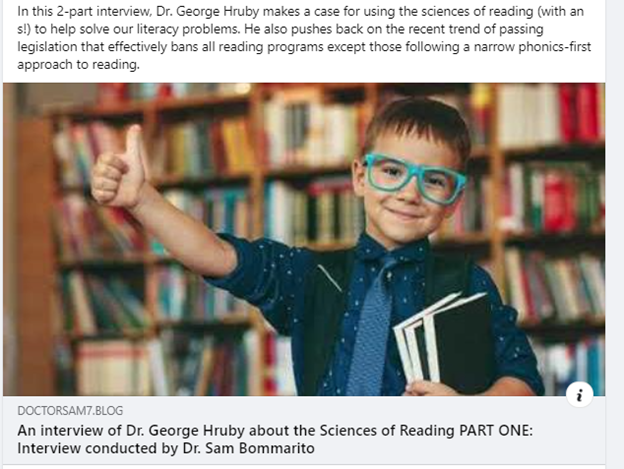
In this 2-part interview, Dr. George Hruby makes a case for using the sciences of reading (with an s!) to help solve our literacy problems. He also pushes back on the recent trend of passing legislation that effectively bans all reading programs except those following a narrow phonics-first approach to reading. https://t.co/O8wVmCikgN
"The certainty of authoritative discourse leaves little room to question these ideas or to implement alternative forms of instruction that could potentially be more beneficial for students." (Worthy, et al., 2018)
@GovMikeDeWine @OHEducationSupt
https://t.co/umAXo8qpgL
WEAC, State Reading Association Raise Concerns as Bill to Increase K-3 Testing, Outlaw Teaching Methods is Signed into Law https://t.co/Gjuo4C90Hw @HarmVenhuizen
“We are the only profession that is not expected to live by our own professional standards but by laws made by people with no expertise in our field.” @plthomasEdD@GovMikeDeWine @OHEducationSupt
https://t.co/dqJ6gRBOC8
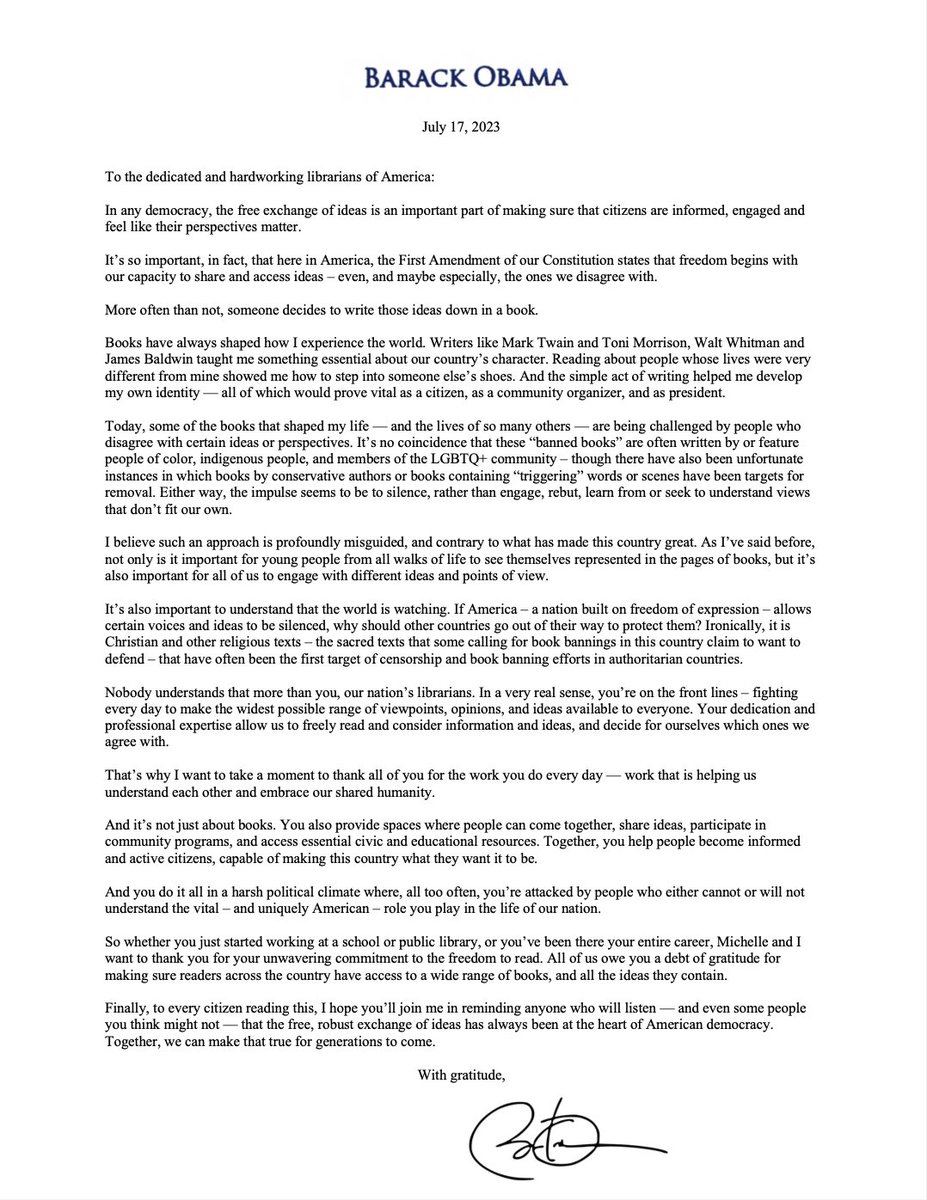
A must read from President @BarackObama to our country’s librarians:
"I hope you’ll join me in reminding anyone who will listen — and even some people you think might not — that the free, robust exchange of ideas has always been at the heart of American democracy."
As someone who taught reading intervention at middle school in a school that focused on a phonics-centric Science of Reading approach, here are a few concerns I see with this new trend and how it might be applied to older students:
1. I worry that we will focus so much on skill development that we fail to see the need for reading for pleasure in order to develop reading endurance. At the middle school level, one of the key elements in helping students increase their reading scores was the role of endurance.
2. An emphasis on phonics, blending, and phonemic awareness at the middle school level sometimes fails to recognize the role of critical thinking, vocabulary, and prior knowledge in reading comprehension. I’ve seen highly fluent readers fail reading tests for these reasons.
3. The one-size-fits-all systematic approach that rejects balance might work at younger levels but the reasons a 13 year old is behind will often be far more varied.
4. I’m really worried that some of the people screaming the loudest about research haven’t read the research in-depth and seen the limitations in actual studies, the nuances in the finding, and the context of the studies (rarely about middle school)
5. I want to make sure we are paying attention to accessibility. I know many people who are dyslexic and became avid readers once they could use voice-to-text and audio readers. My fear is that readying will be defined solely as decoding written text and certain people who might thrive as readers will be forced to do drills where they lean into their weakness without learning about assistive technology.
I’m no expert in early literacy but I am concerned with prescriptive approaches that treat middle school students in the same way as a second graders. I’m worried about prescriptive, singular solutions.
NCTQ
Fordham Foundation
ExcelinEd (Jeb)
GW Bush
Deans for Impact
M4L
SOR
Curriculum bans/censorship
An anti-teacher/public schools THREAD runs through and holds these together
Careful with whom you align ...