The one statement you'll never hear from God in the Old Testament is “Thank you.” He says, “Let there be” and “I will be your God,” but never expresses gratitude for a gift.
The reason is obvious: no one gives God anything he didn't give them first. As David confesses, “All things come from you, and of your own have we given you” (1 Chron. 29:14).
Like a toddler trying to feed Dad with food that Dad earned, purchased, prepared, and spooned onto his plate, so are we with God.
To say “Thank you” is therefore a distinctly human activity.
Thanksgiving is thus a confessional day, when we express a four-word creed that sums up our entire existence. What creed? God gives, we receive. Those four words summarize our position in the divine-human relationship.
The Hebrew language reinforces this understanding of thanksgiving.
A common verb for giving thanks is yadah, which frequently also means to confess or declare. This fits the way Israel thanks God: the thanksgiving often consists of confessing exactly what he's done for his people (see Psalm 136). A Hebrew twist on thanksgiving is that it often sounds not so much like “thank you” as “Here is what kind of God you are for us.”
Therefore, to thank God, Hebrew style, is to confess who he is and what he does. He gives, and we receive. He saves, and we are saved. He loves, and we are the beloved. To thank the Father, therefore, is to confess everything that he has done for us in Christ through the power of the Holy Spirit.
A blessed Thanksgiving to everyone as we confess who God is and rejoice in his gifts.
The Thankful Sinner, Luke 7
Head to https://t.co/yx8iSt5Yzn for the reading guide and to catch up on previous posts from the Bible in One Year series.
Happy Studying! #BibleinOneYear#Biblestudy
The Hebrew phrase commonly translated as "ordained" in the Old Testament is literally "to fill the hands." For instance, when God told Moses, "Thus you shall ordain Aaron and his sons" (Exod. 29:9), he said in Hebrew, וּמִלֵּאתָ֥ יַֽד־אַהֲרֹ֖ן וְיַד־בָּנָֽיו, that is, you shall "fill the hand of Aaron and the hand of his sons."
Why "fill the hands"? It reflects the ritual act of sacrifices placed in the hands of men becoming priests (cf. Lev. 8:27), which they then offer before the LORD. To be ordained in Israel, therefore, like our word "mandate" (lit. "give into the hand"), was to be "handed" an office in which you use your hands for holy things.
This ordination given by God was sometimes twisted and mocked in Israel. For instance, we read today in Bible in One Year how the northern kingdom under Jeroboam ordained whoever showed up with a few animals for sacrifice (2 Chron. 13:9-10).
I suspect the image of ordination = "filling the hands" is also in the background of Isaiah's fiery denunciation of the empty and evil worship in Jerusalem. God says through the prophet, "When you spread out your hands, I will hide my eyes from you; even though you make many prayers, I will not listen; your hands are full of blood" (1:15). The Hebrew for "full" (מלא) is the same root used in "fill the hands."
We would do well to ask what "fills our hands" that we lift to God.
-Are they clutching riches?
-Are they grasping for power?
-Are they smeared with sexual immorality?
-Are they bloody from backstabbing?
What God said through Isaiah speaks just as powerfully today as it did 2,700+ years ago:
"Wash yourselves; make yourselves clean; remove the evil of your deeds from before my eyes; cease to do evil, learn to do good; seek justice, correct oppression; bring justice to the fatherless, plead the widow’s cause. Come now, let us reason together, says the Lord: though your sins are like scarlet, they shall be as white as snow; though they are red like crimson, they shall become like wool" (1:16-18).
God grant it, for Jesus' sake.
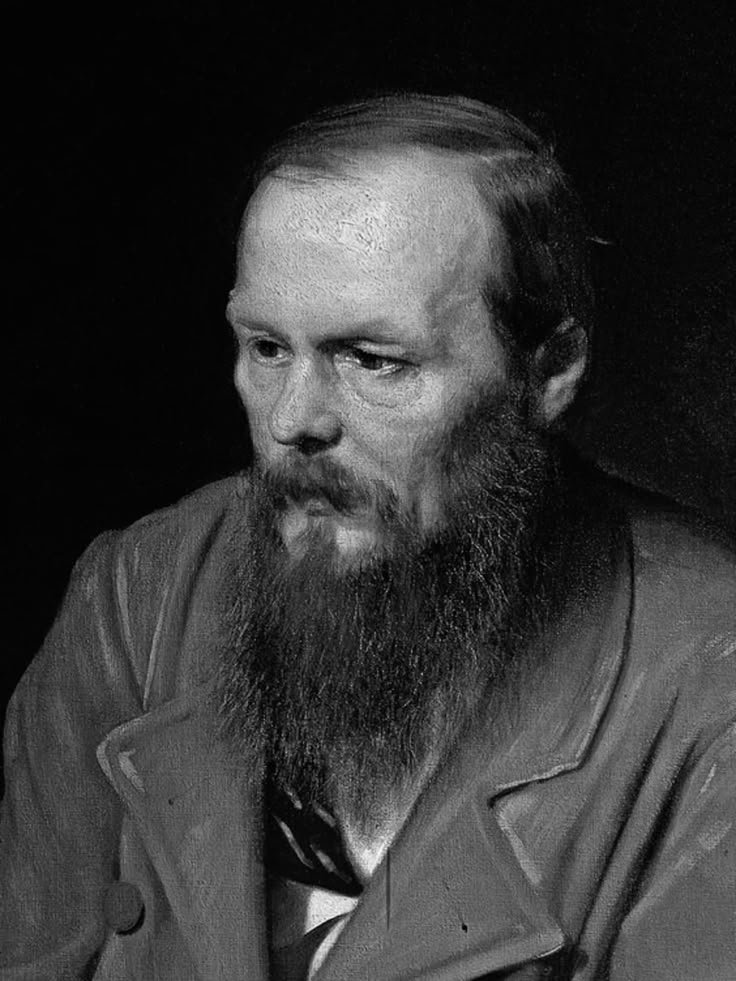
Dostoevsky was 28 when they stood him in front of a firing squad. Blindfolded. Hands tied. He could hear the rifles being loaded.
At the last second, a messenger on horseback arrived. The Tsar had commuted the sentence. The entire execution was staged. Psychological torture designed to break him.
It worked. He had a seizure on the spot.
They sent him to a labor camp in Siberia for four years. Freezing. Starving. Sleeping on wooden planks next to murderers. His epilepsy got worse. He had no paper. No pen. Nothing.
When he got out, he was broke. His first wife died. His brother died. He inherited his brother’s debts. He was so desperate for money that he signed a contract with a publisher that would have given away the rights to everything he’d ever write if he missed the deadline.
He wrote The Gambler in 26 days to make it. Dictated it to a 20-year-old stenographer named Anna. Married her three months later.
Then the real work started. Crime and Punishment. The Idiot. Demons. The Brothers Karamazov. The greatest novels in the history of the Russian language. Maybe any language.
The man who stood blindfolded before the firing squad, who convulsed on the ground while soldiers watched, who slept next to killers in Siberia for four years, who was buried in debt and grief.
That man wrote: "Every minute can be an eternity of happiness."
He earned the right to say it.
It's never over. Never give up, friend.
"they literally deplatformed me from the largest video sharing platform in the world because some shitty pencil pushing blue-haired person in san francisco doesn't like my politics"
@PalmerLuckey on google nuking @anduriltech's youtube channel
Jesus once asked, “Why do you call me, ‘Lord, Lord,’ and do not do what I say?” (Luke 6:46). It’s a fair question.
Imagine a husband who calls his wife “Sweetheart,” but treats her with bitter contempt. Or a quarterback who calls his coach “Boss” but runs the exact opposite plays he was told to use.
We would have some choice words to describe such a husband and such an athlete.
To call Jesus “Lord” is no small thing. This is not a game. We don’t get to just throw that term around. No, it places us under his authority. He is Lord. We are servants. His will is done, not ours. We follow his words, not ours.
If you call him Lord, then forgive that person who did you wrong. If you call him Lord, then love your enemies and do good to those who hate you. If you call him Lord, then treat people the same way you want them to treat you. If you call him Lord, then love God and love your neighbor.
And if you call him, Lord, then also repent when you do *not* do these things. You see, part of how Jesus shows he is Lord is precisely by forgiving his servants when they fail. If you call him Lord, then pray, “Lord have mercy,” and he will.
Both in doing his will and in confessing when you have not done his will, you show yourself to be his disciple, for both of these are actually his will: obedience and repentance. Our Lord delights in them both.
To call him “Lord” is therefore to live as obedient servants and confessing sinners, and thereby to build our house of faith on the rock that will withstand any storm that comes our way.
Three years ago, my wife, Stacy, and I moved to Tyler, Texas. We had several reasons for doing so, but right at the top was our desire to live close to our three grandchildren. We wanted to see them more often, go to their games and events, and be involved in their lives.
Even though we can't always be close to those we love, that is our desire. Love desires togetherness.
Throughout the Bible, we see God, who is omnipresent, also localizing his presence by moving to where his people are. He walked in Eden where Adam and Eve lived. He had the Israelites make a tabernacle so he could dwell in their midst.
Today in Bible in One Year, in 2 Chronicles, we read about the construction and dedication of the temple.
Notice two things at the beginning of chapter 7. First, the glory of the Lord filled the temple. Second, when the people saw this happening, they worshiped and gave thanks to the Lord, saying, “For he is good, for his steadfast love endures forever” (2 Chron. 7:3).
In the fullness of time, God relocated again, this time in the miraculous assumption of our human nature in the incarnation. The Son of God became one of us.
When John describes this happening, he says that “the Word became flesh and dwelt among us” (John 1:14). "Tabernacled" among us. God no longer dwells in a sanctuary made with human hands. God's human body is now our sanctuary.
John also says, “We have seen his glory, glory as of the only Son from the Father” (John 1:14). The glory of God filled the Old Testament temple. In the body of Jesus, that glory is made manifest.
And notice that when the people sang, they sang of the goodness and steadfast love of the Lord. John concludes verse 14 by telling us that Jesus is “full of grace and truth.”
What was foreshadowed in the temple, with God's dwelling place filled with glory and the people singing of his goodness and steadfast love, was brought to fulfillment when the Lord of grace and truth came to where we are and made his dwelling among us.
And Christ continues to dwell with his people today.