Passionate about Fairness, Justice and Equality. Head of Professional Education and Training for Mencap. RMN, QTS. MHFA England Instructor.. Views are my own.
I don’t mind my data being used my for research to help the NHS etc, however, because the government have now allowed Palantir access, I have withdrawn my consent using this link:
https://t.co/OZpVijLzMB
My Brother tragically suffered a cardiac arrest last Sunday at mile 25 of the @LondonMarathon he’s currently fighting for his life in hospital. Please if anyone sees this please share so we can raise funds to help at this really tough time. @age_uk
https://t.co/mhtpUu43mt
In 1984, Ruth Coker Burks was 25 years old, visiting a friend at a hospital in Little Rock, when she noticed nurses drawing straws outside a patient's room. Someone had to go in. She didn't wait for the straws. She opened the door herself. What she found inside would define the next decade of her life. 🕯️**
Inside was a young man reduced to bones — maybe 80 pounds, dying alone, terrified. He kept whispering one word.
*"Mama."*
Ruth told the nurses to call his mother.
They laughed.
*"Honey, we've called. He's been here six weeks. Nobody's coming."*
Ruth made them give her the number. She tried one last time.
The mother's answer was cold and final: her son was sinful, already dead to her, and she would not be coming.
So Ruth went back into that room. She took his hand. She stayed.
For 13 hours, she held the hand of a dying stranger, promising him he wouldn't leave this world alone.
When he died, his family refused to claim the body.
Ruth decided she would bury him herself.
She owned plots in her family cemetery in Hot Springs — where her father and grandparents rested. The nearest funeral home willing to handle an AIDS death was 70 miles away. Ruth paid from her own pocket. A local potter gave her a chipped cookie jar for an urn.
She used posthole diggers to dig the grave herself.
She spoke kind words over the earth because no minister would come to pray over a man who died of AIDS.
Ruth thought that would be the end.
It was the beginning.
Word traveled through the quiet networks of fear and desperation across Arkansas.
*There's a woman in Hot Springs who isn't afraid. There's a woman who will sit with you. There's a woman who will make sure you're buried with dignity when your own family won't claim you.*
They started arriving. Dying young men from rural hospitals across the state, abandoned by the people who were supposed to love them most.
Over the next decade, Ruth Coker Burks cared for more than 1,000 people dying of AIDS.
She personally buried 40 of them in Files Cemetery — digging the graves herself, with her young daughter beside her carrying a small spade, holding their own funerals because no one else would speak over these graves.
Of those 1,000 people, only a handful of families didn't abandon their dying children.
Ruth called parents. Begged them to come say goodbye. To claim their child's body.
Most refused.
*"Who knew,"* she said, *"there'd come a time when parents didn't want to bury their own children?"*
But she also witnessed something else — something that stayed with her.
She watched gay men care for dying partners with a devotion that shattered every stereotype. She watched a terrified community take care of its own — and take care of her.
*"They would twirl up a drag show on Saturday night and here'd come the money. That's how we bought medicine. That's how we paid rent. If it hadn't been for the drag queens, I don't know what we would have done."*
By the mid-1990s, new treatments emerged. The crisis began to shift.
And then, like so many heroes of the AIDS crisis, Ruth Coker Burks faded from public memory.
She wrote a memoir in 2019 called *All the Young Men* because she needed people to understand what happened in Arkansas. What happened across America. What happens when fear convinces people to abandon their own children.
And what happens when one person refuses to walk past a door everyone else fears.
She didn't have medical training. She didn't have institutional backing. She didn't have money.
She had compassion. Courage. Posthole diggers. And a family cemetery.
That was enough to make sure 1,000 people didn't die believing they were worthless.
The next time someone says one person can't change anything —
Remember the red bag on the door.
Remember the 13 hours she stayed with a stranger.
Remember the 40 graves she dug with her own hands.
She walked through that door in 1984. And 1,000 lives were forever changed because of it.
"You are commanded to go do something productive with your life."
"To go give and to produce and to risk and to then go sow into other people. That is a Biblical idea that has made the world a profoundly better place."
🙏
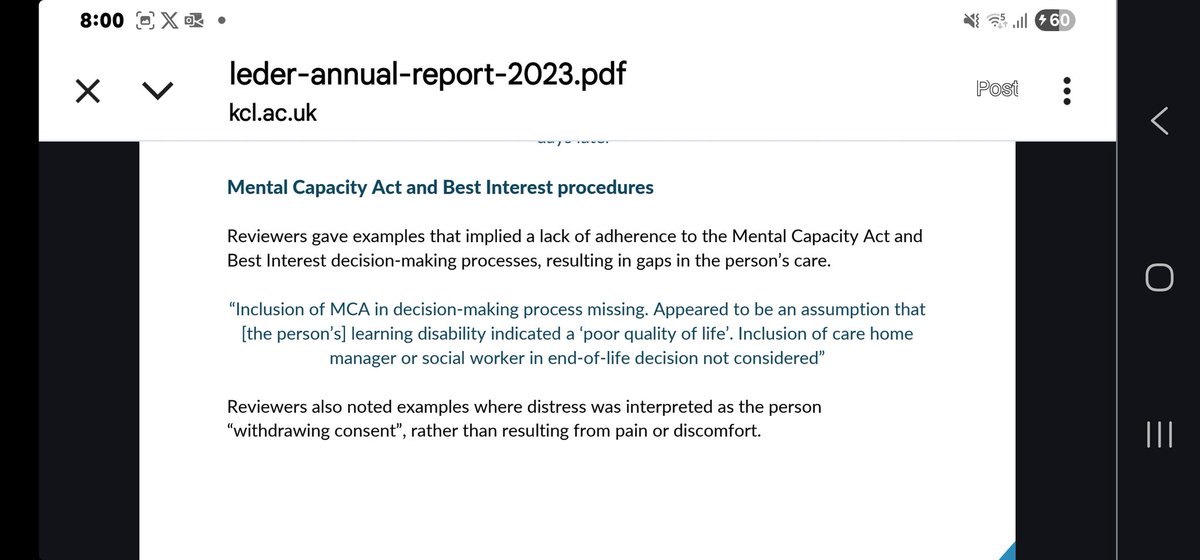
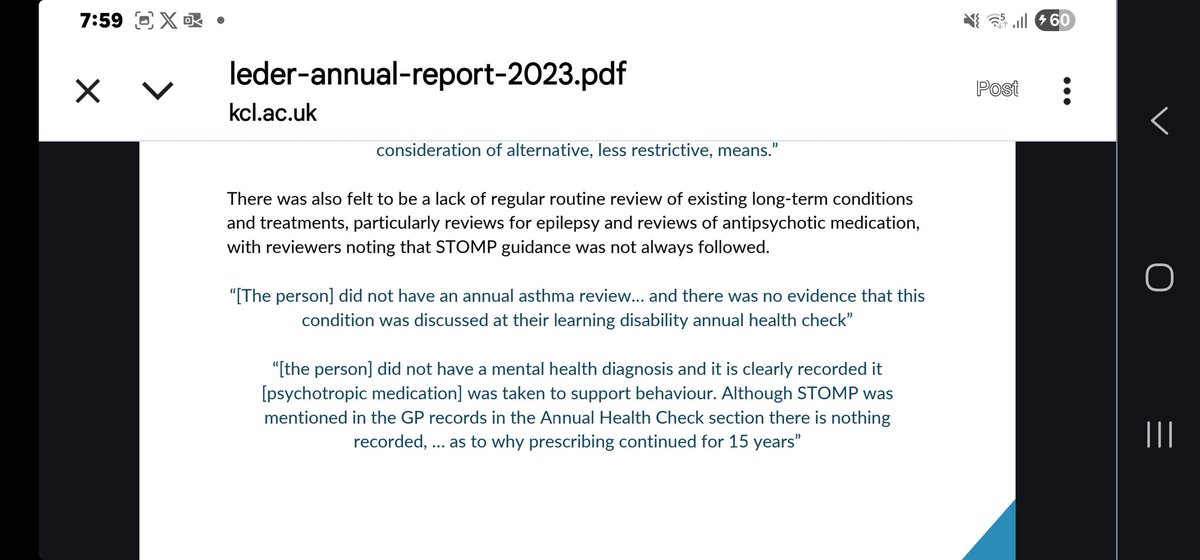
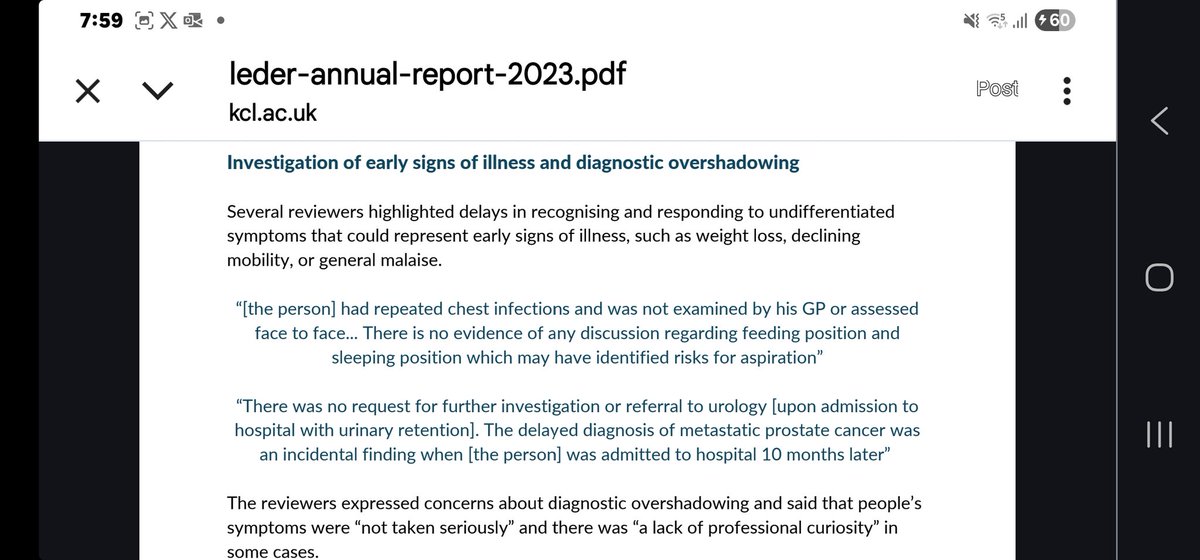
The LeDeR report isn't just a shambles, it's a dereliction of duty. It presents a jumbled mess of data, making real comparison impossible, and offers no critical analysis or new, evidence-based recommendations. A complete failure to learn from these avoidable deaths @AliveLeder
The long awaited 2023 Learning from Lives and Deaths – People with a Learning Disability and Autistic People (LeDeR) report, which examines the circumstances surrounding the deaths of people who have a learning disability (and / or autism) in England, makes for an incredibly troubling read. As the introduction to the report states:
‘There are lots of people who should be here. They should have been at birthdays, graduations, weddings, and funerals. They should have heard their nephews or nieces’ first words, played with them and shared a bedtime story’.
If you would like to read our response to the report, you can find it over on our website: https://t.co/xo2V6eQmnH
#Oliverscampaign
The delayed #LeDeR has been published
138 pages tell us that not much has changed Inappropriate DNRs are still applied because a person learns more slowly
Lack of preventative care doesn't exist
Social care is broken
No accountability
https://t.co/kiVvIaBIkL
The stats are horrific.
People with learning disabilities from some ethnic minority groups live half the average life span of the rest of the population
If we judge society on how we treat the most vulnerable, how short do we fall in the treatment of learning disabled people?
@drandrestrydom@AliveLeder#OliversCampaign
I believe @KingsCollegeLon published the first draft of LeDeR months ago but someone decided it needed watering down & sent it back They diluted & returned it yet it still wasn’t clean enough & might raise concerns with those pesky Bills going through parliament
News: Bereaved families and disability campaigners have sent an open letter to the Health Secretary, Wes Streeting, demanding that the LeDeR programme be put back on track to save lives.
https://t.co/PBOabniZWT
The needs of people with a learning disability and their families deserve to have professionals trained to meet their needs!
Please sign the petition, LD nurses are a key member of the nursing family! Don’t allow the speciality to be lost! @wesstreeting@AshleyDalton_MP@NHSuk
Happy Learning Disability week 🙂
Please sign this petition we have never needed this support more than we need now. Learning Disability nurses make a real difference
Please sign and share far and wide
#chooseLDnursing#ldweek25
https://t.co/LBB7zDLyHh
If you can, please read & donate to help one of my oldest friends Sharon take her boys to Disney for a special final holiday together ❤️
https://t.co/wideVo9HRC
The brilliant Access all Areas team, who co-designed and co-created the original and quite brilliant, Tier 2 Oliver McGowan Mandatory Training on Learning Disability and Autism Training films. Well done you ❤️ !
Here is a QR code so you can easily share this petition with friends and colleagues. It takes 20 seconds to complete, costs nothing, but makes a huge difference in raising our profile #ChooseLDNursing