@davenelsonfit So you claim to be a... "critical thinker"? 🙄😂🤣😂🤣😂🤣😂🤣😂🤣😂🤣😂
You can't even think to pick up a textbook on atmospheric physics and chemistry and actually learn about the perfectly normal, natural interactions between aircraft and atmosphere 🤡
A quick but good read for those who don't quite understand how GPS works.
(Headquartered in Colorado USA, Trimble Inc is one of the world's foremost developers, manufacturers and suppliers of precision GNSS systems for surveying and mapping)
https://t.co/h8sMxPQmHJ
[1/11]
The aluminum-spraying chemtrail claim dies under basic arithmetic. Even if we grant every single premise of the theory, the aluminum quantities required are logistically impossible.
The same math kills barium and strontium versions too!
Let’s do the math.
[a thread...]
@agf412@nanaki_prolife@mtntallpaul@JuanTuneau@nogps1 It's got nothing to do with altitude per se. It's about the atmospheric conditions prevailing.
Like this Tupolev Tu-204 take off in -45°C temps...
https://t.co/UTnXfVmpVG
@Shawneeb54 Flerf parroting BS as usual.
NASA only launches 10 to 16 balloons annually. Hardly noteworthy.
Its primary use of helium is for cooling systems and to pressurise rocket fuel tanks, ensuring fuel flows. (Being non-reactive, it can safely mingle with the tanks' residual contents)
@Shawneeb54 😂🙄 Oh really? My many years of professional involvement in aviation, aerial surveying and geomatics tells us otherwise.
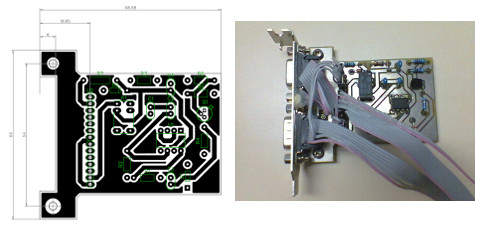
I've even designed, built & deployed GPS interfacing electronics for aerial cameras for survey-grade image geo-tagging.
Checkmate. 🤭
@abynorml62@Shawneeb54 Indeed. GPS reception requires direct line-of sight to its satellite constellation, which are.... in Space of course, in Medium Earth Orbit.
(This part for "Shawn's" benefit who thinks GPS is terrestrial based and why I'm laughing at his "GPS uses bouys" and "bouncing signals")
[1/11]
The aluminum-spraying chemtrail claim dies under basic arithmetic. Even if we grant every single premise of the theory, the aluminum quantities required are logistically impossible.
The same math kills barium and strontium versions too!
Let’s do the math.
[a thread...]
@foreverhealth_x@BGatesIsaPyscho Those are just contrail pendules a.k.a. lobes that have developed from interacting vortices behind the aircraft.
You'll find a full technical & scientific explanation in this:
https://t.co/rzvDcNFk8f
[1/11]
The aluminum-spraying chemtrail claim dies under basic arithmetic. Even if we grant every single premise of the theory, the aluminum quantities required are logistically impossible.
The same math kills barium and strontium versions too!
Let’s do the math.
[a thread...]
@LisaMeese1@CBforAZ@AZCoolRay It's a "proven fact" that you are a gullible idiot for believing this or made to believe it.
It's BS. Period.
Read this, then explain to to us how TF it is even possible:
https://t.co/Tvv5jKdPiq
The total lack of critical thinking by “chemtrailers” is astounding. Their usual mantra being, “they are spraying us like bugs”, often citing aluminium as one of the substances being sprayed.
Yet, it is effectively impossible to spray meaningful quantities of aluminum from aircraft in the way chemtrail claims describe, primarily because of (a) fundamental engineering, materials, and operational constraints of engines and airframes, and (b) particle dispersion at altitude is extremely hard to control for uniform, fine aerosols; agglomeration and settling further reduce any potential effectiveness.
However, let’s take a closer look at the two methods usually claimed: Mixing aluminum into the fuel; and Separate spraying systems.
1. Mixing aluminum into the fuel:
Firstly, the volume and weight displacement in the fuel tanks would leave far less actual fuel available to the aircraft, creating a real risk of unexpectedly running out of fuel mid-flight.
Secondly, pumping a solid, even in powdered form, would clog the finely-toleranced onboard pumps, starving the engines of fuel.
And lastly, even if it somehow manages to get past the pumps, it will destroy the engines in no time!
Aluminum powder or particles act as abrasives. They erode fuel pumps, filters, injectors, and nozzles.
In the combustor (where temperatures routinely exceed 1,500-2,000 °C), aluminum melts (melting point ~660 °C) and rapidly oxidizes to aluminum oxide (alumina, Al₂O₃). Alumina is extremely hard and refractory, and comparable in abrasiveness to materials used in sandpaper. It forms sticky, adherent deposits that:
Clog cooling holes in turbine blades;
Alter blade profiles and airflow;
Reduce thermal efficiency;
Cause rapid wear, imbalance, overheating, and eventual catastrophic engine failure.
Even small concentrations degrade performance quickly. The quantities needed for any detectable atmospheric effect would destroy engines far too rapidly for regular flight operations.
2. Separate spraying systems:
This approach is wholly impractical at scale. If the aluminum were carried in dedicated tanks and sprayed through external nozzles, i.e. bypassing the engines, the payload mass would be enormous. Aluminum is dense; carrying enough to produce persistent, visible trails matching conspiracy claims would severely reduce range, cargo/passenger capacity, and require constant reloading.
Release rates high enough to create the thick, long-lasting trails people point to would empty the tanks in minutes, not hours!
Also, sudden mass loss, especially if it is asymmetric, can create serious flight-control problems.
The requisite hardware (tanks, plumbing, pumps, nozzles, etc.) would be glaringly obvious during routine maintenance and inspections. Thousands of engineers, technicians, and fuelers would notice. No such widespread modifications exist on any aircraft fleet.
In other words:
Adding aluminum to the fuel would not only leave much less fuel actually available for flight, but is wholly incompatible with engine survival, and dedicated spray systems on aircraft are logistically and operationally unworkable for the volumes and secrecy claimed.
It would be like pouring sand and metal filings into a car engine. It would grind up the pumps, clog everything, and melt/stick inside the hot parts until the engine destroys itself.
If separate tanks and spray nozzles were tried instead, the aircraft would need huge extra tanks (super heavy, less room for people/cargo), the stuff would run out in minutes, and every pilot, maintenance engineer and technician at every airport would see the weird equipment immediately.
Regular aircraft, especially airliners, simply aren’t built to do it, and trying would either trash the engines or be impossible to hide.