@sstackmore@NotYourFool10@Griff2024soon@realericmoutsos@OwenBenjamin Lindbergh used the great circle route on his flight to Paris. When it’s a matter of life or death people use the globe since that’s reality. The pictures show air navigation pioneer Capt PVH Weems with the Lindberghs and with my parents.
The first Block 1 GPS satellites were launched in 1978. Both civilians and military could use them from day 1. Surveyors started using GPS in the early 1980s. Selective Availability was introduced in 1990. It was turned off after Iraq invaded Kuwait but was reinstituted from 1991-2000. The idea that the government “had GPS for over a decade” before civilians had it is a myth. The c/a signal was always in the clear.
@xitryuga@GMJacobAagaard #4 decisively won the Candidates Tournament in which #2 and #3 participated. #1 is not interested in the classical championship and I think the challenger should be given credit for his achievements.
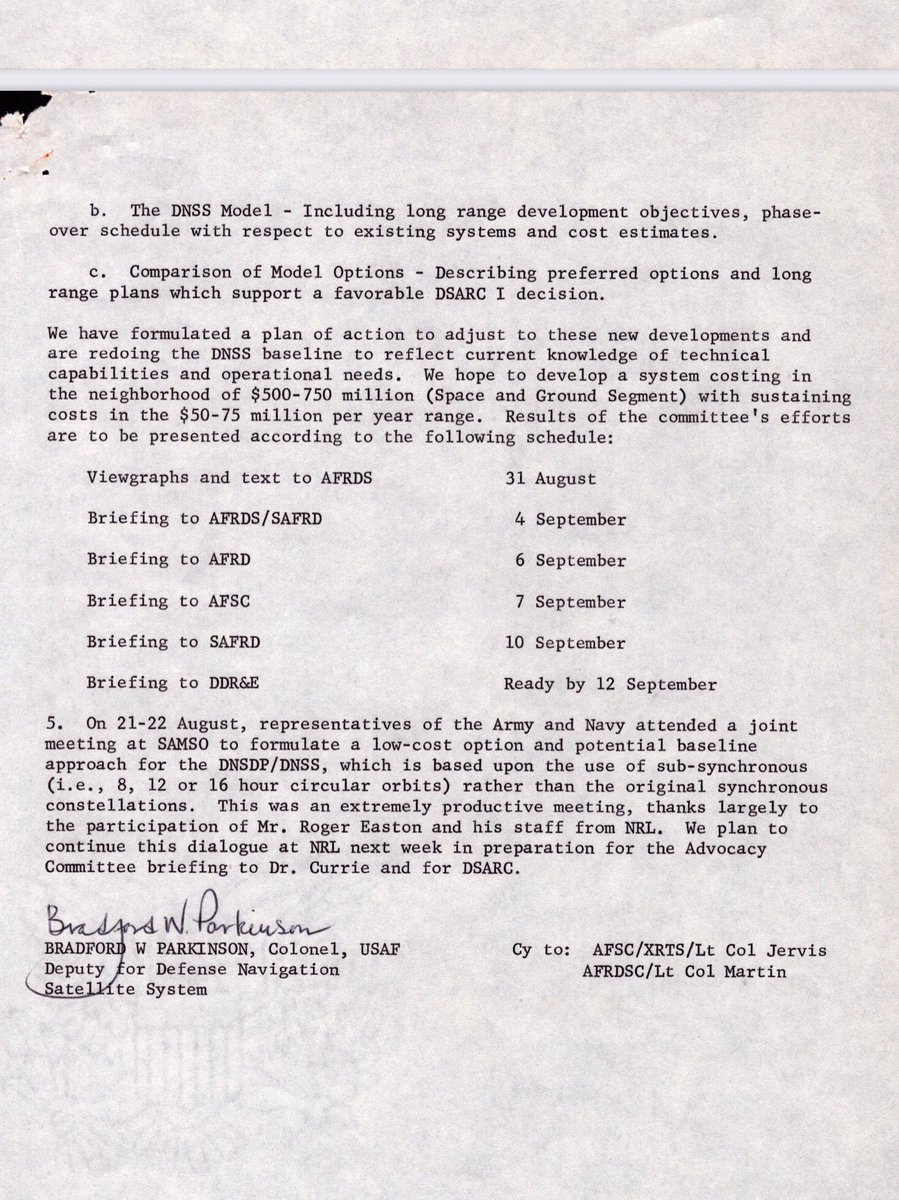
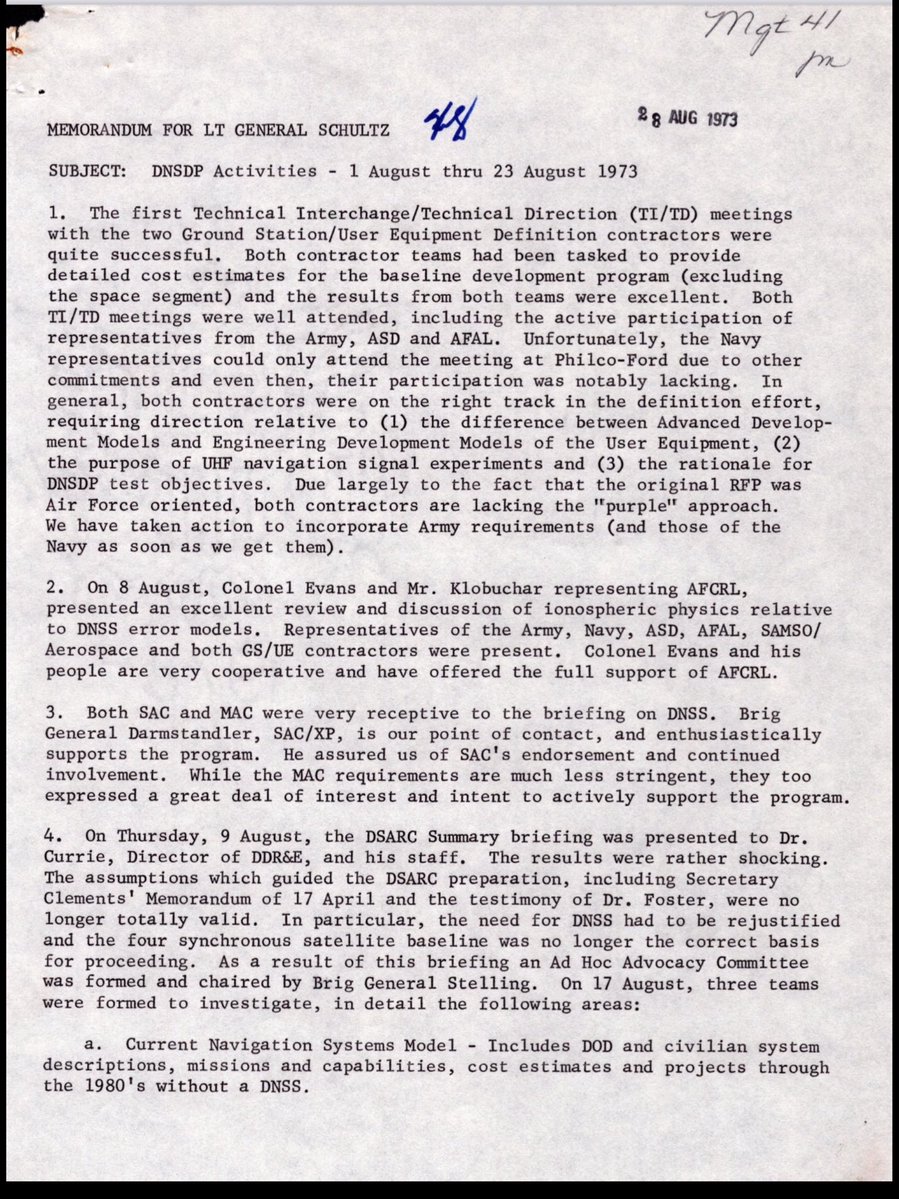
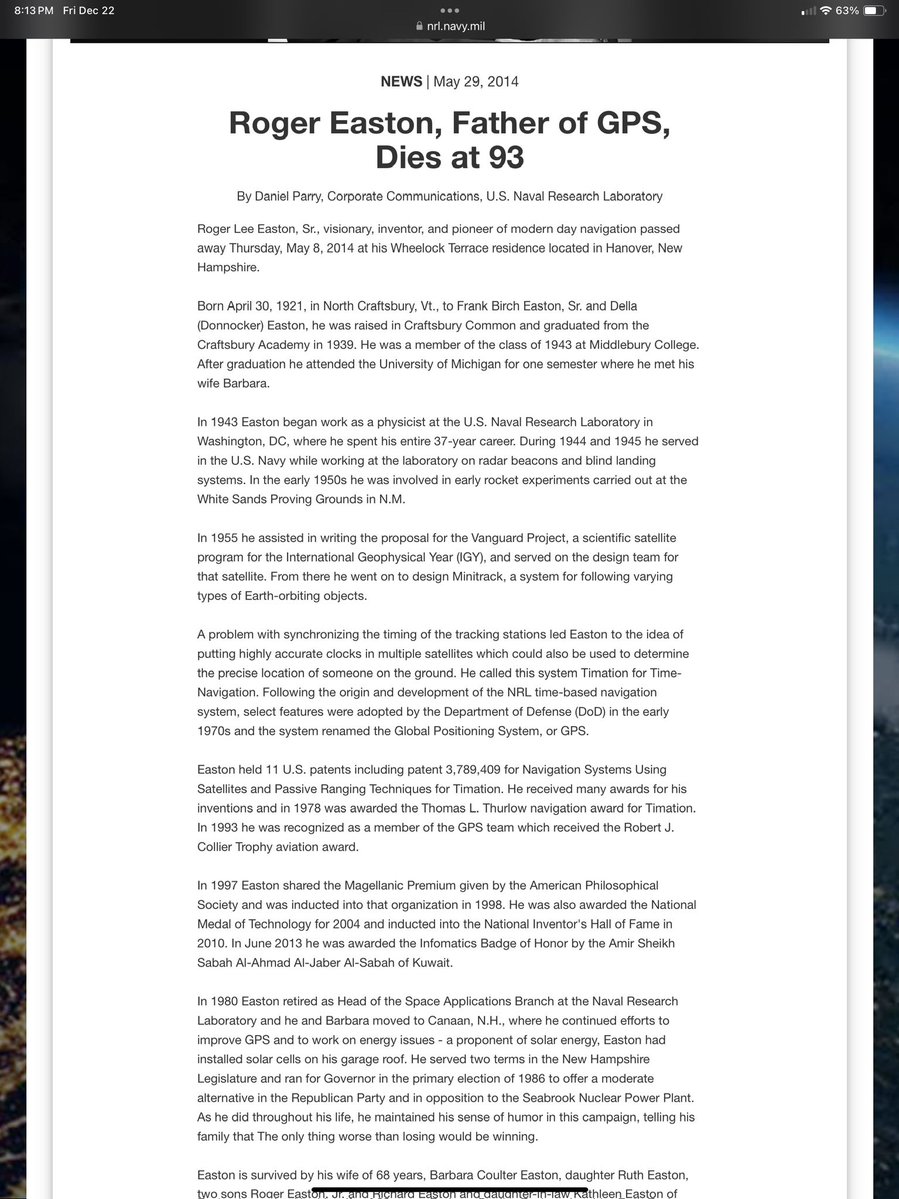
Brad Parkinson was the 1st head of the GPS Joint Program Office. Key negotiations were occurring during the summer of 1973 as to what GPS would be - GEO or MEO, autonomous satellites or repeater satellites. Both were decided in favor of my dad’s proposal. Brad’s August status report gives some of the details. Pay special attention to the 5th point.
@NikolHasler@PICT3791@libsoftiktok Here are slides from a presentation by Lee Hammarstrom who was the 1st chief scientist for the National Reconnaissance Office.
1st solar powered satellite - Vanguard 1 - U.S.
1st weather satellite - U.S.
1st communication satellite - U.S.
1st navigation satellite- U.S.
The latter three are important since they improved life. The significant advantage the U.S. had in electronics was important in these milestones.