"This is one of the largest motorized intrusions into designated Wilderness ever, and it was done, unapologetically, through a backroom deal with commercial interests and with zero public oversight."
https://t.co/v8aLz2jiD8
"Conservation groups are suing U.S. Dept of Agriculture, Forest Service and the BLM over the killing of predator animals by federal employees in designated wilderness areas, arguing the practice violates a law preserving “untrammeled” natural places."
https://t.co/BtBf082jat
We are excited to announce two new first-time #MonarchChampions! 🦋🏆Village President Jim Burket took the Mayor’s Monarch Pledge for the Village of Glen Ellyn in 2025 and Mayor Eric Clarkson first took the pledge for Chamblee, GA, in 2021. Thank you for stepping up for monarchs!
Dangerous amendment to repeal the #publiclands#RoadlessRule advances through the Senate 🐻🌲
Opening up #wilderness areas to road construction could destroy habitat and lead to more #wildfires —putting lives of people and #wildlife at risk. 🏞️
📸Robert Mullen
Amid environmental rollbacks on overfishing, wind energy, deep-sea mining, Tribal collaboration, and more, National Marine Sanctuaries and Marine National Monuments weather turbulent times.
Read the National Wildlife Magazine Spring 2026 Issue 📲:
https://t.co/YrPWbHtRob
Senate Natural Resources Committee will vote 6/9 on Sen Mike Lee's amendment to S. 140, which would nullify the Roadless Rule, opening up public lands to even more roads, logging, and development.
Call 202-224-3121 and urge your senators to oppose!
https://t.co/W57buKWEPu
Today is #WorldOceanDay 🌊
Oceans are home to more than 200,000 marine species. 🐢🐬🐋🦈
Did you know marine invertebrates produce more antibiotics, anti-cancer, and anti-inflammatory substances than any group of terrestrial organisms? 👀
Read more 📲: https://t.co/hyuXPoON6n
The Nashville Zoo has launched a public campaign to block construction of a proposed 69,000-square-foot AI data center that would sit directly adjacent to habitats for endangered animals, including vulnerable clouded leopards.
Zoo officials warn that the facility’s constant noise, bright artificial lighting, and electrical hum could seriously disrupt animal behavior, stress levels, and long-established breeding programs. The zoo is home to more than 3,700 animals representing over 350 species and maintains one of the most important collections of rare and endangered wildlife in the United States.
This conflict highlights a growing backlash against the rapid expansion of data centers driven by the AI boom. These facilities require massive amounts of electricity and operate 24 hours a day, prompting communities nationwide to raise concerns about energy consumption, water use, noise pollution, and environmental impacts. Wildlife conservation groups are now joining the resistance.
More than 180,000 people have already signed a petition opposing the project.
The developer behind the data center states that it will use waterless cooling systems, meet all local noise regulations, and comply with environmental standards. However, zoo leaders argue that the location itself, immediately next to sensitive animal habitats, makes the project unacceptable regardless of technical mitigations.
The dispute underscores a broader challenge of the AI era: how to build the vast digital infrastructure needed for artificial intelligence without placing undue pressure on local communities, ecosystems, and wildlife.
Under Trump, the Forest Service is gutting labs that cost ONE DOLLAR in rent so they can cram scientists into a Fort Collins office that costs taxpayers a million a year.
As reported by NPR, Trump's 2027 budget zeroes out Forest Service research entirely. Three hundred and nine million dollars, gone. Fifty-seven of the agency's seventy-seven research stations are on the chopping block.
These are the forests generations of Americans have hiked, hunted, camped, and prayed in. Sacred ground for almost anyone who's ever stepped outside in this country.
And the "efficiency" pitch? A scam.
The research station in Hilo, Hawaii sits on 30,000 acres the federal government rents for a one-time fee of ONE DOLLAR, locked in until 2067. The Michigan Tech lease? One dollar paid in 1963, free ever since. Another site costs the agency $600 a month for two rooms.
The destination they want everyone shipped to in Fort Collins runs taxpayers a million a year.
Read that again. They're closing dollar leases to expand a million-dollar lease.
Scientists in Baltimore have spent years planting white oak saplings that need three decades to mature. You can't FedEx a forest to Colorado. You can't manage a Hawaiian ecosystem from a cubicle in Utah.
Researchers told NPR they'll quit before they relocate. Which is the point.
Meanwhile, Trump has openly pledged to ramp up logging on federal land. Gut the scientists who document the damage, and there's nobody left to sound the alarm when ancient forests get clear-cut for profit.
These are the people who tell us when wildfire season turns deadly. Who track invasive beetles eating through pine. Who teach cities how to recycle dead trees instead of dumping them in landfills.
You don't dismantle the world's largest forestry research network because you're worried about a maintenance bill. You dismantle it because somebody plans to take a chainsaw to what the public owns and doesn't want a paper trail.
The forests don't belong to Tom Schultz. They don't belong to Trump. They belong to every American who has ever stood quiet under a hundred-year-old tree and understood, for one second, that some things are not for sale.
Defend them now, or explain it to your grandkids later.
🚨 Breaking news: 3 mule deer have been confirmed crossing California's first-ever wildlife overpass.
The deer, captured on trail camera in late May, didn't wait for the official ribbon-cutting. The $20 million wildlife overpass in Siskiyou County, designed to reduce the staggering number of deer and elk killed on Route 97, was apparently usable enough. The bridge will officially open in fall.
We reached out to the 3 mule deer for comment but have not yet received a response.
Wildlife collisions cost the US about $8 billion a year in vehicle damage, injuries, and human deaths. A well-placed crossing pays for itself in reduced accidents within a decade.
A study of 89 wildlife crossings across North America, Europe, and Australia found they reduced wildlife mortality by up to 90% in well-designed projects.
Fencing is doing half the work. A crossing without funnel fencing leading animals toward it is dramatically less effective. The California project includes 3 miles of 8-foot fencing along Route 97.
California has about 100 wildlife crossings planned over the next decade. This one is the first. The Liberty Canyon overpass over the 101 in LA (currently the largest in the world by area) is set to open in 2026.
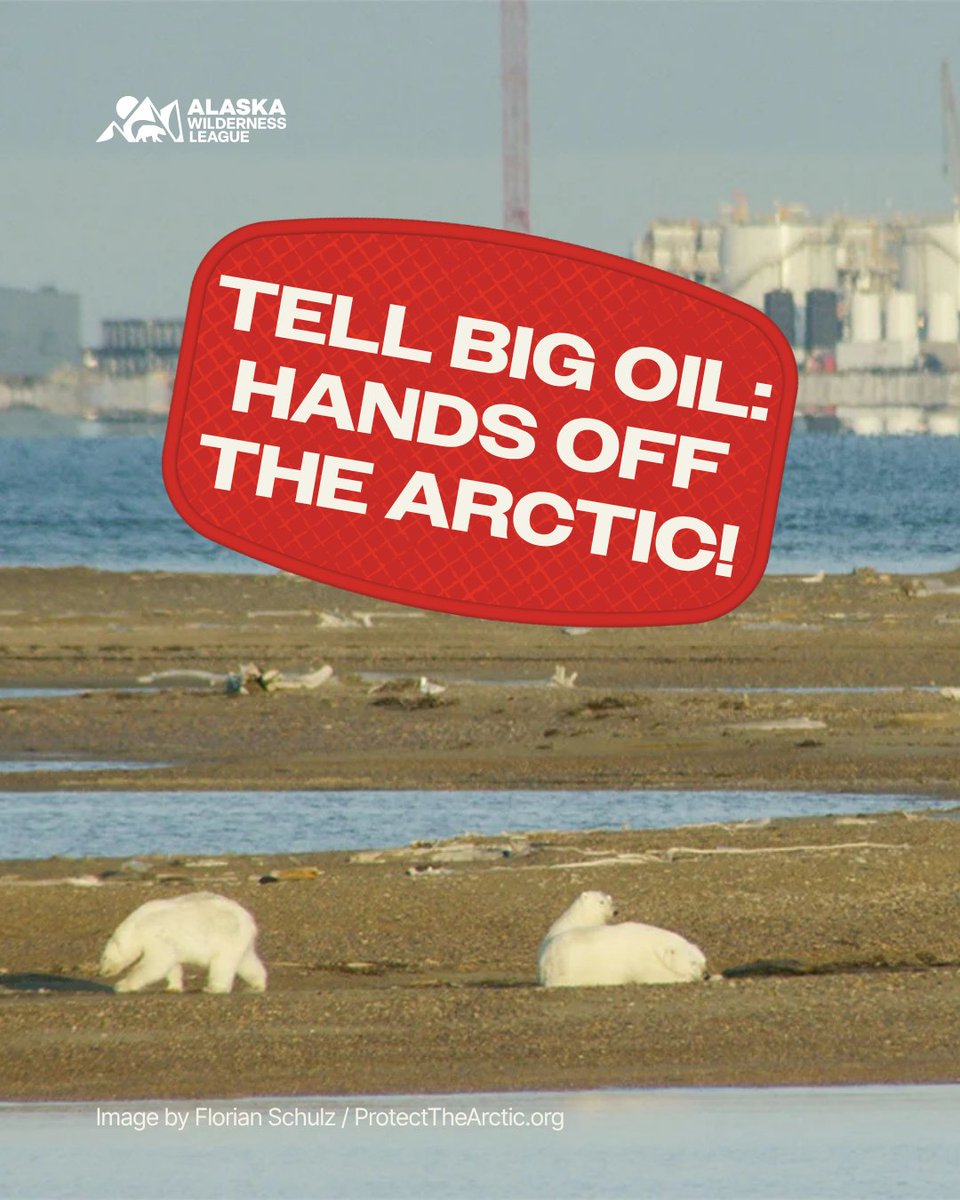
Today, we waited to see who would show up to try to buy our public lands in another lease sale in the Arctic National Wildlife Refuge. And for the third time, a lease sale in the Refuge flopped. This is a clear statement that drilling for oil in the Arctic makes no sense.
But this didn’t happen in a vacuum. Hundreds of thousands of you showed up and signed petitions standing with Indigenous communities, wildlife, and climate. Thousands of you posted, shared, liked, and engaged with content across the social media landscape. You spoke up when we asked.
Today is a good day. But threats remain across the Arctic, including the administration attempting to roll back regulations to make it easier to drill in the Western Arctic. We’re not backing down, and we need each and every one of you.
#publiclands #arctic
The Arctic Refuge is the crown jewel of our American National Wildlife Refuge System.
Tomorrow, the Trump administration is going to try to lease it for oil drilling.
This piece was written in 2019, but it's more relevant than ever as the U.S. Forest Service just approved giving commercial outfitters permission to use gas powered chainsaws for 7 months a year for up to 3 years in the River of No Return Wilderness.
https://t.co/dpSNxdzaRp
The Arctic Refuge is facing its 3rd oil and gas lease sale on June 5th. We stopped them before, and we need your help doing it again. Tell oil companies the Arctic Refuge is not for sale.
https://t.co/VsfJ06oiGk
Gray Wolf protections should be guided by science—not political bargaining. But Section 125 in the Interior funding bill would force the delisting of wolves and block court challenges.
Tell your Rep. to follow the science & oppose Sec 125: https://t.co/4Wy6SWqWF0
The Marine Mammal Protection Act has safeguarded ocean life for decades, but Congress is trying to weaken key protections against harmful industrial activity. We’re fighting back on multiple fronts, including in court to defend these marine species. https://t.co/DUqvmWNUXe
In less than a week, the Arctic Refuge will be opened for oil and gas leasing.
This administration and the oil industry will try to sell you on "responsible" drilling here. There is no such thing as responsible drilling in the Arctic Refuge.
Hands off the Refuge. https://t.co/Ccrk9dkuf1