WATCH | Zimbabwean President Emmerson Mnangagwa has signed the Constitution of Zimbabwe Amendment No. 3 Bill into law, extending presidential and parliamentary terms from five to seven years and updating the country’s governance framework.
According to to @sarstax's own figures, South Africa has imported goods worth R24.6 billion from Nigeria so far this year.
In the same period, South Africa exports to Nigeria were a mere R3.4 billion.
Zimbabwe remains SA's biggest export market: R31 billion so far this year, about a third of the R100 billion SA has exported to China in the same period.
Of this Zim figure, ~R10 billion is food!
Every Zimbo knows, though, that this foodstuffs figure is massively understand because of rampant smuggling of foodstuffs from SA into Zim.
SA exports to selected countries (Jan - June 2026:
Zimbabwe - R31.035 billion
Namibia - R29.2 billion
Zambia - R26.8 billion
Mozambique - R26.5 billion
Botswana - R25.5 billion
DRC - R10.4 billion
Malawi - R3.6 billion
Nigeria - R3.4 billion
So far in 2026 (Jan-Jun), South Africa's largest exports to Zimbabwe are:
Machinery - R5.1 billion
Vegetables - R4.9 billion
Chemicals - R4.4 billion
Prepared Foodstuffs - R3.4 billion
Vehicles & Aircraft Spares - R2.7 billion
Iron & Steel Products - R2.3 billion
Mineral Products - R2.2 billion
@mimmitwit@mavhure@matigary
Following the recent inaugural and historic Google Cloud Summit held in Johannesburg, South Africa, local podcaster Sizwe Mpofu-Walsh recently interviewed Zimbabwean-born
Google Senior Vice-President James Manyika on his SMWX platform.
Johannesburg hosted the Google Cloud Summit which took place on July 1 at the Sandton Convention Centre.
It will also host the upcoming AWS Summit on 19 August 2026.
Google Cloud offers a powerful, optimised AI stack — including AI infrastructure, leading models like Gemini, data management capabilities, multicloud security solutions, developer tools and platform, as well as agents and applications — that enables organisations to transform.
The interview — recorded shortly after the Google Cloud Summit — delved deeply into artificial intelligence, the future of work, and the realities of establishing a thriving tech and AI economy across Africa.
South African President Cyril Ramaphosa opened the summit. They were joined by prominent figures, including Zimbabwean billionaire Econet founder Strive Masiyiwa.
Ramaphosa said:
"Today’s Google Cloud Summit affirms Africa’s position as a core growth region for the global cloud ecosystem. As we step boldly into the age of artificial intelligence, our aspiration is to anchor South Africa as a catalyst for the continent's digital ascendancy. By building robust infrastructure to harness this technology, we are doing more than modernising our economy, we are taking a quantum leap into the future.”
At the summit, Google announced five new initiatives that build on its existing US$1 billion investment commitment, its recent US$37 million AI skills and research funding, and launch of the AI Community Center in Accra last year to advance AI in Africa.
The new initiatives fall under the banner of Google’s "Building for Africa" mission, designed to equip Africa’s local ecosystem for AI-driven innovation.
Manyika said: "The AI opportunity for Africa is significant, and Google is committed to doing our part working with Africans to help Africa realise it. Building on our past commitments, we’re making new investments in critical areas: infrastructure, African-led innovation, and education and skill building. From a new Digital Exchange Port in the Eastern Cape to Africa’s first Applied AI lab, we’re harnessing technical progress and building partnerships to amplify and scale Africa’s incredible vibrancy, hustle, and innovation for the world."
Maureen Costello, Vice President for UK, Ireland, and Sub Saharan Africa at Google Cloud, added: "African enterprises have moved decisively past the initial phases of AI experimentation. Powered by our Johannesburg Cloud Region, which is estimated to contribute US$90.6 billion (ZAR 1.7 trillion) in additional gross economic output and support 314 900 jobs by 2030, leading organisations like Vodacom, Discovery, Pepkor, Naspers are establishing the essential framework to build and deploy autonomous agents that solve uniquely African challenges in real-world environments."
Capitec co-founder Dr Chris Otto will resign from the group's board of directors next month, having been with the group since its formation. https://t.co/bjKlW0bfXP
Yoco is launching AI tools that help business owners understand performance, uncover insights, identify issues, and take action through simple conversations.
What this does for your business:
• Get answers from your business data without digging through reports.
• Spot opportunities and risks before they become bigger problems.
• Automate everyday tasks using AI that understands how your business operates.
For the first time, independent businesses will have access to capabilities traditionally reserved for larger companies.
Coming Q3. #YocoNext
[BREAKING] South African jazz composer and cultural icon Abdullah Ibrahim has died at the age of 91. Ibrahim passed away in Germany after a short illness. Tune in to #eNCA, channel #DStv403 for updates.
Software service provider Avaloq said South Africa's largest banks were scouting for options to help them automate internal processes to cut rising costs. https://t.co/wr64YwY2hb
Capitec has doubled down on its fight against fraud, with the bank's efforts paying off based on recent data from the Banking Ombudsman.
https://t.co/fCPzViRR5P
The United States🇺🇸 has identified 19 African countries that will serve as regional visa-processing hubs under a proposed overhaul of its consular operations on the continent, a move that could significantly reshape how millions of Africans access U.S. Visas
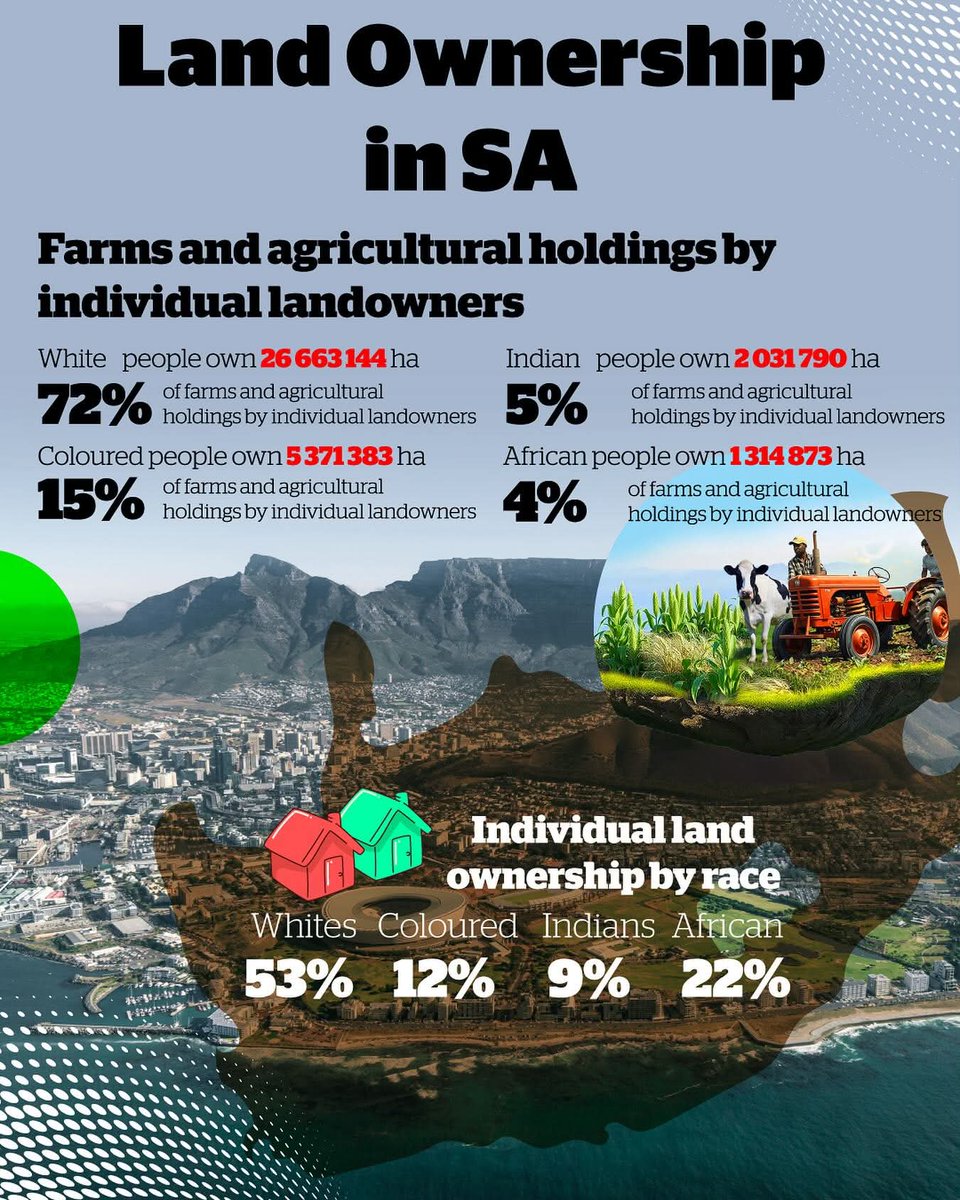
@McKay_Dingis024 You are leaving the people owning 72% of the land and 96% of all water sources and focusing on people that don't even own an RDP or even claim any piece of land for themselves?
South Africa's middle class continue to struggle with their repayments, with 43% of respondents defaulting in the latest Eighty20 Credit Stress Report. https://t.co/tcnt3fFkWE
GOOGLE'S INVESTMENTS SHOULD BE STUDIED.
Google owns 7% of SpaceX and 14% of Anthropic, two of the biggest IPOs in history, both listing this year.
$900 million invested in SpaceX in 2015 is now worth $126 billion, a 140x return.
$13 billion invested in Anthropic is now worth $135 billion, a 10.4x return.
Those two stakes are now worth $261 billion combined, an 18.8x blended return before either company has even gone public.


![eNCA's tweet photo. [BREAKING] South African jazz composer and cultural icon Abdullah Ibrahim has died at the age of 91. Ibrahim passed away in Germany after a short illness. Tune in to #eNCA, channel #DStv403 for updates. https://t.co/amHSw3w3h1](https://pbs.twimg.com/media/HK3YqyZXkAAeAnC.jpg)