Happy to share our paper is out in @NatureComms! 🦋
Ptychographic X-ray CT + ML yields nanoscale density estimates, while correlative imaging reveals insights far beyond a single modality, uncovering how pigments sculpt butterfly wing scales in 3D. https://t.co/KAV9rplRwP
Together with UC Berkeley we are announcing the laser phase plate - a breakthrough in atomic resolution imaging. This is the brightest continuous wave laser in the world, 100 million times the intensity of the surface of the sun.
Phase contrast plays an important role in microscopy, but it was thought close to impossible for electron microscopy, where it would require interfering with an electron beam. Holger Mueller and Robert Glaeser proposed exactly this using a standing wave laser. It has taken over 15 years to make this a reality. Biohub partnered with UC Berkeley and Mueller to support this work and to engineer and build the technology.
Contrast has been the critical barrier to achieving atomic resolution imaging of the cell. In cryo-electron tomography, a cellular imaging technology that uses electron microscopy, the low contrast makes it impossible to resolve anything but the largest proteins within their cellular context. The laser phase plate removes that barrier.
With advances in AI this breakthrough in contrast will start to open up a new frontier in structural biology, that will allow us to see the molecular machines of the cell, and how they assemble into far more complex and dynamic systems, and understand how they work.
In a series of 3 papers and preprints, we’re thrilled to share with you the working laser phase plate. In collaboration with research led by Holger Müller at UC Berkeley, this is a huge innovation in imaging to make small and faint objects inside cells visible. https://t.co/trnQhI6OJr
In our recent paper, using Ptychographic X-ray CT (PXCT) with correlative TEM & optical modelling, we reveal how pigments sculpt the butterfly wing’s 3D nanoscale architecture — from the inside out.
Here is a very detailed examination on how pigmentation in the cuticle of a butterfly wing scale changes the density and refractive index of chitin and, thus, also alters structural color. https://t.co/6ZUi87y0PG
NUS physicists have developed a computational imaging technique to extract 3D information from a single 2D electron micrograph. This method can be readily implemented in most TEMs for rapidly imaging large areas at a nano-scale 3D resolution.
https://t.co/lt6jhLrbkc
In this #BehindThePaper blog post, we discuss how we came up with the 3D pop-out metrology idea, what all the critical insights we derived, and what opportunities this method opens up for the field of nano-characterization.
@NaturePortfolio@CommsPhys
https://t.co/oE9Va6oT1W
Happy to share that our paper is out in @CommsPhys!
We experimentally demonstrate with a TEM that single-shot 3D imaging is possible in the near-field limit by simultaneously inferring local depth and thickness. @DuaneLoh
Paper👉 https://t.co/8erTECIWg1
Nanoscale cuticle density variations correlate with pigmentation and color in butterfly wing scales. (arXiv:2305.16628v1 [physics.bio-ph]) (relevance: 53%) https://t.co/LeFTREp146 #biophotonics#biomedicaloptics
Our latest 𝗽𝗿𝗲𝗽𝗿𝗶𝗻𝘁 𝗶𝘀 𝗼𝘂𝘁!
We showed nanoscale density variations in butterfly wing scales correlate with structural colour and pigmentation. We determined nanoscale 3D densities using ptychographic X-ray computed tomography (PXCT). 🔬🦋
https://t.co/qbPvg0HBML
🔬 New 𝗽𝗿𝗲𝗽𝗿𝗶𝗻𝘁! - "Pop-out 3D metrology."
We show nanoscale 3D imaging of homogenous thin samples from a single 2D HRTEM micrograph is possible with computational electron optics.
https://t.co/RU2csE6Fxp
🧵Why conferences are crucial in academia & should be accessible to all scientists regardless of background or ethnicity:
A thread on mental health, identity, & equal opportunities in academia.
More thoughts in my paper out in @NatureHumBehav:
https://t.co/6XIhD40aEX
@PhDVoice
I wondered if tiny sensors in smart phones with computational correction can produce great images, what can be done with a massive DSLR sensor?
Result: DSLR (300mm) can capture craters in moon even without a telescope. #computational_imaging#Astrophotography
Kind of passport a person carries affects their chance to progress in academia. Yet another type of gatekeeping that is often overlooked. #AcademicChatter#AcademicTwitter
I'm in tears at the office after spending days & nights tracking down every single place I've been, lived, visited, addresses, length+reason of stays, phones/emails/SoMe, jobs I've had, extended lists of activities, ++ for the *PAST 15 YEARS* requested for my visa application ...
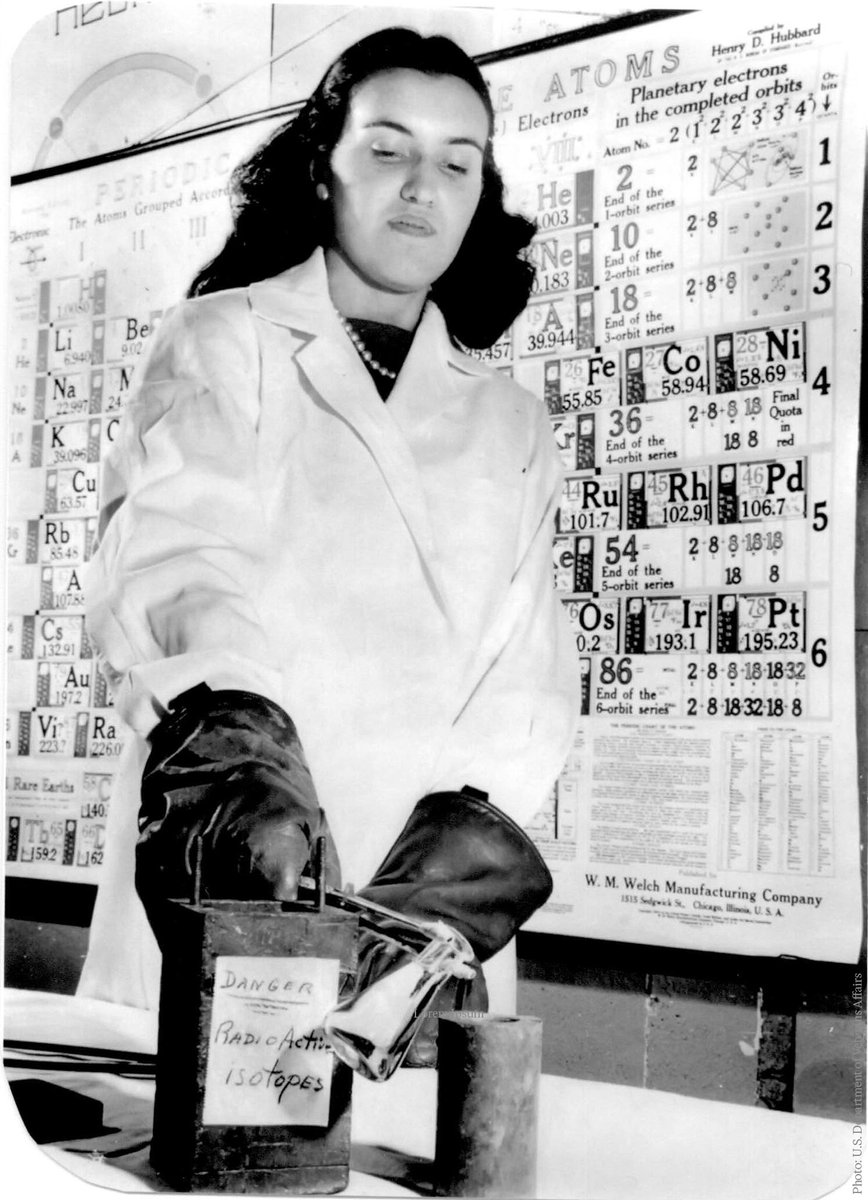
Rosalyn Yalow, born #OnThisDay 101 years ago, grew up as a stubborn and single-minded child. Her parents wanted her to become a schoolmistress, but instead she became a nuclear physicist who revolutionised the medical world. She was awarded the 1977 medicine prize.
#NobelPrize


![biophotonicat's tweet photo. Nanoscale cuticle density variations correlate with pigmentation and color in butterfly wing scales. (arXiv:2305.16628v1 [physics.bio-ph]) (relevance: 53%) https://t.co/LeFTREp146 #biophotonics #biomedicaloptics https://t.co/MuzkmEmiFk](https://pbs.twimg.com/media/FxQq6hbagAEu-ty.jpg)