Probably the best reaction I've had to one of my two-dimensional prints: the first person I showed it to literally gaped and bought the first print on the spot.
Are you a moon lover? Blue micro-moon with a twist!
Lunar convergence: only 9 prints total.
https://t.co/X6S6uObruq
This image features May’s Blue Micromoon, the second full moon of May that is smaller in apparent size compared to other full moons due to its distance from Earth, presented in an inverted tonal format that enhances surface detail and contrast. https://t.co/uRPes1nb66
I'm trying not to be negative, but does something feel backwards about this image of the lunar crater, "Plato"? High-definition file available for (free) download: https://t.co/BpZJcHNTcK
There are some lines you shouldn't cross.
Daytime on the moon reaches a scorching 260 degrees Fahrenheit. When the terminator line passes, you'll get some relief, but only briefly. Once the surface is plunged into darkness, it rapidly cools to -414 degrees Fahrenheit.
Trust me.
During the current (almost half-moon) phase, the low angle of light on the surface casts long shadows creating dramatic details. The original capture was just HD (1920 x 1080) at gains ranging from 40 - 250 and exposures from 20ms - 80ms. I averaged about 20 fps per capture.
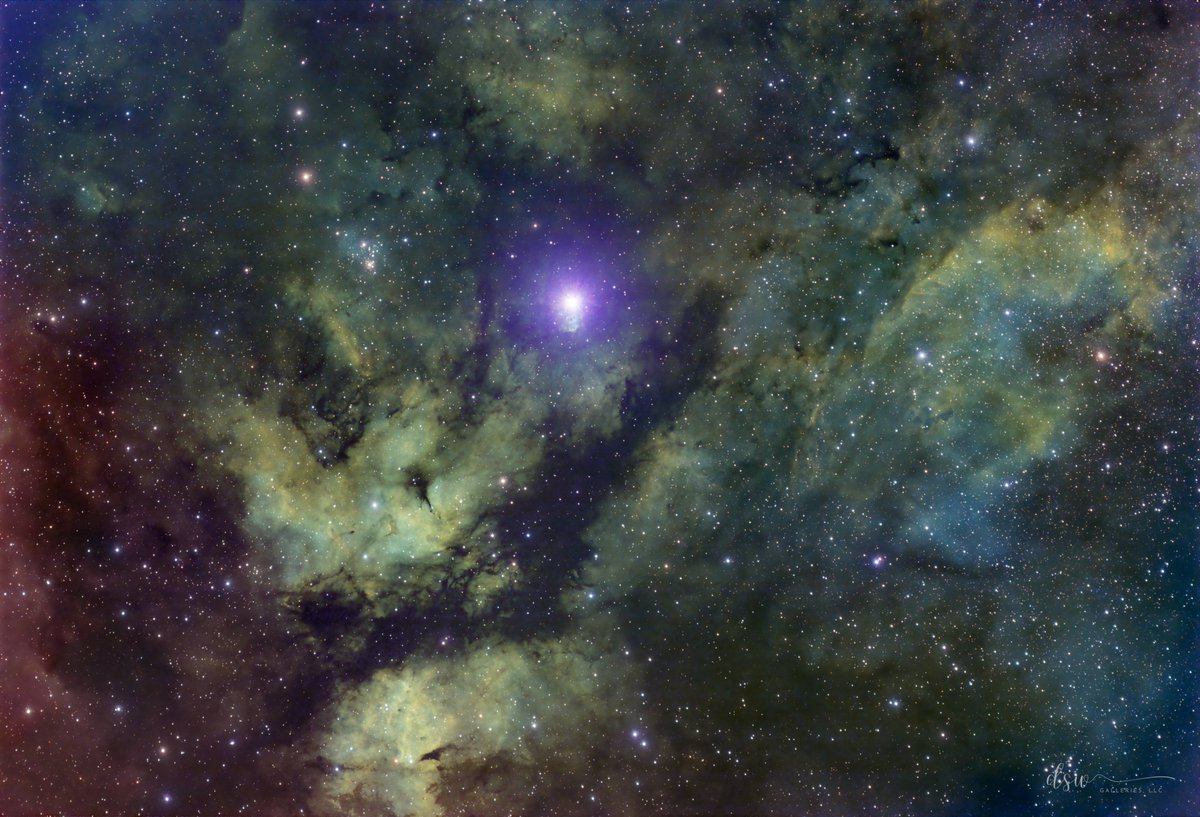
Sadr (Gamma Cygni), a supergiant ~1,500 light‑years away in the constellation Cygnus surrounded by hydrogen‑alpha filaments from energetic shock waves, oxygen‑rich veils of ionized ultraviolet radiation zones, and sulfur-tinged clouds outlining cooler, denser regions.
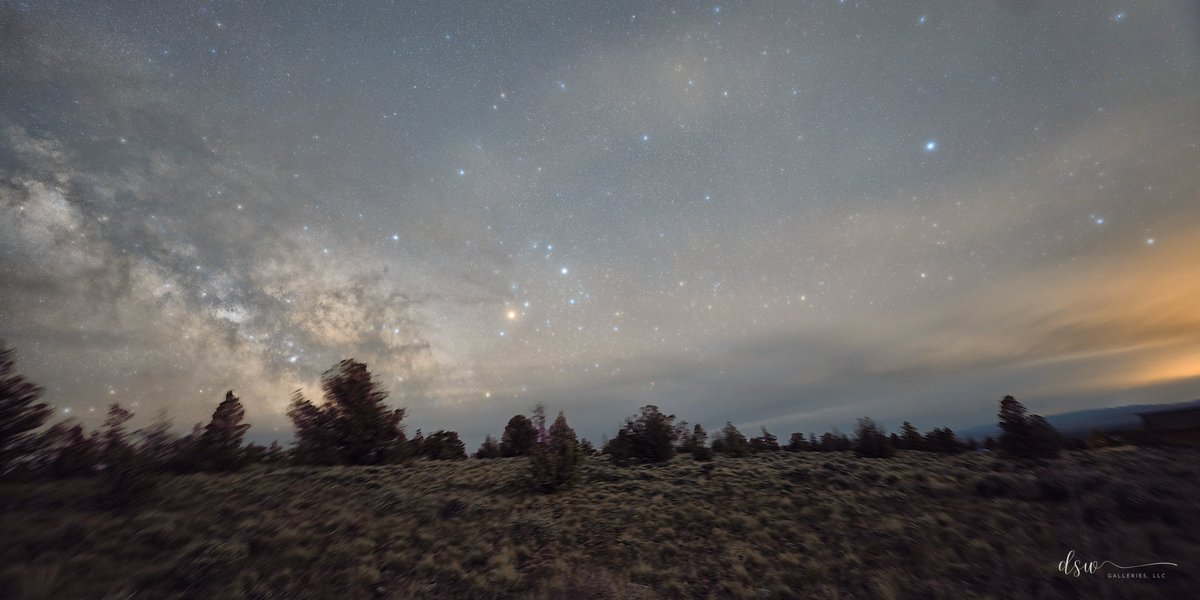
I headed to Seal Rock late on Friday but didn't have much success. I practiced polar alignment and took some shots with my camera, and that's pretty much it for that overnight stint. Here's a capture of the moon revealing the clouds, and the Milky Way behind a thin veil of clouds
This image was a pleasant surprise. A wide angle shot spanning from the east to southwest, it embodies the transition from day to night as she core of the Milky Way rises while dusks soft glow slowly fades
These clouds were welcome. In this rare occasion, instead of hiding the scene, they helped define it. A blend of equipment lights, lingering sunlight, city lights and star light.
This is just after sunset, with the moon and Venus parallel to each other and M45: the Pleiades above them. They are setting over Prineville with the silhouette of Mt. Washington on the side.
I snapped this shot looking north to the Yaquina Head Lighthouse. The 50mm Viltrox lens did an amazing job at capturing the details and my wife, Doreen, pointed out several reasons this should be presented in black and white.
The sun was just slipping behind the marine layer when I captured this shot. I had my aperture mostly closed (f/16) and exposed for 1/1000 of a second. The surreal golden hour scene captures the bright electrified edges of clouds illuminated by the sun's last rays.
The sun had already descended well below the horizon when I took this photo. I was blown away by the natural composition of layers moving from sand and driftwood to salt water, clear sky, and complex clouds. This is "7-Layer Sunset."
Finally captured some good shots with my new solar scope. It's got a slightly larger aperture and much narrower filter so the pictures should be far more detailed than any of my previous.
Lunt 50mm double-stack, disc with ZWO ASI294MM and close up with ZWO ASI662MC.
Thoughts?