Definition of General Intelligence (GI). GI is the kind of algorithms that a living organism discovers as a consequence of its interactions with its environment. This environment includes other living organisms that also have GI.
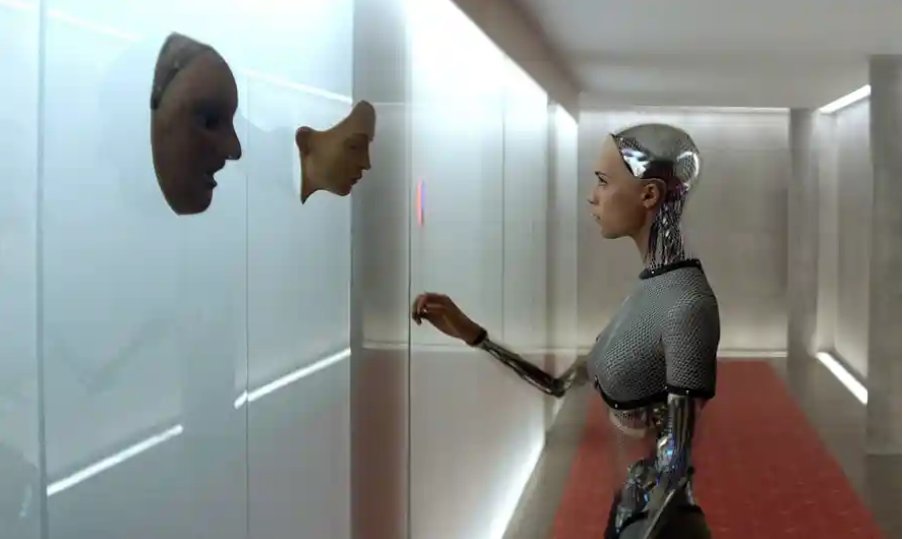
Like every AI spring before it, our current one features experts predicting that “general AI”—AI that equals or surpasses humans in most ways—will be here soon. “Human level AI will be passed in the mid-2020s,” predicted Shane Legg, cofounder of Google DeepMind, in 2016.
How to come up with research ideas?
Excited about starting doing research but have no clue?🤷♂️🤷🏻♀️ Here are some simple methods that I found useful in identifying initial directions.
Check out the thread below 👇
New study on an ancient memory technique, the Method of Loci (aka Memory Palace). 6 weeks of training = recollection for 56/72 words 24 hours after seeing them, as compared to 30/72 words w/ no training. Training effects lasted > 4 months https://t.co/3THYbAAt14
The crowd has spoken! 🙃 A thread with early-stage machine learning research advice follows below. 👇🧵
Important disclaimer before proceeding: these are my personal views only, and likely strongly biased by my experiences and temperament. Hopefully useful nonetheless! 1/15
Many believe that the field of AI is the answer to the question "how can we create artificial (human) minds?". That's also the question that led me here. But today, I think AI is more pragmatically the answer to the question: "how can we make software do more?"
Have 3 minutes? Here is a link to an inspiring video of how memory champ Yanjaa Wintersoul @yanjaaw navigates the Memory Palace. https://t.co/ceCBoTuVze
A guide from @EmilWallner on how to build a €25K Machine Learning Rig with 4 NVIDIA RTX A6000, an AMD EPYC 2 with 32 cores, including 192 GB in GPU memory and 256GB in RAM.
https://t.co/6XwNYWMjvg
I'm currently on the 2020-2021 academic job market, and I'm looking for openings in EE/CS/Stats/OR/B-school. Please feel free to contact me if you are interested.
webpage: https://t.co/MPvOPJk0ue
CV: https://t.co/u8d7aEiIty
It seems that psychologists and ML folks are bemoaning the same road-block:
"The Generalizability Crisis."
See https://t.co/hjo6aOdBvm and https://t.co/KmcPOiD7Fo
This is understandable -- they have not acquired a language for causation. But it's 2021, why haven't they?.
Struggling with how to write a good introduction to your ICCV paper? I used to find this the hardest part of writing. Here is a template I now give to new graduate students: 🙂 How to Write the Introduction in 3 Easy Steps 🙂 #ComputerVision https://t.co/2AXXImr5P2
Can AI be conscious? Or are there more useful questions to address at the inferface of consciousness and AI? I’ll be debating such things with the brilliant @tyrell_turing as part of @CIFAR_News virtual talk series, on June 8th. All welcome! Register here: https://t.co/lcA3oh1NTj
If you really think about it, AI is a non-conventional way of learning how biological brains work. It's is based on a 3rd pillar of science that many ignore. That 3rd tier was established when computers were invented.
I've been serving on grad admissions committees at MIT for 5 years - in EECS and Media Lab
If you want to get into a PhD at a place like MIT, here's a thread with some advice based on my observations
1/13
Extremely encouraging to see causal graphs trickling into NLP, enforcing my speculation that " learning from the way causal reasoning was domesticated, would benefit researchers in other area of AI, including vision and NLP."
(in https://t.co/GCeYu5nEol).