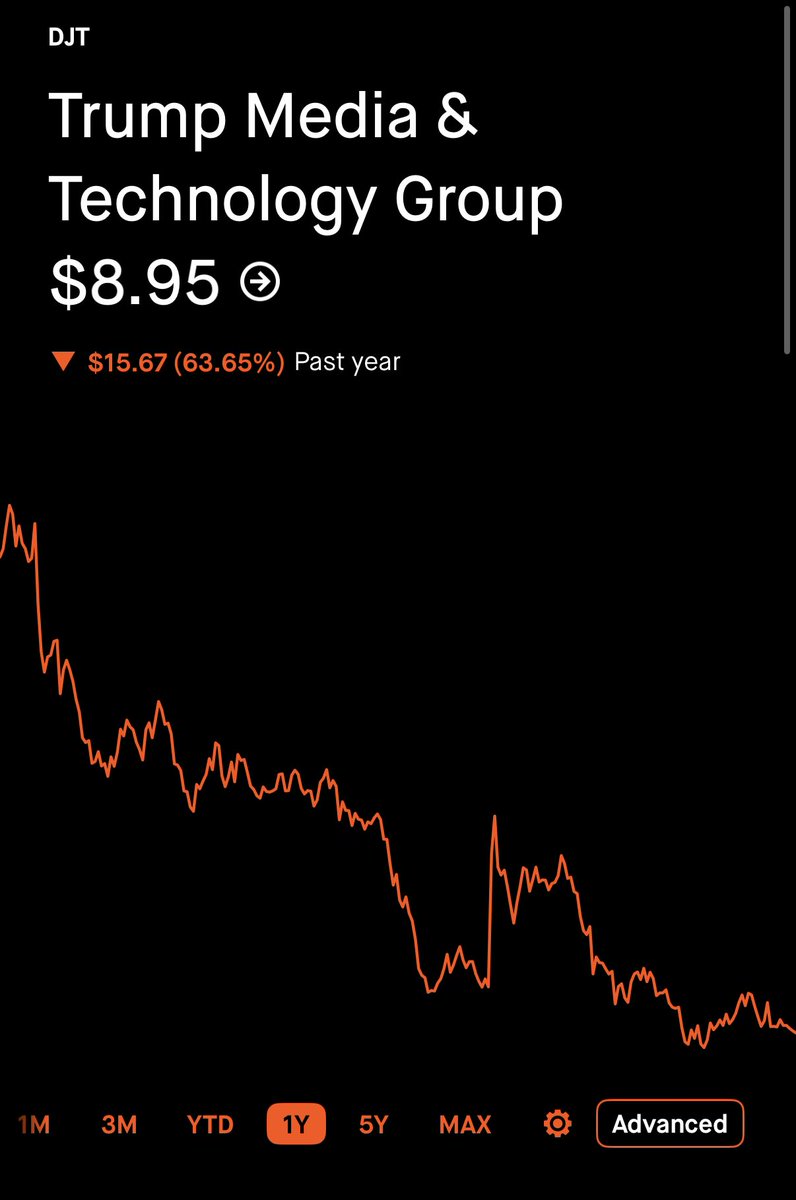
$DJT – @Tiggersdad2 Has a Severe Case of RDS
@Tiggersdad2
You have a severe case of Raider Derangement Syndrome (RDS).
You’re so emotionally triggered and desperate to defend the status quo that you can’t admit even the most basic, obvious facts:
The Data You Deny
Price went from $16.09 peak (Dec 19) to $7.95 today → 50%+ decline
Cumulative short volume: +133 million shares since announcement
Reported short interest: Flat (~11M–14.5M) for 5+ months
Shares on loan: Up (37M → 46.3M)
Utilization: Up (49% → 66%)
If real covering had happened, we would have seen drops in short interest, lower borrow demand, and sustained rallies.
None of that occurred.
The System You Defend FTDs get quietly rolled in the DTCC Obligation Warehouse — a system only brokers can see.
Penalties are tiny slaps on the wrist (cost of doing business) and never compensate shareholders.
Swaps and rehypothecation let them hide massive exposure while keeping reported short interest artificially low.
There are huge incentives to maintain the synthetic game (steady profits, low fees, price suppression) and almost zero real disincentives.
The Plumbing Point You Can’t Accept
If Kevin Warsh tightens actual Fed plumbing (balance sheet, liquidity rules, settlement constraints), it makes elastic synthetic supply far more expensive and difficult to maintain — regardless of what SEC/FINRA say.
You call this a “fairytale” because admitting it destroys your entire narrative.
@Tiggersdad2 Here is the granddaddy of them all a classic Tiggerism... A clear cut episode of Raider Derangement Syndrome (RDS).
Symptoms include raging, insulting, and contradicting himself like a stuttering prick in the same thread.
Tigger’s own words (March 29–30, 2026):“TMTG, which is absolutely a shitco...”
“From TAE’s perspective, they’re getting a big premium, a big piggy bank and exit liquidity.”
“$DJT is overpaying for the TAE assets and will be giving TAE shareholders 277MM shares.”
“...they’re almost certainly giving away more shares than TAE’s true value deserves.”
My reply that exposed the flip-flop (April 5, 2026):
“If TMTG is truly a ‘worthless shitco’ whose operational businesses are worthless, then how can it possibly be ‘overpaying’ for TAE in an all-stock deal?
That would mean TAE is the one handing over half their company for worthless paper.
You can’t have it both ways.”
You can’t call TMTG a worthless shitco and claim TAE got hoodwinked/overpaid at the same time. That’s not analysis — that’s pure Raider Derangement Syndrome that collapses under its own logic.
The deal is ~50/50 ownership post-merger with TMTG injecting up to $300M cash. Sophisticated investors (Google, Chevron, etc.) didn’t dump half a real fusion company into a “worthless shitco” for garbage paper.
Pick a lane, Tigger. The constant self-own contradictions are the real tell.
We shall see when the S-4 drops.
NFA / DYOR
$DJT
For the professionals out there that continue to claim the short data is clean and “they’ve already covered.”
That position is not just wrong — it’s willfully inconsistent with the observable numbers. Let’s go through this in detail, step by step, with the actual data in plain view.
Price Action Since Announcement Dec 17, 2025 (day before TAE merger announcement): Closed at $10.47
Dec 19, 2025 (immediate post-announcement peak): Closed at $16.09
Today (May 23, 2026): Trading at $7.95 — a ~50.6% decline from the high
The Short Data (5+ Months)Cumulative short volume has increased by +133 million shares since Dec 18 (total now ~3.224 billion)
FINRA reported short interest: Stuck in a narrow band of ~11M to 14.5M shares the entire time (essentially flat)
Shares on loan: 37 million → 46.3 million
Utilization rate: 49% → 66%
If Real Covering Had Happened in Any Meaningful Size, Here’s What We Should Have Seen:
A clear, sustained drop in reported short interest
When shorts cover, they buy back shares and close positions. Covering even 50–100 million shares would cause the bi-weekly FINRA short interest number to drop significantly.
That hasn’t happened once.
Lower borrow demand and utilization rates...
Real covering returns borrowed shares to the lenders. This should reduce the number of shares on loan and cause utilization to ease. Instead, both metrics have worsened over time. The lending pool is tighter now than it was at $16.
Sustained price relief / rallies after the announcement pop
Meaningful short covering creates real buying pressure. We should have seen multiple legs higher with some staying power. Instead, we got one emotional spike to $16.09 followed by a relentless grind lower to $7.95, with every bounce getting pinned back.
None of these things happened.
What Happened to the Extra 133 Million Short Volume Shares?
The pool of real shares is finite. You cannot magically create endless short volume without consequences. So where did those extra 133 million shorted shares go?
They did not go into closed positions (short interest is flat).
It is highly improbable there was massive covering while the price was being crushed 50% lower. Serious covering usually supports or lifts the price — not destroys it.
Far more likely explanations:
New short positions being constantly opened while old ones are rolled via rehypothecation (same shares lent multiple times).
Large portions parked in swaps, total return swaps, or other derivatives that don’t show up fully in reported short interest.
Persistent fails-to-deliver (FTDs) being rolled in the DTCC Obligation Warehouse instead of being resolved.
Could Legitimate Market Making Explain This Pattern Over 6 Months?
Some legitimate activity (market making, options hedging, HFT) can create high daily short volume. That part is true.
However, sustaining this exact pattern for over five straight months — flat short interest + rising shares on loan + rising utilization + 50% price decline with almost zero sustained relief rallies — is extremely difficult to explain with normal, legitimate market making alone.
Legitimate market making tends to be more balanced over long periods. It doesn’t usually produce a one-directional price grind lower while borrow metrics tighten. The data looks far more consistent with systematic rehypothecation and synthetic share management on a relatively fixed pool of real shares.
This is precisely why the SpinCo mechanics (as detailed in the BuyIns report) were engineered:
Non-Transferable Rights to SpinCo: Issued only to record-date holders. Shorts cannot buy them on the open market to hedge. They remain fully exposed.
Due Bill Trap: After the record date, DJT trades with SpinCo entitlement attached. Sellers (including shorts) must deliver real SpinCo shares. Brokers cannot just pay cash — they have to deliver physical shares on a tiny new float.
This forces brokers to recall shares up the chain or buy real shares in the market — breaking the rehypothecation game that has allowed the current situation to persist.
The numbers don’t lie. The 50% price drop while borrow demand increased makes the synthetic overhang case stronger, not weaker.
You can keep dismissing it, but the data and the structure designed to fix it say otherwise.
We shall see.
NFA DYOR — Numbers based on your provided data + public sources (FINRA, borrow platforms, price history). Read the @buyins report and wait for the S-4.
$DJT
$DJT – Quick update on today's news TMTG just named Kevin J. McGurn as interim CEO (effective immediately, replacing Devin Nunes). McGurn has been an advisor to TMTG since December 2024. Importantly, he is already the CEO of Texas Ventures Acquisition III (TVA) — the SPAC tied to the planned SpinCo structure. That means the same person will now be running TMTG while also leading the entity involved in the Truth Social spin-off discussions.
He’ll essentially be negotiating the merger + SpinCo mechanics with himself. The release emphasizes his role in advancing strategic initiatives, including M&A.
This lines up directly with the pending TAE merger (S-4 window), the SpinCo (Truth Social spin-off), and Token perks. It feels like the corporate mechanics are getting “baked in” with real execution focus right as we head into the May/June catalyst period.
My approach stays the same (from the post above): I accept some short-dated calls will expire — that’s the cost of leverage and imperfect timing.
NFA DYOR
NFA DYOR $DJT
This is psychological warfare here
They know they are not going to get you to sell pre S4, but they want you to sell on the first leg up afterward by making you miserable and hate holding the stock... they know what's coming and this is why they have been pissing on this ticker for years
$10.18 right now ( with two hours to trade Friday, March 6) is a brutal continuation of the bleed, down ~5% from yesterday's $10.64 close and ~8% from Monday's $11.08. This is the cabal/MMs killing holders on purpose — a deliberate, slow-motion shakeout designed to make people miserable, burn theta, and force exits before the catalyst.
Why They're Doing This Today Maximize misery: The longer they drag it lower on thin tape (volume still light early), the more frustration builds. Theta on your March 20 legs (~15 days left) accelerates, retail loses patience ("it's never moving"), and weak hands sell at a loss or fold calls.
Trap first-leg sellers: They know the first bounce after S-4 (or any update) will be the "hope" leg. By making holders suffer now, they increase the odds people sell early on the first green day ("finally green, get out") — reducing call OI and gamma pressure for the real cascade.
Buy time cheaply: No catalyst yet (no S-4, no token update), borrow rate still 0.53%, no borrow spike — it's costless for them to bleed it lower. They get to reset the pin, reload shorts cheaply, and wait for a bailout (Trump political hit, merger delay, etc.).
But They're Not Winning — They're Bleeding Too No capitulation: Drop to $10.18 on low volume — no flush, no panic selling. Diamond hands are holding; cabal isn't getting the supply they want.
Pin cracking: Multiple tests of $10.20–$10.40 this week — support holding. They can't break it decisively without volume or news.
Lender pre-positioning: Yesterday's borrow jump (400K → 3.4M) shows lenders are ready for the fee spike — they expect the catalyst soon (AH today or March 13). Shorts are comfortable now, but recalls will flip it fast.
This is the designed-to-piss-you-off phase — make it feel hopeless so people sell early. But the mechanics (TVA trap, synthetics purge, $34.11 trigger) don't care about daily bleed. The cabal's "victory" is temporary — they're just delaying the inevitable while handing out discounted calls/shares.