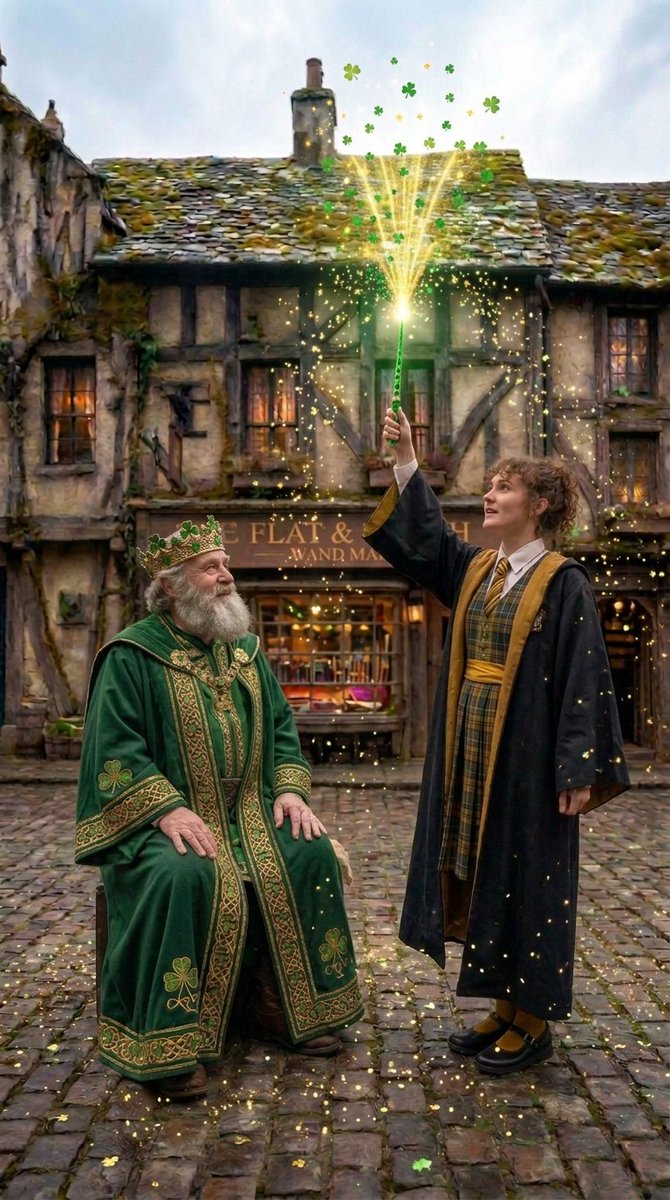
She raised her new wand to the sky and - CRACK! - shamrocks and golden coins burst forth in a shower of light over Tiobraid Draíochta. What started as a simple holiday became the best holiday she ever had.
#TiobraidDraíochta#IrishMagic#CountyTipperary
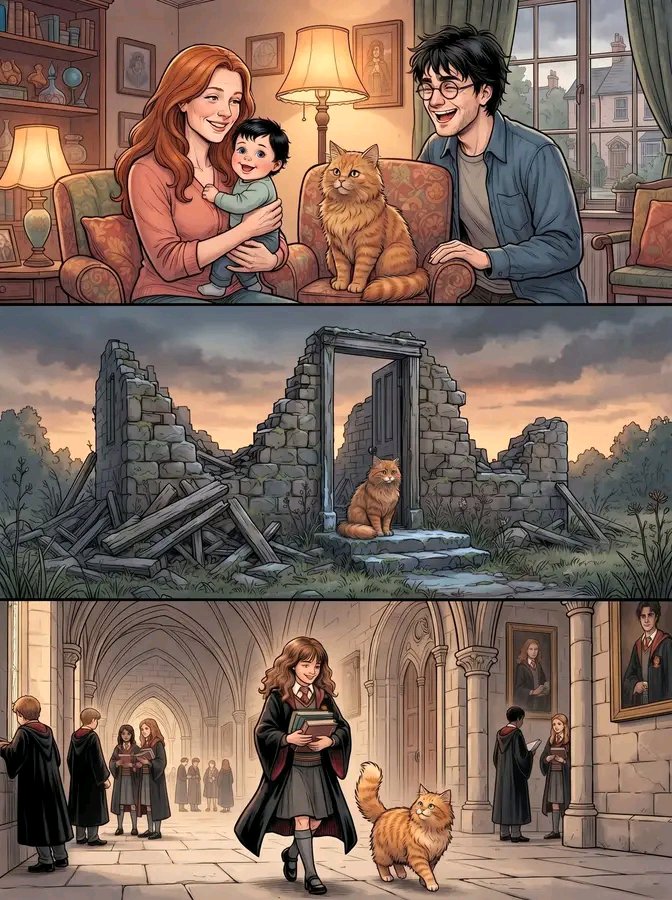
I have a crazy theory that Crookshanks, Hermione’s cat, might have once belonged to the Potter family. It sounds far-fetched at first, but a few details from the books makes it surprisingly fun to consider. Crookshanks was unusually intelligent and seemed to recognize almost immediately that Scabbers was not an ordinary rat. In Harry Potter and the Prisoner of Azkaban, he repeatedly targeted Scabbers and even seemed to cooperate with Sirius Black, while the Potter family was also known to have owned a cat. The biggest clue was that Crookshanks’ previous owner was never revealed after Hermione bought him from the Magical Menagerie.
There was no canon confirmation that Crookshanks belonged to James and Lily Potter, and J.K. Rowling later explained that he was part-Kneazle, which explained his remarkable intelligence and his ability to recognize Peter Pettigrew. Still, that did not stop the theory from being fascinating. If Crookshanks really had once lived with the Potters, his reaction to Scabbers would have been even more significant: he could have recognized the man who betrayed his former owners. It was almost certainly not what the books intended, but that unexplained piece of Crookshanks’ past left enough room for this crazy theory to survive.
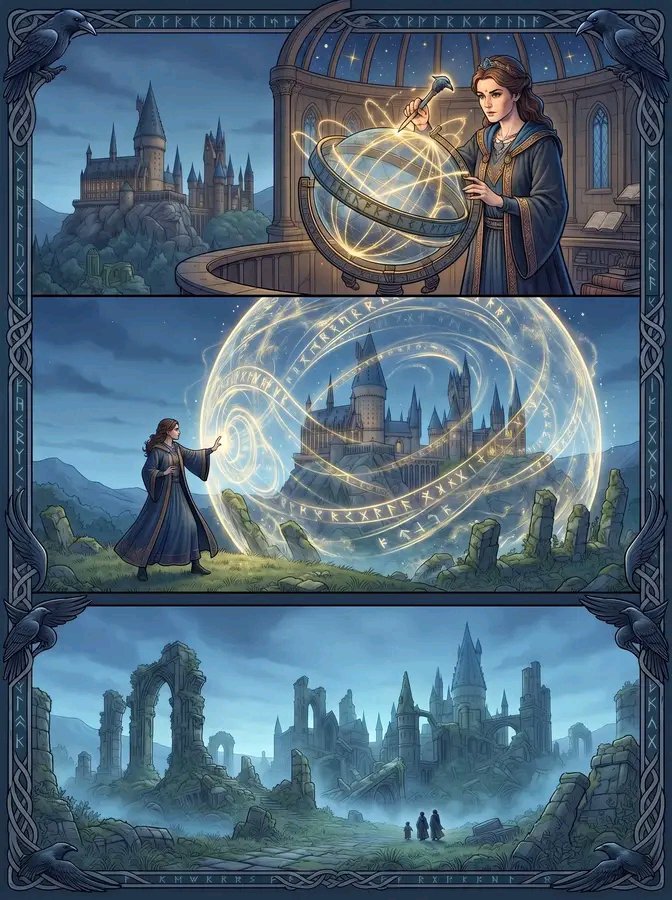
Rowena Ravenclaw was the one who created the powerful magical field that concealed Hogwarts from Muggles.
Thanks to this enchantment, the castle was able to remain hidden for centuries, protected from the eyes of those who did not belong to the magical world.
The field was always active and reacted whenever a Muggle came too close to Hogwarts. Instead of seeing the enormous castle and its grounds, they found themselves looking at abandoned ruins, as though there had been nothing there worth noticing.
This protection was essential in keeping Hogwarts secret from its earliest years. While students and professors could enter and leave normally, Muggles who arrived in the area were shown a completely different image of the place.
In this way, Rowena left her legacy not only through the house that bore her name and her pursuit of knowledge, but also through what was believed to have been one of the school's most important protections: an enchantment that hid Hogwarts from Muggles and made a castle filled with magic appear to be nothing more than a collection of abandoned ruins.
The death of Sirius Black was one of the most painful losses for Harry, but it also had an important consequence that the movies barely explain.
Since Sirius had no children or close relatives he trusted, he decided to leave practically all of his possessions to Harry Potter.
The most important inheritance was Grimmauld Place, the former home of the Black family and headquarters of the Order of the Phoenix. Along with the house, Harry inherited everything inside it, including Kreacher. In fact, it was through the inheritance that Harry was able to legitimately give Kreacher orders and eventually earn his loyalty.
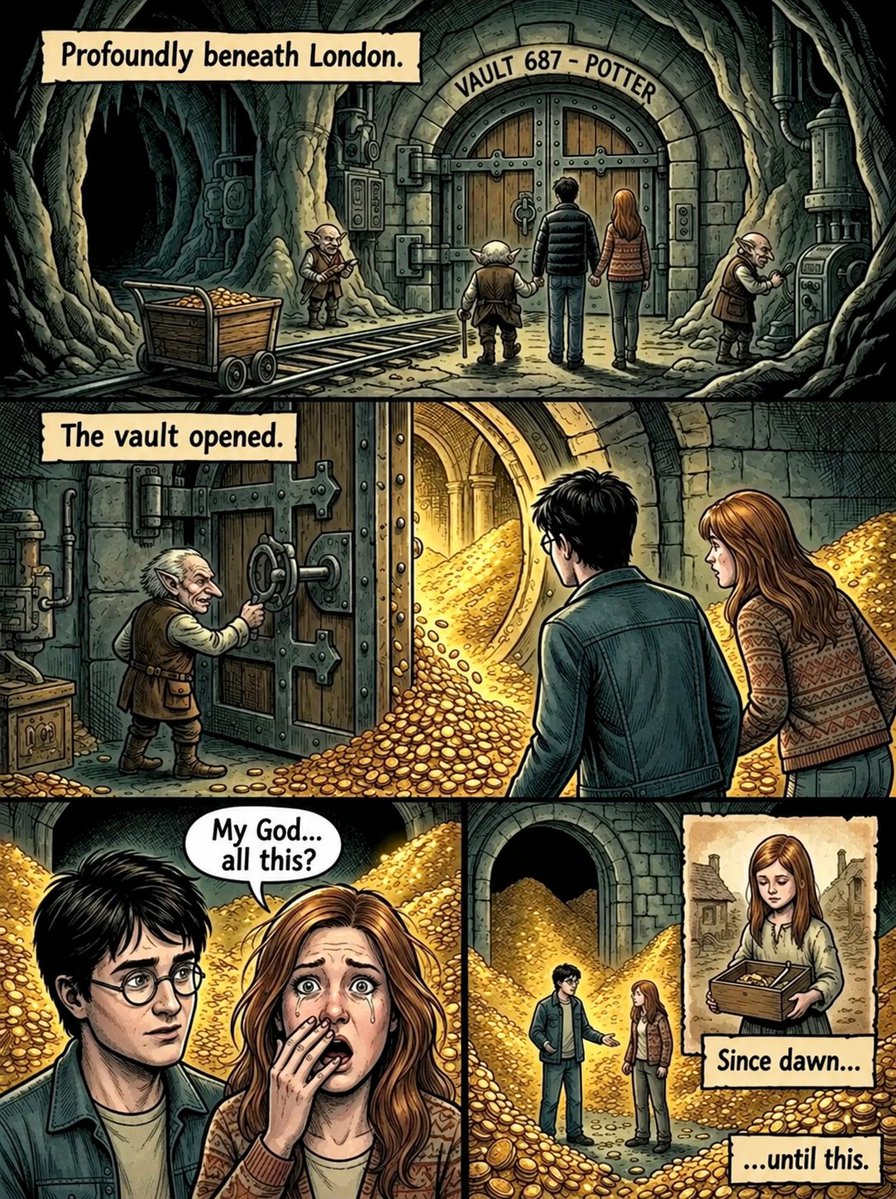
Harry also inherited Sirius’s personal fortune. The Blacks were one of the oldest and wealthiest families in the wizarding world, so Sirius possessed a considerable amount of gold. This was added to the money Harry already had from his parents in his Gringotts vault.
What’s interesting is that Harry was already quite wealthy after inheriting the fortune of James Potter and Lily Potter. However, after receiving Sirius’s inheritance, his financial situation became even more extraordinary. Although he was never as ostentatious as the Malfoys, Harry ultimately became one of the wealthiest young wizards of his generation, something that is rarely mentioned because he never cared much about money.
You know… the Dursleys must have been pretty well-off.
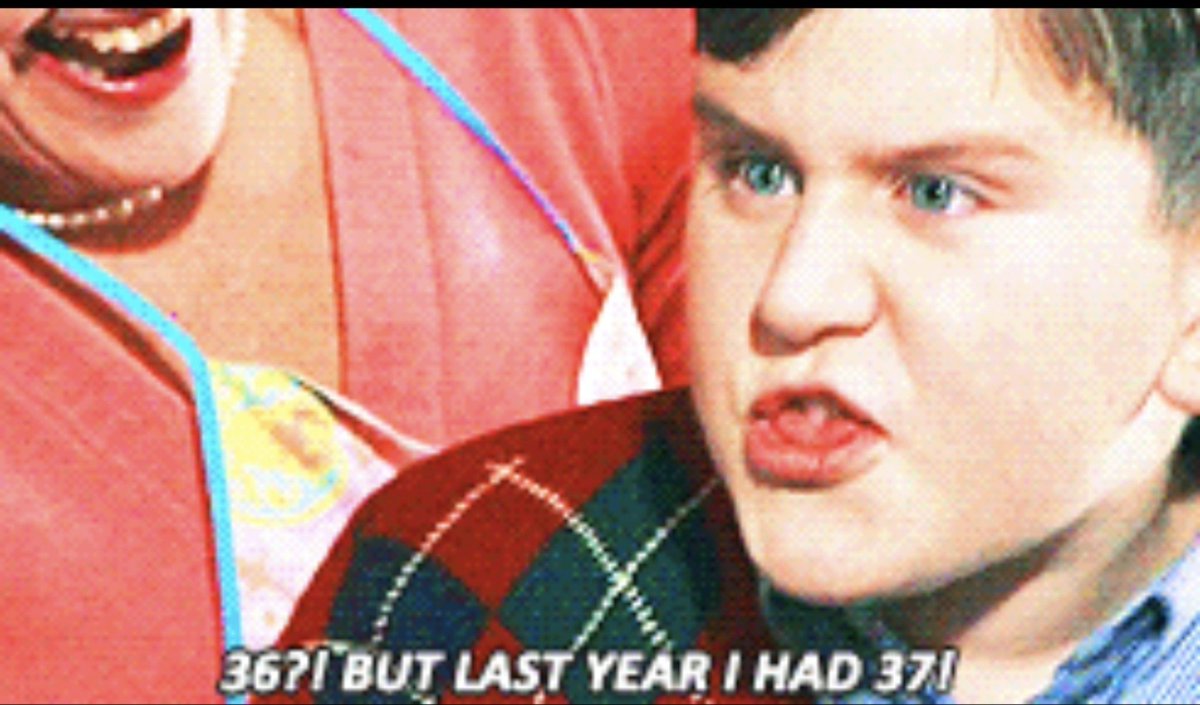
I rewatched the first movie recently and got to Dudley’s birthday, where he’s complaining about his presents. And honestly, 37 presents most of them apparently large wouldn’t have been cheap to begin with.
But the books make it even more obvious. Dudley gets a computer, a sports bike, and a remote-controlled airplane. Those things might be relatively cheap today, but they certainly weren’t cheap in the early 90s when the story was set.
And that’s not even getting into Dudley’s room full of discarded stuff, including the TV he literally put his foot through.
We also know Vernon was a director at the drill company, so he was probably earning pretty well.
Which honestly makes the way they treated Harry even worse.
They could clearly afford to spoil Dudley, yet Harry spent basically a decade wearing rags and being treated like he was barely worth feeding.
The Dursleys weren't struggling financially. They just chose to spend their money on Dudley.
One of the strongest family conflicts that was barely shown in the Harry Potter films was Percy Weasley’s falling-out with his own family.
Percy had always wanted to be different from the rest of the Weasley family. While his brothers were more relaxed and rebellious, he had been obsessed with order, authority, and proving that he could go far within the Ministry of Magic.
That ambition eventually drove him away from his family. When the Ministry began denying Voldemort’s return, Percy chose to completely side with the Ministry. Even when Arthur Weasley tried to warn him that the Ministry was making a mistake, Percy believed his own father was being naive.
The conflict became so severe that Percy left the family home and practically cut off contact with everyone. During that time, he ignored his parents, Ron, Fred, and George, convinced that they were wrong and that he had to defend his position within the Ministry.
This storyline was barely shown in the films, but in the books it revealed something very human: Percy had not acted out of pure malice, but out of pride and his desire to prove that he could make something of himself. Fortunately, years later, he eventually admitted that he had been wrong and returned to fight alongside his family during the Battle of Hogwarts, finally reconciling with them.
Many people say that Percy should have been the Weasley family member who was lost instead of Fred.
They dug up my lane 18 days back to lay water pipes. Repaired the road next day. Now they are digging up the road again to put in power cables..... You can't make this shit up 😂😂😂😂😂
Fred and George Weasley were two of the most rebellious and entertaining students at Hogwarts. In class, they often distracted themselves with pranks, experiments, and inventions, but the books made it clear that their lack of interest in conventional schoolwork was never a sign that they lacked intelligence. They had earned only three O.W.L.s each, yet they possessed an exceptional understanding of practical magic and eventually turned that talent into Weasleys’ Wizard Wheezes. Their creativity could be traced throughout the movies: they had mastered the Marauder’s Map after taking it from Filch, developed products such as Skiving Snackboxes, and even tested their inventions on themselves. In Order of the Phoenix, their rebellion against Umbridge became one of their defining moments. They turned a Hogwarts corridor into a Portable Swamp and then left the school in spectacular fashion, with fireworks and Peeves enthusiastically continuing the chaos after they told him to "give her hell." Their pranks were rarely random; beneath the humor was a remarkable understanding of magic, timing, and human behavior.
When the Second Wizarding War reached Hogwarts, however, the twins story took a much darker turn. Fred and George returned to fight alongside their family and the defenders of the castle, and Fred was killed during the Battle of Hogwarts. His death was particularly devastating because the books had spent seven years establishing the twins as an almost inseparable partnership. They had shared the same humor, ambitions, magical experiments, Quidditch experiences, and ultimately the dream of building their own joke shop. Even their personalities had subtle differences,Fred was often portrayed as the more impulsive instigator, while George could appear slightly more measured,but together they had operated almost as one. After Fred’s death, George continued running Weasleys’ Wizard Wheezes, keeping alive the dream they had created together while having to live without the brother who had been beside him for virtually his entire life. Their story therefore went far beyond comic relief: Fred and George represented creativity, brotherhood, rebellion, and the enormous personal cost of the wizarding war.
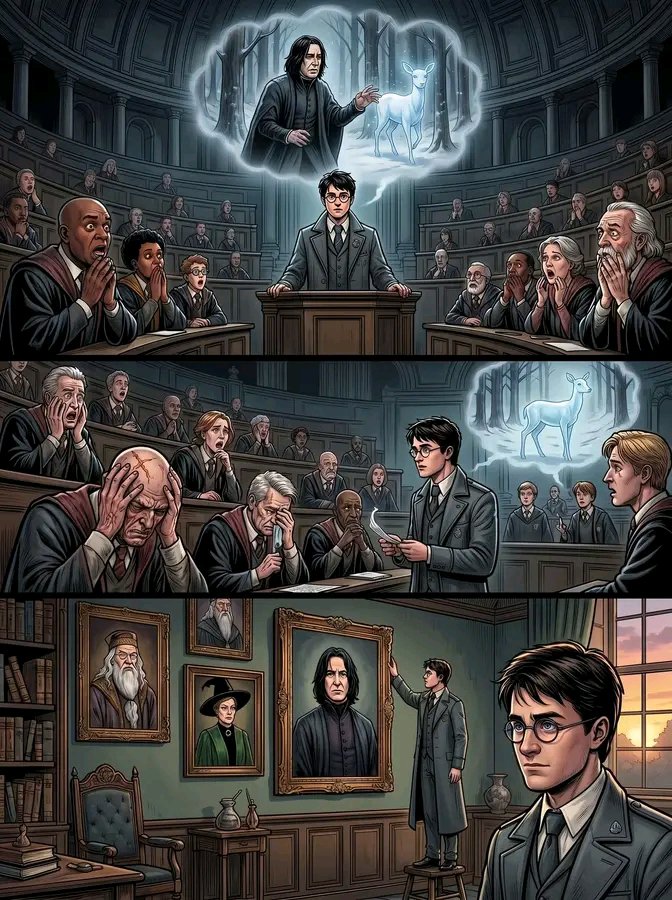
After the war, Harry made sure that the wizarding world knew the true story of Severus Snape. He explained that Snape had been secretly working for Dumbledore and that his loyalty had been crucial to protecting him and ultimately defeating Voldemort. The truth revealed through Snape’s memories showed the enormous risk he had taken for years while everyone, including Harry, believed he was still on Voldemort’s side.
Because of Harry, Snape’s legacy was no longer defined simply by the fact that he had been the Hogwarts headmaster when the Death Eaters took control of the school. His sacrifice and true allegiance became part of the history of the war, and his place at Hogwarts was preserved. The same student who had spent years hating Snape ultimately became one of the people who made sure his sacrifice was remembered rather than allowing him to be condemned to the version of his story that everyone had believed during the war.
Hermione wasn’t just book-smart. She was often the person who kept Harry and Ron alive when their plans went completely off the rails.
She was carrying that trio academically.
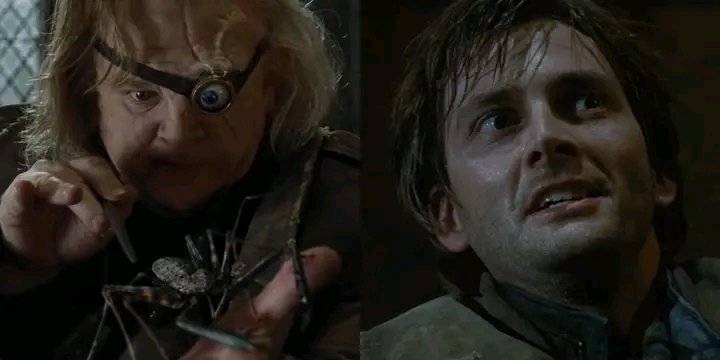
Remus Lupin and the man posing as Alastor Moody both taught Harry practical Defence, but they did so for completely different reasons. Lupin’s lessons in Harry Potter and the Prisoner of Azkaban were built around understanding, confidence, and real experience. He taught the class to face Boggarts, encouraged Neville instead of humiliating him, and personally trained Harry to cast a corporeal Patronus against Dementors. Lupin also gave his students practical experience through the final Defence Against the Dark Arts examination, where they had to navigate obstacles and deal with magical creatures they had studied throughout the year. His approach showed that effective teaching was not simply about knowing powerful spells; it was about giving students the confidence and judgment to use magic under pressure.
The false Moody, however, represented a much darker form of practical education. Barty Crouch Jr. was secretly impersonating Moody while manipulating Harry through the Triwizard Tournament. His lessons on the Unforgivable Curses and his emphasis on practical defensive magic gave Harry genuine experience, while his private actions were carefully designed to keep Harry alive long enough to reach the Triwizard Cup, which Crouch had secretly transformed into a Portkey leading to Voldemort. That made his role particularly unsettling: some of the knowledge Harry gained from "Moody" was genuinely useful, but it was being taught as part of a plan to deliver him to Voldemort. Lupin taught Harry because he wanted him to survive; Crouch taught Harry because he needed him to survive long enough to become the final piece of Voldemort’s plan.
Who did you consider the better teacher: Remus Lupin or the false Alastor Moody?
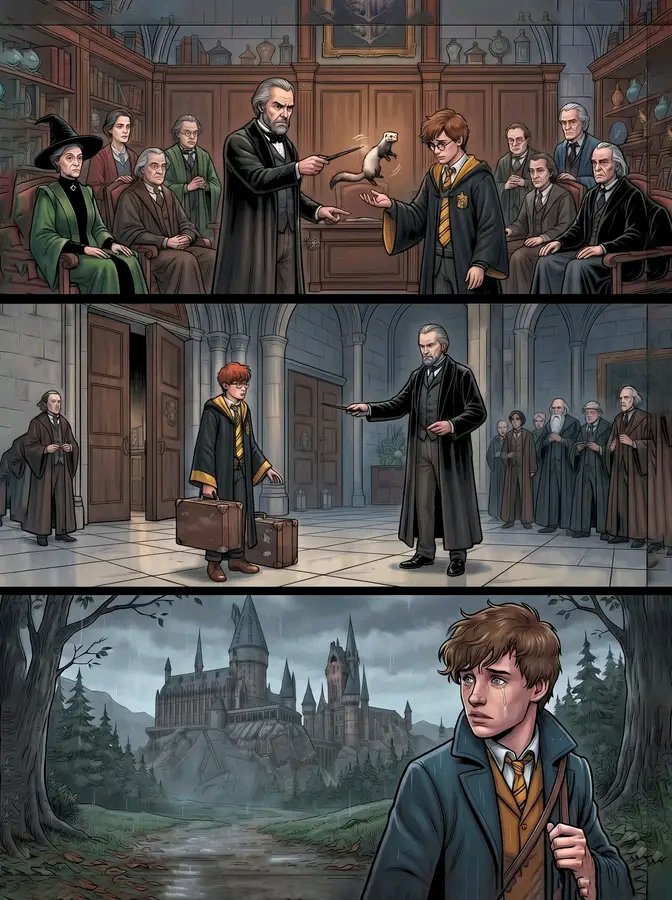
Newt Scamander was expelled from Hogwarts after an incident involving a magical creature that was believed to have put another student’s life at risk. The incident was later mentioned in Fantastic Beasts and Where to Find Them, when Grindelwald, disguised as Percival Graves, confronted Newt about his past. Newt explained that what happened had been an accident, while the film also revealed that Albus Dumbledore had argued against his expulsion. Newt’s time at Hogwarts was also closely connected to Leta Lestrange, who had been a fellow student and someone he cared deeply about. Although later stories added more context to their complicated past, the films never established the commonly repeated claim that Leta simply took full responsibility for the incident and that this directly caused Newt’s expulsion.
Being expelled did not stop Newt from pursuing his fascination with magical creatures. He traveled extensively, studied creatures across the world, and eventually became a renowned magizoologist and the author of Fantastic Beasts and Where to Find Them. His textbook later became part of Hogwarts education and was familiar to students such as Harry Potter and Ron Weasley. More importantly, Newt’s relationship with Dumbledore continued after Hogwarts, with Dumbledore eventually placing his trust in him during the struggle against Gellert Grindelwald. His expulsion therefore became an early chapter in the life of a wizard whose work with magical creatures ultimately left a lasting mark on the wizarding world.
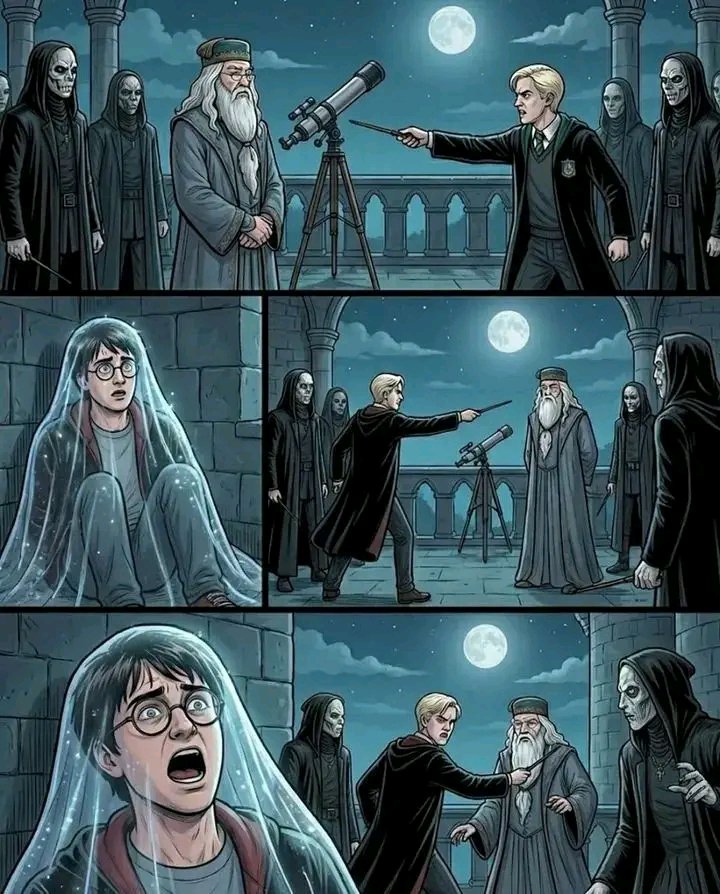
That point about what the film left out was exactly where the book and movie started to feel like two different versions of Half-Blood Prince. One of the biggest differences came in the Astronomy Tower scene. In the book, Harry wasn’t simply standing there watching Dumbledore die. Dumbledore had Petrified him, leaving him completely unable to move or intervene. Hidden beneath the Invisibility Cloak, Harry watched Draco disarm Dumbledore, the Death Eaters arrive, and Snape step forward. Harry could do absolutely nothing. He wasn’t being passive or afraid,he had literally been prevented from acting by Dumbledore himself, because Dumbledore and Snape had already agreed on what had to happen. Harry only understood the truth much later.
And the book gave the aftermath a weight the film handled very differently. After Snape escaped, Harry had to process what he had just witnessed, and the story eventually gave Dumbledore a funeral at Hogwarts, with the school and wider magical community gathered to say goodbye. The film replaced that with the striking image of everyone raising their wands toward the sky. It was a powerful film moment, but some of the context and emotional weight from the book were lost in the adaptation. The same was true of Tom Riddle’s memories: removing much of that material meant the audience lost important pieces of Harry’s investigation into Voldemort’s past. Half-Blood Prince was much more than romance and a dramatic death,it was a story about Harry being given pieces of a much larger puzzle, and the film left some of those pieces out.
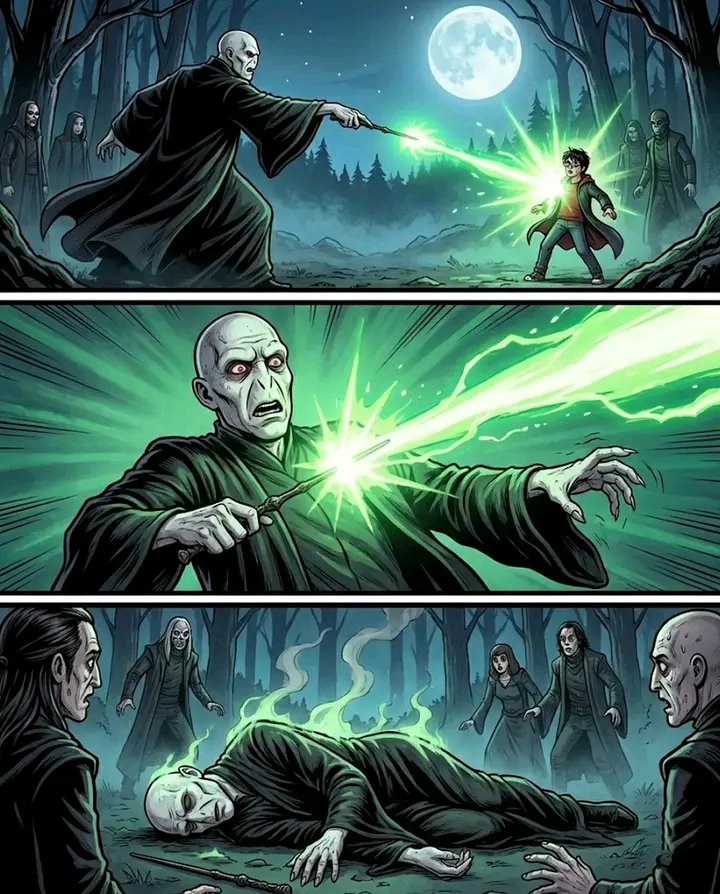
The key point in the book was that Voldemort really did cast Avada Kedavra at Harry,the curse did not simply "fail" .In Harry Potter and the Deathly Hallows, Dumbledore explained that Harry had become an accidental Horcrux on the night Voldemort had attacked him at Godric’s Hollow, when a fragment of Voldemort’s soul had broken away and attached itself to Harry. So, when Voldemort had cursed Harry in the Forbidden Forest, the spell had destroyed that fragment of Voldemort’s soul rather than Harry’s own soul. This was what the strange creature Harry had seen in the King’s Cross chapter represented: the damaged piece of Voldemort that had been living inside him. The movie had communicated this visually, but the book had made the magical mechanics much clearer.
The other crucial piece had been established much earlier in Harry Potter and the Goblet of Fire. When Voldemort had used Harry’s blood to rebuild his body, he had unknowingly carried Lily’s protective magic into himself. Dumbledore later explained that this had created a unique connection between Voldemort and Harry, because as long as Voldemort had remained alive, the protection tied to Lily’s sacrifice had continued to exist within him. This was why Harry had been able to return after the curse in the Forest. Voldemort had believed he had finally killed Harry, but the curse had actually destroyed the last piece of Voldemort’s soul inside him. At the same time, the blood Voldemort had used to resurrect himself had helped keep Harry anchored to life. The irony had been deliberate: Voldemort’s attempted to eliminate Harry had ultimately destroyed part of himself instead.
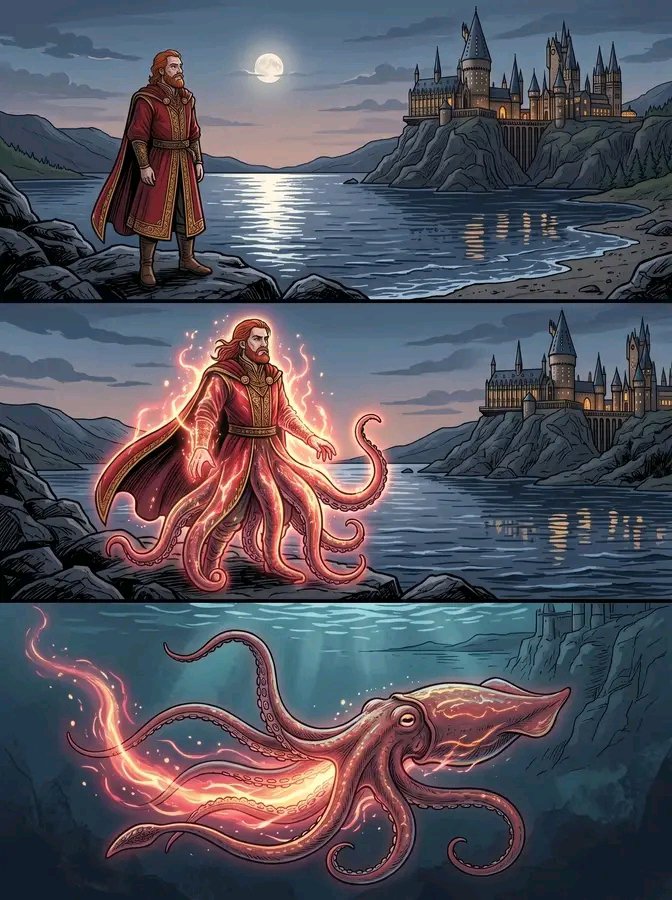
One of the most intriguing theories surrounding Harry Potter suggested that Godric Gryffindor had never truly disappeared, but had somehow ended up transformed into the giant squid living in the lake at Hogwarts. My theory centered on a genuine mystery in the books: although Godric had been one of Hogwarts four founders, very little had been revealed about what happened to him later in life. His ultimate fate had remained largely undocumented, leaving room for speculation about what might have happened after the founding of Hogwarts.
The giant squid had also been an unusual presence at the school. It had behaved peacefully around students, had allowed them to interact with it, and had even been involved in situations where students received help from it. Those details had made the creature seem different from an ordinary magical animal. Still, the books had never connected the squid to Godric Gryffindor, and there had been no evidence that Godric had possessed the ability to permanently transform himself into a sea creature. My theory had therefore remained unconfirmed, built around two mysteries in Hogwarts’ history rather than anything the books had explicitly established.
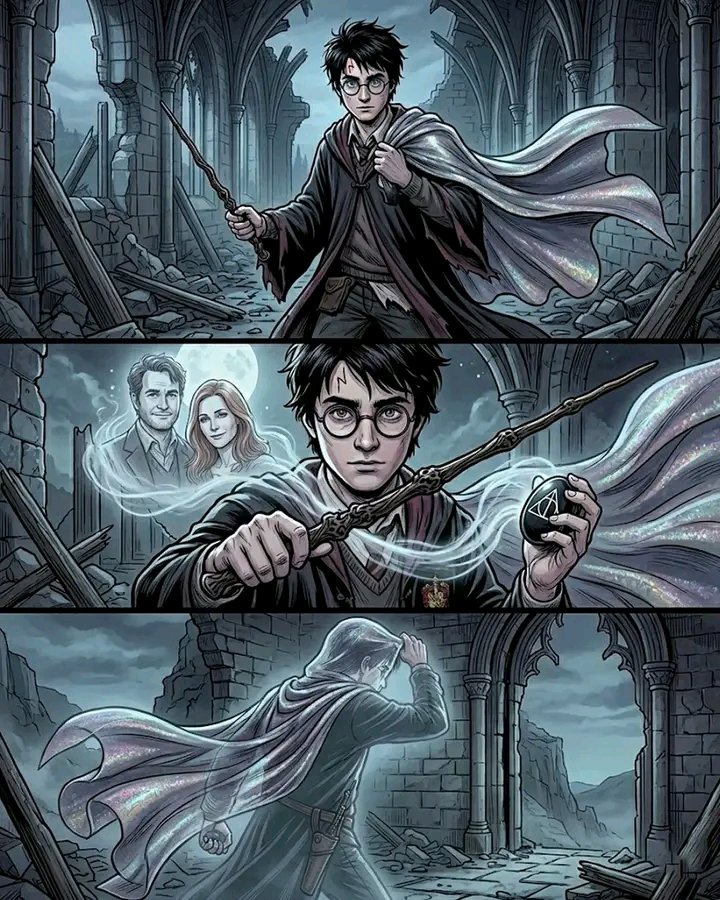
Harry Potter became the owner of all three Deathly Hallows without even intending to, and that is a dimension many people overlook: Harry became a master of death.
It wasn’t about ambition or a desire for power. The Hallows came to him almost by destiny, intertwined with his story and his sacrifice.
He had the Elder Wand, even though he never sought it; the Invisibility Cloak, which belonged to him through his family inheritance; and the Resurrection Stone, which appeared inside the Golden Snitch he inherited from Dumbledore. None of these Hallows were acquired through his own intention. Instead, each one found its way to him almost naturally, as if destiny itself had chosen him.
This revealed something profound about Harry: his power does not depend on ambition or a desire for domination. Possessing all three Hallows does not make him a more dangerous wizard; it made him someone in whom responsibility, sacrifice, and a destiny beyond his own will converge. This stands in contrast to Voldemort, who actively seeks power and builds his strength on fear and control.
The books emphasize that, despite having the Hallows, Harry acts with prudence and humanity. He does not seek to become the master of death; he simply possesses them, and it is his ability to choose how to use them that defined him as a true hero. Many readers only see the objects; few understand what it means that he had all three without ever seeking them.
After Sirius Black’s death, Harry Potter inherited something far more significant than just a house: he became the sole heir to everything Sirius personally owned, adding the wealth of one of the oldest pure-blood families in the wizarding world to the fortune he had already inherited from the Potters. In Harry Potter and the Half-Blood Prince, Dumbledore made it clear that Sirius’s will left Harry "everything he owned," which included 12 Grimmauld Place and Sirius’s personal possessions. Sirius himself had already inherited substantial wealth from the Black family, including an inheritance from his uncle Alphard. The Blacks had been accumulating wealth, property, and valuable heirlooms for generations, so Harry’s inheritance was unquestionably significant. However, there was one detail that often gets exaggerated by many: the books never give us an exact figure for the Black, Potter, or Malfoy fortunes, meaning canon never actually confirms that Harry became richer than the Malfoys.
What made Harry’s situation remarkable is the contrast between the fortune he possessed and the way he was raised. By the end of the films,Harry had inherited the Potter fortune as well as everything Sirius personally owned, effectively giving him access to the accumulated wealth and possessions of two ancient wizarding families. Draco Malfoy, meanwhile, had been raised from birth surrounded by his family’s wealth, status, connections, and privileges. The Malfoys were unquestionably one of the wealthiest and most influential pure-blood families, and their fortunes and political connections played an important role in their position within wizarding society. After Voldemort’s defeat, however, the family suffered serious social and financial consequences, although the books never establish that they were poorer than Harry. So the most accurate way to put it is this: Harry ended the series as an extraordinarily wealthy wizard, having inherited two significant family fortunes, but canon never provides enough information to prove that his wealth exceeded the Malfoys’. The fascinating part is that Harry possessed all of this wealth without ever being raised to understand just how wealthy he actually was.
When Fawkes left Hogwarts, it happened shortly after the death of Albus Dumbledore. After the funeral, Harry hears his song while he is at Hogwarts and understands that the phoenix is mourning its former owner.
The scene is especially significant because Fawkes had been tied to Dumbledore for many years. He had stayed with him in his office, helped him in important moments, and even gave one of his feathers to Harry's wand; that's why his departure works as a sign that a stage of Hogwarts was also coming to an end.
Fawkes simply takes flight and disappears, with no one knowing exactly where he goes. The books don't explain what happened to him afterward or say he died; as a phoenix, he could live for a very long time and be reborn from his own ashes.
The movies practically eliminate this moment and also don't show what happened to Fawkes after Dumbledore. That's why it remains one of the small details in the book that make the connection between them and the void left by Dumbledore in Hogwarts more evident.
DID YOU KNOW WHY LILY EVANS WALKED AWAY FROM SEVERUS SNAPE?
Lily Evans walked away from Severus Snape because of an accumulation of reasons that eventually culminated in an unforgivable betrayal. It wasn’t a single event, but rather a series of cracks that had deepened over the years.
The Differences That Drove Them Apart
When they arrived at Hogwarts, their relationship began to grow strained. Lily was sorted into Gryffindor, while Severus was placed in Slytherin. The houses weren’t just sporting rivals; they represented opposing views of the magical world. Lily was Muggle-born and believed in equality, while Slytherin had been a breeding ground for blood-purity ideology.Severus’s Dangerous Friendships
Severus surrounded himself with students who would later become Death Eaters: Avery, Mulciber, and Evan Rosier. Lily hated them and couldn’t understand how Severus could have been friends with people who regarded Muggle-borns as "Mudbloods." During their fifth year, Lily confronted him after Mulciber had used Dark Magic against a fellow student, and Severus had dismissed it as "just a laugh." Lily told him: "That was Dark Magic, and if you thought it was a joke, I didn’t know what you were doing here with me."
The Insult That Broke Everything
The decisive moment came during their fifth year, after a Potions O.W.L. James Potter and Sirius Black humiliated Severus in front of other students, disarming him and hanging him upside down in the air. Lily stepped in to defend him, but Severus, furious and humiliated, shouted: "I don’t need your help, Mudblood!"
That word ,"Mudblood",was the final blow. Lily, who had defended Severus for years, felt betrayed by the person she had trusted most. Severus tried to apologize that same night outside the Gryffindor Tower, but Lily didn’t forgive him.
The Forgiveness That Never Came
Lily told him: It was over. I wasn’t going to bother him anymore. And she kept her word. She never spoke to him again. Severus lost the only person he had loved because of his inability to choose between her and the Dark Arts.
Years later, when Voldemort decided to kill the Potters, Severus realized what he had lost. But it was already too late. Lily died, and Severus spent the rest of his life trying to atone for the mistake that had separated them forever.
Sainfoin - a beautiful flower with a beautiful name🌸
The name is French for 'wholesome hay' because it is protective again ailments in cattle🐮
But the flower became known as 'holy hay' in English due to the similarity of 'sain' & 'saint'🌸😇🌸