The business landscape is evolving at a quantum pace, and this opportunity stands out as a disruptive force that redefines industry standards and unlocks new possibilities.
@Gidi_Traffic
BIG CHANGE:
YOU CAN NOW OFFICIALLY
GENERATE ELECTRICITY FOR YOURSELF, USE WHAT YOU NEED, AND SELL EXCESS ELECTRICITY BACK TO THE GRID THROUGH YOUR DISCO
The Nigerian Electricity Regulatory Commission (NERC) has commenced the Net Billing Regulations 2026, a new framework that allows eligible electricity users to generate power mainly through solar energy for their own use and export excess electricity back to the distribution network.
In simple terms, if your solar system generates more electricity than you consume, you can now send the extra power back to your DisCo and receive credits under a regulated billing arrangement.
This effectively creates what the sector calls a “Prosumer” ;meaning you are both a consumer and producer of electricity.
However, there are conditions.
This is not yet targeted at the average small residential solar setup.
To qualify:
-You must already be connected to a DisCo network.
-Your renewable energy system must have a minimum installed capacity of 50kWp and a maximum of 1.5MWp
-You must obtain approval from your DisCo.
-You must sign a Net Billing Agreement and register with NERC.
Approved users will receive bidirectional meters that track: ➡️Electricity imported from the grid
⬅️Electricity exported back to the grid
SETTING THE RECORD STRAIGHT: TCN Responds to Inaccurate Capacity Figures Cited in PHEDC Social Media Post
The Transmission Company of Nigeria (TCN) has noted with concern a social media post published yesterday, April 2, 2026, by the Port Harcourt Electricity Distribution Company (PHEDC), stating that TCN’s transmission wheeling capacity stands at 7,300MW, with an operational capacity of between 4,000MW and 5,000MW.
TCN wishes to firmly correct this intentionally inaccurate information.
First, it’s important to note that the daily output on the national grid is a function of what the DisCos nominate, what the GenCos declare they can generate, and what TCN declares it can wheel. There is a penalty against any of these three players if they fail to meet what they declared.
The question is: “Do the DisCos nominate beyond 4,000MW to 5,000MW?” This is a question for Port Harcourt DisCo to verify before making distracting publications. Every day–ahead, the Nigerian Independent System Operator (NISO) looks at what each player declares and tries to strike a balance, which is what is then generated, transmitted, and distributed.
TCN’s Verified Transmission Wheeling Capacity: 8,700MW
The fact is that 8,700MW is the simulated capacity by the Independent System Operator (ISO) when it was still part of TCN. Through sustained, capital-intensive infrastructure investments, including transformer installations, substation construction, and transmission line reconductoring, among others, TCN has progressively expanded its wheeling capacity to a verified 8,700MW. This figure is a matter of public record and reflects TCN’s ongoing commitment to strengthening Nigeria’s grid infrastructure. 7,300MW cited by PHEDC is outdated and no longer representative of TCN’s current capacity. In fact, with several completed and ongoing projects since the last simulation, a new simulation would certainly show increased capacity.
Operational Milestones Contradict the 4,000–5,000MW Claim
Recent, verifiable sector-wide records directly contradict the assertion that TCN can only transmit between 4,000MW and 5,000MW operationally. The Nigerian power sector has, in the first quarter of 2025 alone, achieved three successive peak generation milestones, all of which were successfully transmitted by TCN:
•March 4, 2025: Peak generation of 5,801.84MW at 49.69Hz frequency, with a maximum daily energy dispatch of 128,370.75MWh — the highest peak generation and maximum daily energy ever attained in Nigeria’s power sector history. TCN successfully transmitted this entire output to Distribution Companies (DisCos) during peak hours.
•March 2, 2025: Peak generation of 5,713.60MW and maximum daily energy of 125,542.06MWh, efficiently transmitted by TCN to all distribution load centres.
•February 14, 2025: Peak generation of 5,543.20MW and maximum daily energy of 125,159.48MWh, also successfully wheeled to DisCos by TCN.
These figures, independently documented and publicly verifiable, speak for themselves.
A Call for Accuracy in Power Sector CommunicationTCN acknowledges that Nigeria’s electricity value chain from gas supply through generation, transmission, and distribution to end users is deeply interconnected, and that each stakeholder has a responsibility to communicate accurately about their role alone and where they need to communicate about others, must take steps to verify information before releasing to the public.
Misinformation, however unintentional, undermines public trust, misrepresents sector progress, and may negatively influence policy conversations and investment decisions.
TCN, therefore, calls on all stakeholders to verify information not domiciled with them before publication to ensure their communications accurately reflect the current state of grid infrastructure. TCN remains committed to transparency, collaboration, and the continued growth of Nigeria’s power sector.
@PHEDconnect@NERCNG@OFFICIALNISO_NG@NigeriaGov@daily_nigerian
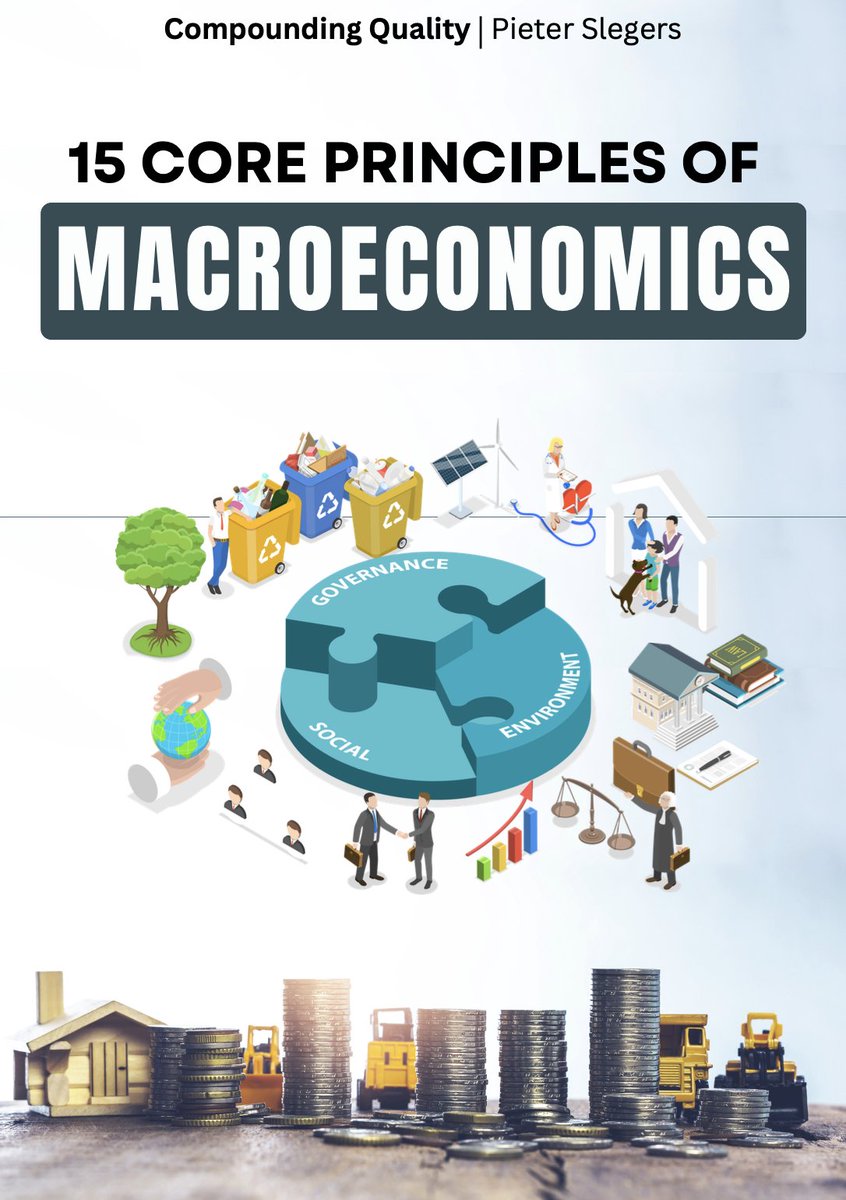
Macroeconomics is the study of the economy as a whole.
It helps you understand the bigger picture of money.
Here are 15 core principles of macroeconomics:
Global nuclear capacity is set to rise by over 75%⚡
With global pledges to boost nuclear capacity by 2050, the prospects for nuclear power's future are promising.
Our partner, @RangeETFs, visualizes the leading countries meeting this growing demand.
https://t.co/wYb6s9v5Ml
According to @worldranking_, Nigeria is part of the top 15 most disliked countries in the world as at 2024.
We all need to be intentional in order to change our global perspective.
In your daily living, remember that you have a name, and it should be protected.
@Gidi_Traffic
The Gunvor 75K Barrels per Day (BPD) Rotterdam Refinery halt its operations on Nov. 25, 2024. Wesseling and Gelsenkirchen plants in Germany, and Grangemouth in Scotland also halted operations, due to pressure from Dangote (650K BPD), Dos Bocas in Mexico (340K BPD).
@Gidi_Traffic
JUST IN: 🇺🇸 Ballot drop box in Washington, USA was set on fire with hundreds of ballots inside at the time.
Police said explosive devices were placed inside the box early Monday morning.
Carbon Emissions From Energy Production in 2023 (world’s total share):
🇨🇳 China - 31.2%
🇺🇸 U.S. - 12.7%
🇮🇳 India - 7.7%
🇷🇺 Russian Federation - 5.4%
🇯🇵 Japan - 2.6%
🇮🇷 Iran - 2.3%
🇮🇩 Indonesia - 2.1%
🇸🇦 Saudi Arabia - 1.8%
🇨🇦 Canada - 1.5%
🇰🇷 South Korea - 1.5%
According to Energy Institute, Statistical Review of World Energy 2024
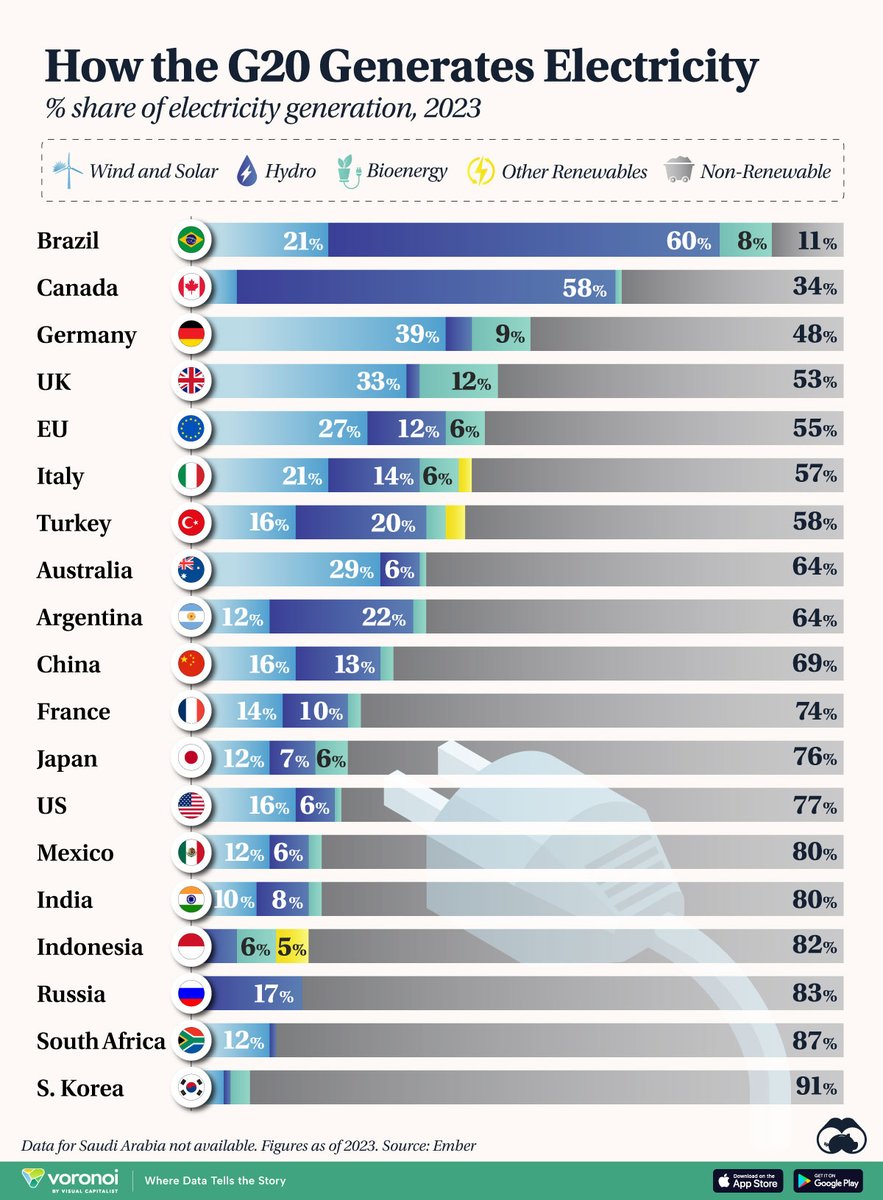
Visualizing How the G20 Generates Electricity 💡
📲 Want more content like this with daily insights from the world’s top creators? See it first on the @VoronoiApp.
https://t.co/BZ2cTBflLV
Annette Echikunwoke was set to represent Nigeria at the 2020 Olympics but was disqualified along with nine other athletes after failing to undergo mandatory tests due to an error by the Athletics Federation of Nigeria.
She then changed her allegiance to the United States to compete at Paris 2024.
Now, she can call herself an Olympic medalist after winning silver in the women's hammer throw 🥈
Join us for 30th Nigerian Economic Summit themed "Collaborative Action for Growth, Competitiveness, and Stability" from October 14th-16th, 2024 at the Transcorp Hilton Hotel, Abuja and virtually.
Register now and get an Early Bird Discount of 15% at https://t.co/tescnPlim7
The Authority Chief Executive (ACE), Engr Farouk Ahmed inaugurated a project team comprised of NMDPRA, Gas Transporter (NGIC) and other Stakeholders on the Nigerian Gas Transportation Network to develop a model for Shrinkage Factor (SF) determination on the Gas Network.
🆕The Energy Institute #StatsReview 2024 reveals a year of record highs in an energy hungry world.
Published today with co-authors @KPMG and @kearney, the #StatsReview presents the first full breakdown of the global energy data from 2023.
Read it now: https://t.co/LRdgrSmHKf