Former senior editor at Forbes, senior writer at Fortune. Founder Media Luna Creations, Knight-Bagehot Fellow, writing about borderlessness, learning to farm.
Today's Kiffmeister #Fintech Digest includes The European Central Bank (ECB) inviting private companies and organizations to collaborate in exploring how the digital euro can foster innovation in the market. For more detail go to: https://t.co/K2X7bE25ra
Convince me that the leaders of the world’s largest asset management firms, brokers, exchanges, FinTechs, banks, card companies, hedge funds, insurance companies, social media platforms, AI labs, auction houses, museums, university endowments, governments, business conferences, along with our best programmers, engineers, artists, and cryptographers, and the several hundred elite grad students who take my classes every year have all been duped by the same scam for a decade.
That’s what it takes to believe “crypto is a scam” in 2026.
First you fight them then you join em.
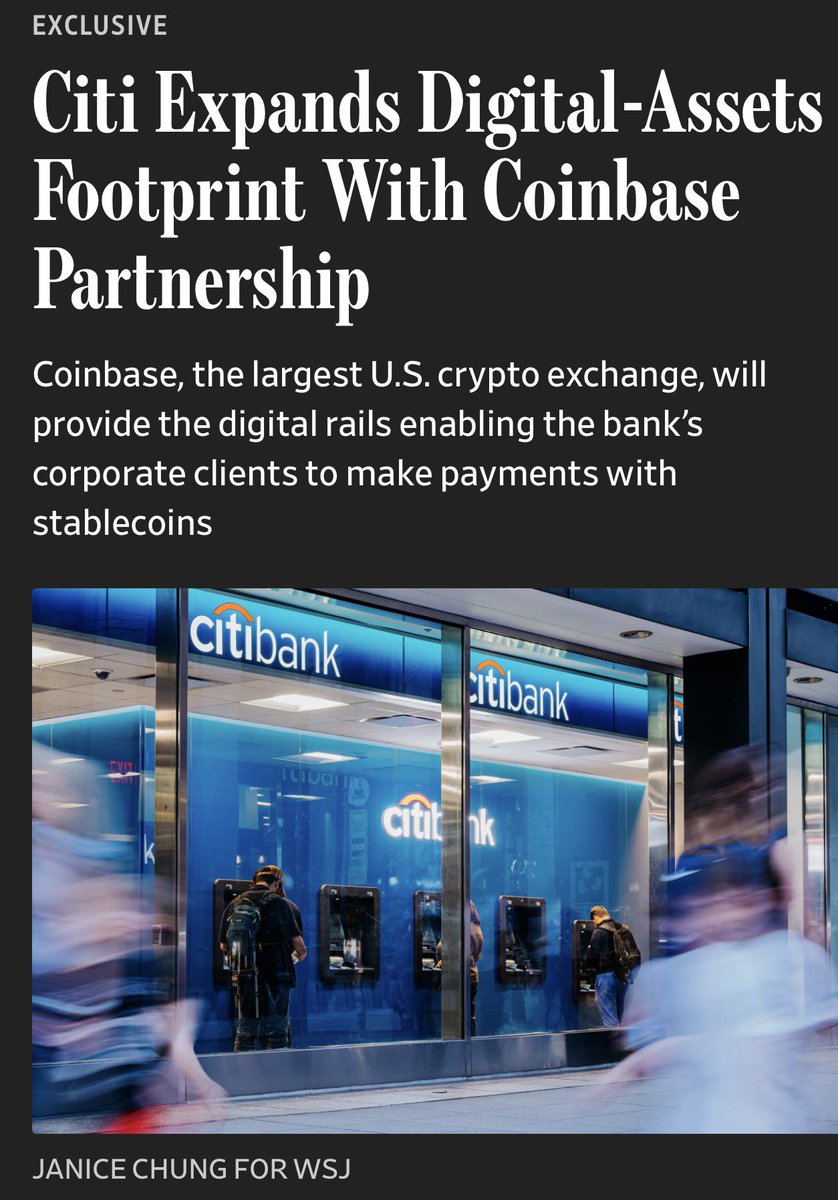
Citi is partnering with Coinbase to let its institutional clients accept stablecoin payments, with Coinbase providing the payment rails and blockchain infrastructure while Citi settles the funds as bank of record.
The partnership will also let customers hold and move stablecoins through Citi’s banking infrastructure, while Citi separately expands its own token services to Japan and the UAE.
I don't see how this could possibly be seen as a net negative.
Banks were fucking their customers. Agents now realize that. Agents then route customers to better products.
This is... bad? That people get a better deal? That they earn interest on their own money?
1/6 In one of her final speeches as an SEC Commissioner, @HesterPeirce made a compelling case for rethinking America's financial surveillance regime. It deserves a wide audience. 🧵https://t.co/B1fSCi5dMD
Our financial markets are evolving w a new category that isn't DeFi or TradFi. "Onchain finance" competes w Wall St. on its own terms, pairing the benefits of public blockchains w "trust" as a feature.
@jchervinsky & I wrote about it in @FortuneMagazine: https://t.co/Vy2yJseWlX
Onchain finance isn’t a rebrand for DeFi. It’s a new product category built with one goal in mind: competition.
DeFi takes trust out of finance. Onchain finance adds some back in to make the best product. @RebeccaRettig1 and I explain in @FortuneMagazine:
https://t.co/WFBfmcajRO
Fifty billion trees by 2030: how Ethiopia is recruiting citizens across the country to plant, plant, plant....After losing much of its forests in recent decades, the country’s people have led the way in planting saplings across the country as part of the government’s Green Legacy Initiative: https://t.co/4DKjIyn3Jr via @guardian
Excited to share that I’ve joined @HyperliquidPC as Head of Government Relations.
After more than a decade working at the intersection of policy, agriculture, commodities, and advocacy, I’m looking forward to bringing that experience to a new set of challenges.
There’s a real opportunity to shape how onchain markets develop in the U.S., and to make sure the policy frameworks around them are clear, workable, and informed by the people and industries that rely on our markets every day.
Thrilled to be working with HPC’s rockstar team, @jchervinsky, @adam_minehardt, @salahghazzal, @BradBourque, @itsgolovina, and @siannabird!
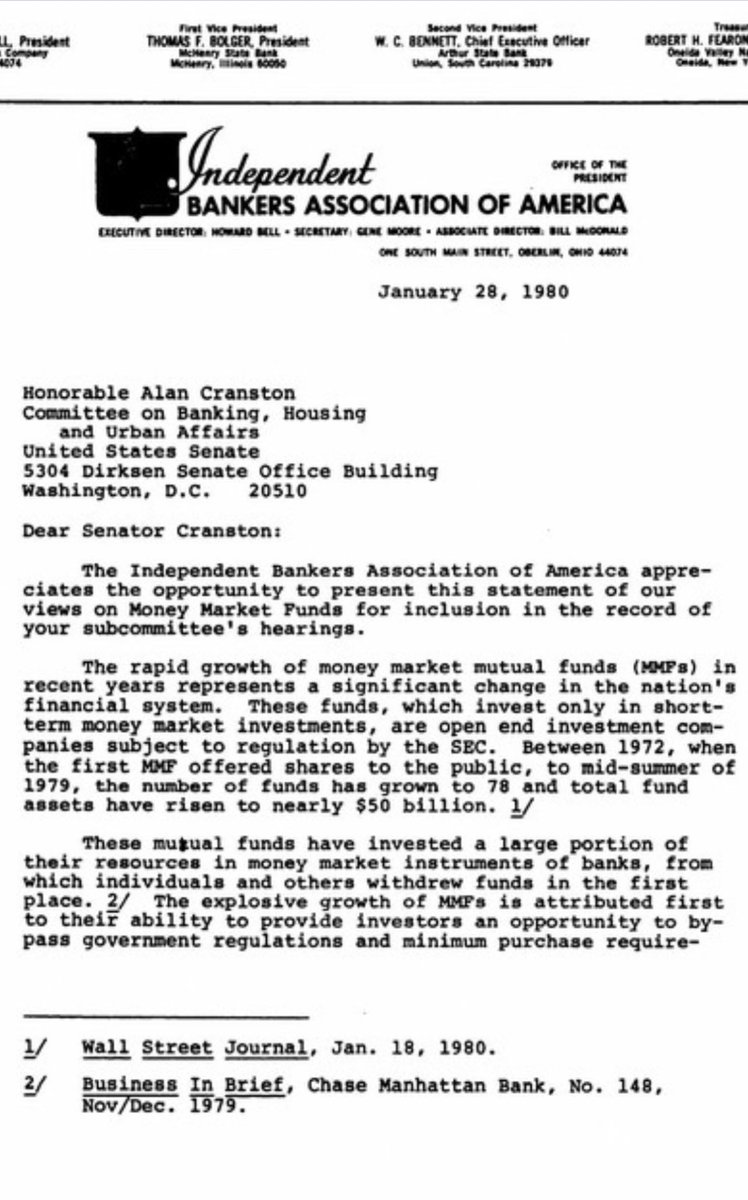
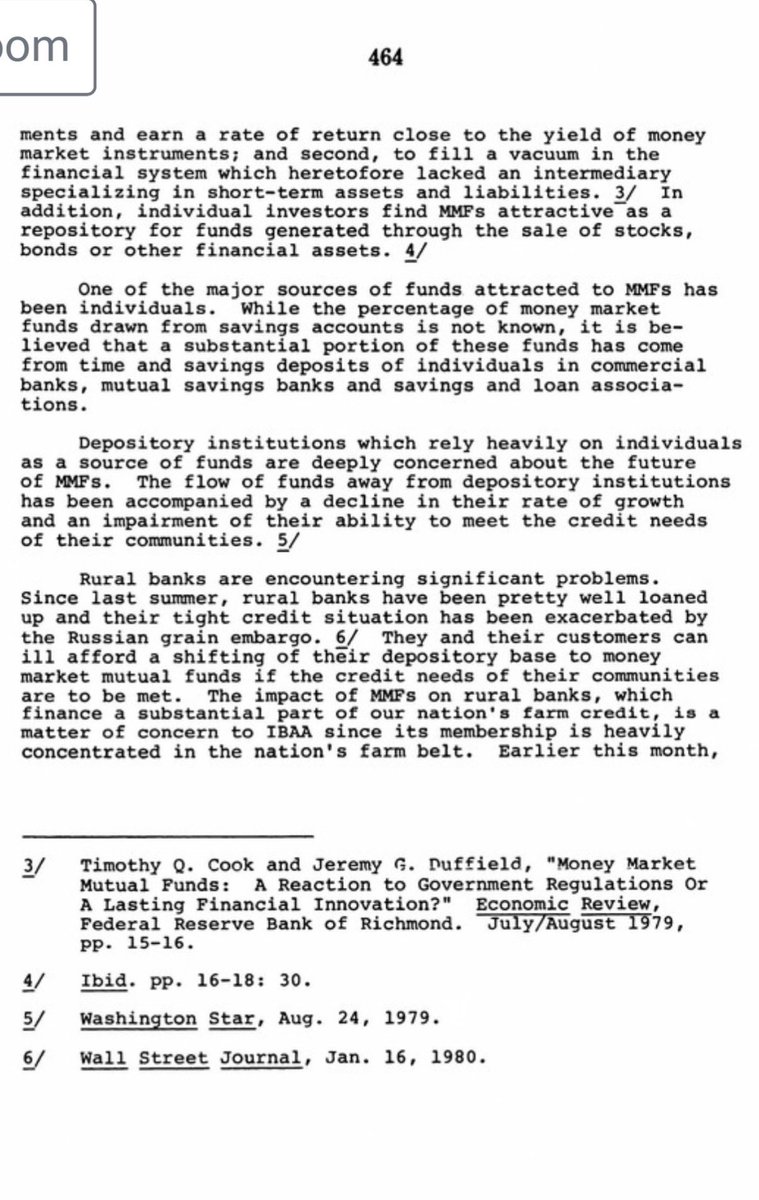
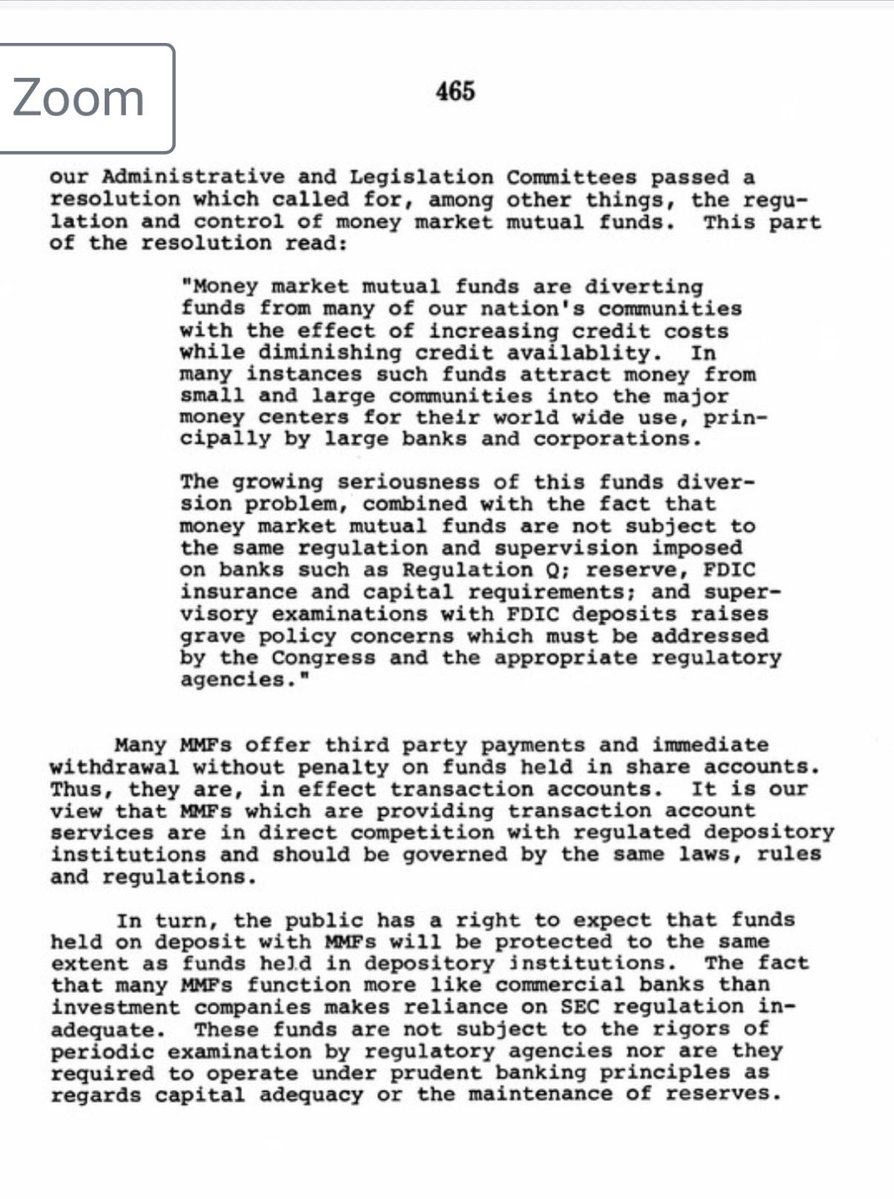
Many of us have mentioned how the stablecoin yield debate playing out in Clarity, and the arguments made against yield by the bank trades, mirror the battle over money market funds in the 1970s. Well here's some proof.
Here's a letter submitted by the Independent Bankers Association of America (a predecessor to the ICBA) in a 1980 hearing of the Senate Banking committee on money market funds.
As you can see, many of their arguments against stablecoins are almost verbatim a copy from what they argued back then: threat to deposits, harms lending, uniquely dangerous for smaller banks.
And we know today that argument was dead wrong. Money market balances grew parabolically into the trillions, and yet banks remain flush with deposits.
I just published a new paper exploring the operational, financial, and business benefits of permissionless blockchains as compared to permissioned networks for activities such as payments and capital markets.
It lays out how permissionless systems like Bitcoin and Ethereum offer desirable properties such as resilience, diminished counterparty risk, and guaranteed settlement. These benefits are endogenous to the system: what regulators and users see is what they get.
It then describes the mechanical reasons why the reintroduction of a gatekeeper in permissioned networks forfeits these benefits. Such networks can never be as reliable and are more vulnerable to cyberattack, particularly in the age of AI. Their guarantees are exogenous and live inside off-platform agreements.
My paper argues permissioned networks are not blockchains and the assets they hold should not be considered tokens. Their consensus and cryptography are mostly performative.
Lastly, my paper describes an oft-missed business benefit of permissionless systems: the inability of incumbents to take them over and exercise monopoly power, in the way they historically have in TradFi.
Permissioned networks are destined for the same fate, which is why they should be avoided by smaller entities (like community banks) and startups.
My argument relies on the decades-old literature in distributed consensus, current statistics on network reliability, and the first principles of TradFi design for clearing and settlement.
I wrote it because I think it’s important for lawmakers and regulators to start distinguishing between the two designs. Thinking the two types of platforms are similar opens the door to dangerous regulatory arbitrage.
Now is the time to understand the difference from a technical, financial, and practical point of view.
So take a look and let me know what you think ⬇️
Yo! Thanks to Bruce for forcing me to fact-check myself. Found the first ever mention of "Bit Coin" in my emails on August 22, 2011. In my defense, when you Googled bitcoin back the you there were probably only a couple mentions. Little did i know it'd define my career
Hyperliquid Is Set To Enter The US Market Imminently (Necessary Steps Explained) with @HyperliquidPC CEO @jchervinsky
Timestamps:
00:00 Intro
02:03 The Press Conference Surprise
04:03 Founding The Hyperliquid Policy Center
07:45 Why Perps Beat Traditional Futures
11:00 CFTC Already Approved Perps
14:16 Crawl Walk Run Approach
20:06 One Shared Liquidity Venue
22:25 HIP-3* Markets Explained
31:37 The Silver Market Breakout
34:03 Stablecoins And The Genius Act
36:12 Circle & Hyperliquid USDC Deal
41:16 Bottom Up Vs Top Down Regulation
@farzamehsani Please share links to articles you like written by hardworking journalists trying to earn a living: https://t.co/OB4vBI79IM by @OlafStorbeck via @FT