Ten years ago, $ZEC launched money that can’t be watched.
Today, that story gets printed.
ZM? ZCASH MAGAZINE, Issue 0: “Zero Known”
82 full-color hardcover pages on Halo ending the ceremony, the four-year bug, Wall Street buying a shield, and the quiet fight over who gets to see your money.
Written for people who treat privacy as the default. Hardcover so it lasts. Available now: https://t.co/qMv3u3IjHf
Follow the new page: @zcashmag
Site: https://t.co/Wt7SinTdom
Independent publication. Not affiliated with the Zcash Foundation or any Zcash organization.
🧵 details, subscriptions, merch, and manifesto below:
Zcash turns 10 today!
Its founder, Zooko, on the 15 years before Bitcoin:
"My whole wish was to figure out how to make it decentralized, so that then it could be like what Bitcoin later became. So I was trying to invent Bitcoin for like 15 years, unsuccessfully, before Satoshi invented Bitcoin."
@zooko in the full episode. S16 E29 zcash:native
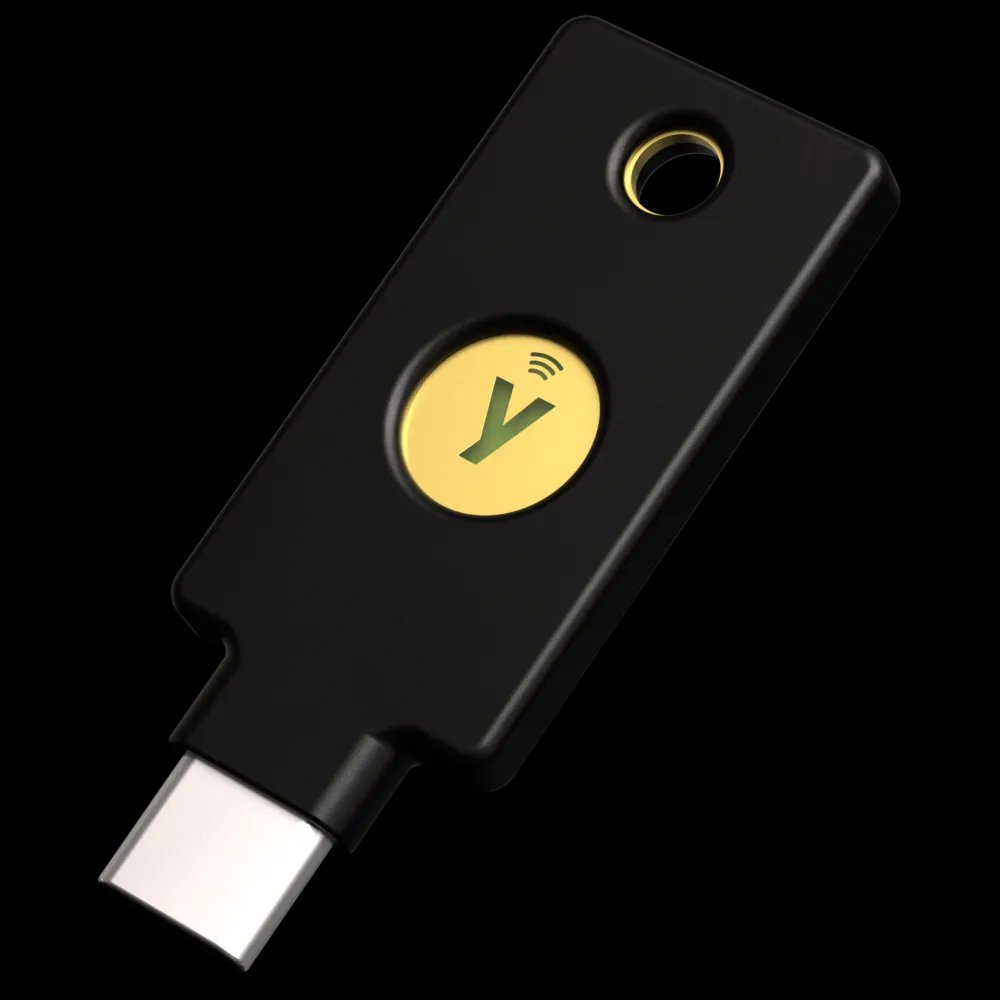
In El Salvador, hardware keys could protect compatible government portals, financial accounts, and digital-asset platforms. A subsidized rollout could widen access to stronger authentication, but a YubiKey would not automatically function as a national ID or a cryptocurrency transaction-signing wallet.
The expansive scenario is that governments begin issuing physical authenticators alongside other essential credentials.
That could create large procurement channels and normalize hardware authentication beyond the workplace. Adoption would depend on service compatibility, enrollment, recovery, citizen participation, and procurement decisions. Yubico would still have to win those contracts against competing providers.
7. The Multibagger Math: An Illustrative Five-Year Framework
A dramatic valuation increase requires sustained business growth and a favorable market assessment of that growth.
Under a strong-adoption scenario, revenue compounds at 25% annually for five years, reaching approximately 3.05 times its starting level. If the enterprise-value-to-sales multiple also expands by 50%, enterprise value reaches approximately 4.6 times its starting level.
Under an accelerated hardware-mandate scenario, revenue compounds at 35% annually for five years, reaching approximately 4.48 times its starting level. With the same 50% expansion in the enterprise-value-to-sales multiple, enterprise value reaches approximately 6.7 times its starting level.
These are scenario calculations, not price targets. Equity returns would also reflect net cash or debt, dilution, and the entry valuation. Multiple expansion is an additional assumption; an expensive starting valuation could instead produce multiple compression.
The potential reward comes from two forces reinforcing each other: earnings expand as deployment scales, and investors assign a higher valuation to a business they increasingly view as essential infrastructure.
SanDisk illustrates how AI can elevate the investment significance of an established infrastructure supplier. Yubico offers a prospective version of that opportunity in authentication: supplying the physical credentials required to access increasingly powerful digital systems. The catalyst is a shift from recommended protection to mandatory permission.
Yubico: Monetizing Permission to Use the AI Economy
$YUBCF @Yubico
The aggressive bull case is that Yubico becomes an essential infrastructure expense of the AI economy: a physical checkpoint between human identity and autonomous digital power.
AI infrastructure spending initially flowed into compute, networking, energy, and storage. As AI systems gain execution rights over proprietary codebases, financial transactions, and automated business workflows, another bottleneck emerges: trusted authorization. Who is directing the machine—and what are they permitted to do?
Hardware-backed authentication could move from a safeguard for privileged users to a prerequisite for accessing high-value digital systems. Yubico is positioned to capture a meaningful share of that spending.
1. The SanDisk Parallel: Storage for AI, Trust for Its Users
SanDisk provides a useful framework for understanding Yubico’s potential. Its February 2025 separation from Western Digital gave investors direct exposure to NAND flash storage, a critical component of digital infrastructure.
The investment connection is that AI creates demand far beyond the companies building models. Suppliers of essential supporting infrastructure can capture substantial revenue and earnings growth as adoption scales.
SanDisk supplies storage for an increasingly data-intensive economy. Yubico supplies credentials for an increasingly automated economy.
For SanDisk, the opportunity comes from growing datasets and workloads, which increase demand for storage. Revenue can expand through greater shipment volumes, higher-value products, and favorable pricing. Product mix, pricing, and manufacturing economics then determine how much of that growth reaches earnings.
For Yubico, the opportunity comes from protecting access to increasingly valuable systems. Revenue can expand through more protected users, backup keys, and subscription adoption. Its high gross margins create the potential for earnings to grow faster than revenue when operating expenses rise more slowly than sales.
Both investment cases also contain a potential re-rating: investors assign greater strategic value to an established supplier as its importance to AI becomes clearer. SanDisk’s business remains sensitive to memory pricing, supply cycles, and capital investment. Yubico’s growth depends on deployment decisions, access requirements, and competitive alternatives.
The aggressive Yubico thesis is that hardware authentication follows a similar path of investor recognition: a familiar product acquires greater strategic importance as AI changes the scale and value of the systems it supports.
Authentication demand can spread across employees, contractors, customers, and citizens. Each deployment can create demand for primary credentials, backup devices, and ongoing services.
A SanDisk-style outcome for Yubico would require a comparable financial sequence: AI-driven demand becomes revenue growth, revenue growth produces faster earnings growth, and stronger earnings support a higher valuation.
The analogy establishes the opportunity, rather than an equivalent return forecast.
2. AI Raises Account Value While Lowering Attack Costs
AI changes both sides of the cybersecurity equation.
Generative models lower the cost of personalized phishing, voice impersonation, and social engineering at scale. Attacks can become more convincing and economical to deploy against larger populations.
At the same time, a compromised account can expose more than email. It may grant access to autonomous agents, proprietary models, software deployment, and financial workflows. As those capabilities expand, the potential damage from unauthorized access grows.
Bypassable authentication methods—SMS codes, one-time passwords, and push approvals—therefore become harder to justify for sensitive access....
YubiKeys provide a cryptographic defense against credential phishing by binding authentication to the legitimate service and keeping private keys on the device. They do not eliminate compromised endpoints, stolen sessions, or weak recovery procedures. Their value is establishing a stronger foundation for controlling access.
Organizations have two reasons to spend more: attacks become cheaper to mount, while the systems being protected become more valuable.
3. From Recommended Protection to Mandatory Admission
The decisive commercial shift would occur when hardware authentication becomes a condition of accessing valuable digital systems.
Banks, enterprise platforms, AI providers, and government services could require dedicated hardware credentials for sensitive activities: moving money, deploying code, accessing proprietary models, or authorizing automated workflows.
A security recommendation competes for budget. An access requirement creates a purchasing trigger.
If these requirements spread, hardware authentication could become a recurring cost of doing business. Organizations would need to provision credentials, maintain backup access, replace lost devices, and manage employee turnover.
For Yubico, the opportunity is to become a preferred supplier as institutions raise their access standards. That transition could turn isolated security deployments into sustained procurement programs.
4. Expansion Through Seats, Backup Keys, and Recurring Revenue
Yubico has several potential growth engines that can reinforce one another.
Organizations can begin with administrators, developers, and executives, then expand deployment to employees, contractors, and external partners. Each customer therefore represents an opportunity for wider adoption after the initial purchase.
Primary and backup keys can increase unit demand per protected user while supporting continuity when a device is lost. Subscriptions and deployment services can add recurring revenue through provisioning, replacement, distribution, and ongoing access to the offering.
Subscription revenue increased 23.4% year over year in Q2 2026, representing 18% of quarterly sales.
The aggressive scenario combines more customers, wider deployment within each customer, and greater adoption of recurring services. Financial models must account for how subscription contracts recognize hardware and service revenue to avoid double-counting the opportunity.
5. Operating Leverage: The 80% Gross-Margin Engine
Yubico reported a gross margin of 80.1% in Q2 2026—an attractive foundation for a business built around physical products.
At a hypothetical gross margin of 78–80%, every additional SEK 1 billion in annual revenue would generate approximately SEK 780–800 million in gross profit, before additional operating expenses.
If revenue accelerates faster than spending on sales, research, administration, and support, operating profit could grow substantially faster than sales.
That is the financial engine of the bull case: a relatively small revenue base, high gross margins, and the possibility of much broader deployment.
6. Sovereign Identity: The Estonia and El Salvador Optionality
Enterprise adoption provides the core investment case. Sovereign digital identity offers a more speculative expansion opportunity.
Estonia and El Salvador illustrate two possible routes, rather than announced Yubico deployment plans.
Estonia’s established digital identity infrastructure provides a setting in which governments could evaluate complementary hardware authenticators for public employees, critical services, citizens, or e-residents. FIDO2 keys could simplify authentication for compatible services, although replacing national identity cards would require broader legal, technical, and digital-signature capabilities....
🚨 Altcoin influencer @jason thinks Bitcoin is dead because “the memes are gone.”
HALF a MILLION sats for the best new bitcoin meme.
Winner announced on the Friday LIVE show.
Reply to this tweet with your entry.
Many people aren’t aware of this ticker. They make the security keys to prevent phishing. More cyber security issues = more keys sold = more profit made = share price higher. We are heading into a strange time with AI right now and this stock along with CYPH and specific cryptos like ZEC QTC and NEAR are my personal plays.
Yubikey (yubcf) could very well be like getting into sandisk when it was $20 before it caught on and exploded.
The Etherealization of Money and the Zcash Hard-Scarcity Thesis + 2026 prediction
The U.S. Treasury’s 2025 suspension of penny production was not a fiscal adjustment; it was a terminal signal confirming the etherealization of money—the irreversible shift from materially constrained value to administratively declared value. In this new ontology, capital rotates toward assets whose scarcity cannot be instantiated by policy, expanded by decree, or edited by institutions. Zcash ( $ZEC ) stands as the paradigmatic answer: a protocol-enforced, mathematically immutable hard asset that mirrors the non-sovereign scarcity of physical metals in cryptographic form. As fiat becomes fully abstract, ZEC emerges as a non-etherealizable anchor—immune to the "magic wand" of governance.
1. Regime Shift: The Death of Physical Denominations
The end of U.S. penny production marks the obsolescence of physical money itself. Sovereign states no longer require material substrates to define monetary units; value is now declared through balance sheets, digital ledgers, and institutional authorization.
The markers of this shift are absolute:
Supply is created administratively, not through production.
Units are instantiated digitally, not minted.
Liquidity is generated by policy, not extraction.
Scarcity is adjusted politically, not geologically.
Modern money is no longer produced—it is proclaimed. Through quantitative easing and central bank digital frameworks, governments expand monetary units by fiat alone. This is etherealization: the total detachment of value from physical constraint and its reattachment to sovereign discretion.
2. Ontological Bifurcation: Ethereal vs. Hard Assets In an ethereal monetary environment, the asset class cleaves into two irreconcilable categories:
Ethereal Assets (The Edited Ledger)
Exist by institutional permission.
Expand via policy decree.
Editable by committees or regulators.
Dependent on governance legitimacy.
Hard Assets (The Immutable Anchor)
Exist by constraint.
Expand only via production or protocol rules.
Immune to administrative expansion.
Anchored in physics (Silver & Gold $XAU & $XAG ) or mathematics (Zcash $ZEC).
Zcash belongs squarely in the second category. Its 21 million supply cap is not a policy suggestion; it is a cryptographic inevitability. ZEC cannot be issued by central banks or diluted by regulatory whim. Its scarcity is protocol-defined, non-sovereign, and non-declarative. Structurally, Zcash is digital geology: hardness expressed mathematically rather than metallurgically.
3. The Penny as Terminal Signal
The penny’s decommissioning is a psychological watershed. It announces to markets that the physical representation of value is obsolete and that denominational materiality no longer constrains policy.
Markets price not only quantity but ontology—what money is. The penny’s end confirms that money has severed from matter. In doing so, it accelerates capital’s flight toward non-etherealizable refuges.
4. Capital Rotation into Non-Etherealizable Scarcity
As money etherealizes, value migrates to anchors that resist administrative conjuring. The repricing of gold and silver reflects their structural immunity to policy expansion. They cannot be digitally instantiated or bureaucratically multiplied.
Zcash inherits this property in cryptographic form:
Metals: Physical non-replicability.
Zcash: Mathematical non-replicability.
Both evade the core vulnerability of ethereal systems: the ability of states to create value units ex nihilo.
5. The Next Phase: Privacy as the Sentinel of Scarcity The rotation into metals is only the first wave. Capital historically migrates in stages: from fiat abstractions → physical hard assets → protocol-enforced hard assets.
Zcash sits at the convergence point of this migration. However, its privacy narrative—enabled by optional shielded transactions via zk-SNARKs—is not merely a feature; it is a structural necessity. ...continued...
Hackers managed to steal authentication keys for devices made by @KeystoneWallet
I don't understand one thing here however. During manufacturing, as part of the factory self test in initial boot you have the device generate & save a private key on its own, and take note of the public key.
If you have private keys to be stolen, it means that *somehow* a copy of the key exists outside of the secure element on the device?
If the manufacturing process involves each device's private key existing outside of the device, there's something that needs urgent improvement. Have the device generate the key and include its own public key as part of its self test report, not the other way around.
https://t.co/OMfnmMaxMF
MONERO BROS TALK ABOUT ZCASH BEING A MOSSAD HONEYPOT BECAUSE OF THE PARTICIPATION OF JEWISH CRYPTOGRAPHERS
BUT:
1/ XMR WHITEPAPER INCLUDES A DOZEN JEWISH CRYPTOGRAPHERS
2/ THE RING SIGNATURES WERE CREATED BY JEWISH CRYPTOGRAPHERS
3/ THE GUY IMPLEMENTING FCMP++ IS JUSTIN BERMAN... WHILE THE OTHER GUY QUIT A WEEK AFTER WITNESSING ANTISEMITISM AT MONEROTOPIA
IT'S NEVER TOO LATE TO GIVE CREDIT WHERE IT'S DUE AND BE THANKFUL FOR TODAY!
@matthew_sigel Its fairly easy to put Bitcoin addresses on an OFAC list. So many conspiracies (from the Monero people?) about $ZEC being run by Jews... hmmm....
Sanctions List Search https://t.co/7pCvHhsT4G
Lots of people missed this, I think. Soon, @vizorwallet will have quantum-unlinkable swaps, and it doesn't need to wait for a network upgrade. Yet another way it leads the privacy frontier of Zcash right now.